








Approximately 2,000 people escape from prison each year in the United States alone, with most of them being recaptured and returned to prison. Films such as «The Shawshank Redemption, Escape from Alcatraz» and others, Stories of daring and exciting prison escapes are often based on real events and are not entirely fictional.
People around the world are resorting to unconventional, and sometimes mind-blowing, methods to escape from prison. Here are some of the most interesting prison escape stories throughout history!
1. A French prisoner escaped from prison by using nectarines painted like grenades to climb onto the roof and into a helicopter piloted by his wife, who had taken lessons specifically for the escape.
Michel Vaujour was a long-term prisoner serving a sentence for armed robbery and other crimes at the Ulster Prison in Montparnasse, Paris. Vaujour, who successfully escaped from prison five times, is best known for his most famous escape, when he painted nectarines like grenades to scare off guards and climbed to the prison roof. His wife, Nadine Vaujour, was waiting for him on the roof by helicopter.
Nadine, who had taken flying lessons specifically for this escape plan, flew the helicopter to a soccer field some distance away, where they landed, got into a car, and drove away. This happened in May 1986. Nadine was later arrested in southwest France, and Michel, who had survived a gunshot to the head during a botched bank robbery, was arrested afterward.
Michel Vaujour was finally released in 2003 after 27 years in prison, 17 of which he spent in solitary confinement. His escape served as the basis for a French film. «"The Daughter of the Air" (La Fille de l'air). and a documentary film. Don't let me go, I'm responsible for this myself. . (1, 2)
2. In 2001, drug lord El Chapo escaped from prison in a dirty laundry basket, bribing several guards to smuggle him out. He spent $2.5 million bribing 70 guards, one of whom is now in prison for the crime.

Joaquim "El Chapo" Guzmán, the notorious drug lord, escaped from prison not just once, but several times. In 2001, he famously escaped from Mexico's harshest prison, Puente Grande. This prison, equipped with a state-of-the-art video surveillance system, assigned two guards to each inmate. Having reduced his 20-year sentence to eight years, he also successfully escaped from Puente Grande.
El Chapo bribed prison guards to remove the security cameras, hide him in a laundry cart, and take him to a waiting truck, which took him out of prison. After this escape, he disappeared for 13 years! This escape cost him $2.5 million. One of the guards who helped him escape was arrested and is serving a sentence.
Thirteen years later, El Chapo was arrested again and placed in the Altiplano Federal Penitentiary. He served less than 17 months there and escaped by ordering a maze to be constructed beneath his cell. The bribes and escape route cost him over $50 million. (1, 2)
3. Steven Russell escaped from prison by using laxatives to fake AIDS symptoms. Posing as a doctor seeking prisoners willing to sign up for an experimental treatment, he called the prison and volunteered for the fake program. After his release, he sent his death certificate to the prison.

Steven Russell, nicknamed "Houdini" and "King Kong," was sentenced to prison for stealing millions of dollars while posing as a pilot, judge, doctor, and FBI agent, among other identities. Over the course of five years, Russell escaped four times from various Texas prisons. His escapes were fueled by his love for a fellow inmate named Philip Morris, and he always planned his escapes for Friday the 13th, Morris's birthday.
Speaking about his escapes, he once said, "I didn't escape. They opened the door and let me in." During one of his escapes in 1998, he faked AIDS symptoms for ten months. He ate very little and took laxatives to appear weak. He also falsified his medical records and sent them to the prison department. Thanks to his persuasive skills and a little luck, Texas authorities transferred him to a nursing home without conducting their own tests.
Posing as his own doctor, he called the prison to obtain permission to participate in a non-existent treatment program. Some time later, he declared himself dead, sent a death certificate to the prison, and set out again to find Philip Morris. A film about his life was made, entitled «"I love you, Philip Morris." (source)
4. Criminal Richard Lee McNair escaped from prison three times. The first time, he escaped by using lip balm on his handcuffs, the second time by climbing through an air duct, and the third time, he mailed himself out of prison in a package and confronted a police officer, convincing him he was a traveling runner.

Richard Lee McNair, once one of the U.S. Marshals' 15 Most Wanted Fugitives, is currently serving two life sentences at the Florence State Penitentiary in Colorado. After escaping from prison twice, when he was recaptured, McNair devised a plan for his third escape.
McNair was incarcerated at the federal prison in Pollock, Louisiana. His prison duties included repairing old and torn mail bags in the manufacturing department. Over the next several months, while doing this work, he planned his escape. He constructed an escape pod with a breathing tube. He climbed into the pod and patiently waited for over an hour until a forklift delivered a crate to a warehouse located behind the prison fence. When the guards at the warehouse left for lunch, he climbed out of the crate and escaped on April 5, 2006. He entered the crate at 9:45 a.m. and emerged at 11:00 a.m. He knew no one would notice his absence until 4:00 p.m.
A few hours later, a police officer stopped him after seeing him running near the railroad tracks in Ball, Louisiana. Although McNair made a mistake by giving two different aliases—Robert Jones and Jimmy Jones—in the space of five minutes, Officer Carl Bordelon didn't suspect anything suspicious. McNair laughed and joked with the officer, saying he was a visiting runner who had come to help with a project after Hurricane Katrina. He was released. The whole incident was captured on Bordelon's patrol camera, who already knew of the escape of a prisoner named Richard McNair but hadn't received a precise description or a new photograph. (source)
5. Three men from Alcatraz prison used spoons to dig tunnels in their cells leading to an unsecured service corridor. They then climbed onto the roof, descended a 5-inch drainpipe, scaled a 12-foot security fence, and inflated a makeshift raft to use in the sea below. Their bodies were never found.

More than 55 years ago, on the night of June 11, 1962, three inmates escaped from the impenetrable Alcatraz prison through spoon-dug tunnels. They were never recaptured, and their bodies were never found. Bank robbers Frank Lee Morris and brothers John and Clarence Anglin escaped from "The Rock" using a plan devised by Morris.
Three men used 50 rubber raincoats to make rafts and jumped into the stormy sea. To fool the guards, they made fake papier-mâché faces with real hair attached and left them in their beds. They spent months making holes in the eight-inch-thick wall with table knives and spoons, then camouflaged them with painted cardboard sheets.
On the night of their escape, they slipped through tunnels into a utility room, climbed down a drainpipe, and climbed onto the roof through a vent. They then climbed down another vent and climbed over two barbed-wire fences to finally jump into the sea. Their rafts were found on the shore of a nearby island, but the rafts themselves have never been recovered. The investigation into what happened to them continues to this day, with numerous theories put forward by various people. Some believe they are hiding, others believe they drowned, and still others believe two of the men survived. (1979 film) «Escape from Alcatraz» was inspired by this escape. (source)
6. Choi Gap-bok, a South Korean yoga master, escaped from prison by squeezing through a 6-by-18-inch food slot in his cell. It took him just 34 seconds to escape.

Arrested on robbery charges, yoga master Choi Gap-bok, who had been practicing yoga for 23 years, "escaped" from his cell just five days after his arrest. He applied ointment to his upper body and managed to squeeze through a 14-centimeter-high, 43-centimeter-wide food slot in his cell at night in just 34 seconds. The guards in his holding cell at a police station in Daegu, South Korea, were asleep at the time.
Using a technique from the movie «The Shawshank Redemption» , He covered his pillows with blankets to fool the guards into thinking he was sleeping. Journalists dubbed Gap-bok "the Korean Houdini" for his escape from prison on September 17, 2012. A massive manhunt was launched, and Gap-bok was spotted in various mountainous areas. He was eventually captured. (source)
7. Moondyne Joe escaped from prison so many times that an Australian prison built him an escape-proof cell where he was chained to a window. The cell was light- and air-tight, lined with 1,000 nails, but he eventually escaped from it, too.

Joseph Bolitho Jones, a multiple convict for various crimes in the 19th century, earned the nickname "Moondyne Joe" for the numerous robberies he and his crew committed. After being arrested for escape and possession of an illegal firearm, he was sentenced to 12 months in Fremantle Prison in Western Australia.
In April 1866, when the chief justice reduced his sentence by only four months, he was dissatisfied. His sentence was extended by six months when he attempted to break the lock on the prison door but escaped again, where he was arrested and chained in an inescapable cell. He was kept in the yard, chained by the neck to the iron bars of a window, while an inescapable cell was built for him. The stone-walled cell was lined with over 1,000 nails and jarrah sleepers and was airtight and light-tight. He was allowed fresh air for only two hours a day.
But when his health began to fail in 1867, he was forced to break rocks outdoors in the prison yard. Governor John Hampton was so confident in the escape-proof system that he told Mundine Joe, "If you ever get out again, I'll forgive you." And Joe did escape. Eventually, when the pile of rocks he was breaking grew taller and obscured the guard's view of Joe above the waist, he occasionally swung a sledgehammer at the prison's limestone wall, and on March 7, 1867, he managed to escape through it. (source)
8. From a prison considered impenetrable, John Dillinger escaped using a wooden pistol he had carved in his cell. He intimidated 33 men with this fake pistol to obtain a real machine gun, boasting as he escaped: "Ha-ha-ha! And I did all this with a wooden pistol!"«
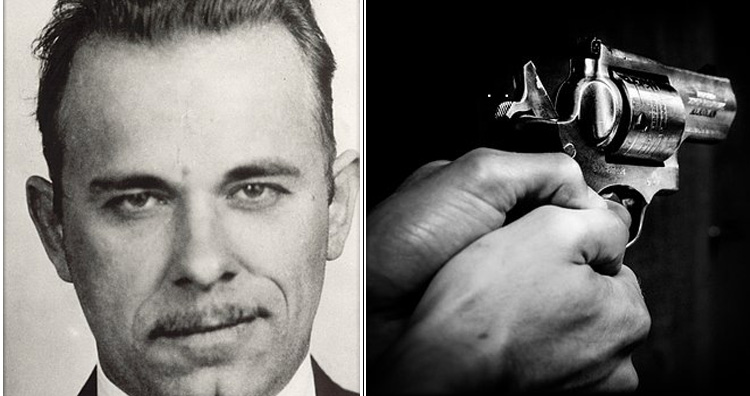
John Dillinger was arrested in January 1934 in Tucson, Arizona, for robbing police stations and other crimes. He was extradited to Indiana and held in Crown Point Penitentiary awaiting trial. Authorities there often boasted that it was escape-proof. Dillinger denied these claims. Dillinger claimed to have made a fake pistol out of a piece of wood, a razor handle, and black shoe polish, but reports later emerged that the fake wooden pistol was smuggled in by his lawyer.
Just over a month after his arrest, he used a fake gun to intimidate 33 people in prison, including guards and other inmates. He managed to get his hands on a real Thompson submachine gun. Now armed with the real weapon, he entered the sheriff's office, stole the key to his personal police car, and drove off to Chicago, boasting, "Ha-ha-ha! And I did all this with a wooden gun!" Just three days after his escape, he participated in a bank robbery and returned to active duty. (1, 2)
9. In 1979, Mark De Friest was sentenced to four years in prison for "stealing" tools left to him in his father's will. Of 13 prison escape attempts, seven were successful. He could memorize and reproduce jailer keys on any object within his reach.
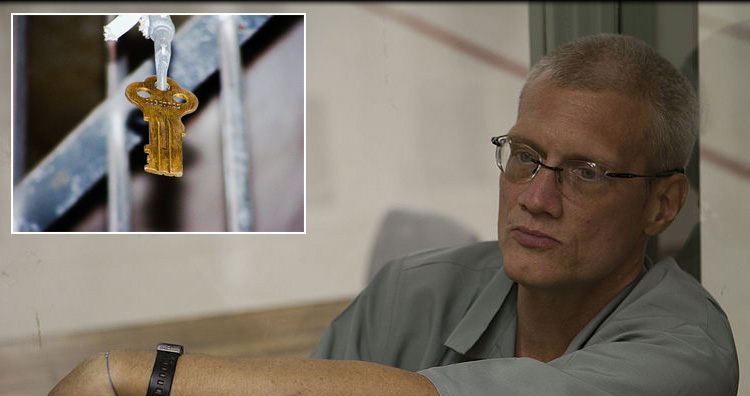
In 1978, Mark De Friest was arrested and served a year in prison. In 1980, before his father's will was probated, Mark De Friest, while on parole, took his father's tools. Since the will was not deemed authentic, this was considered theft, and his stepmother reported it to the police, leading to his arrest.
Since his "tools of the trade" included a firearm, his possession of one constituted a violation of his probation. He was arrested and sentenced to four years in prison, later increased to 34 years due to 13 escape attempts. It was his resourcefulness that enabled him to make seven successful escapes. He possessed a unique memory: he could memorize the patterns of prison keys and accurately reproduce them on any available material. He then used these patterns to open doors and escape. He once fashioned a homemade pistol from a toothpaste tube! Because his escape attempts angered the prison guards, he had a very difficult time inside. At one point, the "escape artist" was deprived of almost everything, even water, for 11 days straight. (source)
10. Kazimierz Piechowski, Auschwitz prisoner , and three others escaped from a Nazi camp, disguised as Nazi officers. and seized the deputy's car Fuhrer. Having reached the gate, they simply barked at the guards who opened the gate for them.
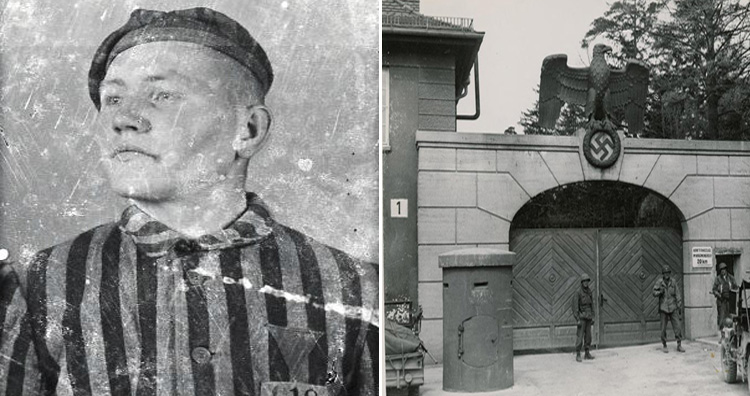
«"Wake up, you bastards! Open up, or I'll open you up!" Auschwitz prisoners dressed as German officers shouted at the guards to open the gates for them. It was this imitation that led to their escape "by car.".
Fed up with the torture and atrocities they and their friends were subjected to, a group of four Polish prisoners—Kazimierz Piechowski, Genek Bendera, Boy Scout Stanisław Gustaw Juster, and priest Józef Lempart—devised a plan to save their lives. One Saturday in June 1942, when work had ceased early and the warehouses were empty, they stole German officers' uniforms by breaking down the warehouse door, while Bendera, using a counterfeit key, stole the Führer's deputy's car. The car he stole was a Steyr 220, the fastest available.
As they approached the camp gates, they expected the guards to open them automatically. This didn't happen, and everyone began to panic. Then came the most dramatic moment of the escape. Piechowski summoned all his courage and began shouting at the guards to open the gates. The guards, fearing for their lives and jobs, hastily released them. They drove two hours through the forest to avoid the main roads and became the only four escapees out of 144 prisoners in the Auschwitz camp. (source)