








Cats aren't dogs; they're not man's best friend. But while it may seem like your cat is a jerk, at least they have excuses. From treating you like crap to torturing the wild, here are 10 things your cat does.
10. Sleep all day

Cats sleep an indecently long time by human standards. After a kitten's 24-hour sleep, the average cat will sleep 16 hours a day ( until he gets old , (when he starts sleeping more). Why are they so damn lazy? Because they don't sleep as soundly as we humans.
Unlike us, who have clearly defined cycles of rapid and non-rapid eye movements during sleep, culminating in deep REM sleep, cats nap in short periods of slow-wave sleep. In other words, they spend most of their time in light sleep, experiencing deep sleep only five minutes during the day.
Of course, as crepuscular animals, they also need to sleep all day to be active at dawn and dusk. Another explanation, given that they evolved in hot climates, is that cats sleep all day to regulate their body temperature.
9. Watch
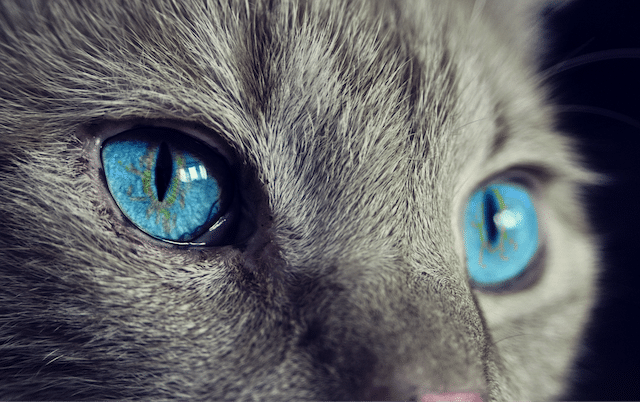
Whether it's the world outside the window, on the wall or just in space, cats are big lovers . It doesn't help that their eyes are huge compared to their bodies, or that they blink several times faster than we do (twice a minute versus our 15-20 times a minute). This is not a pleasant quality for a pet.
But cats' vision differs from ours, which sheds light on this question. First, they have a slightly wider field of view (200 degrees versus our 180 degrees) and the ability to detect even the slightest movement. However, their visual acuity isn't as good as ours, meaning we can see more detail at a distance.
Explanations for why cats stare so intently vary. Perhaps what seems like a wall to us is, for cats with their super-hearing, a complex and stimulating soundboard of pipes, insects, and rodents. It could also be related to hunting, for which patience and concentration are key. However, perhaps the least asshole-like reason is love. Based on numerous studies, Japanese researchers have concluded that cats stare only on people they trust . They also found that, like dogs, cats can notice and follow your gaze.
8. Writing outside the litter box

There are some truly unpleasant reasons for urinating outside the litter box. Your cat might feel better sniffing more of its own urine, or maybe it doesn't like the litter (kind of like how you poop on the floor because you don't like toilet paper). Alternatively, if you have more than one cat, it's possible the one who doesn't pee on the floor is a real asshole who aggressively hoards the tray . But even these reasons have their justifications. For example, if your cat needs to sniff its own urine more often, it's likely a sign of anxiety. And if they don't like their bedding, it could just be because their paws are sore.
There may be others,more serious explanations . These include urinary tract infections, kidney or thyroid disease, diabetes, digestive problems, and age-related health issues.
Or maybe you're a jerk because you don't empty the box enough?
7. Meowing through the night
If your cat meows more than usual, it could be a sign of illness. But generally, it's their way of getting what they want from you. Cats very rarely meow at each other. This is another behavior reinforced by human reactions that we fear means it's your fault again. For example, your cat meows, and you feed them; you've taught them that meowing brings food. Many of us condition our pets this way without even realizing it.
Cats can even learn to associate different meows—different lengths, different pitches—with different rewards (food, attention, etc.). It is no coincidence that cats of deaf owners meow less , and research shows that meowing imitates sounds human babies .
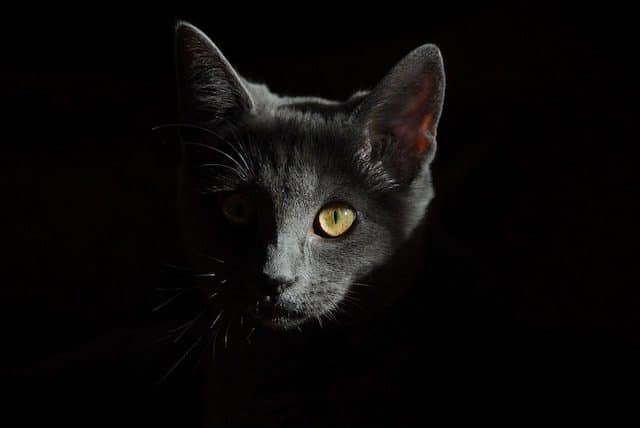
However, as mentioned, meowing can be cause for concern . A good way to rule out an underlying condition is to look at your cat's ears and eyes. If their ears are turned to the side or back and/or their pupils are dilated, there's a good chance your cat is sick or distressed.
6. Ignoring you

Why does your cat seem content to ignore you? Unlike dogs, who come running when called, cats don't even look up. We know they hear us; studies have shown that they can recognize your voice and even their own name (at least as precursors to a reward).
One eight-month study , For example, it was shown that cats up to 70% turned their heads when they heard a human voice. It's just that cats' responses are extremely subtle, especially compared to dogs, whose responses are deliberately sociable.
Essentially, we haven't bred or trained cats the way we have dogs, meaning feline behavior is much more instinctive. Cats in the wild don't communicate vocally, even to their own kittens, unless there's an immediate threat. So, if your cat doesn't want something from you when you call her, she simply doesn't have the guts. reasons to answer .
5. Headbutt

Also known as head rubbing or head rubbing , This is when your cat presses their head against you. They also do this with each other. But this can become a nuisance if they become more aggressive.
It's no surprise that dominant cats headbutt more often. And this is a clue to the cause. Cats have scent glands all over their bodies, including their chins, mouths, temples, and ears, and a dominant cat in an apartment building will headbutt more to spread its scent (the colony scent) to all members.
So, holey or not, when your cat headbutts you, she's marking you. as my tribe , which, by the way, makes her your leader (at least for other cats).
4. Lose your shit on catnip

Cats on catnip are like humans on cocaine: manic, aggressive, unpredictable, and a bit silly. It's just that cats aren't quite as hedonistic—at least they have an excuse.
It turns out that catnip, as well as silver vine (another plant that causes a reaction), contain chemicals called nepetalactone and nepetalactol, which act as mosquito repellents . In the study, the researchers allowed cats to rub against paper soaked in nepetalactol, then introduced mosquitoes and counted how many cats were attacked. They found a clear correlation between rubbing and fewer bites.
The drug's effect is believed to be euphoria, attributed to The β-opioid system is a response cats have to this plant to encourage them to interact with it. Not all cats do this; hereditary trait . Thirty percent don't respond to catnip, and 20 percent don't respond to silver vine. Tigers were also found to be indifferent to catnip and even "disapproving" of silver vine.
3. They dig their claws into you

Kneading soft objects (as if making dough with your paws) is something all cats learn as kittens. It's a way to stimulate milk production. by releasing oxytocin . It is also a form of communication between kittens and their mother, as kneading releases pheromones from scent glands in the paws.
However, domesticated cats typically continue to knead into adulthood. This can become painful, as many cats also dig their claws in. In typical feline fashion, this simply means..., that they love you . And the more they do, the harder they will knead - so you become an asshole if you punish.
But why do cats continue kneading long after their mother is dead and buried? Again, it's your fault. The persistence of juvenile behavior into adulthood (neoteny) in this case likely comes down to its advantage in interacting with you and other animals in the house.
2. Bringing dead animals into the house

Even if you don't feel disgust, horror, or guilt about your cat's habit of bringing dead birds and rodents into the house, it can still feel like a passive-aggressive comment about how much you feed them. The truth is, cats just natural-born predators . It's not about eating, it's about hunting. In fact, it's the same drive that makes your cat chase laser pointers or feathers on a string.
But why, after killing their prey, are they so eager to show it to you? Sometimes they won't even leave it somewhere for you to find, but will hold it in their mouths and meow until you come and see it. This is connected to another drive, which is their instinctive nature as pack animals. Female cats, in particular, are eager to teach their young how to hunt. In other words, they're not trying to scare you, shame you, or make you vomit; they're simply being nice to you. like a helpless kitten , which cannot hunt on its own, but which they love very much.
1. Playing with your prey

Perhaps the most disgusting thing your cat does is toy with its prey before killing it. Typically, they paw at their prey, ensuring a slow and painful death, leaving us wondering: How could Mr. Cuddles be so cruel?
According to research, Conducted in the 1970s, the answer is actually quite simple. Researchers found that cats given rats and mice to hunt played with their prey longer the larger the prey. And of course, the larger the prey, the greater the risk to the predator. Therefore, the researchers concluded that "play" was actually a strategy for neutralizing the prey from a distance before proceeding to the kill. The researchers also observed that hungrier cats played with their prey for shorter periods of time. We observe the same behavior. in big cats in the wild.
But why do cats sometimes neglect to kill the prey they've been playing with? The answer is a bit more nuanced: practice .