








Many facts are known about the planet Mars. Among them are that it is the fourth planet from the Sun, it is named after the Roman god of war, it is the second smallest planet after Mercury, and, of course, it is red. However, we know very little about Mars. Here are twenty-four facts about Mars you probably never knew.
1. Gravity on Mars is only a third of Earth's. Because of this, our muscles will gradually begin to deteriorate when we visit the planet.

Without the influence of gravity, bones lose minerals, causing their density to decrease by more than 1% per month. By comparison, the rate of bone loss in older men and women on Earth is between 1% and 1.5% per year. Even after returning to Earth, this bone loss may not be compensated for by rehabilitation, so you may be at higher risk of osteoporosis-related fractures in the future. Furthermore, while on Mars, if you don't exercise and eat properly, you will lose muscle strength and endurance, and you will develop cardiovascular maladaptation, as floating in space requires little effort. The lack of gravity will also prevent fluids from draining properly from the head, which can cause vision problems. (source)
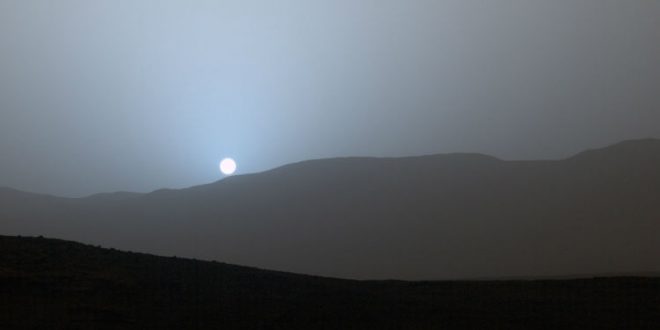
2. The sunset on Mars is blue.
Because of the fine dust that permeates Mars's thin atmosphere, blue light passes through it more efficiently than light with longer wavelengths, such as red. Thus, when all colors of sunlight pass through the atmosphere, blue hues remain closer to the sun. Because sunlight takes longer to travel through the atmosphere when the sun is on the horizon, the blue effect is more pronounced at sunset than during the day. (source)
3. When observed from Earth, Mars appears red, but upon closer inspection its surface is actually multicolored, with shades of gold, brown, beige, green, and more.
Mars is known as the "red planet" because that's what it looks like from Earth. The red color is due to a layer of rust. However, up close, the surface of Mars appears multicolored. These colors are due to the presence of minerals on Mars. These minerals include sulfur, chlorine, phosphorus, and other elements with low boiling points.

The image above shows a view of Earth from Mars and a view of Mars from Earth. The image on the left shows Earth and our Moon in the evening sky on Mars, captured by the Curiosity rover. The image on the right shows Mars rising over Salt Lake City, USA. (1,2)
4. Mars, like Earth, has four seasons, but they can last twice as long. Furthermore, the seasonal changes are very extreme due to Mars's elongated, elliptical orbit around the Sun.
Due to various factors, such as the tilt of Mars's rotational axis and its eccentricity, Mars experiences seasons, just like Earth. These seasons typically depend on the tilt of Mars's rotational axis. This tilt is constantly changing because its moons aren't large enough to stabilize it. Mars has an elongated, elliptical trajectory, making its seasons extremely harsh. Furthermore, a year on Mars lasts 687 days, almost twice as long as a year on Earth. Consequently, seasons on Mars last twice as long. (source)
5. Mars has two satellites, Phobos and Deimos, but neither is spherical. However, Phobos rises in the west and sets in the east twice a day, while Deimos takes twenty-seven days to rise in the east and set in the west.
Phobos and Deimos are relatively small, and both are tidally locked. This means they always present only one side to Mars. Furthermore, the motion of Phobos and Deimos is very different from that of our own Moon. Phobos rises in the west, sets in the east, and rises again in just eleven hours. Deimos, being only slightly outside the synchronous orbit, rises, as expected, in the east, but very slowly. Despite its 30-hour orbit, it takes 2.7 days to set in the west, as its orbital velocity is only slightly slower than the rotation of Mars. Thus, the moons of Mars are quite unlike those of Earth. (source)
6. Winter on Mars is colder than on Earth. When snow falls on the Red Planet, it can evaporate before it reaches the surface.

The weather on Mars varies over time. The average temperature on Mars is typically −55°C (218°K; −67°F). Additionally, surface temperatures can reach a maximum of about 20°C (293°K; 68°F) at midday at the equator and a minimum of about −153°C (120°K; −243°F) at the poles. At such low temperatures, snow falls, but because snow is made of carbon dioxide, it evaporates before it hits the ground. It is essentially a desert, but an extremely cold one. (source)
7. One-fifth of Mars was once covered by a vast primeval ocean.
NASA has discovered evidence of a vast ancient ocean that once covered almost half of Mars's northern hemisphere. In some places, it reached a depth of one and a half kilometers. Researchers have determined that the ocean contained a total of 20 million cubic kilometers of water, more than the Arctic Ocean.
Shortly after its formation 4.5 billion years ago, Mars was a warm, wet world with streams, meandering river deltas, and perennial lakes. But over time, Mars's atmosphere thinned. Due to a drop in pressure, ocean water evaporated into space. The planet also lost much of its thermal insulation and was no longer warm enough to keep the remaining water liquid. The ocean retreated and eventually froze. Today, only 131 TP3 T of ocean remains, trapped within Mars' polar caps. (source)
8. Mars has no magnetic field, no noticeable atmosphere, or weather. It's constantly cold and windy.
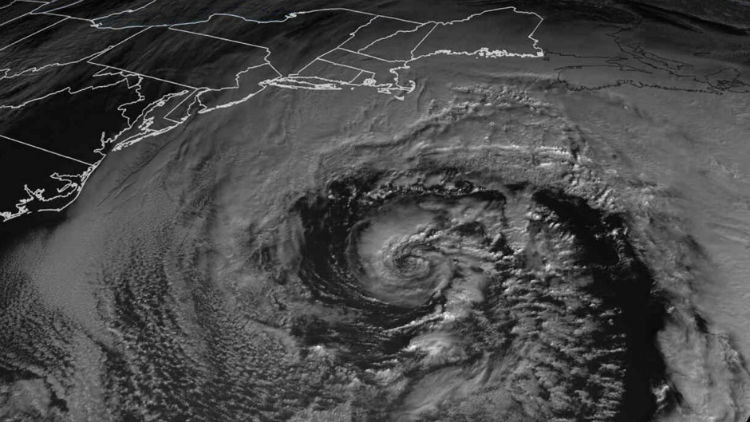
A study based on slight changes in the orbits of spacecraft around Mars over sixteen years found that when winter arrives in one hemisphere, approximately 3 to 4 trillion tons of carbon dioxide freezes from the atmosphere and falls onto the northern and southern polar caps. This amounts to between 12 and 161 trillion tons of the mass of the entire Martian atmosphere. (source)
9. Mars has virtually no ozone layer, so the surface of Mars is exposed to a lethal dose of radiation every time the Sun rises.
The ozone layer on Mars is known to be 300 times thinner than on Earth. Although this layer varies depending on location and time, its extent is generally negligible. In fact, temperature differences on Mars greatly influence the amount of water vapor in the atmosphere, as warmer air can hold more moisture. This, in turn, influences the formation of ozone-depleting hydrogen radicals. As the ozone layer depletes, solar radiation is unblocked. (source)
10. The surface of Mars contains iron-rich minerals. These minerals are essentially rust, which is then carried into the atmosphere, giving the planet its red appearance from afar.

It has been observed that the surface of Mars appears red from a distance; up close, however, it has more of a caramel hue. It turns out that the red color is present only on the surface and is caused by the oxidation of iron present on Mars. This oxidation process produces rust, which is suspended in the air and gives Mars its red color. Furthermore, the soil on Mars is particularly suitable for growing asparagus. (source)
11. Mars has the largest impact crater in our solar system, measuring 3,300 km (half the diameter of the planet).
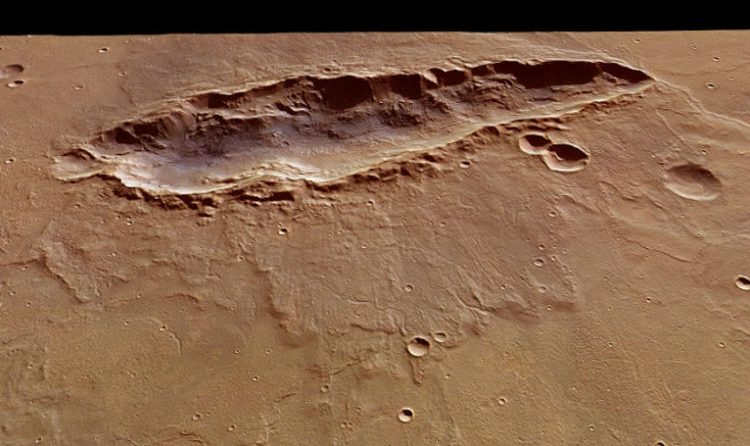
The largest impact basin in our solar system is located on Mars and measures almost half the planet's diameter. This basin is called Utopia Planitia. Many rocks in Utopia Planitia appear as if wind has washed away most of the soil at their bases. The hard surface crust is formed by mineral solutions rising from the soil and evaporating on the surface. Furthermore, some areas of the surface appear as if they were carved with an ice cream scoop. These depressions are thought to have formed as a result of the erosion of ice-rich permafrost. (source)
12. Phobos, one of Mars's moons, orbits fairly close to the planet and is gradually descending toward its surface. In about 50 million years, it will either collide with Mars or disintegrate, forming a small ring around the planet.
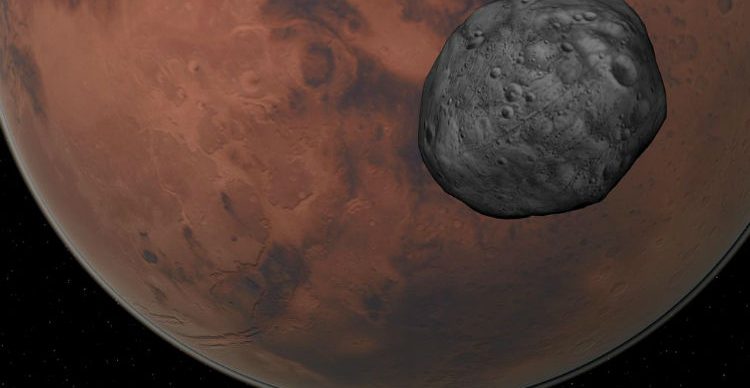
Satellites have detected dust from Phobos forming a ring around Mars. It is predicted that Phobos will be completely destroyed in a few million years. Mars's gravity pulls Phobos toward the planet, and it will likely eventually collide with it and break up into small meteorite-like particles. These particles form a ring similar to Saturn's. Due to the weak material of Phobos, its disintegration is inevitable. (source)
13. The crust of Mars is a single piece and is much thicker than the Earth's crust, which consists of several moving plates separated by oceans.

The crust of Mars is much thicker than Earth's and forms a single piece called "chaotic terrain." Chaotic terrain typically consists of irregular groups of large blocks, some tens of kilometers across and a hundred or more meters high. Tilted and flattened blocks form depressions hundreds of meters deep. Mars is a two-faced planet. Its northern hemisphere consists of low-lying plains, while the southern hemisphere is rugged. (source)
14. Olympus Mons is the tallest mountain and volcano in our solar system. At 16 miles (22 kilometers) tall, it is about three times taller than Mount Everest.

Olympus Mons is an exceptionally large shield volcano on the surface of Mars. It is the youngest of the large volcanoes on Mars and is located in the planet's western hemisphere. As a shield volcano, Olympus Mons has a very gentle profile. The average slope of the volcano's flanks is only 5°. Olympus Mons's shape is distinctly asymmetrical. Moreover, its slopes are gentler and extend further from the summit to the northwest than to the southeast. The volcano's shape resembles a "circus tent," supported by a single, off-center pole. (source)
15. Although spring storms on Mars reach speeds of 400 km/h, they won't knock you over if you're standing there. Because the atmosphere is so thin, the atmospheric pressure is only about 0.51 TP3T of that at sea level on Earth.
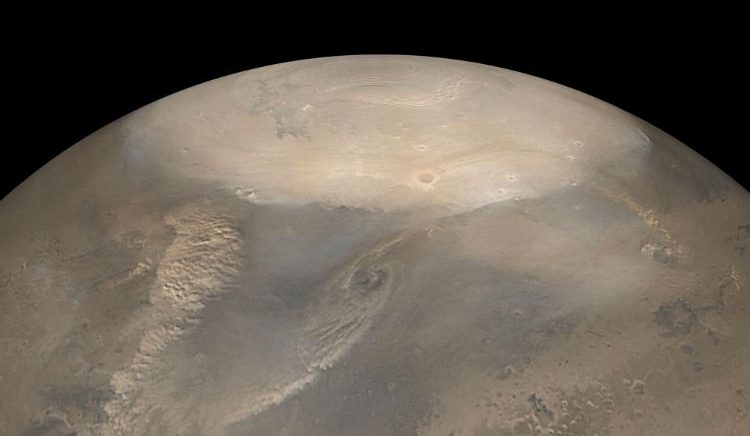
Tornadoes (more precisely, dust devils) exist on Mars, and they can reach very large sizes, rising to heights of several kilometers. But because Mars's atmosphere is so thin, you could be inside one and not be blown away. In fact, you'd barely feel the wind. (source)
16. Mars's Valles Marineris Canyon is the longest and deepest canyon in our solar system. It's 4,000 kilometers long—roughly the length of the entire United States!

Mars is home to the largest gorge of any planet in our solar system. Valles Marineris was formed by volcanic eruptions around it, which eroded the landscape, leaving a vast valley. Stretching more than 4,000 kilometers along Mars's equator, Valles Marineris can reach depths of 7 kilometers in places. Furthermore, while the Grand Canyon is 1.8 kilometers deep, Valles Marineris is almost four times deeper! (source)
17. Like Earth, Mars also has ice caps at its poles. However, Martian ice caps are composed of frozen carbon dioxide and are constantly changing shape.

Although these "dry ice" caps exist year-round, they are constantly changing shape. Some of this CO2 ice near Mars's south polar cap forms as a transparent film without any underlying water ice. In spring, sunlight passes through it, heating the soil beneath, which in turn heats the ice from below. Eventually, accumulating CO2 gas ruptures the film, forming short-lived "geysers.". (source)
18. During a dust storm on Mars, the entire planet can be covered in dust, and this can last for many Earth months. Dust storms on Mars are the largest in our solar system.

Many Mars rovers have observed dust storms covering almost the entire planet, with only the giant Olympus Mons volcano visible above the haze. These dust storms last for months. Furthermore, their occurrence is influenced by the amount of sunlight, the formation of water ice clouds, and the temperature on Mars. (source)
19. One day, a meteorite about the size of Pluto fell on Mars in the northern hemisphere.

Based on data obtained from the largest impact basin in the solar system, it is believed that Mars collided with a Pluto-sized body approximately 4 billion years ago. This event, believed to have caused the dichotomy of Mars's hemispheres, created the smooth Boreal basin, which covers 40% of the planet's surface. This catastrophic event caused a dramatic change in the topography of the northern and southern hemispheres. (source)
20. A group of objects called the "Martian Trojans" occupy the same orbit around the Sun as Mars.
The Mars Trojan asteroids are located at an angle of 60 degrees on either side of the planet. They are called the "leader cloud" and "trailing cloud," and they orbit the Sun along with Mars. The origin of the Mars Trojan asteroids is not fully understood. Several theories exist, but none are proven correct. Currently, this group includes seven asteroids confirmed as stable Mars Trojan asteroids by long-term numerical models, but only four of them are recognized as true Trojan asteroids by the Minor Planet Center. (source)
21. Mars is the only known planet inhabited entirely by robots, or seven robots to be exact.
Several missions have been completed from Earth to Mars. The success rate of these missions totaled 501 TP3T. The newest rovers or robots on Mars are called Curiosity and Opportunity. (source)
22. Some meteorite impacts were so powerful that some of the Martian rocks were knocked off the planet and eventually reached even Earth.
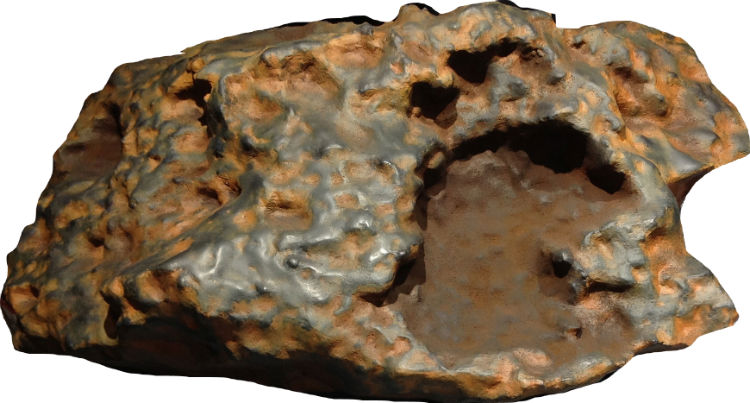
Mars is subject to various meteorite impacts, which eject rocks from Mars into space. Some of these rocks have been found to eventually reach Earth. Remnants of these rocks have been found in Antarctica. The unofficial names of many rocks on the surface of Mars are simple and straightforward, such as Barnacle Bill, Yogi, Pop-Tart, Shark, Half-Dome, Moe, Stimpy, and Cabbage Patch. Scientists chose these names because they are easy to remember. (source)
23. Scientists believe that Mars has just emerged from an ice age.
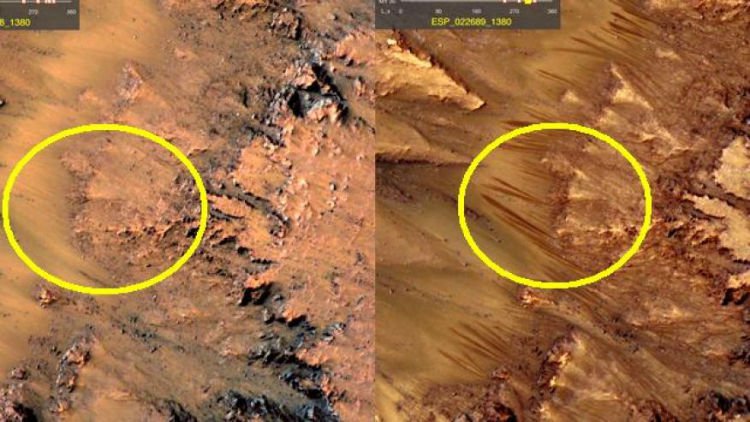
A team of astronomers led by Isaac Smith, an astrophysicist at the Southwest Research Institute in Boulder, Colorado, has collected the first concrete evidence that Mars just emerged from an extreme ice age. Using cameras and a radar instrument aboard NASA's Mars Reconnaissance Orbiter, Smith's team reached this conclusion by dating the kilometers-thick layers of snow and ice covering Mars's north pole. They found that just 370,000 years ago, during this period, Mars would have appeared much whiter. . (source)
24. Elon Musk plans to send 1 million people to Mars, each costing $500,000.

According to SpaceX founder Elon Musk, humanity has the potential to evolve to near-divine levels, but he also argues that if we limit ourselves to just one planet, we may not survive long enough to realize our potential. Therefore, he actively advocates sending humans to Mars. His company is working on the Dragon capsule, which will eventually be able to transport people and cargo to another planet. (source)