






I've loved Toy Story for almost my entire life, and that's impressive because it's been an emotional assault on me for most of its runtime. These movies aren't just about toys—they're about those terrible little fears that children can't yet name, and that adults then spend the rest of their lives pretending to have outgrown.
The first Toy Story film explored the fear of being replaced by someone better. Woody isn't jealous because Buzz has wings and a laser. He's jealous because Buzz makes him feel unwanted in the one place he thought he was safe. Toy Story 2 explores the fear of missing out on your true calling, the fear of discovering that the life you chose may have cost you the life you should have lived. Toy Story 3, by contrast, explores the fear of being unwanted, the fear of being deeply loved and then growing beyond it.
That's why these films were successful. They were funny, beautiful, and full of plastic people falling out of windows, but underneath it all was a pure emotional nightmare.
Then came Toy Story 4, and while the film was great, it felt like the franchise was circling the same emotional road again. The question arose again: does a toy have meaning after the child has grown up and abandoned it? It was touching, because Pixar can make a fork suffer an existential crisis and somehow escape punishment, but the theme was too familiar. We've already discussed relevance, and we've already cried about it. This topic has already taken up enough of our energy.
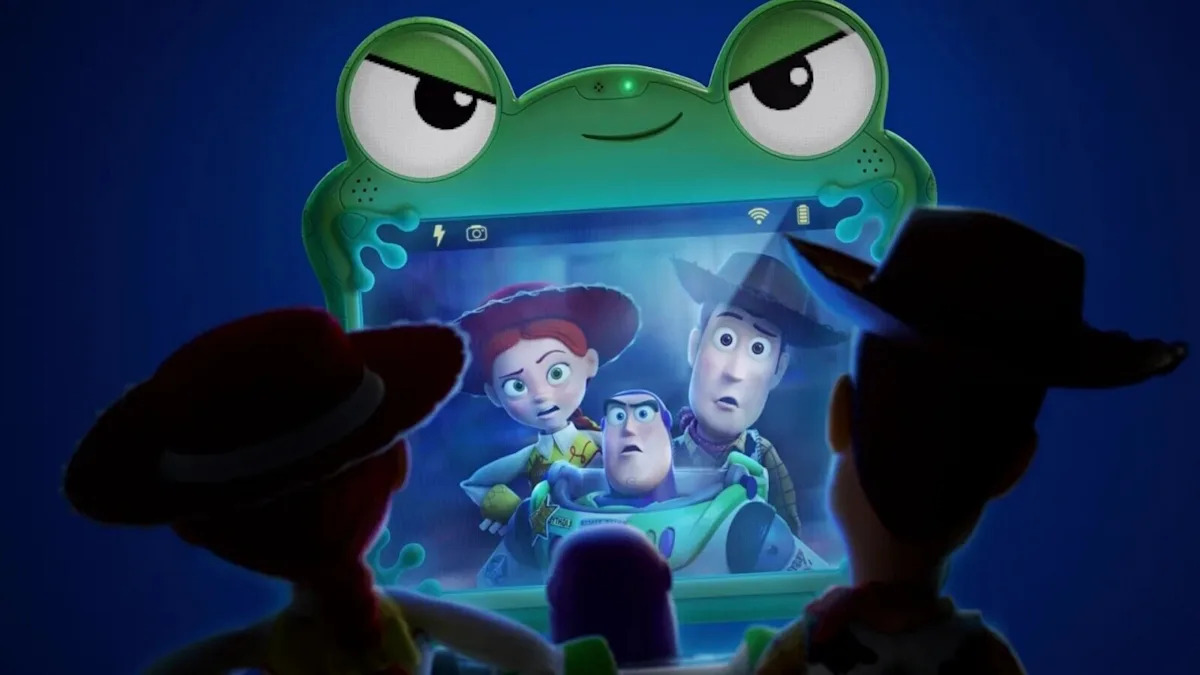
The final trailer for Toy Story 5 has arrived, and I'm already nervous, because it looks like the series might do the same thing again. Only this time, they've added a tablet, which means the film might not just be afraid of becoming irrelevant. It might be trying to explain that technology is bad, that kids are bad for liking it, and that parents are bad for allowing it into the house.
I haven't seen this movie yet, and I admit, it could be great (Pixar has humiliated my skepticism more than once). But right now, the trailer makes me feel like I'm about to get lectured by the toy box.
The creators of the first three films knew exactly what they were afraid of.
The genius of the original trilogy is that each film has its own emotional tension. Woody's fear in the first film is different from the one in the sequel, and Andy's departure to college in the third film isn't just the arrival of a larger-than-life version of Buzz. The films age because the scares age.
As a child, you understand that Woody doesn't want to be replaced. As you grow older, Toy Story 2 begins to resonate more deeply, because the idea of choosing one life and losing another becomes less abstract. Then Toy Story 3 arrives like a Pixar ambush, forcing every adult in the theater to ponder boxes, endings, and the terrible truth that love doesn't freeze people in time.
These weren't sermons. Rather, they were personal stories, touching on specific emotional traumas—which is why they got away with being so brutal. They didn't force their opinions on the audience, but quietly found something you were already afraid of and put a cowboy hat on it.
It seems that in «Toy Story 5» The concern about relevance is repeated again.
In the official release of Toy Story 5, Bonnie's toys face a new threat: Lilypad, a smart tablet voiced by Greta Lee. The trailer portrays it as a battle between old toys and new technology, with Woody, Buzz, Jessie, and the rest trying to survive in a world where children may be more interested in screens than traditional games.
This is a truly relevant topic. Children and screens are a source of real parental anxiety, and I'm not suggesting that Pixar invented the idea that kids like tablets. Any parent who has seen a child silently transform into a little gamer in front of a glowing rectangle understands this concern.
But for Toy Story, it also veers dangerously close to the age-old question: what happens when children no longer need us? The difference is that the first three films made that fear personal, while this version risks turning it into a condemnation for future generations. Instead of Woody struggling with jealousy, the meaning of life, or grief, the franchise perhaps points to the tablet and says, "This is why playtime died.".
This is a much less interesting fear.
Pixar may still surprise us.
To be fair, this is Pixar. The studio has crafted a masterpiece around a rat who wants to cook, and another one around the emotional life of grief. Andrew Stanton directed, Randy Newman returned, and the cast includes the same actors who voiced these characters, making them more than just marketing assets, but more like old friends who accidentally ended up in a plastic container.
Perhaps the film will be smarter than the trailer. Perhaps Lilypad isn't simply evil technology. Perhaps the film understands that children's screen use isn't a moral transgression, but rather another version of the age-old problem that every Toy Story film has faced: children change, and those who love them must decide what to do with those changes.
It would be interesting to watch, and it's worthy of a series. But the trailer makes me wary, because Toy Story has previously excelled at turning universal fears into personal stories. Toy Story 5, it seems, could turn a personal story into a lecture on screen time.
I hope I'm wrong. I'd really like to be wrong. I want to walk out of the theater after watching Toy Story 5 feeling ashamed for ever doubting it.
But now, after watching the trailer, I'm worried that Pixar has forgotten what made these films so heartbreaking. Toys were never afraid of technology. They were afraid of losing someone they loved.
This is a much better story than the one about the villain with the iPad.
Get more news from Cracked delivered straight to your inbox. Subscribe to the Cracked newsletter on the Cracked News Letters Signup page.