








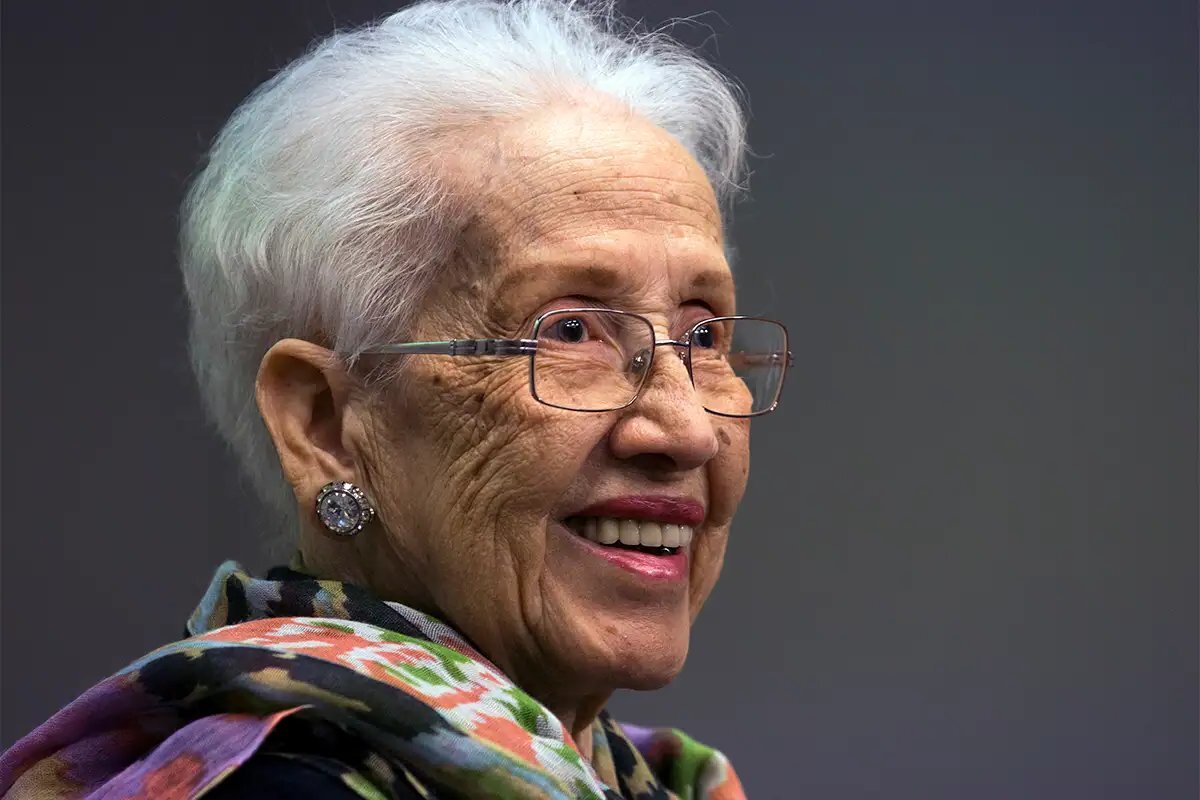
 Source: Newscientist.com
Have you ever wondered who was behind NASA's successful space missions? Let me introduce you to Katherine Johnson, a mathematical genius whose calculations played a crucial role in the success of numerous space flights, including the Apollo 11 mission to the Moon. Katherine Johnson She wasn't just a mathematician; she was a pioneer who broke down racial and gender barriers at a time when segregation was widespread. Her story is more than just numbers; it's a story of perseverance, intellect, and overcoming obstacles—both literally and figuratively. Want to learn more about this remarkable woman? Stay tuned as we delve into ten fascinating facts about Katherine Johnson that will inspire you and make you admire her incredible contributions to space exploration and beyond.
Key findings:
- Katherine Johnson, a brilliant mathematician, overcame numerous barriers at NASA and played a crucial role in space exploration, including the Apollo 11 mission. Her legacy inspires young people in the fields of science, technology, engineering, and mathematics.
- Despite racial and gender barriers, Katherine Johnson's remarkable calculations helped shape the history of space exploration. Her story teaches us to overcome obstacles and strive for greatness despite difficulties.
Contents 01Who was Katherine Johnson? 02Early Life and Education 03Breaking Barriers at NASA 04A Key Figure in the Apollo Missions 05Recognition and Legacy 06Contributions to STEM Education 07Final Remarks on Katherine Johnson's Legacy
Who was Katherine Johnson?
Katherine Johnson, a mathematician whose calculations of orbital mechanics were crucial to the success of U.S. human spaceflight, became a symbol of perseverance and excellence in science, technology, engineering, and mathematics. Born in 1918 in White Sulphur Springs, West Virginia, her love of numbers and remarkable intellect set her on a path that ultimately led her to a key role in major space missions, including the Apollo 11 lunar landing.
Early years and education
- Katherine demonstrated exceptional mathematical abilities from an early age, entering high school at age 13 and graduating from college at 18. Her academic journey was marked by early achievement and a relentless pursuit of knowledge, despite the racial and gender barriers of the time.
Breaking Barriers at NASA
-
In 1953, Johnson began working at the all-male, predominantly white Western Area Computing Unit of NASA's predecessor, the National Advisory Committee for Aeronautics (NACA). Her duties included performing complex manual calculations that would later prove crucial to space exploration.
-
Her hard work and brilliant abilities quickly set her apart, leading to her participation in some of NASA's most historic missions. Johnson's calculations helped plot Alan Shepard's trajectory in 1961, making him the first American in space.
A key figure in the Apollo missions«
-
Johnson's most famous achievement was the Apollo 11 mission in 1969. Her precise flight trajectory calculations allowed the spacecraft to land on the Moon and return safely to Earth, cementing her place in space exploration history.
-
In addition to Apollo 11, she also played a crucial role in Apollo 13, providing calculations that helped the crew safely return home after an onboard explosion. Her work demonstrated not only her mathematical genius but also her ability to work under pressure.
Recognition and Legacy
-
Despite her vital contributions, Johnson's work remained relatively unrecognized until later in her life. It wasn't until 2015, at the age of 97, that she was awarded the Presidential Medal of Freedom, one of the United States' highest civilian honors.
-
Her story gained further recognition through the 2016 film Hidden Figures, which highlighted the contributions of African-American women to NASA during the space race. Johnson's character, played by Taraji P. Henson, brought her story to a wider audience, inspiring countless young women and girls pursuing careers in STEM (science, technology, engineering, and mathematics).
Contribution to STEM education
-
Beyond her work at NASA, Johnson was a passionate advocate for education, particularly encouraging young people to pursue careers in science, technology, engineering, and mathematics. Her legacy continues to inspire efforts to increase diversity and inclusion in these fields.
-
Johnson's life and work are a testament to the power of resilience, intelligence, and hard work. Her story teaches us that barriers are meant to be overcome, and that the often-overlooked contributions of individuals can have a profound impact on the world.
-
Katherine Johnson passed away on February 24, 2020, at the age of 101. Her legacy lives on not only in the annals of space history, but also in the countless lives she touched through her work, her advocacy for education, and her unwavering belief in the potential of every person to achieve greatness, no matter the obstacles they may face.
In conclusion, a tribute to the legacy of Katherine Johnson.
Katherine Johnson's story is a testament to the power of perseverance, intellect, and the vital role of diversity in science. Her calculations propelled humanity to the moon, breaking down barriers for women and people of color in STEM fields. Johnson's legacy teaches us that genius knows no gender or race. Her life's work continues to inspire future generations to reach for the stars, literally and figuratively. As we reflect on her contributions, let us remember the paths she blazed across the vast expanses of space exploration and mathematics. Johnson's journey was more than simply reaching outer space; it was about expanding opportunities for others to succeed in fields once considered inaccessible. Her story is more than just history; it is a beacon for the future.
Frequently Asked Questions
Q: Who is Katherine Johnson? Q: Katherine Johnson was a prominent American mathematician who played a critical role in the success of United States space missions. Her calculations of orbital mechanics were essential to the success of the first and subsequent US manned space flights. Q: What made Katherine Johnson's work at NASA so significant? Q: Her work was key to sending astronauts to the Moon and ensuring their safe return. Johnson's precise calculations helped plot the trajectory for the Apollo 11 mission in 1969, as well as other missions, making her contributions invaluable to the field of space exploration. Q: How did Katherine Johnson overcome the challenges she faced? Q: Faced with racial and gender barriers, Johnson's brilliance, determination, and hard work allowed her to succeed. She was known for her precision in celestial navigation and for being a pioneer in overcoming the limitations placed on African-American women in her field. What awards and recognitions has Katherine Johnson received? Johnson received numerous awards throughout her life, including the Presidential Medal of Freedom in 2015, one of the highest civilian honors in the United States. The NASA Katherine G. Johnson Research Center is also named in her honor. How has Katherine Johnson's legacy impacted the field of STEM (science, technology, engineering, and mathematics)? Johnson's legacy continues to inspire countless people, especially women and minorities, to pursue careers in STEM. Her story highlights the importance of diversity and perseverance in achieving groundbreaking results. Are there any books or films about Katherine Johnson's life and work? Yes, her life and contributions were highlighted in the book Hidden Figures by Margot Lee Shetterly, which was later adapted into the Academy Award-nominated film of the same name. Both the book and the film played a significant role in bringing her story to a wider audience. What can young students learn from Katherine Johnson's life? Young students can learn the value of hard work, dedication, and the importance of pursuing your passions, even when facing obstacles. Johnson's life teaches us that through perseverance and determination, one can overcome challenges and make a significant contribution to society.
Was this page helpful?
Our work is based on a commitment to providing reliable and engaging content. Every fact on our site is contributed by real users just like you, providing a rich and varied experience and information. To ensure the highest standards of accuracy and reliability, our experienced editors carefully review every submission. This process ensures that the facts we share are not only engaging but also trustworthy. Trust our commitment to quality and authenticity as you explore and learn with us.
Share this fact: