






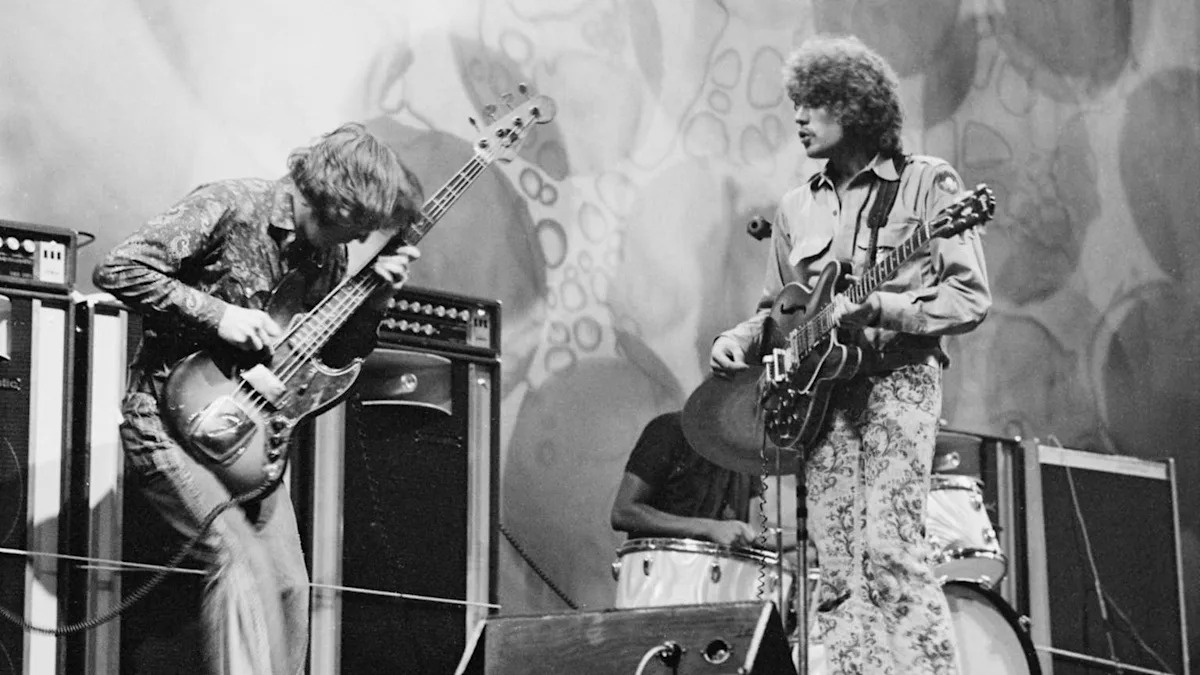
Fifty-five years ago, the iconic hard rock band Ten Years After released the song «I’d Love to Change the World,» which, despite never reaching number one on the Billboard chart Hot 100, became an enduring counterculture anthem.
Released on August 31, 1971 as the lead single from their sixth studio album A Space in Time , The song "I'd Love to Change the World" enjoyed a gradual success. After extensive radio play, the track gained widespread recognition and charted. Billboard Hot 100, where it peaked at number 40.
Following their triumphant performance at Woodstock in 1969, Ten Years After had already enjoyed considerable popularity, and the new single only cemented their meteoric rise to the top of their career. The album on which the single was released was certified platinum by the Recording Industry Association of America (RIAA) for sales of over 1 million copies worldwide—an achievement that confirms their rapid rise to fame.
Photo of Alvin Lee, Leo Lyons, Chick Churchill, and Rick Lee of the rock band Ten Years After. Gems/Redferns
Produced by Chris Wright at Columbia Records, "I'd Love to Change the World" is recognizable for its unique sound, blending folk and blues. The track combines a captivating, folk-inspired chord progression with edgy electro-blues elements, creating a unique instrumental accompaniment that perfectly captures the song's theme.
The song "I'd Love to Change the World," written by frontman Alvin Lee, explores the collective political disillusionment of the time. The song reflects the social instability of the late 1960s and early 1970s, largely caused by the Vietnam War. The lyrics are wryly observant, pointing out the main grievances of counterculture movements.
Even after more than five decades, "I'd Love to Change the World" remains a radio classic, frequently played on rock stations. The track has also maintained its popularity in the digital age on streaming platforms. On Spotify alone, it has accumulated over 217 million plays, cementing its status as a true counterculture anthem.
See also: The nearly 10-minute power ballad from 1976 has become a timeless rock classic.
This article was originally published by Parade on May 29, 2026, in the Entertainment section. Add Parade to your list of recommended sources by clicking here.