






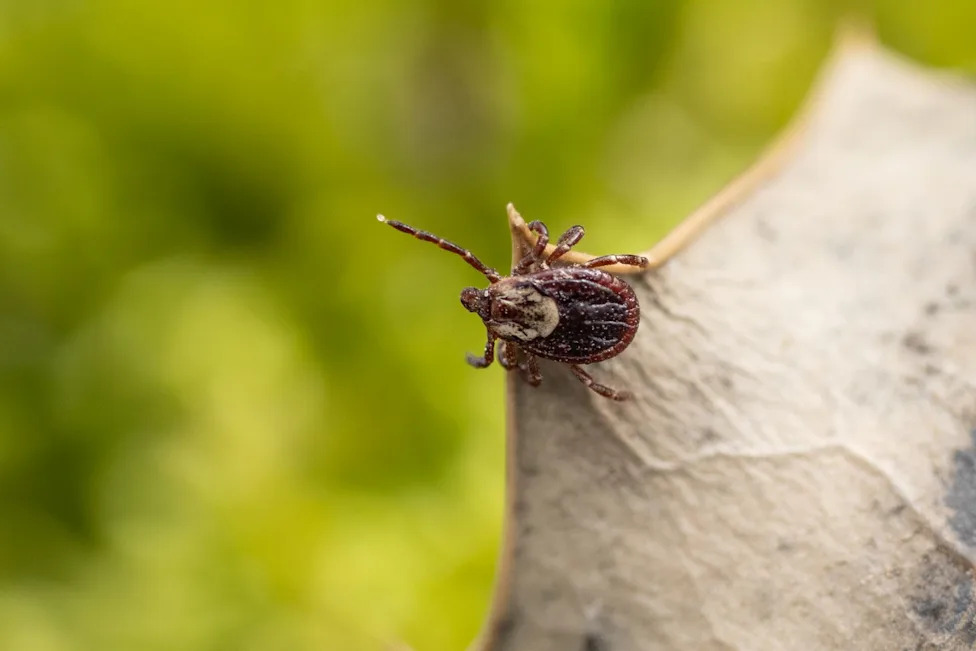
Researchers from Biltmore Forest, North Carolina, found bacteria associated with Lyme disease in nearly 40% adult ticks they collected from deer.
Here's what you need to know.
According to NBC News, the study, conducted by the Centers for Disease Control and Prevention, was led by Dr. Ross Boyce of the University of North Carolina School of Medicine. Between November 2024 and August 2025, researchers surveyed 22 lawns in Biltmore Forest and collected 373 ticks.
Black-legged ticks, also known as deer ticks, made up 76.91 TP3T of the sample. Analysis showed that 39.61 TP3T of adult black-legged ticks were carriers. Borrelia burgdorferi , the bacteria that causes Lyme disease in humans.
Boyce said this level is consistent with rates observed in long-standing Lyme disease hotspots such as Pennsylvania and New York. Researchers also reported the first ticks in North Carolina to be found infected. Anaplasma phagocytophilum и Borrelia miyamotoi , which can cause influenza-like illnesses in people.
Additional information
Angela Newman, a 57-year-old Biltmore Forest resident, told NBC News it took her five years to be diagnosed with Lyme disease after experiencing blurred vision, numbness, weakness, and other symptoms. She said one doctor told her, "I don't think you have Lyme disease. We hardly have it here.".
Ultimately, her test came back positive, and the antibiotics helped. Newman told the publication, "It's really frustrating when people essentially say, 'I think you need antidepressants.'".
However, in some places, tick infestations are spreading faster than awareness and testing can be achieved. Lyme disease and other tick-borne illnesses are generally treated with antibiotics, but delayed diagnosis can prolong symptoms and complicate recovery.
In the United States, approximately half a million people become infected with Lyme disease each year. The disease has long been concentrated primarily in the Northeast and Upper Midwest, but researchers say shifting tick distribution patterns are putting more and more communities at risk.
Ticks may colonize new areas as winters warm up and animals migrate.
What is being done?
According to NBC News, Newman and Jonathan Canipe, the town manager of Biltmore Forest, helped organize a community group to raise awareness of the tick threat in the area. Both co-authored the study.
Mark Soloski, a senior adviser to the Center for Lyme Disease Research at Johns Hopkins Medical Center, also told NBC News: "Doctors and health care workers, particularly in this region, need to be very vigilant and aware that ticks infected with this bacteria have taken up residence here.".
Subscribe to TCD's free newsletters to receive helpful tips, actionable advice, and a chance to win $5,000 toward your home improvement. To see more stories like this, change your Google preferences here.