








The human body is a collection of many different types of cells that make up tissues and, consequently, organ systems. Thus, the human body is composed of parts ranging from the smallest to the largest organs, from the well-known to the lesser-known. It's likely that no one pays much attention to the seemingly less significant body parts. However, it's truly astonishing to know that almost every centimeter of the human body has a unique name. Moreover, these parts perform very important functions, and some even play a crucial role.
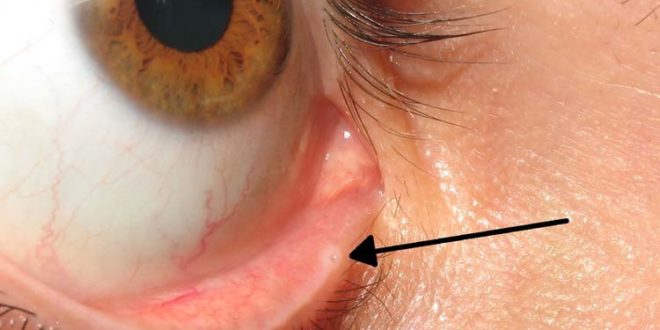
1. Lacrimal opening:
This is a small opening in the eyelids through which tears flow into the nose. This is why crying causes a runny nose.

Have you ever wondered why your nose runs when you cry? Is there a connection? Yes, it's the work of the puncta—tiny openings at the tips of the lacrimal papillae. They drain tears from the eyes. There are two puncta on the inside of each eyelid. The puncta collect tears produced by the lacrimal glands. The lacrimal canaliculi then transport them to the lacrimal sac. From there, they travel through the nasolacrimal duct into the nose, causing drainage. (1, 2)
2. Filtrum:
The philtrum is a vertical depression in the middle of the upper lip.
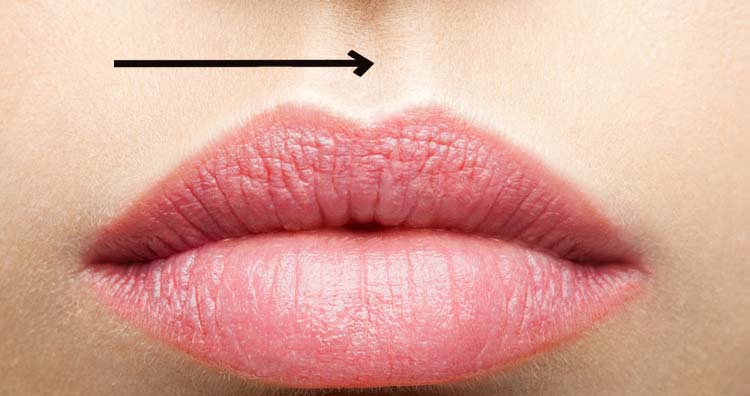
A ubiquitous groove with no apparent function (in humans), the philtrum is vestigial. However, some argue that the philtrum allows for greater maneuverability of the face and mouth. The philtrum is the site where the various parts of the face fuse into one. It forms when the nasomedial and maxillary processes converge during embryonic development. As pregnancy progresses, the face begins to take shape, and its parts fuse into the philtrum. The formation of the philtrum is crucial, as it holds the face together and prevents further enlargement. The shape and width of the philtrum can indicate or be a symptom of certain disorders. (1, 2)
3. Glabella:
The small area between the eyebrows is the glabellar septum.

The skin on the forehead, where Hindus apply red eyeliner, women attach headbands, and create decorative patterns to enhance their appearance, has a unique name. It's called the "glabella." In adult men, the glabella is a rounded protrusion, while in children and adult women, it's flat. Interestingly, the bone beneath the skin, which is slightly depressed and connects the two brow ridges, is also called the "glabella." In medicine, the glabella (skin) is used to measure a patient's degree of dehydration. If, after compressing and lifting the skin, the glabella remains "tent-shaped," then the person is dehydrated instead of returning to its normal shape. (1, 2)
4. Suprasternal notch:
This is the depression under the neck between the collarbones, also known as the "jugular notch.".

The suprasternal notch is another small depression in the human body, located after and slightly away from the philtrum. It is located below the neck, between the clavicles. A diagnostic test for the aorta using the suprasternal notch has proven useful in identifying conditions such as aneurysms, dissecting aneurysms, atherosclerosis, and hypertension. The jugular notch is also a vulnerable spot used by martial artists to attack and immobilize an opponent. A person can lose consciousness or even suffocate if fingers press into this area in self-defense. (1, 2)
5. Columella nasi:
This is the name given to the cartilaginous tissue at the end of the nasal septum that separates the nostrils.

The columella, or columella, is the fleshy, outer, and visible end of the nasal septum. It is a tissue bridge separating the nostrils at the base of the nose. It extends from the tip of the nose to the base and is composed of cartilage and tissue. Piercing this area is often done for cosmetic purposes. Rhinoplasty is the name of a surgical procedure aimed at correcting any aspect of a deformed nose. (1, 2)
6. Lunula:
It is a whitish, crescent-shaped area located at the base of a fingernail or toenail.
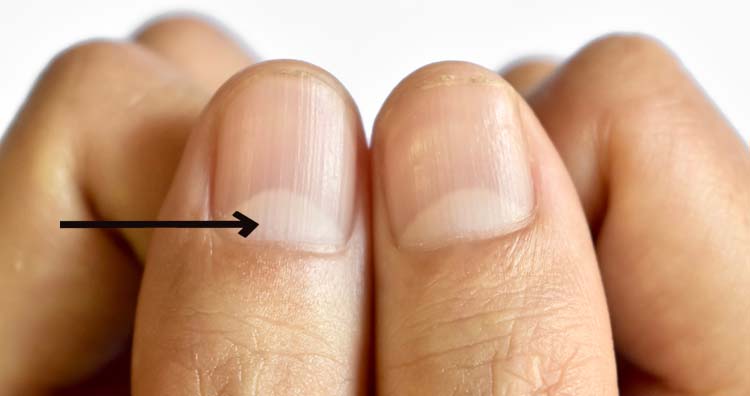
It looks like a rising moon above the horizon, only the moon is located at the base of the nails. This small, round, whitish area literally means "little moon" and appears during the 14th week of pregnancy. This is a very delicate part of the nail structure, and any damage to it leads to nail deformity. Each lunula on the finger, and its absence, corresponds to a malfunction of a specific organ in the body. For example, the lunula on the little finger should be inconspicuous or absent. This indicates the functioning of the kidneys, heart, and small intestine. An enlarged lunula can indicate high blood pressure. The size and color of the lunula can also provide insight into a person's health. For example, gray lunulae indicate digestive disorders, possible difficulty absorbing nutrients, and severe fatigue. Purple lunulae indicate poor circulation. (1, 2)
7. Cantus:
This is the point at the corners of the eyes, both the inner and outer corner, where the upper eyelid meets the lower eyelid.

The canthi are the inner and outer, or medial and lateral, ends/angles of the palpebral fissure, respectively. They are located at the corners of the eye where the upper and lower eyelids meet. The inner canthus, or the fleshy portion adjacent to the nose, is more prominent than the lateral canthus. Canthoplasty is a surgical procedure performed in the area of the medial or lateral canthus. During canthotomy, the canthus is incised to relieve excess orbital pressure. (source)
8. Rasceta:
The folds on the wrist are not just skin folds, but so-called «calculations».

The rasketa is the name given to the folds running along the palmar surface on the inside of the wrist. These folds are also called "bracelet lines" or "wrist lines," and they are located where the palm and wrist meet. The rasketa is important in palmistry because it indicates a person's health and financial situation from adulthood to old age. (source)
9. Gnathion:
This is the lowest point in the middle of the mandible and serves as the starting point for craniofacial measurements.
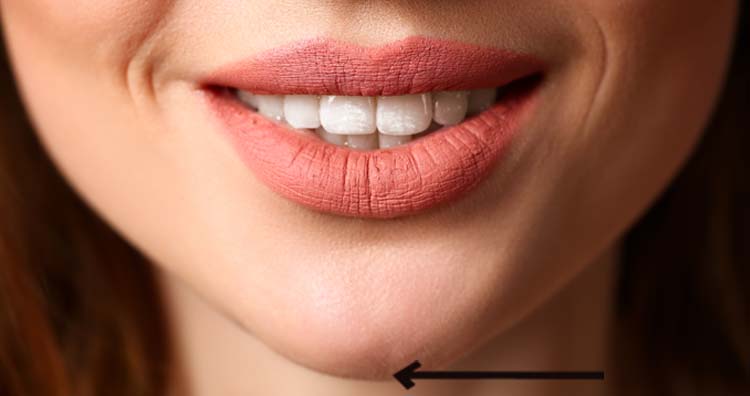
Surprisingly, there's a lowest point on the chin, and it even has a name. The gnathion is the lowest point in the middle of the lower jaw. The gnathion is important because it's part of the cephalometric analysis used by orthodontists, dentists, and maxillofacial surgeons to treat facial growth anomalies and dental problems. (source)
10. Dimples of Venus:
These are symmetrical depressions on the lower back of a person, just above the gluteal fold.

The dimples of Venus, or "buttock dimples," are small depressions in the lower back just above the hips on either side of the spine. These dimples are more noticeable in women, but they also occur in men. In men, they are called the "holes of Apollo." These two depressions connect the ilium in the pelvis to the sacrum in the spine. The dimples of Venus serve as landmarks for locating the superior articular surfaces of the sacrum, which helps with the placement of sacral pedicle screws during spinal surgery.
The dimples on Venus's cheeks are considered a sign of beauty, and women pierce them to enhance their attractiveness. Dimples are also an erogenous zone and are known to enhance pleasure during intimacy. (source)