








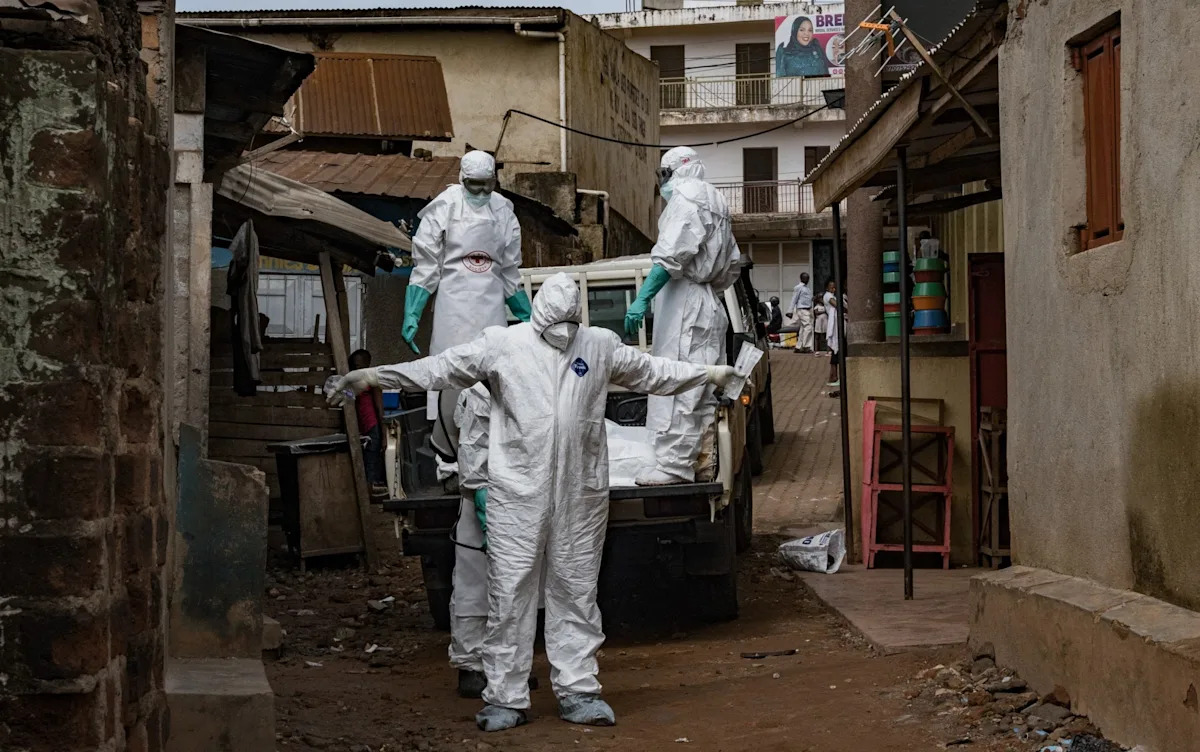
Of all the places in the world you could hang out at, a morgue would be at the bottom of most people's lists. Maybe as a visitor you'd love to stroll through, but as a resident, well, it's no fun at all.
In general, the morgue is a gloomy place, but it turns out that if you dig deeper, sometimes it can be even worse.
10. Friends stole John Barrymore's body from the morgue.

It's never easy to say goodbye to someone you love, whether it's a friend or family. Losing someone often feels like losing a part of yourself, and in the immediate aftermath, your grief can feel like you're even losing yourself. How we cope with grief varies from person to person, and you may have heard that there's no wrong way to express this emotion. However, we can probably all agree that some ways of expressing grief are more common than others. And some may be frowned upon, to put it mildly.
Actors Errol Flynn and W.C. Fields were known to be friends with John Barrymore. The famous actor and grandfather of Drew Barrymore was one of the leading figures of Hollywood's Golden Age. He died of cirrhosis of the liver and pneumonia in 1942. His friends didn't take it well.
After he died, W.C. Fields and Sadakichi Hartmann went to the city morgue and Barrymore's body was stolen . According to Flynn's memoirs, some friends told the story that Barrymore's aunt was so distraught that she needed to see him one last time, so they convinced the undertaker to let them borrow his corpse for an hour. This and a bribe of $200 sealed the deal.
The body was brought to Flynn's house and placed on the couch as a joke, and then they waited for Flynn to return home. Flynn allegedly freaked out on his porch, and the others returned the body, appropriately traumatizing Flynn.
9. Cruise ships have morgues large enough for multiple bodies.

For a certain group of people, a cruise is the absolute epitome of luxury vacation. A beautiful seaside resort with all the amenities—what more could you want? And sure, cruises are known to have their share of problems, but most end just fine, right?
However, nothing is always good, and cruise ships must be prepared for this. People live on board these ships for weeks or more. 30% passengers over 60 years old. About 141 of them are over 70 years old. So it's not impossible to imagine a scenario in which a passenger could die quite unexpectedly while the ship is at sea.
For this reason, although they usually never advertise it, every cruise ship has a morgue. Morgues have small refrigerators , capable of accommodating several bodies. In a pinch, a freezer could be used. Apparently, if something extremely unforeseen happens and enough passengers are lost, the ship will call for air support, and a helicopter could bring the bodies back to shore.
Deaths occur on cruise ships to 200 people per year , so this is just part of standard procedure. Any ship should be able to handle between 6 and 10 bodies.
8. There are approximately 40,000 unclaimed bodies in US morgues.

Have you ever seen a TV show or movie where someone has to go to the morgue to identify a body? It's often a huge emotional revelation, and sometimes a surprising twist, when we discover the deceased isn't who we thought they were. But what happens next? What happens in real life if no one comes to identify the body?
It turns out this happens more often than you think. Much more often. The real numbers are sobering and quite sad. In US morgues can be located up to 40,000 unclaimed bodies . In 2021, Maryland alone had 2,510 unclaimed bodies , which is about 4% of the total in the state.
Some of these unclaimed bodies belong to homeless people who had no friends or family to claim them, but not all. A number of unclaimed bodies have families and loved ones who refuse to come and claim them. Sometimes it's as simple as an inability to afford the financial burden of burial, so they simply leave the body where it is and let the state take care of it.
Different places handle this differently. Los Angeles buries unclaimed bodies in a mass grave every three years. In 2016, the county buried the remains of 1,400 people in a mass grave.
7. You can buy a corpse from a Philippine morgue to fake your own death.

Every now and then, films appear in which a character fakes their own death as a plot point. This happens in real life, too, but extremely rarely. It's hard to say how often, though, because if it works, we'll never know.
If you've ever wanted to do this yourself or suspect someone else has, you might want to take a look at the Philippines. It turns out that for Death Kits there is a profitable industry . This is when you pay around £350 for fake documents stating you're dead, but more importantly, for a real corpse. We just mentioned that the US has a lot of unclaimed bodies, but the Philippines does too, and people have started selling them to fake deaths.
There have been several documented cases of travelers being caught doing this. It's also worth noting, as one PI pointed out, that if you participate in this deal, you have dealing with criminals , who now have serious blackmail against you so they can continue to milk you for money. Fake your own death at your own risk.
6. The parents of a deceased teenager discovered that his brain was stored in a jar at the morgue.

Imagine this scenario. You're a high school senior, and a friend and classmate dies in a car accident. It's a tragedy, and people are distraught, but life goes on. Time passes. A few months later, you're on a field trip with your school's forensics club and head to the city morgue. While you're there, you see a jar on a shelf. It contains a human brain, and on the outside of the jar is a label with a name. The name of your friend who died in the plane crash. The morgue kept his brain on the shelf for several months. What do you do with this information?
For some children in New York City, this actually happened to them, and they eventually told the sister of Jesse Shipley, who died in a car accident in 2005. Shipley's parents knew their son was being autopsied, but they later buried him, assuming his body was whole.
The medical examiners defended their actions, citing that determining the cause of death is a slow process, and in this case, they needed more time to gather evidence. Brains need to be preserved in fluid for several weeks to prepare them for examination, during which time bodies are typically buried. They were simply following standard procedure. The family disagreed and filed a lawsuit, but the court sided with the city . No rules were broken, and the pathologist did what they were supposed to do, while the family was still able to bury their son, according to the ruling.
5. The Paris Morgue was once a place of entertainment.

In the modern era, horror movies are big business, and fans love to watch a little grisly chaos. It's arguably in our DNA. People enjoy the macabre, as evidenced historically by cases like Parisian morgue , which was the city's go-to place for nighttime jumping.
In the 19th century, the Paris morgue was something of a zoo. People came to gawk at the corpses. If someone died under mysterious circumstances, such large crowds formed that they spilled out onto the street and stopped traffic. Everyone wanted to see the victims with their own eyes. The death of one little girl attracted attention 150,000 people .
A newspaper story was one thing, but people wanted to see it for themselves. It brought a horrific story to life, so to speak, and it was great entertainment. Vendors sold food on the street, and police had to maintain order, as the crowds often got rowdy. It was like an open-air concert with dead people instead of orchestras.
4. People still regularly wake up in morgues

There is a story often told about how, long ago, some coffins had little strings in them that allowed those inside to pull them and ring the bell. bell , if they woke up and were clearly not dead and needed rescuing.
In today's world, we don't bury people with bells. But some still do. wake up in the morgue . One woman woke up in the refrigerator after she was pronounced dead 11 hours earlier. The other man was about to be embalmed when he came to.
How did this happen? At least in the US, many coroners are elected officials and in fact, they don't have a medical education . So they don't have the qualifications to actually determine whether someone is alive or dead unless it's as obvious as it would be to any layperson.
3. There is a photographer who takes his subjects from morgues

Many artists seem to benefit from a muse. John Carpenter enjoyed working with Kurt Russell. Andy Warhol was inspired by Edie Sedgwick. And Joel-Peter Witkin There are corpses. He uses bodies from morgues, and to say his work has caused controversy is a gross understatement. His work contains imagery not found in most horror films.
He obtained many of the bodies for his work from Mexico, where he made a deal with a hospital that allowed him use unclaimed bodies and parts for staging their photographs. The end result is beauty for some and a nightmare for others.
2. An Idaho coroner was accused of using human remains as fertilizer.

In general, there are a few things you can expect from human remains. An examination to determine the cause of death. Perhaps a full autopsy. Embalming. Cremation or burial. And nothing more. So, when the coroner decided to take the remains home to use them as fertilizers for the garden , it was unusual. This was stated by the deputy coroner of Canyon County, Idaho, back in 2018.
This was one of several charges , brought against the coroner, which also included harassment and creating a hostile work environment. Whether any of this was ever proven remains questionable, as the media seems to be paying scant attention.
1. The legal sale of human body parts is worth millions

We've seen that there's already a market for bodies to fake their deaths, and you've probably heard stories about black market organ sales for years. Well, things are getting much worse. And the legal aspect, too.
If you've ever lost someone and made arrangements for the body, someone may have approached you with an offer. You can get a cheaper burial/cremation if you donate the body for research. You know, for science. Advanced medical research , as they call it.
Your loved one's body becomes the property of the broker if you agree to this deal. This is where it becomes a complete horror movie nightmare.
In Nevada, residents living near a funeral home began noticing a very unpleasant odor. Additionally, someone was throwing blood-soaked boxes into the trash. Police arrived to investigate and found a man in a robe hosing down a frozen human body in the yard. With a garden hose. It was mid-afternoon. Pieces of the corpse were running down the street in the gutters.
The company sells body parts for research and study, not for transplantation, which is regulated. Therefore, there are few laws governing the practice. The bodies were not obtained illegally, and they do not have to meet any medical requirements.
Brokers cremate the body parts as promised, and the families receive what they asked for. The company keeps the profitable parts and sells them to schools or research centers at a huge profit. At least one company earned over $12 million a year. And in four states that track data on these bodies, more than 50,000 bodies and 182,000 body parts were sent between 2011 and 2015.
In one case, the man earned more than 13 million dollars in 6 years, selling the diseased parts he cut out with a chainsaw and stored in refrigerators filled with mouthwash.