








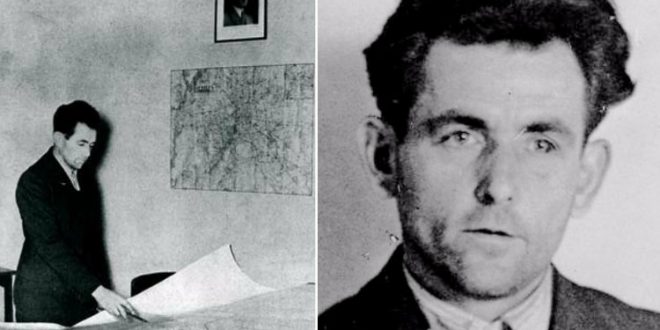
During his 12 years in power, the infamous dictator Hitler faced more hatred than love. As a result of this growing hatred, numerous assassination attempts were planned against Hitler. He became the target of numerous plots by foreign governments, political enemies, and even some of his former supporters who began to oppose his barbaric methods. While some of these attempts were thwarted, others nearly cost him his life. In this list, we present ten people who almost killed Hitler.
1. Claus von Stauffenberg
In 1944, Claus von Stauffenberg attempted to assassinate Adolf Hitler using a briefcase packed with plastic explosives. When the bomb exploded less than two feet away, Hitler survived thanks to the thickness of a table leg and the fact that he was leaning on the table, which absorbed most of the damage.

On July 20, 1944, Colonel Claus Schenk Graf von Stauffenberg arrived at the Wolfsschanze, or "Wolf's Lair." This was Hitler's secret headquarters on the Eastern Front, located in a forest in East Prussia. Stauffenberg entered the complex to attend the Führer's daily briefing, held by the German high command. He carried a black suitcase containing two bombs. Once inside, Stauffenberg began planting the bombs. He was interrupted, so he only managed to place one of the two bombs in the suitcase before entering the conference room.
During the meeting, Stauffenberg hid his briefcase under the table and left the room shortly afterward. In Stauffenberg's absence, someone moved the briefcase behind a table leg just before the explosion, so the bomb would be less powerful than expected. Furthermore, Hitler, when the explosion occurred, was leaning over a thick oak table, examining maps, which helped shield him from the blast. The explosion killed four people and injured many more, but Hitler survived. (source)
2. Axel Freiherr von dem Bussche
German army officer and resistance fighter Axel von dem Bussche twice volunteered to carry out suicide attacks on Hitler, planning to hide explosives in his uniform, embrace the Führer, and detonate the bombs. However, both attempts failed.

In November 1943, Hitler was scheduled to inspect the new winter army uniforms at the Wolfsschanze, the "Wolf's Lair." Busche, over two meters tall, blond, and blue-eyed, was the perfect model for the uniform. Encouraged by Colonel Klaus Stauffenberg, Busche agreed to commit a suicide bombing to assassinate Hitler on the day of the inspection. Busche rigged a mine with a quick-acting hand grenade detonator, which he intended to hide in the deepest pockets of his uniform. He planned to detonate the bomb while embracing Hitler, killing both himself and Hitler. But the night before the inspection, the train car carrying the new uniforms was destroyed in an Allied air raid on Berlin.
Busche volunteered to try again in February 1944, when new uniforms were due to arrive. However, in January 1944, he was seriously wounded and lost one leg. Another officer, Captain Ewald von Kleist, volunteered to carry out the mission at the farewell ceremony on February 11, 1944. However, Hitler repeatedly postponed and eventually canceled the event. (source)
3. Rudolf Christoph Freiherr von Gersdorff
Colonel Gersdorff attempted to assassinate Hitler with two small bombs he hid in his suit while touring the exhibition. The plan failed because Hitler shortened the tour from half an hour to eight minutes, and then stayed for only two minutes.
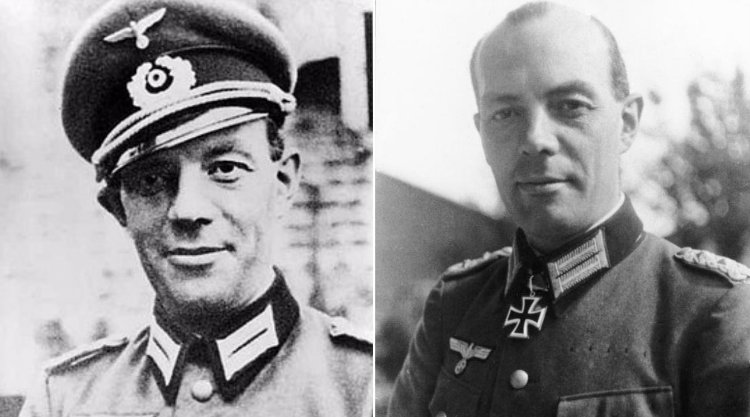
On March 21, 1943, Hitler visited the armory to inspect Soviet weapons captured during the war. As an expert, Colonel Rudolf Christoph Freiherr von Gersdorff was assigned to give Hitler a tour of the weapons. Immediately after Hitler entered the museum, Gersdorff detonated two ten-minute delayed-action fuses on explosive devices hidden in his coat pockets. His plan was to embrace Hitler and trigger a fatal explosion that would blow them both up. In the exhibition hall, Gersdorff was informed that the Führer would only be able to view the exhibits for eight minutes. After Hitler left the building, Gersdorff managed to disarm the devices in a public restroom "at the last second.". (1,2)
4. Philipp von Boeselager
In March 1943, von Böselager was scheduled to execute Hitler and SS chief Heinrich Himmler at a military conference. The operation was cancelled when Himmler's absence became known.
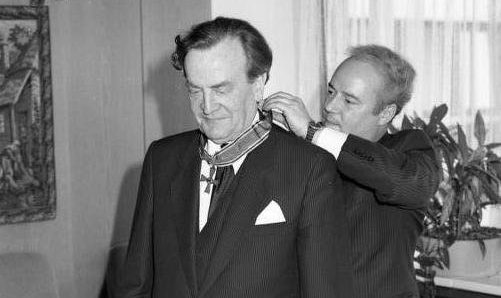
In 1942, 25-year-old Field Lieutenant Philipp von Böselager participated in Operation Valkyrie, a plan to retake Germany after the assassination of Hitler. Along with his commander, Field Marshal Günther von Kluge, Böselager joined the plot to assassinate the Führer. Böselager's opportunity presented itself in March 1943, when Hitler and Heinrich Himmler were heading to the front for a strategy meeting with Kluge's troops.
Boeselager was given a Walther PP semiautomatic pistol, which he was supposed to use to kill Hitler and Himmler at the officers' mess table. But at the last minute, Himmler abandoned Hitler's company. The risk of leaving him alive was too great, as Himmler could have succeeded Hitler as leader of the Nazi Party. Therefore, the plan was abandoned. (1,2)
5. Henning von Tresckow
Henning von Tresckow attempted to assassinate Hitler by planting a bomb on his plane, but the plane climbed too high, which compromised the integrity of the chemicals and prevented the bomb from detonating.
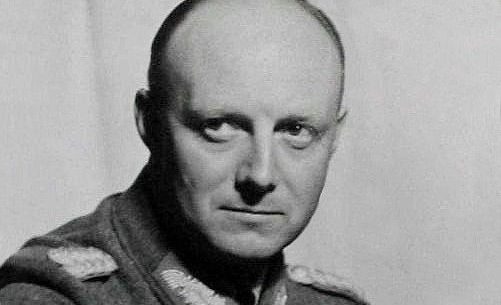
On March 13, 1943, Henning von Tresckow planned to assassinate Hitler in an operation called "Operation Flashpoint." Hitler planned to return to Rastenburg, Germany, from Vinnitsa, USSR, with a stopover in Smolensk. In Smolensk, Tresckow asked Lieutenant Colonel Heinz Brandt, who was traveling with Hitler, if he would give a bottle of Cointreau to Colonel Helmut Stiff at Hitler's headquarters in East Prussia as payment for a lost bet. Brandt readily agreed. The Cointreau was actually a bomb constructed from British Plastic C plastic explosive, placed inside a British magnetic mine, with a timer consisting of a spring that would gradually dissolve in acid.
The 30-minute fuse was activated before takeoff on Hitler's Condor aircraft, and the package was handed over to Brandt. But Hitler landed safely at his headquarters in East Prussia. This was because the bomb failed to detonate, as the extremely low temperatures in the unheated baggage compartment prevented the chemicals in the fuse from detonating. (1,2)
6. Johann Georg Elser
In 1939, 36-year-old carpenter Georg Elser spent 30 nights hollowing out a column in a German beer hall to plant a bomb. On the day of the bombing, Hitler ended his annual speech early, so the bomb detonated 13 minutes after Hitler left the hall.

Johann Georg Elser was a German laborer who meticulously planned the assassination attempt on Adolf Hitler. He began working at the Vollmer quarry in Königsbronn, where he assembled an arsenal of 105 explosive cartridges and 125 detonators. On August 5, 1939, he arrived in Munich. He soon became a regular at the Bürgerbräukeller restaurant and was able to enter the adjacent Bürgerbräukeller before the doors closed around 10:30 PM. Over the next two months, Elser stayed overnight at the Bürgerbräukeller 30-35 times. Inside the hall, he hollowed out a column directly behind the speaker's podium, planted explosives in it, and set a timer. After setting the timer, he left Munich on November 7, the day before Hitler gave a speech at the Bürgerbräukeller.
On November 8, 1939, Hitler delivered his annual speech at the Munich Beer Hall. He decided to return to Berlin that evening on his private train, so he shortened his speech from the usual two hours to one hour. He concluded at 9:07 PM, 13 minutes before Elser's bomb detonated at 9:20 PM. By this time, Hitler and his entourage had left the Bürgerbräukeller. (1,2)
7. Eberhard von Breitenbuch
Eberhard von Breitenbuch was recruited by General Tresckow to participate in a plot to assassinate Hitler. However, he was unsuccessful, as he was denied entry to the conference room.

Eberhard von Breitenbuch was a captain in the reserve cavalry in Army Group Center and adjutant to Field Marshal Ernst Busch. After a dispute with General Tresckow, Breitenbuch agreed to assassinate the Führer. But instead of committing suicide with a bomb, he chose to shoot him in the head.
On March 9, 1944, Busch and his aides were summoned to a briefing with Hitler on March 11 at his Berghof residence in Bavaria. On March 11, 1944, Adjutant Breitenbuch, armed with a 7.65mm Browning pistol concealed in his trouser pocket, accompanied Field Marshal Ernst Busch to the conference. However, earlier that day, SS guards had been ordered not to allow the aides into the conference room. Thus, Breitenbuch was unable to carry out his plan to assassinate Hitler. (1,2)
8. Maurice Bavaud
In 1943, Bavaud purchased a semiautomatic pistol to assassinate Hitler, posed as a Swiss reporter, and attended the parade Hitler attended every year. He abandoned the assassination attempt when he saw Hitler marching alongside other Nazi leaders, as he did not want to harm them.
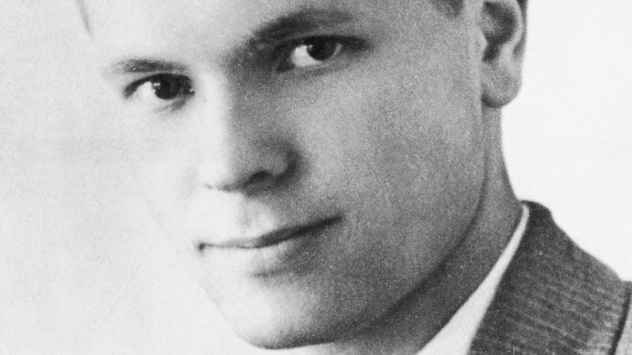
Bavaud, a Catholic theology student, was obsessed with assassinating Hitler. On October 9, 1938, Bavaud traveled from Brittany to Basel, where he purchased a Schmeisser 6.35mm semiautomatic pistol. Following the advice of a Berlin police officer, Bavaud traveled to Munich for the anniversary of the 1923 Beer Hall Putsch, which Hitler attended annually. Bavaud bought a ticket for a seat in the stands, posing as a Swiss reporter. He intended to shoot Hitler as he passed by during the parade. Bavaud abandoned the attempt when, on November 9, it was discovered that Hitler was accompanied by other Nazi leaders, whom Bavaud did not want to injure. (source)
9. Heinrich Grunow
In 1935, Heinrich Grunow, armed with a pistol, hid in a spot where Hitler's car would likely slow down. He fired as the car approached, but the bullet struck not Hitler but the driver, who was sitting in the backseat while Hitler himself was driving.

In 1935, SS soldier Heinrich Grunow, along with Otto Strasser, the leader of the Black Front opposition movement, devised a plan to assassinate Hitler. They decided the best opportunity would arise when the Führer was being driven to his favorite residence, Berchtesgarten. Grunow was a member of the close guard guarding Hitler at Berchtesgarten. He therefore knew a spot on the road where the car would need to slow to less than 24 km/h. It was decided that this would be a suitable location to execute Hitler. On the planned day, Heinrich Grunow positioned himself near Hitler's residence in the Alps with a rifle and opened fire on Hitler's passing car. Unfortunately, Hitler was driving that day, and Grunow shot the driver in the backseat, leaving Hitler alive. (1,2)
10. Kurt Lutter
Kurt Lutter, along with other members of an anti-Nazi group, planned to assassinate Hitler with a bomb in March 1933, but someone leaked the details and Lutter was arrested just a day before the plan was to be carried out.
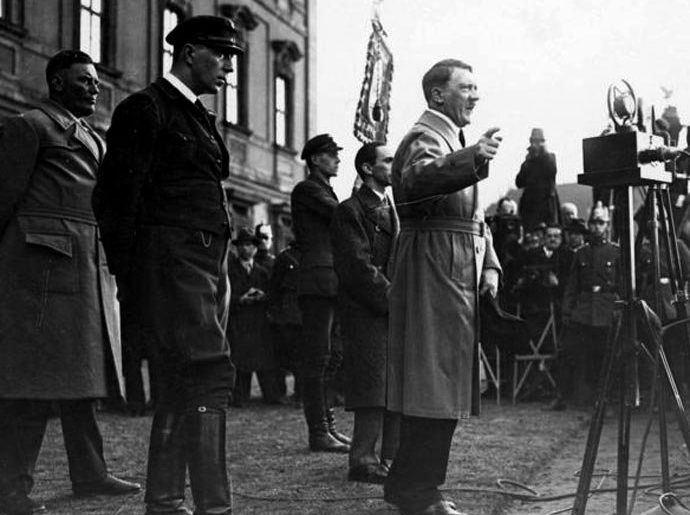
Kurt Lutter was a shipwright and leader of a communist anti-Nazi group known as the "Lutter Group." After Adolf Hitler's election as chancellor on January 30, they plotted his assassination. The plan was to kill Hitler on March 4 during his campaign speech, the day before the Reichstag elections. Two secret meetings were held in February to plan the details. A police informant was planted in these meetings, passing information to the authorities. The plan failed, as Lutter and the entire group were arrested just the day before Hitler's campaign speech. (1,2,3)