








Art means different things to different people. For billionaires, owning a piece of art can signify high status. Most famous paintings, especially those by old masters, are kept in museums and are not owned by anyone, but they can be just as valuable. For example, «Mona Lisa» Leonardo da Vinci holds the record for the highest insurance price for a painting in history. In 1962, its price was estimated at $100 million, which, adjusted for inflation, would be $620 million in 2016. But since« Mona Lisa» Not for sale, at the top of the list of the most expensive paintings in the world is another work by Leonardo, which you can read about below.
10. Portrait of Adele Bloch-Bauer I works by Gustav Klimt - $158.7 million.
This portrait, created between 1903 and 1907, was commissioned by Ferdinand Bloch-Bauer. It was stolen by the Nazis in 1941, then displayed for decades at Austria's Belvedere Gallery, and was returned to the family in 2006 after eight years of legal proceedings.

After Klimt was commissioned to paint the portrait, he made over a hundred preparatory sketches between 1903 and 1904. In December 1903, he and his fellow artist Maximilian Lenz visited the Basilica of San Vitale in Ravenna, where the golden mosaics of Justinian I and Empress Theodora had a profound impact on Klimt and may have led to his "golden period." After meticulous preparation, more thorough than for any other work, Klimt used gold and silver leaf to add decorative motifs to the bas-relief.
Adele died in 1925. Following the annexation of Austria in 1938, Ferdinand fled to Switzerland, and all of his property, including the painting, was confiscated by the Nazis in 1941 after he was charged with tax evasion. After Ferdinand's death in 1946, he left his estate to his nephew and two nieces. Although Austria declared all Nazi transactions invalid in 1946, Jews who wanted their art back were forced to donate some of it to Austrian museums.
In 1998, an Austrian investigative journalist discovered that the Belvedere Gallery had been holding 16 Klimt paintings and 19 pieces of porcelain belonging to the family and refusing to return them. In 2000, one of Ferdinand's nieces, Maria Atlmann, hired lawyer E. Randol Schoenberg to file a lawsuit. Four years of legal proceedings followed, and in 2006, five of the six Klimt paintings were returned to her. Film «Woman in Gold» starring Helen Mirren and Ryan Reynolds, it was based on these events. (source)
9. «Woman III» Willem de Kooning – $161.6 million.
Completed in 1953, this painting is one of six works de Kooning painted between 1951 and 1953 that have a woman as their central theme.
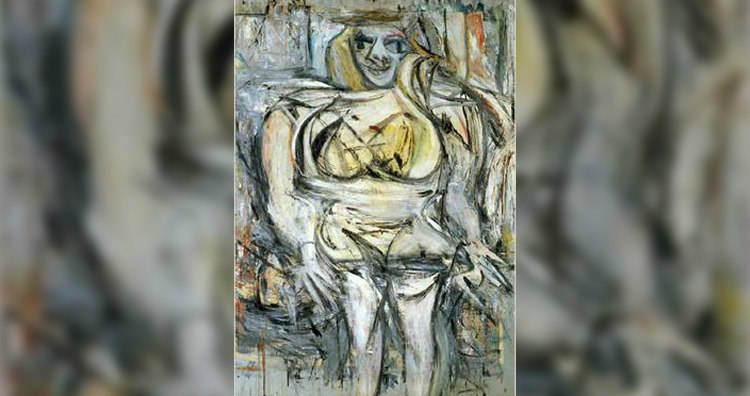
De Kooning began painting portraits of women in the 1940s and more seriously in the 1950s. His paintings depicted women in a graffiti-style style, with exaggerated eyes, breasts, smiles, and clawed hands. «Woman III» — the only painting from the "Women" series in a private collection. From the 1970s to the 1990s, the painting was housed at the Tehran Museum of Modern Art, but could not be displayed due to strict art regulations following the 1979 Iranian Revolution. It was secretly exchanged by David Gaffen for «Shahnameh »"Tahmasbi is a 16th-century manuscript containing the world's longest epic poem, written by the Persian poet Ferdowsi between 977 and 1010 CE. In November 2006, it was acquired by billionaire Steven A. Cohen. (source)
8. Masterpiece Roy Lichtenstein - $165 million.
This 1962 pop art painting, in which Lichtenstein uses classic Ben-Day dots and speech bubbles, is considered by many critics to be an ironic joke on his own career and is known for its subject matter predicting his future fame.

This American pop artist was one of the leading figures of the pop art movement in the 1960s, alongside Andy Warhol, Jasper Johns, James Rosenquist, and others. Inspired by comic books, he created his works with precise compositions, but in a parodic and often ironic manner.
When Lichtenstein was asked about his other work «"I know... Brad."» (or «"I know how you must feel, Brad. »"), he said he found the name Brad heroic and used it to show clichéd oversimplification. «The Drowning Girl» — another example of cliched melodrama, showing a drowning woman with tears in her eyes saying, "I don't care! I'd rather drown than call Brad for help!"« (1, 2)
7. Hanging portraits of Maarten Soolmans and Oopjen Coppit by Rembrandt - $182 million.
Painted in 1634, these two wedding portraits are considered unusual in Rembrandt's work because of their size and the fact that they depict the figures full-length.
The portraits were painted for the wedding of the men depicted in them, Maerten Soolmans and his wife, Oopjen Coppit, dressed as wealthy newlyweds in the Amsterdam style. Although they are two separate portraits, they were always hung side by side and were frequently included in inventories of the time. This pair is among other works by Rembrandt used for comparison with paintings of dubious attribution. In 2015, the paintings became jointly owned by the Louvre and the Rijksmuseum after they contributed half of the purchase price. (source)
6. No. 6 (Purple, Green and Red) Mark Rothko - $194.6 million.
Painting No. 6 , painted in 1951, consists of large expanses of color interspersed with other washed-out hues, like other Rothko works, and its inexpressive title leaves the viewer to interpret the painting's emotions for themselves.

Mark Rothko is known for introducing Abstract Expressionism to the art world with his large canvases full of color. According to many critics, the darker tones at the top of the painting No. 6 reflect Rothko's depression. The painting was acquired by Russian billionaire Dmitry Rybolovlev at one of the highest prices ever paid for a work of art through his Swiss art broker, Yves Bouvier. (source)
5. «"When are you getting married?"» Paul Gauguin - $213 million.
This painting, painted in 1892, dates back to the time when Gauguin traveled to Tahiti in the hope of finding "a corner of paradise where he could create pure, 'primitive' art.".
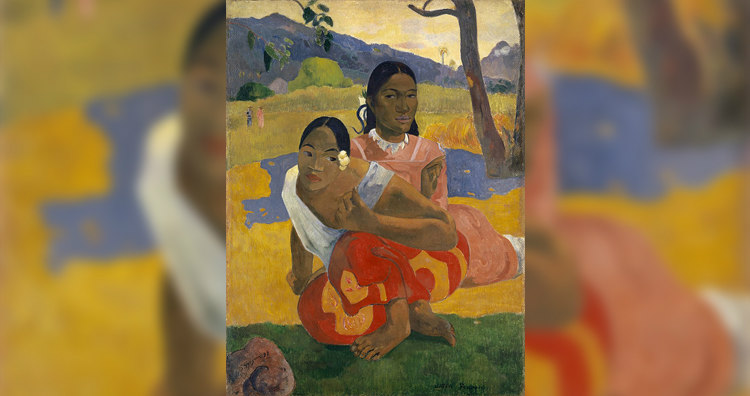
Like most Post-Impressionist artists, Gauguin's work remained unrecognized during his lifetime. But now his paintings are renowned for their synthetic style and experimental use of color. Gauguin traveled to Tahiti in 1891 and discovered the country was nothing like he had imagined: at least two-thirds of the population had perished from diseases brought by Europeans during their colonization in the 18th century. But he persisted, painting local women in both traditional and Western dress.
Gauguin was fascinated by the Tahitian language and began painting in it at the time, as seen in the lower right corner of the painting above. His Tahitian paintings were generally met with indifference and received some positive reviews, but they did not sell after his return to France. However, in 2015 painting "When will you get married?"« It was sold privately by the family of Fudolf Staehelin to Sheikha Al-Mayasse bint Hamad Al-Thani for one of the highest prices ever paid for a painting. (source)
4. Painting "Number 17A"« Jackson Pollock - $203 million.
This abstract painting was created in 1948 and is considered one of the finest examples of "drip painting," a unique art form that Pollock introduced in 1947.
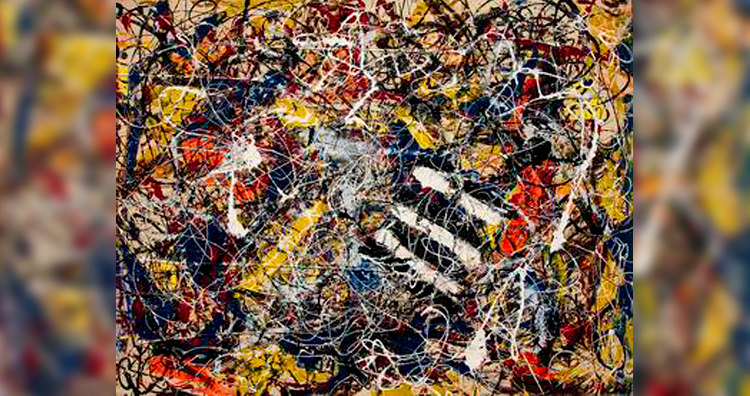
Jackson Pollock was renowned for his contributions to the Abstract Expressionist movement, though his paintings were largely unpopular and generally considered of little value on the art market. His first series of drip paintings was first exhibited at the Betty Parsons Gallery in New York in 1948, and a year later Life magazine published an article about him titled "Is He the Greatest Living Artist in the United States?" in 2016. painting no. 17A was acquired by billionaire art collector Kenneth K. Griffin, known for owning some of the most expensive paintings, including «Changes » Willem de Kooning and «"False start » Jasper Johns. (source)
3. «The Card Players» Paul Cezanne - $270 million.
This painting, painted in the early 1890s, is one of five in the series and is considered by critics to be a cornerstone of Cézanne's work.

In the early to mid-1890s, Cézanne's subjects were Provençal peasants, often depicted as local farmhands, some of whom worked on his family estate, enthusiastically smoking pipes and playing cards. He adopted the style of 17th-century French and Dutch painting, which often depicted drunken, rowdy gamblers in taverns. However, in his paintings, the men were depicted earnestly poring over a game in a very simple setting, with a noticeable absence of booze and money, save for an unused bottle of wine in the two-player versions. (source)
2. «Interchange »"Willem de Kooning – $304 million.
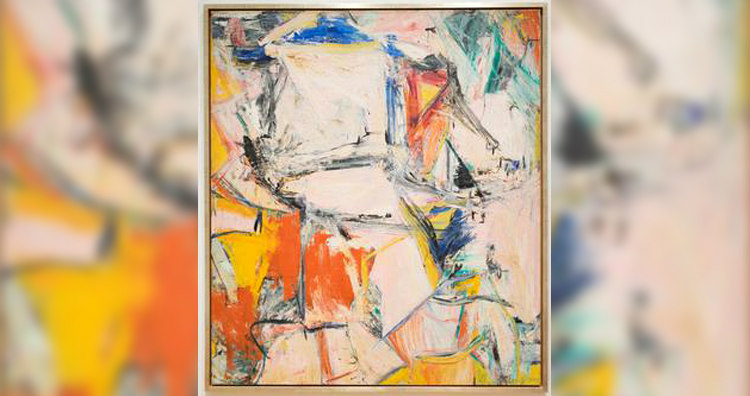
Willem de Kooning is known as an influential artist who inspired his friends and fellow artists Franz Kline, Arshile Gorky, Jackson Pollock, and many other Abstract Expressionists. He wrote «Interception» At a time when his contemporaries had achieved financial stability, they were free to make new choices. For de Kooning, this meant changing his hectic lifestyle and moving to a farm, followed by 11 years of painting abstract landscapes.
When de Kooning wrote «Change» , He collaborated closely with Kline. Both artists influenced each other. Kline was known for his intuitive, rapid brushstrokes, while de Kooning's style was characterized by sharp, dramatic brushstrokes that often cut across the canvas. He worked on his paintings repeatedly over long periods of time, sometimes removing or adding layers, giving them a busy yet unfinished appearance. (source)
1. «Savior of the World» Leonardo da Vinci – $450.3 million.
Dated around 1500, the painting depicts Jesus in Renaissance attire, pronouncing a blessing and emphasizing his role as savior and ruler of the world. The painting was thought to have been lost in the 18th century, and during the 19th century, it was erroneously attributed to Leonardo's student, Giovanni Antonio Boltraffio.

It is believed that painting "Savior of the World"« It was painted for Louis XII of France and his wife, Anne of Brittany, and its origins have been somewhat convoluted over the centuries. It is believed to have arrived in England in 1625 and been inherited by Sir Charles Herbert Sheffield, 1st Baronet, who auctioned it off in 1763 along with other works of art at Buckingham Palace.
After this, the painting was thought to have disappeared until it was acquired in 1900 by Francis Cooke, 1st Viscount Montserrat, whose great-grandson sold it in 1958 for £45. The painting remained attributed to Leonardo's student Boltraffio until 2011, when it was again attributed to da Vinci.
According to Christie's, more than 27,000 people saw the painting during previews in Hong Kong, New York, San Francisco, and London, and many were moved by it. The painting was sold at auction in November 2017 to Prince Badr bin Abdullah bin Mohammed Al Farhan on behalf of the Department of Culture and Tourism – Abu Dhabi. Often referred to as "Da Vinci's final work,", «"Savior of the World »" is the only known painting by the artist, still in a private collection. (source)