






Science is undoubtedly one of the most important fields of endeavor in the world. Some people mistakenly think that science is weak when we believe something that, over time, turns out to be wrong. However, this is precisely what makes science so valuable. It's never a good idea to say, "This is the absolute truth." Scientists are constantly trying to explain things to the best of their ability, given the evidence. Despite this, science still can't explain some things, and sometimes these things are the most mundane, seemingly perfectly understandable. Let's look at 10 things science isn't entirely sure about.
10. We don't fully understand how anesthesia works.

If you're going to the hospital for major surgery, you'll need anesthesia. It'll be easier for doctors to work on your insides if you don't look or scream.
There are many types of anesthesia used for different purposes: some are local, some are general, some are inhalational, and some are injectable. Whatever anesthesia you use, it's designed to keep you from feeling pain. Sometimes, this means you're unconscious.
Given the potency of anesthesia, it must be administered with caution. Too little, and you'll feel the surgeons cutting into you. You might not even be able to react to indicate you're conscious, but you'll feel everything. Too much anesthesia, and you could die. This is serious business.
Knowing what we know about anesthesia, it's excruciating to realize we don't know how it works. The process by which it knocks you out and deprives you of the ability to feel pain is a true mystery. There are theories that it may dissolve certain fats in your brain and otherwise affect how your brain transmits information.
In 2020, a study showed that one type of anesthesia weakens high-frequency electrical signals between neurons. The experiment, conducted on mice, could explain the pain-relieving effect while simultaneously allowing low-frequency signals—the ones that control your ability to breathe and keep your heart beating—to continue.
Again, this study was conducted in 2020 on mice. For the first time since the 1840s, scientists were able to observe something that they believe could explain the effects of the medical procedure we undergo. .
9. Ithacumite is a flexible stone, and we don’t know how it works.
If someone asked you to describe the characteristics of rocks, you might say words like "hard," "heavy," "solid," or "solid." A few fairly simple and boring adjectives. But if you were tasked with describing the rock known as itacolumite, you might also add bendability to the list.
Itacumite is a type of sandstone, most common in the mountains of Brazil, hence its name. The stone can bend in your hands even under its own weight, much like you'd expect a piece of rubber to bend. It's no Stretch Armstrong, but compared to stones found elsewhere in the world, it's impressive.
The reason why flexible sandstone works remains a mystery. The stone's structure consists of quartz grains that are more widely separated than in harder rocks. The spaces between these grains are also uneven, which presumably accounts for its flexibility. But how and why this happens remains unknown.
8. We understand the purpose of different tastes other than sour
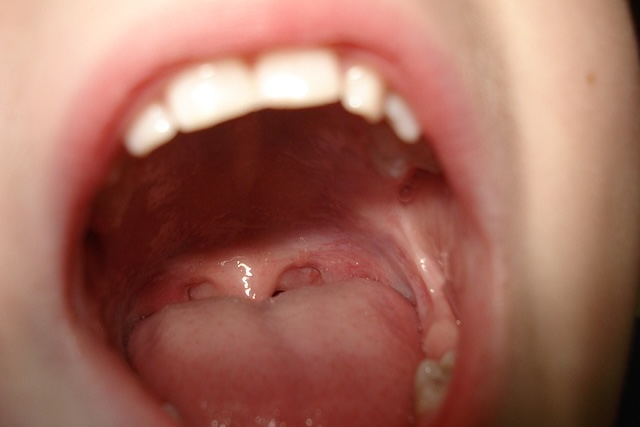
Humans can distinguish five basic types of taste. We divide them into sweet, salty, bitter, sour, and umami. Science has even managed to find the cause of each of them.
Biologically, sweetness lets you know something contains sugar, which is carbohydrates and therefore energy. Umami is caused by meat products, which is protein. Bitterness is often associated with things we don't want to eat, and dangerous plants, especially poisonous ones, are bitter, and we've learned to avoid them because of their bitterness. Saltyness affects electrolytes and fluid balance, as well as overall health. And then there's sourness.
Whether you love sour foods or hate them, science hasn't been able to explain the biological purpose of our ability to taste them. It's a simple way to determine whether a food is sour, but it doesn't provide any significant benefit. Sour foods may be toxic, promote fluid balance, or contain carbohydrates. Or they may not. Acidity has no relevance to these people or a reliable way to assess their value in satisfying these needs.
It has been suggested that ancient fish could "sense" sourness through their flesh, which could have alerted them to acidic and therefore dangerous water. Furthermore, since humans cannot produce vitamin C ourselves, the ability to sense sourness may help us identify it in its natural form in our food. Or it may help us identify rotten fruit, which produces acids from bacteria. But again, this is possible.
7. Everyone has face mites, but it's unclear why.

If you were to examine your face under a powerful microscope, you'd discover a whole world of tiny creatures living in your pores, enjoying your oils, reproducing, and carelessly pooping on you. These tiny mites, called demodex mites, are arachnids and live on all mammals. They evolved alongside us. We have no idea why they're here.
Mites don't cause any harm, and you can't get rid of them. Of the 2,000 people randomly tested, every single one had them. These little guys live in the pores of the oiliest parts of your face, clinging to your hair follicles. They feed on sebum, the oily substance your skin produces to protect itself, and then crawl out late at night to reproduce on your face before burrowing back into your pores.
While evidence suggests these mites have always been present, since the dawn of our species, their cause remains unclear. They're generally harmless, though some people may have a reaction to them or suffer from multiple mites. But mostly, they eat away dead skin and keep your face smooth.
6. Flying squirrels glow pink under ultraviolet light.
Flying squirrels are simply adorable, and why shouldn't they be? They're the squirrels that glide through trees like Batman. Science has also discovered that these little mammals are incredibly fun animals, as they glow bright pink under ultraviolet light.
To be clear, no other squirrel glows under black light, only flying squirrels. Researchers have studied squirrel fur with a mass spectrometer to determine what compounds might cause it to glow, but they haven't found anything, making the path to understanding a little more difficult.
The phenomenon wasn't captured on camera until 2021, leaving experts to speculate. The squirrels could be glowing to be seen by other squirrels, as part of a mating ritual, as a means of communication, or even to ward off predators. It's difficult to say for sure, as it's unique to these animals.
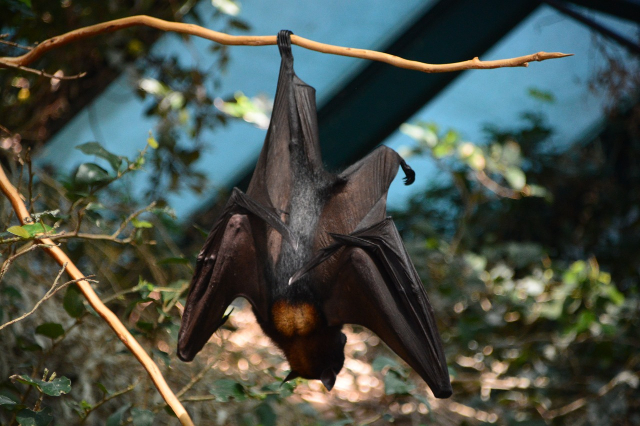
Bats are among nature's most useful animals, clearing the skies of dreaded pests like mosquitoes every night and inspiring some of our best superheroes. They also prefer to live in dark places like caves, attics, under bridges, and so on. One thing they seem to hate? Sunlight.
Bats avoiding solar power plants may not seem like a big deal, but it's quite possible. If bats avoid them, it can alter the entire ecosystem. The insects they prey on can thrive in these areas. Solar farms are actually excellent breeding grounds for insects. As solar farms spread, insects and the potential diseases they carry can also spread.
No one yet knows why bats hate light. Now it's a balancing act as to whether something can or should be done. Fossil fuels may kill more bats than sunlight, so perhaps nothing can be done about the bats that don't want to be there, especially since we don't even know why.
4. Dogs' brains are getting bigger for some reason.

There are two types of pet owners: those who think their pets are geniuses, and those who think their pets are idiots. If you're in the genius camp and own a dog, you might be onto something. Dogs' brains are actually getting bigger, but the reason remains a mystery.
Compared to their ancient ancestors, many modern dog breeds have larger brains than in the past. Generally, a dog's brain is smaller than a wolf's brain, but the further a dog breed is from wolves in the modern world, the larger its brain appears.
Domestication reduced the size of dogs' brains, but when we bred new dogs and tasked them with tasks like hunting or herding, their brains began to grow again. Domestic dogs may have developed such larger brains not only because they have a job (wolves had to do just as much or even more), but also because they live in a more complex and social world. The expectations and burdens of living with humans force their brains to expand to cope.
3. Tornadoes are getting bigger and faster.

If you feel like bad weather is getting worse, you're not alone. In fact, tornadoes are bigger, faster, and more frequent today than in the past. And while that's concerning, perhaps even more concerning is that we can't explain why.
Over the past 50 years, the part of the United States known as Tornado Alley has expanded. Deadly storms are becoming more frequent and powerful. Climate change is something people can point to, but talking about it and explaining it are two different things. If climate change is to blame, then how is it to blame? That's something we don't yet know for sure. Warmer winters certainly exacerbate the problem, allowing tornadoes to form both earlier and further north, but that doesn't do much to explain or predict their occurrence.
Tornado prediction and warning are among the areas that suffer from the new models. In 2011, the average tornado formation time was 13 minutes. That's how long of a warning people in the storm's path will need to prepare. By 2020, it had dropped to 8.4 minutes. This is an improvement over 1990, when it was only 5 minutes, but the fact that it's moving downwards rather than upwards is not a good sign.
2. Crows behave unexpectedly with dead people

Crows are among the most intelligent animals in the world. They are capable of conscious thought and possess self-awareness, something long believed to be reserved for primates. In fact, crows and gorillas may be on the same intellectual level. This is both astonishing and impressive, and should make us see these birds in a whole new light.
Considering how intelligent crows are, some of their behavioral peculiarities are even more puzzling. Some crows have been observed committing unlawful acts with the corpses of other crows. The least offensive term for this would be necrophilia.
Crows typically avoid their own carcasses or use them as an opportunity to warn others of danger. About 24% cases involved crows approaching the corpse to poke it in some way. However, in 4% cases, the birds were attempting to mate, and the reason for this is entirely unclear. One suggestion was that this behavior occurred during mating season, and hormone levels in living birds could impair their cognitive functions, but there is no concrete evidence.
1. Science has not yet proven that water is wet.

Is water wet? It sounds like one of the stupidest questions you could ever ask, but scientifically, it's not stupid at all. And there's no clear answer here either. Part of the problem lies in what the word "wet" means. It sounds semantic, but that's not all.
Science defines humidity as the ability of a liquid to maintain contact with a substance, thereby making it "wet," as we understand water. And by this definition, water In fact Not wet, but simply something that makes something else wet. However, if you think "wet" means something liquid, then water is wet.
Another way to think about it is that wetness is the sensation something feels when there's liquid on it. So, if you dip your hand in water, your hand will feel wet because there's water on it. But since wetness is just a sensation, the water itself isn't technically wet because it's not sitting on anything and hasn't gotten wet yet. Water is never wet; your hand just feels wet because of the water. If that sounds confusing, that's precisely the point, and it's why science still doesn't know for sure whether water is wet.