








When most of us think of vacation, we imagine places where we can relax and unwind. But there are also those who enjoy an adrenaline rush and adventure to recharge their batteries. However, there are places in the world where visiting is forbidden, places that pose a life-threatening threat, and places so dangerous that the slightest mistake can lead to a terrible outcome. Here are a few places you shouldn't visit if you want to avoid trouble.
1. Ilha da Queimada Grande is an island in Brazil teeming with venomous snakes, with an estimated population of one snake per square meter. The last human settlement existed before the lighthouse was automated, and the island is now closed to visitors except for certain research groups.
Off the coast of Brazil in the Atlantic Ocean lies an island teeming with venomous and rare snake species. It's the only place in the world where the endangered and venomous golden lancehead viper can be seen. The lighthouse was built in 1909, and since it was automated, no one has lived there. To protect the snakes, Queimada Grande Island The site is closed to the public and accessible only to the British Navy, a small group of researchers, and only after thorough inspection by Brazil's Federal Agency for Nature Conservation. Due to numerous hazards, access for tourists and visitors is restricted. (source)
2. The most dangerous pedestrian walkway in the world is in Spain, called "« El Caminito del Rey »"The King's Narrows" is 300 feet high and only three feet wide, meaning a fall from its ledges would result in certain death.
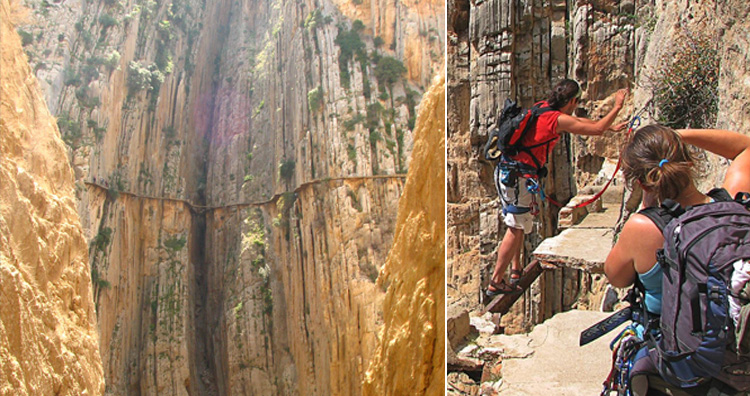
Caminito del Rey In Spain, it's a walking path that runs along the steep walls of a narrow gorge. It's this narrow, meter-wide path that attracts daredevils. However, since its construction in 1905, the path has fallen into disrepair, creating large gaps. Many people have died on this path, and in 2000, local authorities closed both entrances.
After more than a decade of inactivity, it was closed, then underwent renovations and repairs, and reopened to the public in 2015. While it's a thrilling adventure, the sheer danger shouldn't be underestimated. (source)
3. The blood-red, salty, and carbonated lake known as Lake Natron in Tanzania is a living hell on earth, making it a dangerous tourist destination. The lake's high alkalinity and temperature are so dangerous that they kill all living creatures except the lesser flamingo.
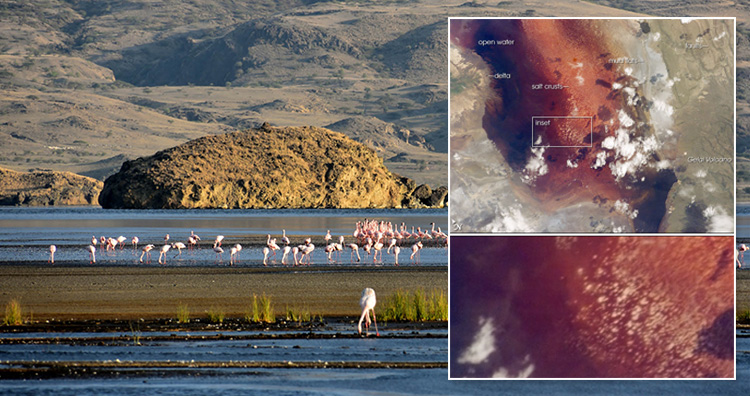
Lake Natron, located in northern Tanzania, is one of the most caustic bodies of water in the world. It is highly alkaline, caused by sodium carbonate and other minerals leaching from the surrounding hills. The alkaline water has a pH above 12, causing skin and eye burns in birds and animals not adapted to such conditions.
However, this is the only breeding ground for lesser flamingos. They can feed on the algae, and the harsh environment deters predators. The algae can kill any animal that gets too close, so tourists are advised to admire them from afar. (1, 2)
4. Mount Sinabung is an active volcano located on an Indonesian island. An eruption, recorded in 2010 after centuries of dormancy, occurred annually from 2013 to 2018, causing numerous casualties. The area around the volcano's crater is considered inaccessible to visitors.
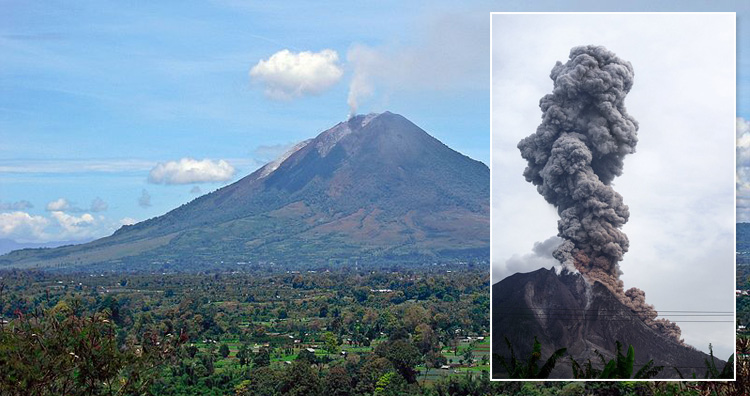
Mount Sinabung, a volcano dormant since the 1600s, is located on the Karo Plateau in Indonesia. After a hiatus of nearly four centuries, the volcano erupted in 2010 and has erupted regularly since. Authorities have banned visitors to the area around the volcano. The most recent eruption occurred in February 2018, which released at least 1.6 million cubic meters of material from the mountain's summit, and again in April 2018, making the area dangerous to visit. (source)
5. The Danakil Depression in Ethiopia is one of the hottest places on Earth, with temperatures reaching 122 degrees Fahrenheit, and the lowest point at 410 feet. It is home to numerous active volcanoes and geysers spewing toxic gases, making this region one of the most inhospitable in the world and very difficult for tourists to visit.
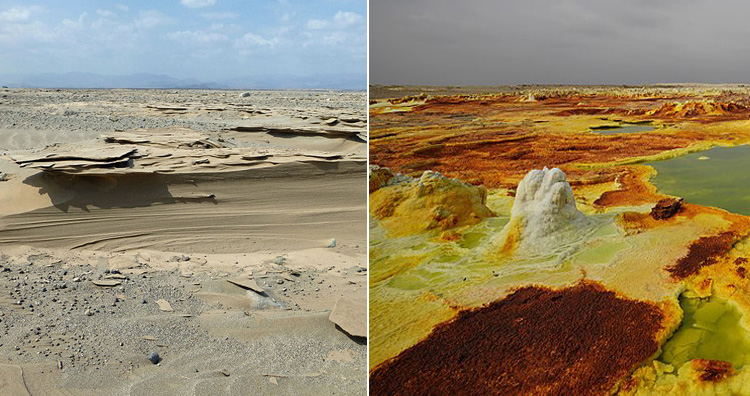
Located in the Afar region of Ethiopia, this place is one of the least hospitable. The average annual temperature is 93.92 degrees Fahrenheit, making it one of the hottest places on Earth. However, it is home to the Afar people, who have adapted to the high temperatures.
The Danakil Depression attracts tourists with its bubbling lava lakes, enormous salt lakes, and colorful hydrothermal fields. However, this also makes visiting the site dangerous. In 1974, the famous Australopithecus fossil "Lucy," estimated to be 3.2 million years old, was discovered here. This discovery has been of great interest to paleontologists for many years. (1, 2)