








There are so many amazing things happening in the world. Instead of making pointless small talk with someone you've just met, start an interesting conversation using these facts, which are perfect for breaking the ice. These facts will help break awkward silences and spark interesting conversations. For example, what if you told someone that chameleons change color not to blend in with their surroundings, but primarily to warn others of danger?
Don't forget to read Part 1 and Part 2 for more similar facts.
1. Adolf Hitler was once nominated for the Nobel Peace Prize.

Despite Hitler's actions being the exact opposite of what should have been done for peace, he was nominated for the Nobel Peace Prize in 1939. E.G.K. Brandt, a Swedish parliamentarian, nominated Hitler for the Nobel Peace Prize, and he didn't take it seriously.
An anti-fascist himself, Brandt did this to satirically criticize the parliamentarians who nominated British Prime Minister Neville Chamberlain for the award. Brandt doubted Chamberlain was a suitable candidate. On February 1, 1939, the nomination was withdrawn after others objected to Brandt's move.
The Nobel Peace Prize, first awarded in 1901 to Henry Dunant (founder of the International Committee of the Red Cross), has been awarded 133 times: 17 times to women and 27 times to organizations (as of 2018 ). (source)
2. Leeches have 32 brains, ten stomachs, 18 testicles and several hundred teeth.
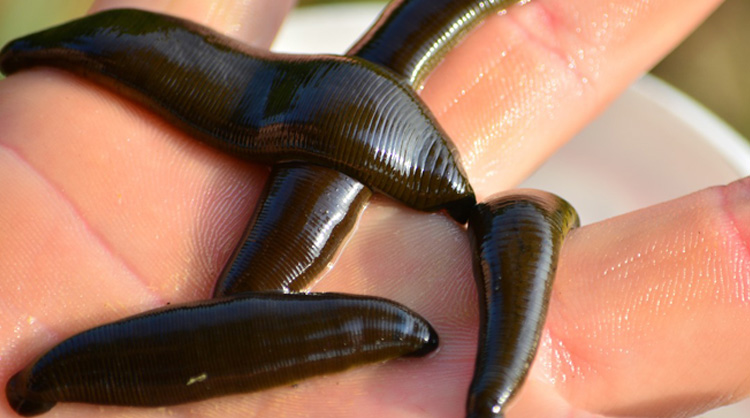
What do leeches do with 32 brains? A leech's internal body can be divided into 32 segments, and each of these segments has its own brain. Anatomically, they are the same brain, but it is segmented into 32 parts. But since each brain functions independently, it is physiologically correct to say they have 32 brains.
They also have ten stomachs and nine pairs of testicles. Not all leeches suck blood, and of those that do, not all suck human blood. Some leeches feed on camels, while others prefer bats.
Thousands of years ago, leeches were first used for medicinal purposes, as they were believed to help with a variety of ailments, from headaches to suffocation. Today, these creatures are used to clean wounds and improve blood circulation in the human body, as leeches secrete anticoagulants.
In 2002, a study of 550 plastic surgery centers in the UK found that 80% of them used leeches. This explains the existence of leech farms. Hirudo verbana и Hirudo medicinalis — these are the types of leeches used in medicine. (source)
3. There are real castles that can be purchased for much less than an apartment in the city.

If you love all things royal, you should consider living in a castle—and you don't have to be incredibly rich. There are several charming castles for sale in France, Ireland, Scotland, Spain, and other countries, boasting rich histories and stunning landscapes.
On average, an apartment in the city (approximately 350-500 square feet) will cost you at least a million US dollars. In some places, prices can be much higher. For less than a million dollars, you can buy a castle.
A 14th-century castle is listed for sale in France for $677,000, while another castle, McDermott Castle, is listed in Ireland for $100,000. The castle used as Riverrun in Game of Thrones is also listed in Northern Ireland for $650,000. (source)
4. Mysterious floating objects of various shapes in our eyes are called "eyelobes." They are visible due to shadows cast on the retina by tiny protein filaments inside the eyes.

Within the vitreous humor (the fluid) of our eyes are deposits of varying sizes, shapes, and consistencies. These deposits sometimes cast shadows on the retina, causing the appearance of unsightly, squiggly formations that seem to float before the eyes. These formations, called "floaters," tend to sink to the bottom of the eyeball. These are proteins or other cellular debris that become lodged in the transparent vitreous humor of our eyes.
They are especially visible in bright light or when looking at empty space. Because these protein filaments do not remain stationary inside our eyes, they can be seen, unlike the blood vessels in our eyes, which, thanks to neural adaptations in our brains, are accustomed to staying in one place. (source)
5. HD video has been around for over 30 years. It has only become popular in the last five to ten years.
In the 1980s, Japanese engineers developed HighVision, an interlaced television standard with a resolution of 1125 lines and a frame rate of 60 frames per second. Modern HD imaging dates back to this era. The US Federal Communications Commission, led by the Committee on Advanced Television Systems, officially adopted interlaced video with a resolution of 1080 lines for transmission in 1996. The first broadcasts took place on October 28, 1998.
In the early 2000s, other countries began to implement this technology, and high-definition video gradually gained popularity. It wasn't until this decade that HD video became incredibly popular, despite its first broadcast being in 1998. (source)
6. During a kidney transplant, the patient's own kidney is not removed. Surgeons attach the donor kidney to the patient's body.
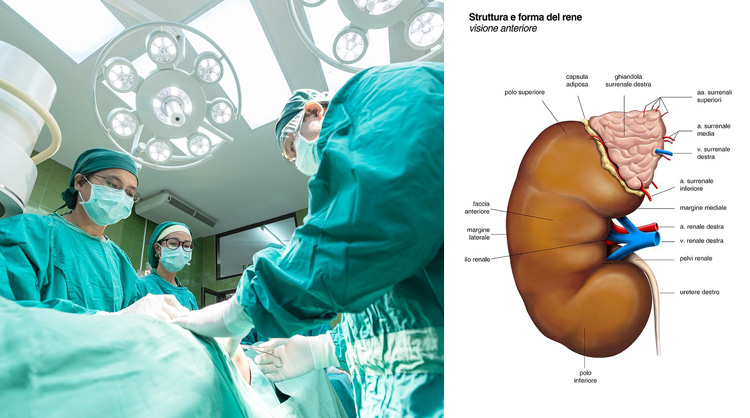
Kidney transplants have saved millions of lives worldwide. However, awareness of organ donation and the transplant procedure remains low. When a person receives a healthy, transplant-compatible kidney from a deceased donor or living relative, the diseased kidneys are left in place and are usually not removed.
The transplanted kidney is surgically placed in the lower abdomen on the front side of the body. The right donor kidney is implanted on the left side, and the left donor kidney is implanted on the right side of the patient's body. (source)