








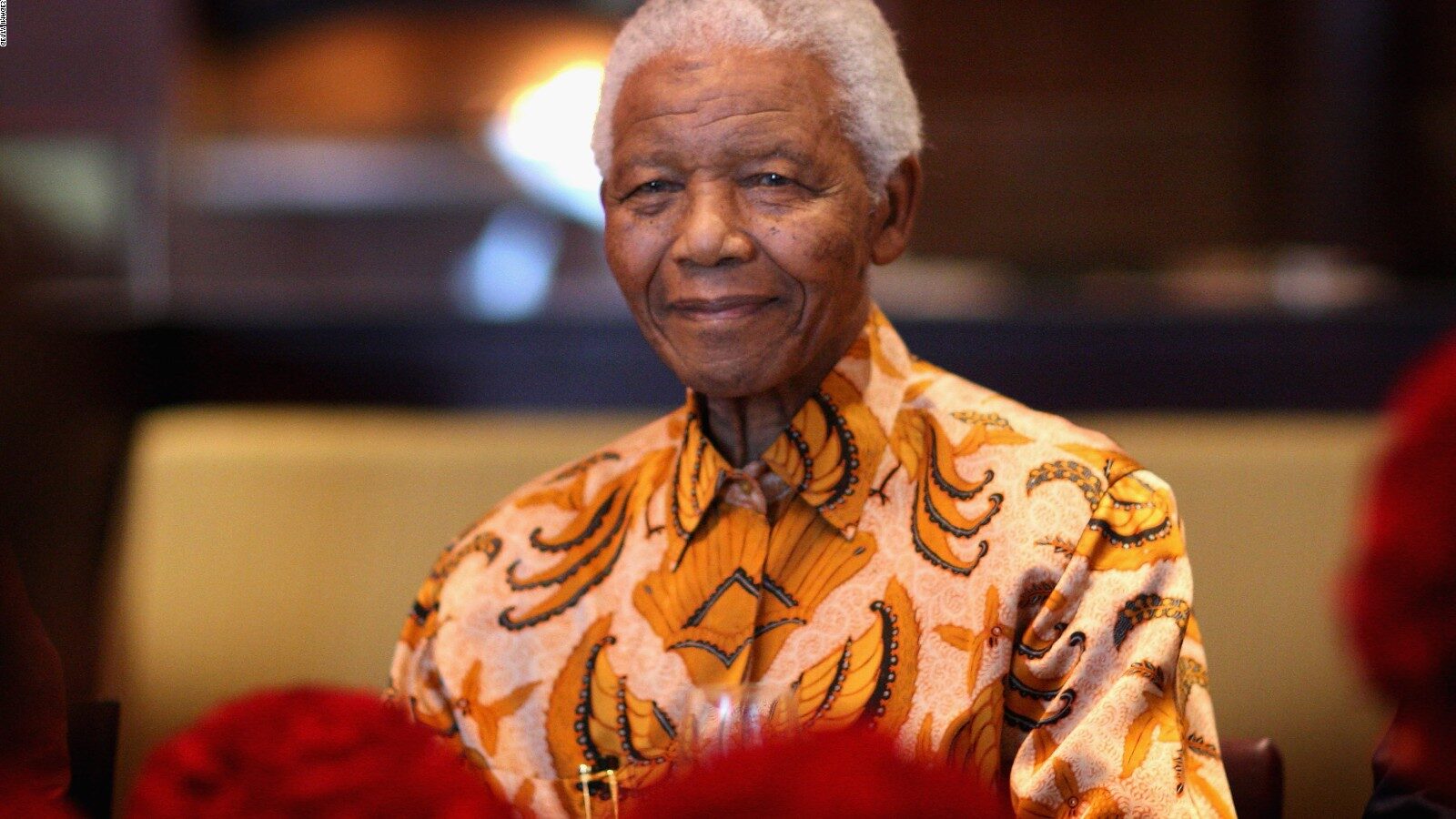
 Source: Cnn.com
Nelson Mandela, whose name is associated with courage and fortitude, is a symbol of freedom and justice. Who was Nelson Mandela? He was a South African revolutionary who fought against apartheid and became the country's first black president from 1994 to 1999. Mandela's journey from prisoner to president testifies to his unwavering commitment to equality and human rights. Born on July 18, 1918, in Mvezo, South Africa, he spent 27 years in prison but emerged with a message of forgiveness and reconciliation. His leadership and vision helped dismantle apartheid, a system of racial segregation and discrimination. Mandela's legacy continues to inspire people around the world, reminding us of the power of perseverance and the importance of standing up for justice. Learn more about his extraordinary life and enduring influence by exploring these 24 fascinating facts about Nelson Mandela.
Contents 01 Early years and education 02 Political awakening 03 Imprisonment and resistance 04 Release and presidency 05 Legacy and influence 06 Personal life 07 Cultural influence 08 Final years and death 09 Mandela's legacy lives on
Early years and education
Nelson Mandela's journey began in a small village in South Africa. His early years were filled with events that shaped his future as a leader and activist.
-
Birth name Nelson Mandela was born on July 18, 1918, in the village of Mvezo, Transkei, as Rolihlahla Mandela. "Rolihlahla" means "tree branch puller" or "troublemaker" in Xhosa.
-
Royal origin He was born into the Thembu royal family. His father, Gadla Henry Mphakanisiwa, was a chief and adviser to the Thembu king.
-
The first in the family Mandela was the first in his family to attend school. His teacher gave him the English name "Nelson," which was common at the time.
-
Higher education He studied at the University of Fort Hare, the only Western-style black higher education institution in South Africa at the time. However, he was expelled for participating in a student protest.
Political awakening
Mandela's political journey was marked by significant events that fueled his pursuit of justice and equality.
-
Joining the ANC In 1944, Mandela joined the African National Congress (ANC), a turning point in his life. He became one of the founders of the ANC Youth League to fight racial segregation.
-
Campaign of Defiance Mandela played a key role in the 1952 Defiance Campaign against apartheid laws. This was the first large-scale, multi-racial political mobilization against apartheid.
-
Mandela's trial for treason In 1956, Mandela was arrested along with 155 other activists and charged with treason. The trial lasted until 1961, and all defendants were acquitted.
Imprisonment and Resistance
Mandela's imprisonment became a symbol of the struggle against apartheid, inspiring people around the world.
-
Rivonia Trial In 1962, Mandela was arrested again, and in 1964, he was sentenced to life imprisonment at the Rivonia Trials. At this trial, he delivered his famous "I am prepared to die" speech.
-
Robben Island Mandela spent 18 of his 27 years in prison on Robben Island. Despite the harsh conditions, he continued to inspire other prisoners and the anti-apartheid movement.
-
Secret negotiations While in prison, Mandela initiated secret talks with the apartheid government, laying the groundwork for future negotiations.
Liberation and presidency
Mandela's release marked a new chapter in South African history, bringing to an end apartheid and his presidency.
-
Release from prison On February 11, 1990, Mandela was released from Victor Verster Prison after 27 years in prison. His release was broadcast live worldwide.
-
Nobel Peace Prize In 1993, Mandela and then-President F.W. de Klerk jointly received the Nobel Peace Prize for their efforts to end apartheid.
-
The first black president In 1994, Mandela became South Africa's first black president after the country's first multiracial elections. His presidency focused on reconciliation and nation-building.
Legacy and influence
Mandela's legacy continues to inspire generations, leaving an indelible mark on the world.
-
Truth and Reconciliation Commission Mandela established the Truth and Reconciliation Commission to investigate the atrocities committed during apartheid and promote healing and forgiveness.
-
Mandela Day On July 18, Mandela Day is celebrated around the world, with people encouraged to dedicate 67 minutes of community service to symbolise the 67 years he dedicated to fighting for social justice.
-
World Icon Mandela is revered worldwide as a symbol of peace, resilience, and forgiveness. His life and work continue to inspire movements for justice and equality.
Personal life
Beyond his political achievements, Mandela's personal life was full of challenges and triumphs.
-
Marriages Mandela was married three times. His first marriage, to Evelyn Ntoko Mase, ended in divorce. He later married Winnie Madikizela, with whom he had two daughters, and finally, Graça Machel.
-
Family tragedies Mandela suffered personal tragedies, including the loss of his son Thembekile in a car accident in 1969 while he was in prison.
-
Love for children Despite his political beliefs, Mandela had a deep love for children. In 1995, he founded the Nelson Mandela Children's Fund to improve the lives of South African children.
Cultural influence
Mandela's influence extended beyond politics, influencing culture and media worldwide.
-
Books and films Mandela is the author of several books, including the autobiography Long Walk to Freedom. His life has been depicted in numerous films and documentaries.
-
Musical dedications Many musicians, including Stevie Wonder and U2, have paid tribute to Mandela in songs celebrating his legacy and influence.
-
Statues and memorials Statues and memorials to Mandela can be found around the world, from South Africa to the UK, symbolising his global influence.
Last years and death
Mandela's final years were marked by continuous human rights activism and reflection on his life's work.
-
Care From the presidency in 1999, Mandela continued to work on various humanitarian projects, including raising awareness about HIV/AIDS.
-
Death Nelson Mandela died on December 5, 2013, at the age of 95. His death was mourned worldwide, with condolences pouring in from leaders and citizens around the world.
Mandela's legacy lives on.
Nelson Mandela's life is a testament to resilience, courage, and the power of forgiveness. His journey from a small village in South Africa to becoming a global icon peace и justice, Truly inspiring. Mandela's unwavering commitment to ending apartheid and promotion racial equality changed the course of history. He showed the world that even in the face of adversity, one person can make a difference. Mandela's legacy continues to inspire activists , leaders and ordinary people striving for a better world. His story reminds us that freedom и equality worth fighting for. As we reflect on his life, let us continue his message. hopes и unity . Mandela's influence will forever remain in the hearts of those who believe in a just and inclusive society. His legacy is a beacon for future generations.
Was this page helpful?
Our work is based on a commitment to providing reliable and engaging content. Every fact on our site is contributed by real users just like you, providing a rich and varied experience and information. To ensure the highest standards of accuracy and reliability, our experienced editors carefully review every submission. This process ensures that the facts we share are not only engaging but also trustworthy. Trust our commitment to quality and authenticity as you explore and learn with us.
Share this fact: