








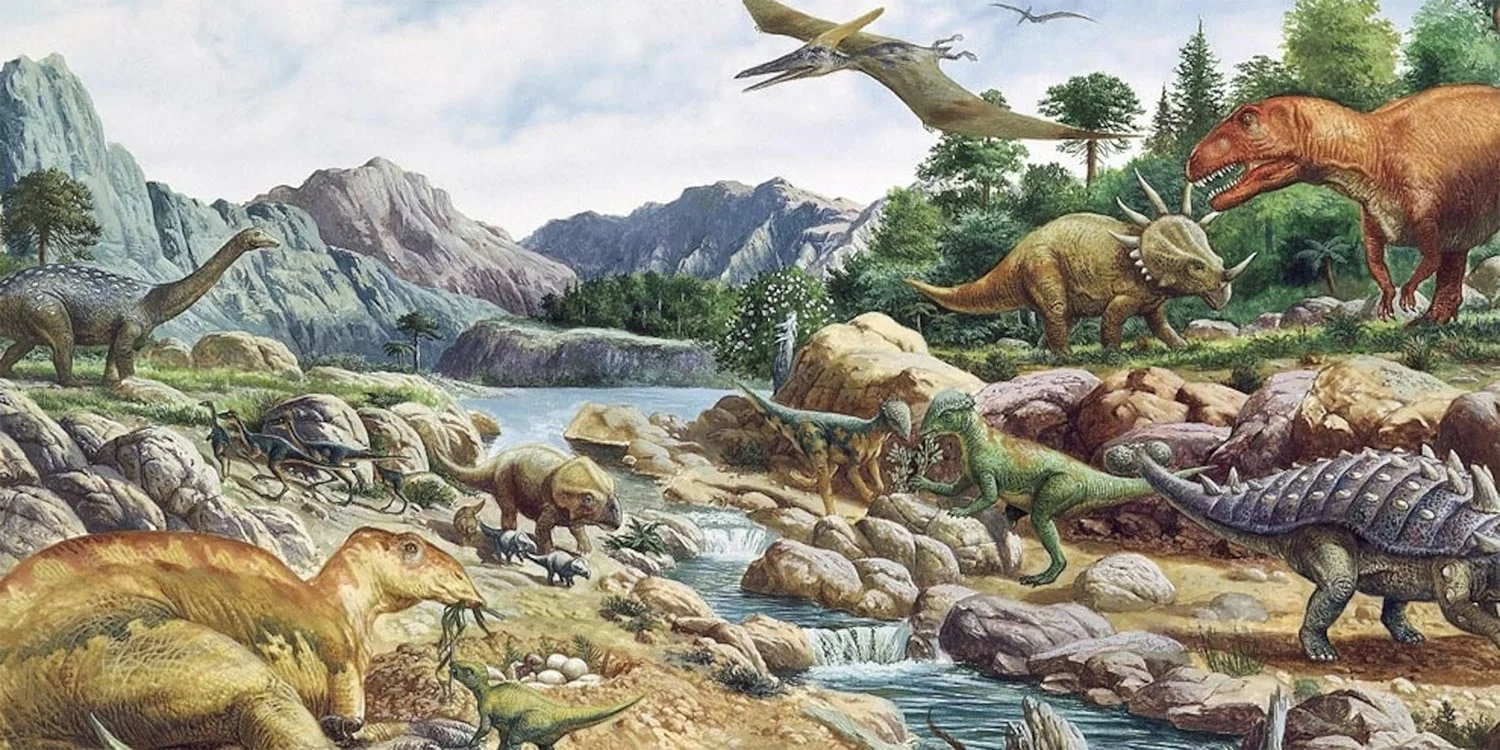
The Cretaceous Period, spanning approximately 145 to 66 million years ago, was the final and longest segment of the Mesozoic Era. Marked by significant geological, climatic, and biological changes, the Cretaceous Period laid the foundation for the modern world as we know it. This era saw the dominance of dinosaurs on land, the emergence of birds from their theropod ancestors, and the development of flowering plants, dramatically altering the landscape and ecosystems. The oceans teemed with diverse life forms, including fearsome marine reptiles and the first appearance of modern fish groups. Here are 28 fascinating and informative facts about the Cretaceous Period that reveal the complexity and vibrancy of this bygone era.
- The Cretaceous Period is divided into two halves: the Early Cretaceous Period (145–100.5 million years ago) and the Late Cretaceous Period (100.5–66 million years ago).
- The name comes from the Latin word "creta" meaning chalk, due to the large deposits of chalk of this age found in Western Europe.
- The climate during the Cretaceous period was generally warmer than today, even at high latitudes.
- During this period, the supercontinent Pangea continued to break apart, forming the Atlantic Ocean and shaping much of the modern continental structure.
- During the Cretaceous period, the first flowering plants (angiosperms) appeared, which subsequently came to dominate terrestrial ecosystems.
- During the late Cretaceous period, dinosaurs such as Tyrannosaurus rex, Triceratops, and Velociraptor roamed the Earth.
- During this period, the first true birds evolved from theropod dinosaurs.
- Sea levels were significantly higher than they are today, leading to the formation of vast, shallow inland seas.
- The Cretaceous Period ended with one of the most significant mass extinctions on Earth, wiping out an estimated 75% species, including all non-avian dinosaurs.
- It is widely believed that this mass extinction was caused by a combination of volcanic activity, climate change and an asteroid impact.
- The Chicxulub crater in Mexico's Yucatan Peninsula is evidence of the asteroid impact that contributed to the end-Cretaceous mass extinction.
- Ammonites, marine mollusks, were among the creatures that became extinct at the end of the Cretaceous period.
- The Cretaceous period saw the rise of mammals, although they remained small and largely nocturnal until the extinction of the dinosaurs.
- During this period, coral reefs began to resemble modern coral reefs with the appearance of scleractinian (rocky) corals.
- It is believed that the first snakes appeared in the Cretaceous period.
- Continental drift led to the isolation of various continents, promoting evolutionary diversification.
- During the Cretaceous period, the ocean was inhabited by large marine reptiles, including mosasaurs, plesiosaurs, and ichthyosaurs.
- Belemnites, squid-like cephalopods, were widespread in the oceans of the Cretaceous period.
- During this period, several significant volcanic eruptions occurred, which affected the global climate and ecosystems.
- During the Late Cretaceous, there was a rapid diversification of flowering plants, leading to new coevolutionary relationships with insects.
- During the Cretaceous period, significant coal deposits were formed, which are now the main sources of fossil fuels.
- The oldest known ants date back to the Cretaceous period.
- Fossilized feathers from this period provide evidence of the coloration and diversity of feathered dinosaurs and early birds.
- During the Cretaceous period, conifers, ferns and the first flowering plants dominated the land.
- The Tethys Sea, a vast ocean that separated the continents of Laurasia and Gondwana, began to close during the Cretaceous period.
- Fossil evidence suggests that some dinosaurs, such as hadrosaurs, may have lived in herds.
- The end of this period was marked by a significant reduction in plant diversity, as evidenced by fossil pollen deposits.
- Despite the mass extinction, the Cretaceous period laid the foundation for the subsequent evolution of modern flora and fauna in the Cenozoic era.
The Cretaceous Period was a time of profound change that shaped Earth's biological and geological landscape. From the dominance of dinosaurs to the emergence of flowering plants and a catastrophic mass extinction, the Cretaceous was a period of endings and beginnings. Its legacy is evident in the rich fossil record, which continues to intrigue and enlighten scientists and enthusiasts about the history of our planet. As we learn more about this fascinating era, we gain insight into the resilience of life and the ever-changing nature of Earth's history.