








Have you ever seen flowers that look like something else? For example, like a small alien, a bird, or a stone? Well, it's time to get acquainted with nature's amazing creations that have forgotten they're ordinary plants. We present a collection of the world's most unusual and astonishing flowers, complete with names, photos, and descriptions.
30. Dancing Girls (Impatiens Bequaertii)
 These little beauties are named for their appearance. They resemble tiny ladies in white or light pink dresses. These orchids belong to the genus Impatiens and have the curious property of rooting wherever they touch the soil. This makes "dancing girls" excellent houseplants, if you can find them.
29. Swaddled Baby, Anguloa uniflora
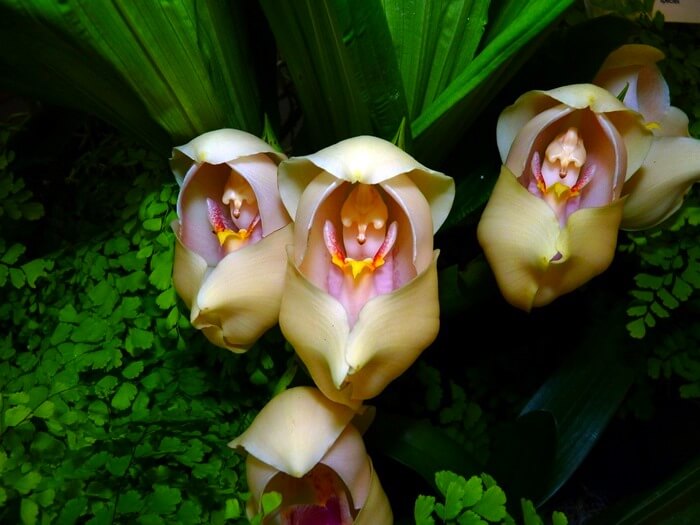 This cute little orchid, when in bloom, resembles a miniature baby wrapped in swaddling clothes. Or a tulip, hence its other name, the "tulip orchid.".
28. Dragon's shell, snapdragon achene (Antirrhinum)
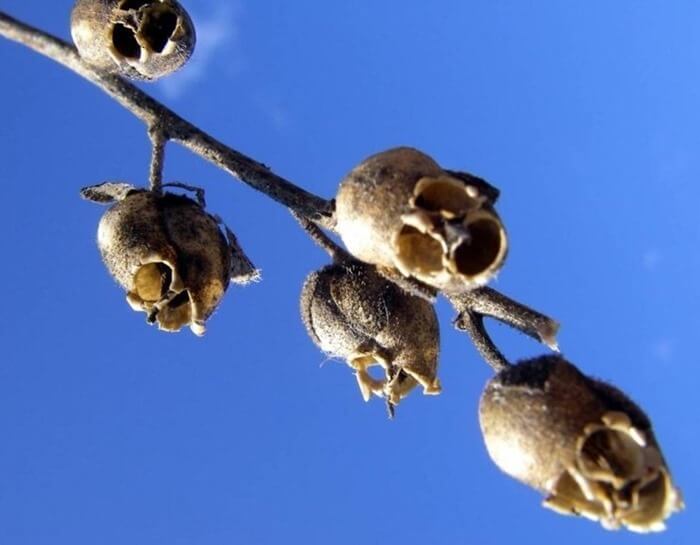
Many gardeners love snapdragons for their striking appearance. However, after blooming, snapdragons look like a scattering of miniature skulls.
In ancient times, people believed that the "dragon's shell" had mystical powers, and if you planted a snapdragon in your garden, it would protect your home from curses and evil.
27. Monkey orchid, Dracula saulii
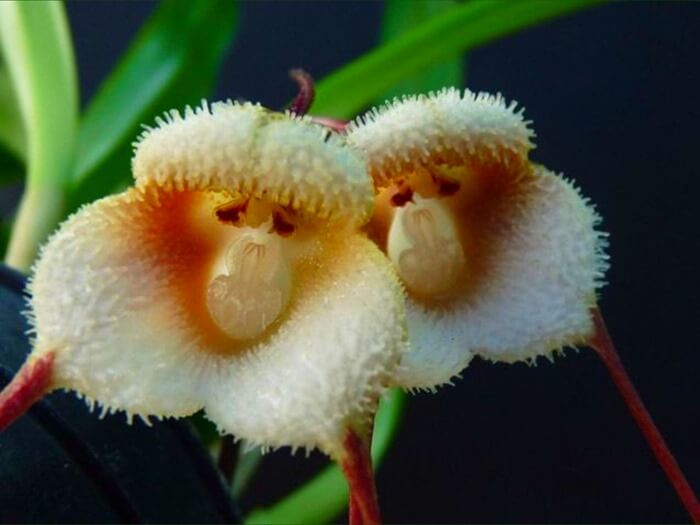 There are at least two species of orchids that resemble monkeys. One is Dracula saulii, a tiny, fluffy white orchid with a monkey face, discovered recently in Peru (2006), and the other is Dracula simia, an orchid found in the mountainous regions of Ecuador, Colombia, and Peru.
Both belong to the genus Dracula, which contains 123 species. None of the plants in this species suck blood, and they got their name from their shape, reminiscent of a small dragon's face, and their predominantly dark coloring.
26. Passion flower, Passiflora incarnata
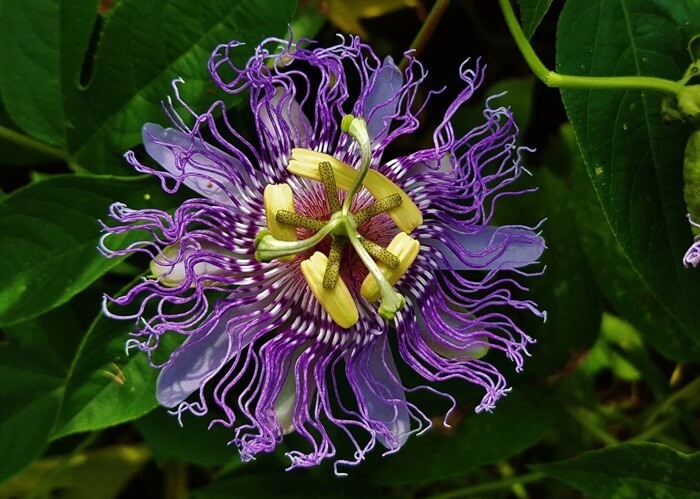 Spanish missionaries, who first saw this beautiful flower, named it passion flower because of the similarity of its appearance with elements of the story of the crucifixion of Jesus Christ.
- The triple stigma symbolizes the three nails with which Jesus was nailed to the cross.
- The thread-like fringes of the receptacle resemble a bloody crown of thorns.
- Five anthers of an unusual flower are the five wounds of Christ.
- Sharp leaves are the spear of Longinus.
- Antennae - whip, etc.
25. Leucospermum catherinae
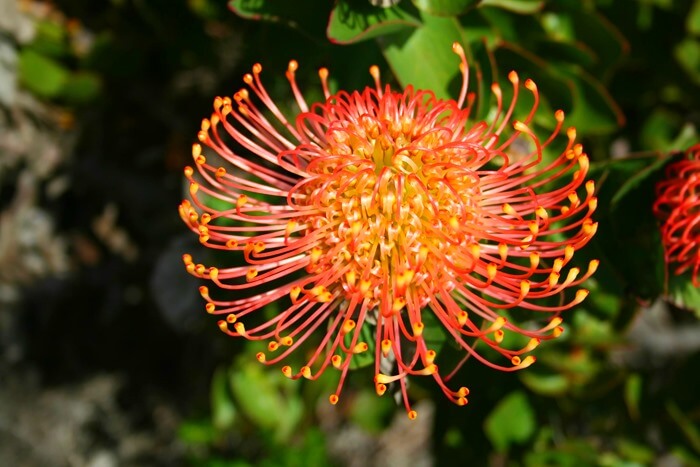 This playful flower resembles a carnival toy more than a creation of nature. Few plants can match the vibrant colors of this African wonder.
The most favorable time for leucospermum to bloom is after a drought or fire, when rodents and insects that would hinder its growth have been destroyed.
24. Star Flower, Stapelia grandiflora
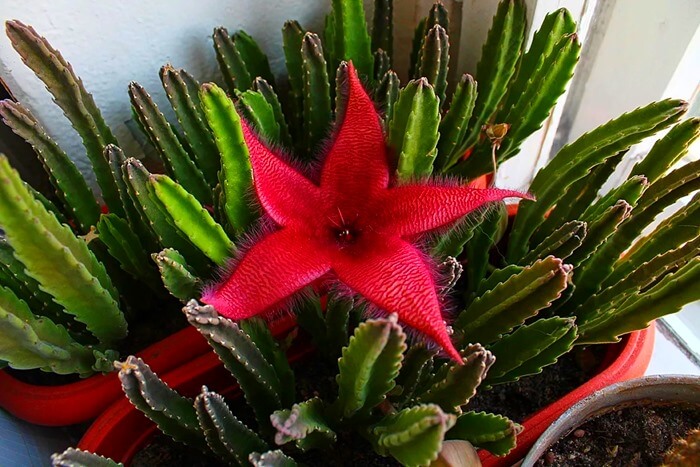 The graceful, crimson or deep purple petals of this plant look very unusual and even charming. However, the foul odor of the Star Flower makes it unsuitable as a gift for a loved one.
This is because the pollinators of the Stapelia grandiflora are flies, and what could be a better lure for flies than the sweet smell of rotting meat?
23. Ginger Beehive (Zingiber spectabile)
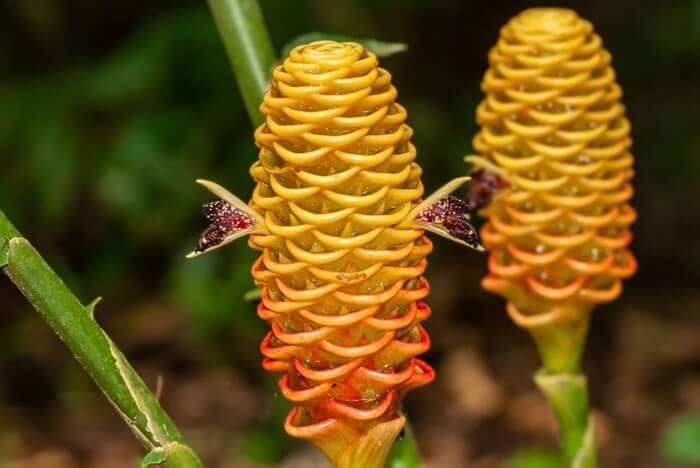 One of the strangest flowers in the world looks like a large pine cone. Its tiny "cups" or "honeycombs" (actually bracts) collect water and emit a ginger-like scent. And when the flowers bloom on the ginger hive, they resemble tiny white bees.
22. Pleurothallis truncata
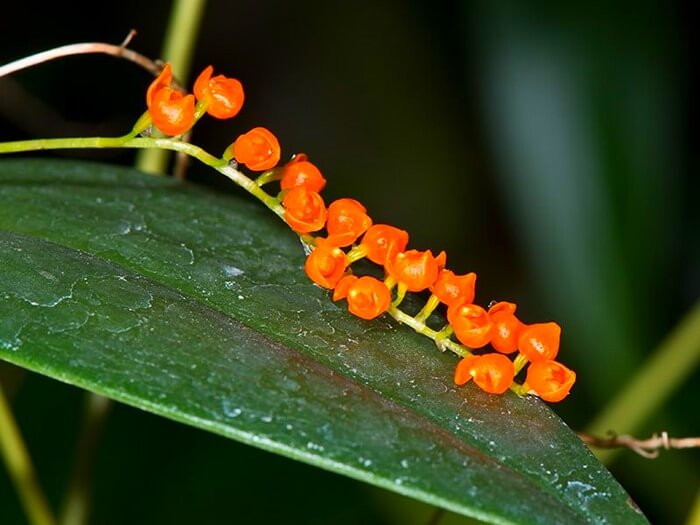 This unique orchid from the tropical regions of Ecuador features a bright orange inflorescence in the form of a two-tiered chain. This curious flower is so rare and strange that it doesn't even have a nickname.
21. Devil's Hand, Chiranthodendron pentadactylon
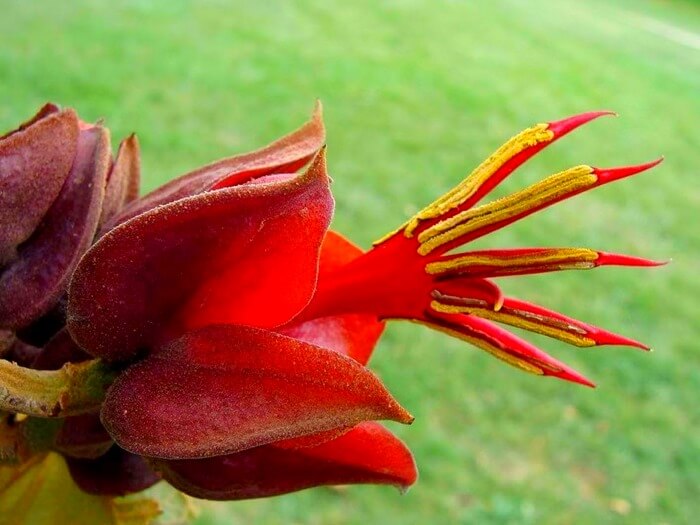 This is not just a flower, but a whole tree on which red petals form in the form of long, clawed fingers, reminiscent of the hand of a non-human creature.
20. Crab claw, Heliconia rostrata
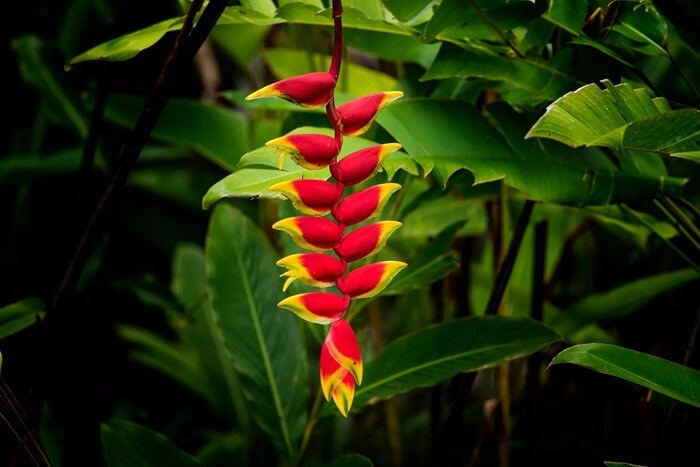 This charming plant gets its name from its red and yellow bracts, which resemble a crab's claw.
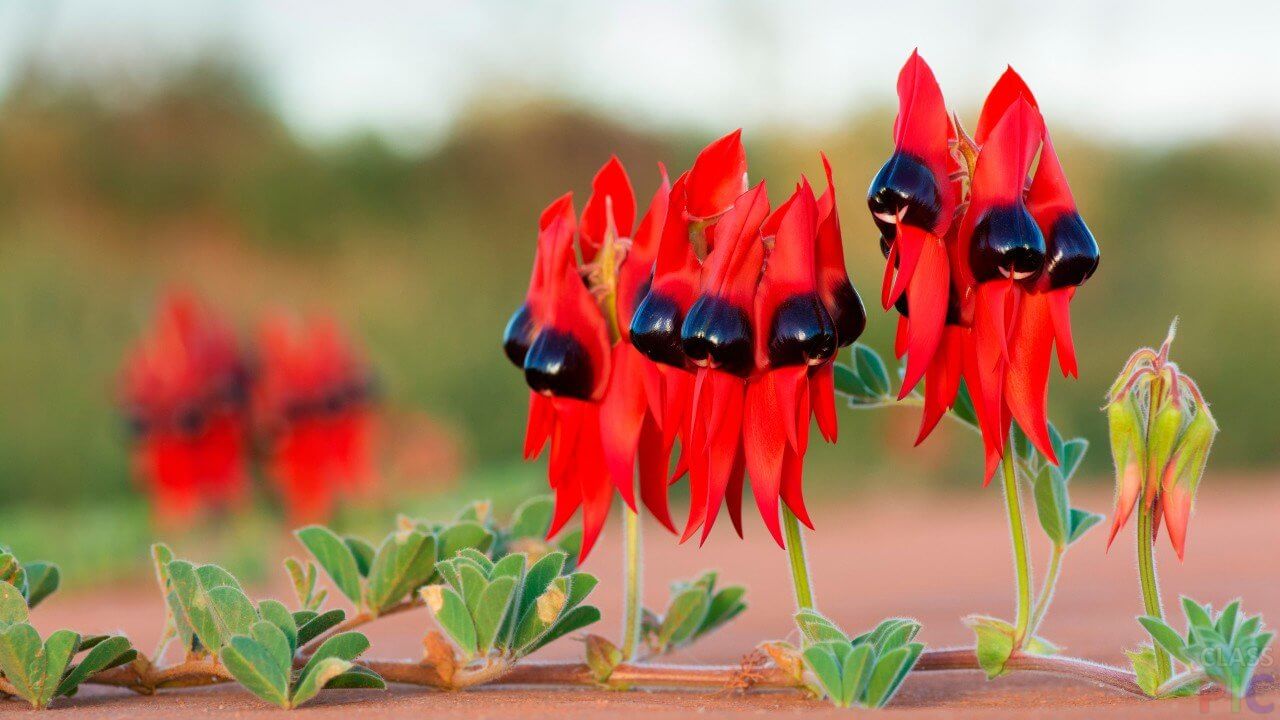
19. Desert pea, Swainsona formosa
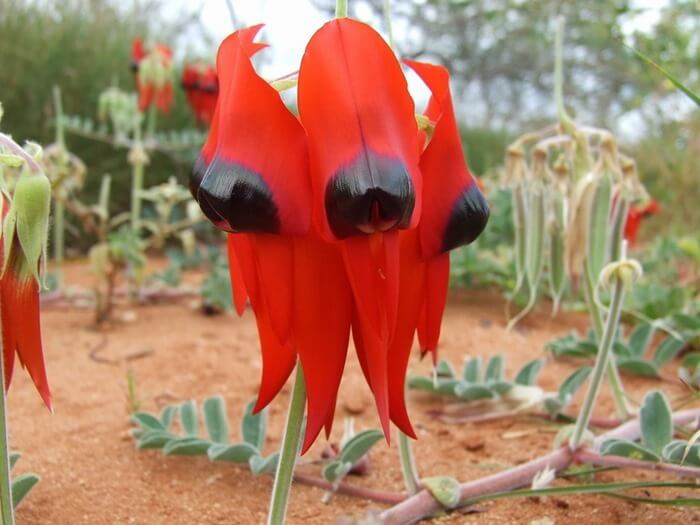 Before you is the product of rigorous evolutionary selection—a bright and fragile-looking flower that survives and thrives in a dry, arid climate.
Desert peas are one of Australia's most famous wildflowers. However, they cannot be picked without written permission from the Australian government.
18. Drumsticks, Craspedia globosa
 These playful little balls, seemingly woven from sunlight, look wonderful in both fresh and dried bouquets. They can be grown not only in a greenhouse but also on a balcony.
17. Bumblebee Orchid, Bee-bearing Orchid (Ophrys apifera)
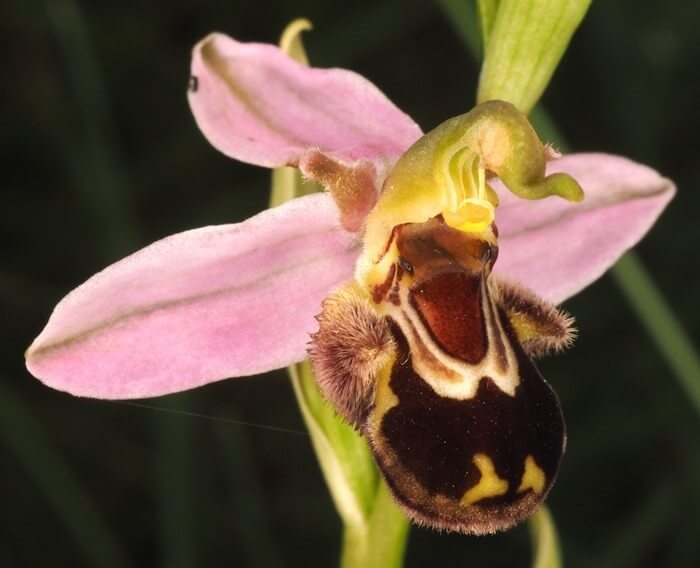 We don't know what this "bumblebee" is so happy about, as this flower has no reason to be happy. It's considered an endangered species.
16. Fire lily, Gloriosa superba
 If you plan to grow this plant to decorate your home or garden, make sure it's kept out of reach of pets and children, as it's poisonous. Ironically, this rare flower is considered an invasive weed in many regions of the world.
15. Snake's Head, Hydnora Africana
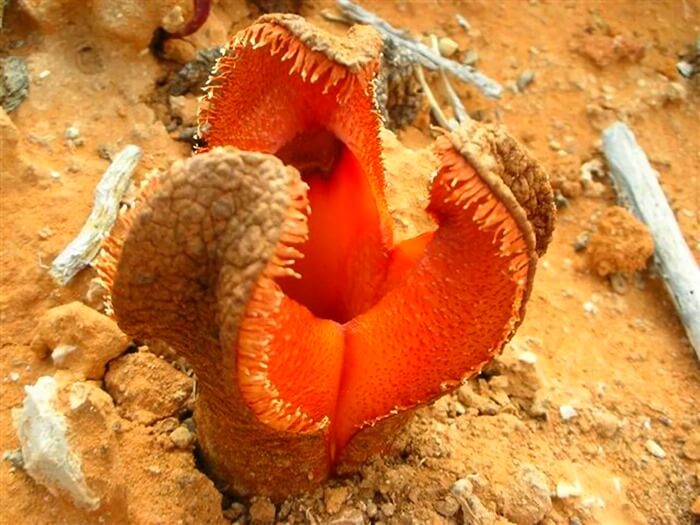 This monstrous-looking flower is native to South Africa. Its scent matches its appearance.
However, despite its shortcomings, Hydnora africana produces extremely tasty berries. They are not only delicious but also healthy; locals use them to treat cardiovascular diseases.
14. Welwitschia mirabilis

The main thing is to survive! This motto could be inscribed on the coat of arms of the Welwitschia, if it were transformed into a medieval knight. This the flower is a record holder for survival. The plant is found only in Angola and Namibia—some of the hottest and driest places on Earth.
13. Amorphophallus titanum
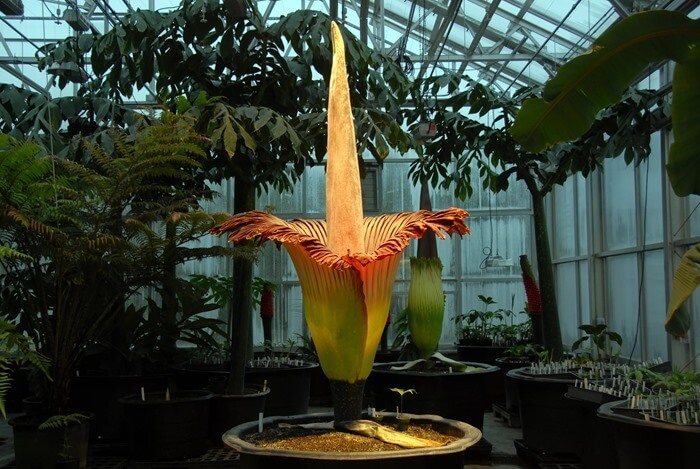 This gigantic flower can grow up to three meters tall. It also boasts one of the most offensive odors in the plant kingdom, making it a poor choice for the home.
12. Nepenthes attenboroughii
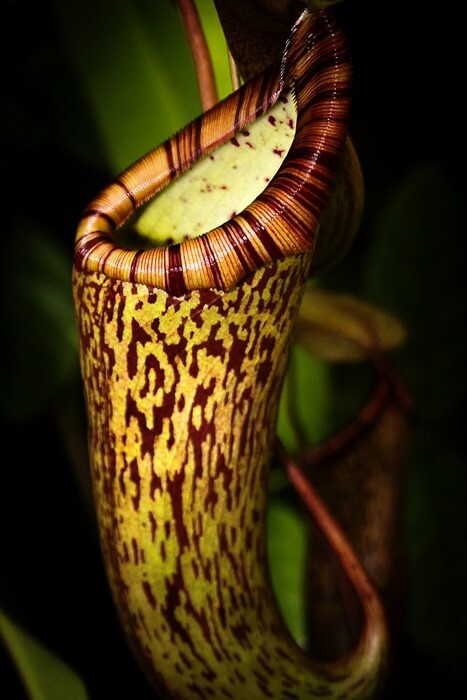
Some call this species the "pitcher plant," while others call it the "monkey pitcher plant." This comparison stems from its resemblance to a pitcher plant created by Mother Nature.
However, the sweet syrup found inside the plant is extremely dangerous to small birds, insects, and rodents, as it traps and dissolves creatures that come too close.
11. Angel's Trumpet, Brugmansia

Native to South American forests, this plant is beautiful, aromatic, and extremely poisonous. It is the source of three deadly toxins: atropine, hyoscyamine, and scopolamine, which are essentially psychotropic drugs.
There are many stories of this beautiful looking plant being used by criminals and drug addicts who use it to make a narcotic drink.
10. Parrot's beak, also known as spotted lotus (Lotus berthelotii)
 Once you see this plant, you'll understand why it's known colloquially as "Parrot's Beak." It looks as if a multitude of these brightly colored birds are lurking in the grass, or have somehow removed their beaks and forgotten to put them back on.
One of the rarest flowers in the world (in the wild), this plant was once a true gem in the Canary Islands. Its bright red or yellowish-red flowers contrast beautifully with the silvery-green, needle-like foliage.
It was formerly pollinated by sunbirds, but they became nearly extinct (except in Africa), and all scientific efforts to return the Parrot's Beak to its natural habitat have been in vain. It is found in the wild only occasionally and is listed as endangered.
However, this flower is quite successfully grown in flowerbeds, flower gardens, and even at home.
9. Tacca chantrieri
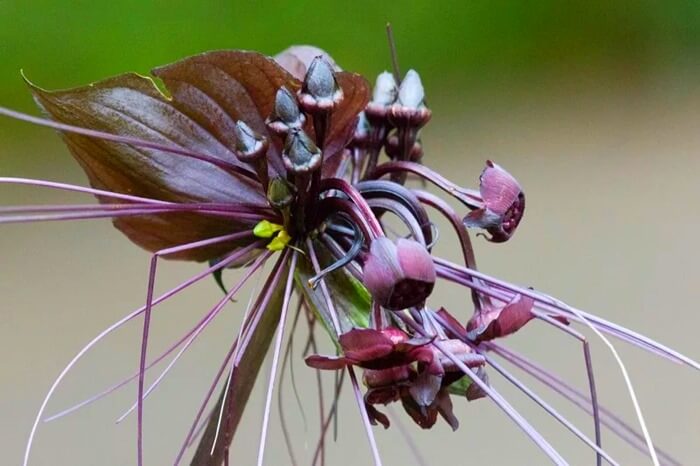 If Batman wanted to decorate his costume with some kind of fancy flower, the tacca chantrier would be the perfect choice.
This unusual flowering plant is found in Thailand, India, Malaysia, and East Asia. It has unique burgundy-black bracts shaped like bat or butterfly wings, as well as long, thread-like tendrils.
8. The Happy Alien Flower, Calceolaria uniflora
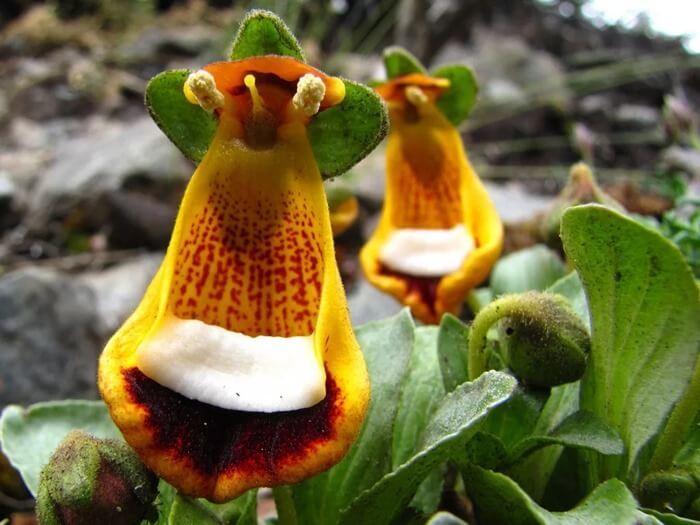 «Hello, earthlings! I come in peace.»", one of the most unusual flowers on the planet might say, if it had the opportunity.
Calceolaria uniflora looks like an alien with a happy face and an empty white tray in its hands. This unusual shape attracts not only people but also small birds like hummingbirds. They love to eat the white part of the flower and also help with pollination.
7. Moth Orchid (Habenaria Radiata)
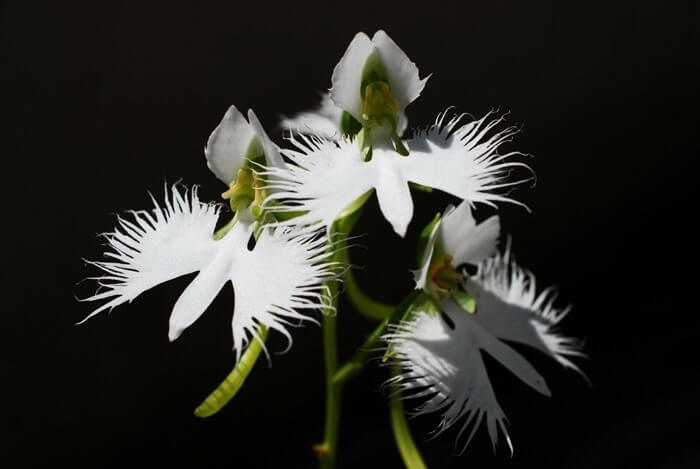 The shape of this graceful flower, native to Asia, resembles a delicate white butterfly or small bird. The moth orchid's flowers are only 4 cm wide.
6. Hot Lips, Psychotria Elata
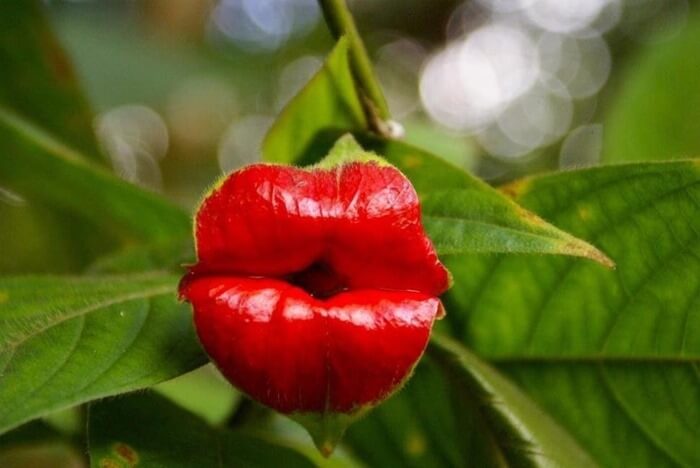 These gorgeous red, luscious lips belong to a flower found in the tropical forests of Central and South American countries such as Colombia, Costa Rica, Panama, and Ecuador.
The plant apparently «chose» such an interesting bract shape to attract pollinators, including hummingbirds and butterflies.
5. Flying duck, sea otter orchid (Caleana major)
 This amazing Australian flower truly resembles a miniature duck in flight. This orchid's shape helps it attract pollinators.
Pollination occurs in a cunning way. It's carried out by sawflies, insects similar to wasps. A special substance, an attractant, is produced inside the "duck's head," the composition of which is similar to the pheromones of female sawflies.
Attracted by this scent, the males land on the calania and become trapped. While the insect desperately struggles, it becomes covered in pollen, after which the flower releases its prey. However, sawflies aren't very smart, and the process of "land, grab, twitch, release" repeats on the next plant. And again. And again. And...
4. Elephant yam, Amorphophallus paeoniifolius
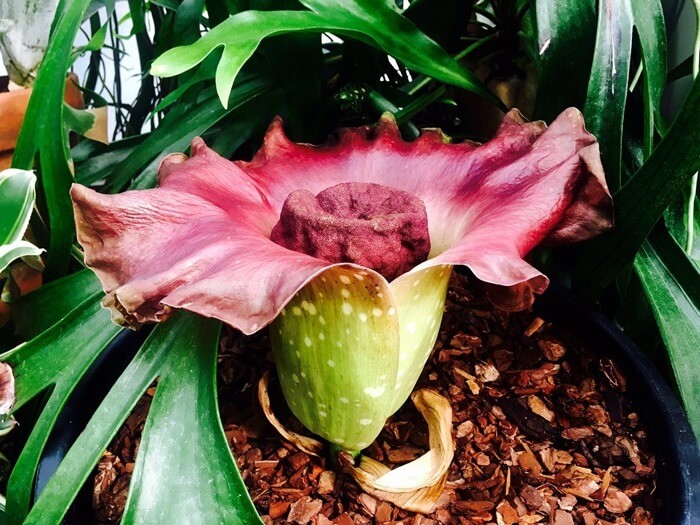 This unpleasant-looking plant also has an exceptionally foul odor, reminiscent of rotting meat. It's like one of the foulest-smelling objects on Earth. However, pollinating insects love this scent, and for the elephant yam, it's the most important thing.
The elephant yam is edible (if you hold your nose tightly). In some Southeast Asian countries, its tubers, which can grow up to 16 kg, are grown as a delicacy. In China, the elephant yam is used as a medicinal plant, and in the Philippines, it is fed to pigs.
3. Italian Orchis (Orchis Italica)
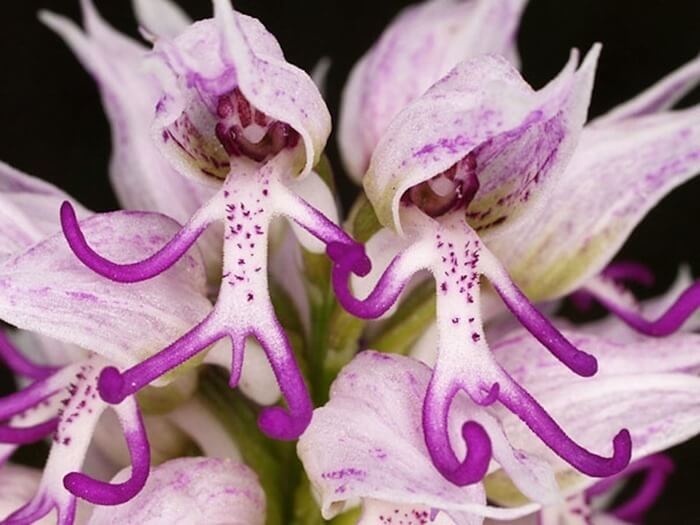 A true macho among the world's most unusual flowers is immediately distinguished by its lower half. Its appearance resembles that of a naked man.
Interestingly, the flowers of Orchis italica are hermaphrodites, meaning they have both male and female organs.
2. Living stone, lithops (Lithops species)
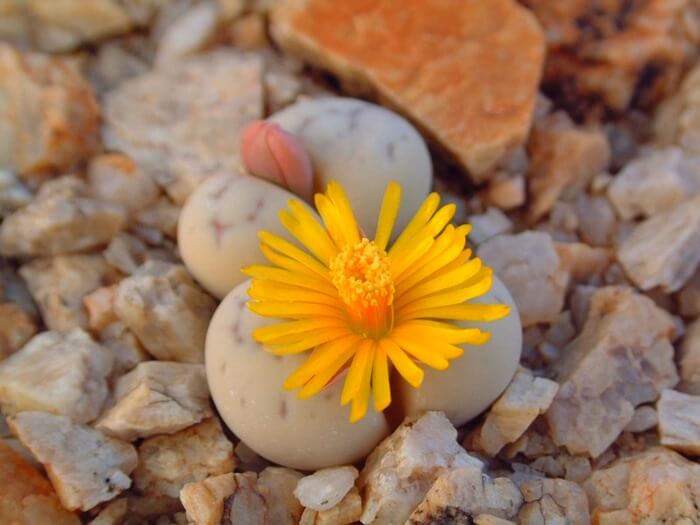 Some plants use toxins to avoid being eaten. Some use their thorns. The lithops survives by disguising itself as a rock.
If you're planning to collect rocks in southern Africa, you'll likely pick up a couple of these bivalve plants. There are dozens of species of lithops, each preferring a specific type of rock to hide among.
These fun plants can be grown indoors and will reward you with yellow or white daisy-like flowers.
1. Darth Vader's Flower, Aristolochia Salvadorensis
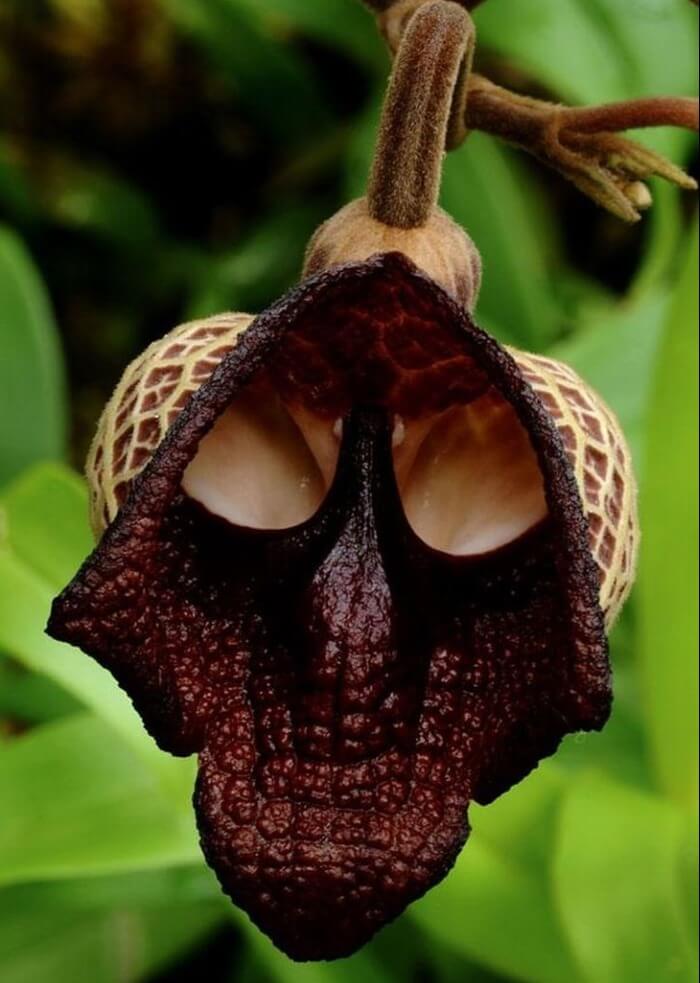
Even before the world saw the first Star Wars trilogy, this flower knew something. Imagine the Dark Lord adorning his helmet with it, sighing for his lost youth and love. Or decorating his son's room, which he carefully prepared on the Death Star, with slightly sinister-looking Dutchman's pipe.
But enough of the fantasy, let's get back to the facts. The appearance of the Salvadorian Birch Plant is determined by adaptations that ensure its survival. The helmet-like shape and purple color of the flowers, combined with the powerful aroma of rotting flesh, attract pollinating insects.
Lured by the scent and sight of the flower, insects fly through the glowing "eyes" of Darth Vader. The inside of the Dutchman's pipe is covered in sticky hairs that trap the unfortunate visitors long enough to coat them in pollen. The plant then releases its victims to fly off and pollinate more flowers.