








Benin, a country rich in history and culture, is located in the heart of West Africa, bordering Togo, Nigeria, Burkina Faso, and Niger. Despite its small size, this country boasts a diverse landscape, from the sandy Atlantic coast to the lush forests and national parks of its interior. Benin's history is closely intertwined with the Kingdom of Dahomey, known for its mighty warriors and significant role in the transatlantic slave trade. Today, Benin is a vibrant tapestry of cultures, languages, and traditions, offering a unique perspective on life and heritage in West Africa. Here are 31 interesting and informative facts about Benin that shed light on its past, present, and the essence of its people and land.
- Until 1975, Benin was known as Dahomey.
- The country gained independence from France on August 1, 1960.
- The country's name, Benin, comes from the Bight of Benin, a body of water on the southern coast.
- Porto Novo is the official capital of Benin, but Cotonou is the largest city, economic center, and seat of government.
- Benin has an area of approximately 114,763 square kilometers, making it one of the smallest countries in Africa.
- Benin's population is estimated to be over 11 million people.
- Benin is home to over 50 different ethnic groups, with the Fon group being the largest.
- Voodoo (Vodun) originated in Benin and is recognized as an official religion along with Christianity and Islam.
- The historical kingdom of Dahomey was famous for its female warriors, known as Dahomey Amazons or Mino.
- Benin's Pendjari National Park is one of West Africa's last refuges for wildlife, including elephants, lions and cheetahs.
- The Ou-Arli-Pendjari complex, located in Benin, Burkina Faso and Niger, is a UNESCO World Heritage Site due to its biodiversity.
- French is the official language, but indigenous languages such as Fon and Yoruba are also widely spoken.
- The Royal Palaces of Abomey, a UNESCO World Heritage Site, showcase the history of the Kingdom of Dahomey.
- Benin is one of the leading cotton producers in Africa.
- The country has a relatively young population, with an average age of about 19 years.
- Ganvie, known as the "Venice of Africa," is a lakeside village in Benin built entirely on stilts.
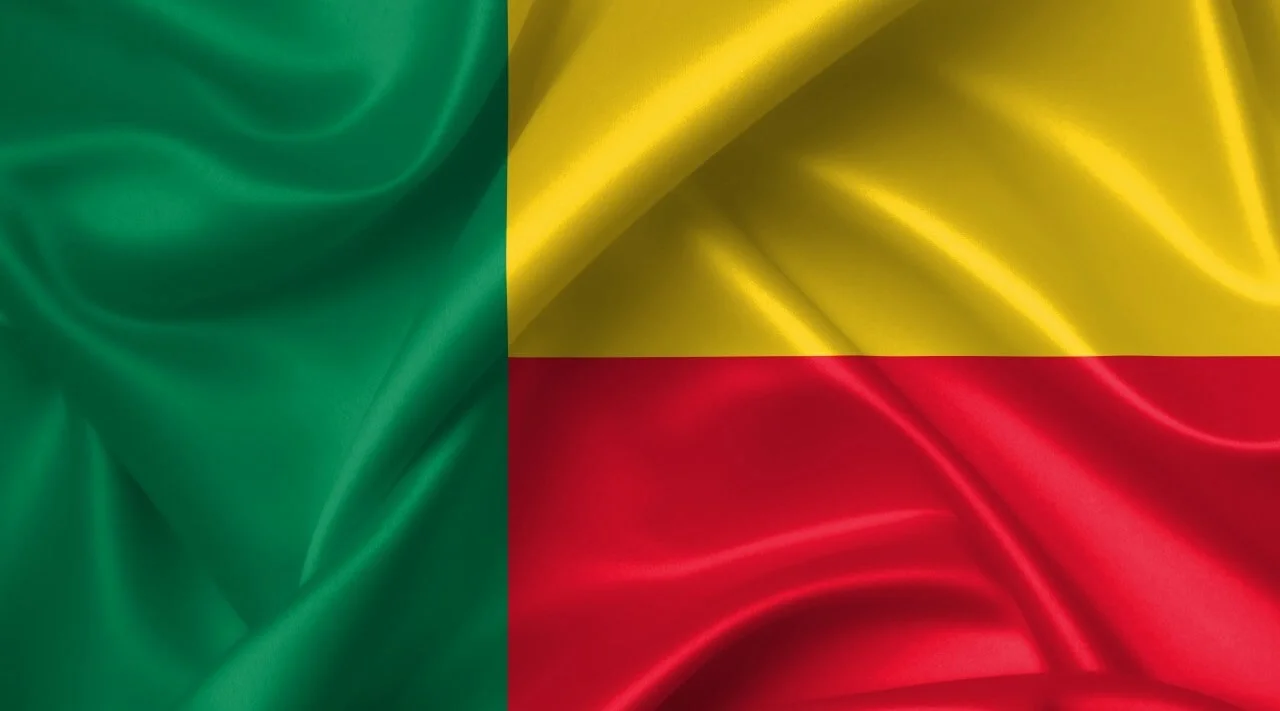
- The flag of Benin consists of two horizontal yellow and red stripes with a vertical green stripe at the hoist.
- Benin's economy relies heavily on agriculture, with crops such as cotton, maize and cassava grown.
- «The Door of No Return in Ouidah is a memorial to the millions of Africans forced into slavery as a result of the transatlantic slave trade.
- The Dan people of northern Benin are renowned for their skill in crafting elaborately decorated masks.
- Benin's coastline is home to endangered sea turtles, which are protected in several coastal marine parks.
- Gelede, an annual festival celebrating Yoruba culture and motherhood, is recognized by UNESCO for its cultural significance.
- In 2012, Benin introduced a community health insurance system to improve citizens' access to health care.
- Music is an integral part of Beninese culture, where traditional styles are combined with modern genres such as hip-hop and reggae.
- The country is making efforts to increase its capacity in renewable energy, especially solar energy.
- Benin City, a historic city in Nigeria, is named after the Bight of Benin but is not part of the modern state of Benin.
- The literacy rate in Benin is around 38.4%, and there are ongoing efforts to improve education throughout the country.
- The National University of Benin, founded in 1970, is the largest institution of higher education in the country.
- Benin is a member of the African Union and the Economic Community of West African States (ECOWAS).
- Dantokpa Market in Cotonou is one of the largest open-air markets in West Africa.
- The Somba people of northern Benin are known for their tata-somba, fortified mud houses that serve as both living quarters and fortresses.
Benin's rich heritage, history, culture, and natural beauty make it a fascinating country to explore. From the legacy of the Kingdom of Dahomey to vibrant traditions that continue to thrive today, Benin offers a unique window into the heart of West Africa. Its commitment to preserving its heritage while simultaneously embracing the future demonstrates the resilience and spirit of its people. As Benin continues to evolve and share its stories with the world, it remains a testament to the diversity and dynamism of African civilizations.