








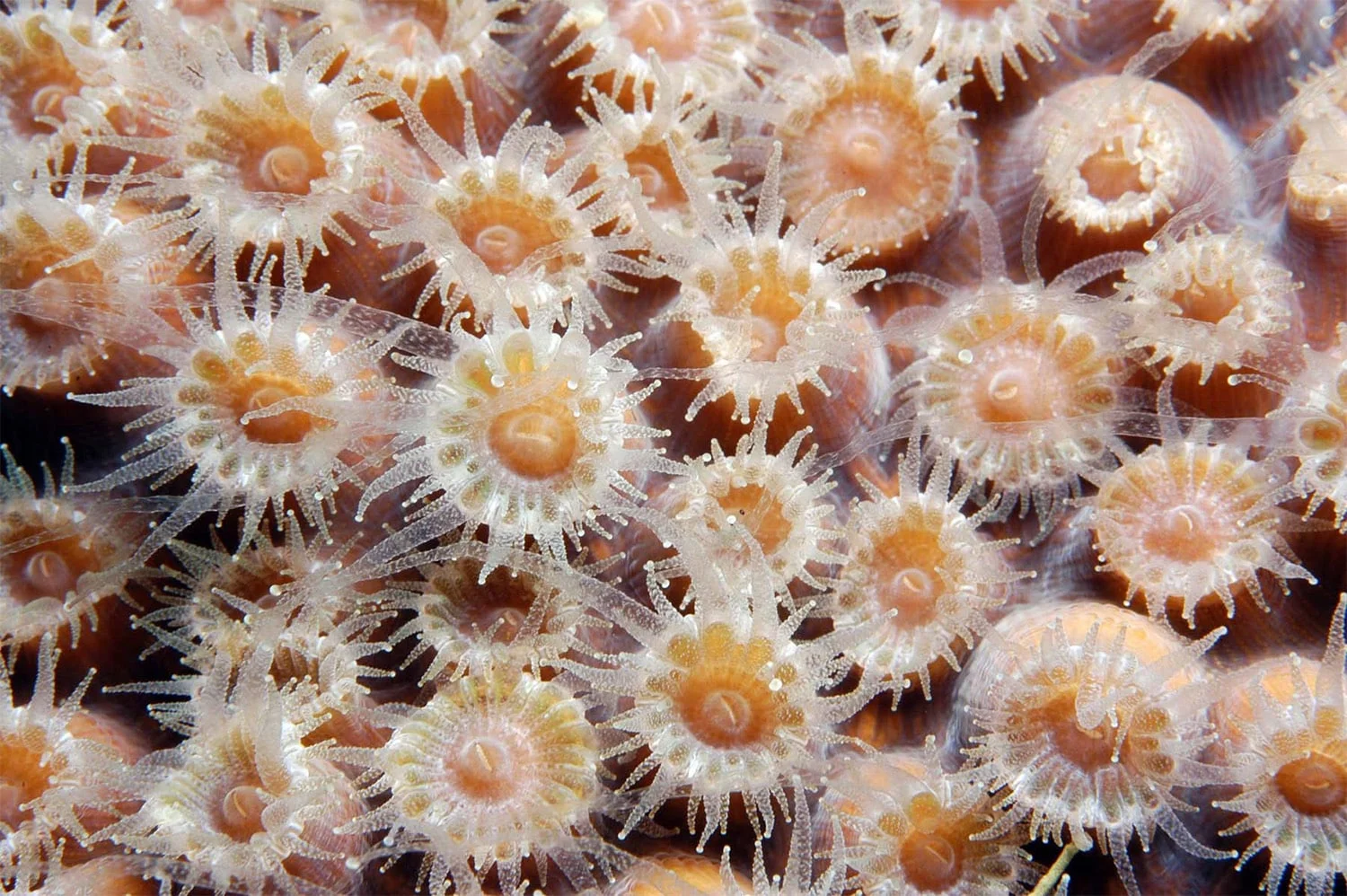
Coral reefs are among the most diverse and biologically complex ecosystems on Earth, often referred to as the "rainforests of the sea." Found primarily in tropical and subtropical waters, these vibrant underwater landscapes not only boast a stunning array of colors and life but also play a crucial role in the marine environment. Corals are not plants, but living organisms belonging to a group known as Cnidaria, which also includes jellyfish and sea anemones. These amazing creatures have a symbiotic relationship with algae called zooxanthellae, which provide them with food through photosynthesis. As the foundation of the reef ecosystem, corals support an incredible diversity of life, providing shelter, food, and breeding grounds for countless marine species. Here are 35 interesting and informative facts about corals that highlight their importance, beauty, and the challenges they face.
- Corals are made up of tiny animals called polyps that secrete calcium carbonate to form a hard skeleton.
- An individual coral polyp can be as small as a pinhead or as large as 30 centimeters in diameter.
- Most corals contain photosynthetic algae, zooxanthellae, which live inside their tissues and provide the corals with food through photosynthesis.
- Coral reefs grow best in warm, shallow, clear, sunny, and choppy waters.
- They typically grow at depths of less than 50 meters in tropical and subtropical waters.
- There are two main types of corals: hard and soft. Hard corals form the structure of coral reefs from calcium carbonate, while soft corals do not.
- The Great Barrier Reef, located in Australia, is the world's largest coral reef system and is visible from space.
- Coral reefs support approximately 25% of all marine species, despite occupying less than 1% of ocean floor area.
- Coral polyps have a mouth surrounded by tentacles; these tentacles can sting and are used to capture food.
- The color of corals is due to the presence of zooxanthellae algae in their tissues.
- Coral reefs provide protection and shelter for many marine organisms.
- Bleaching occurs when corals under stress, such as from rising water temperatures, shed their algal cells and turn white.
- Although bleached corals do not die, they are at higher risk of dying from disease and starvation.
- Coral reefs serve as natural barriers, protecting coastlines from tropical storms and erosion.
- Overfishing, destructive fishing practices, pollution, ocean warming and acidification pose serious threats to coral reefs.
- Coral reefs are a source of important substances for the development of new drugs, including those for the treatment of cancer, arthritis, bacterial infections in humans, and Alzheimer's disease.
- A quarter of the world's coral reefs are considered damaged beyond repair, and another two-thirds are under serious threat.
- Coral reefs have existed for about 500 million years.
- Coral reefs grow very slowly; some reefs take 5,000 to 10,000 years to form.
- It is estimated that people receive $29.8 billion in economic benefits from coral reefs annually in the form of goods and services.
- The process of new coral formation on a reef is called coral recruitment.
- Coral spawning is a major event during which many coral species release eggs and sperm en masse into the water.
- Coral diseases often spread during coral bleaching events due to the reduced resilience of stressed corals and an increase in pathogen numbers.
- Coral polyps feed on a variety of small organisms, from microscopic zooplankton to small fish.
- The relationship between corals and zooxanthellae is so close that corals cannot live without algae, and algae cannot live without corals.
- Coral reefs are sometimes called the "medicine kits" of the 21st century because of their potential for developing medicines.
- Climate change poses the greatest global threat to coral reef ecosystems, primarily due to rising temperatures and ocean acidification.
- Coral calcification rates decrease as ocean acidification increases.
- Some species of coral are nocturnal, and their polyps go out to hunt at night.
- Corals can reproduce asexually, by budding new polyps, or sexually, by spawning.
- Parrotfish play a crucial role in maintaining the health of coral reefs by eating algae that can suffocate corals.
- Coral reefs have been used as important navigational landmarks since humans began sailing the seas.
- Manta rays are one of the larger species that live on coral reefs, where they are cleaned by smaller fish.
- Coral reefs are often referred to as the "canaries in the coal mine" for the health of the global marine environment.
- The UNESCO World Heritage Centre has included several coral reefs on the World Heritage List, recognising their outstanding universal value and calling for their protection.
Coral reefs are vital not only to ocean health but also to human society, supporting millions of jobs in fisheries, tourism, and medicine. They protect our coastlines, support our economy, and provide a home for countless species. However, these ecosystems face serious threats from human activity and climate change. Protecting and preserving coral reefs is essential to maintaining our planet's biodiversity and the health of our ocean ecosystems. Through education, conservation efforts, and sustainable practices, we can help ensure these vibrant ecosystems are preserved for future generations to enjoy.