








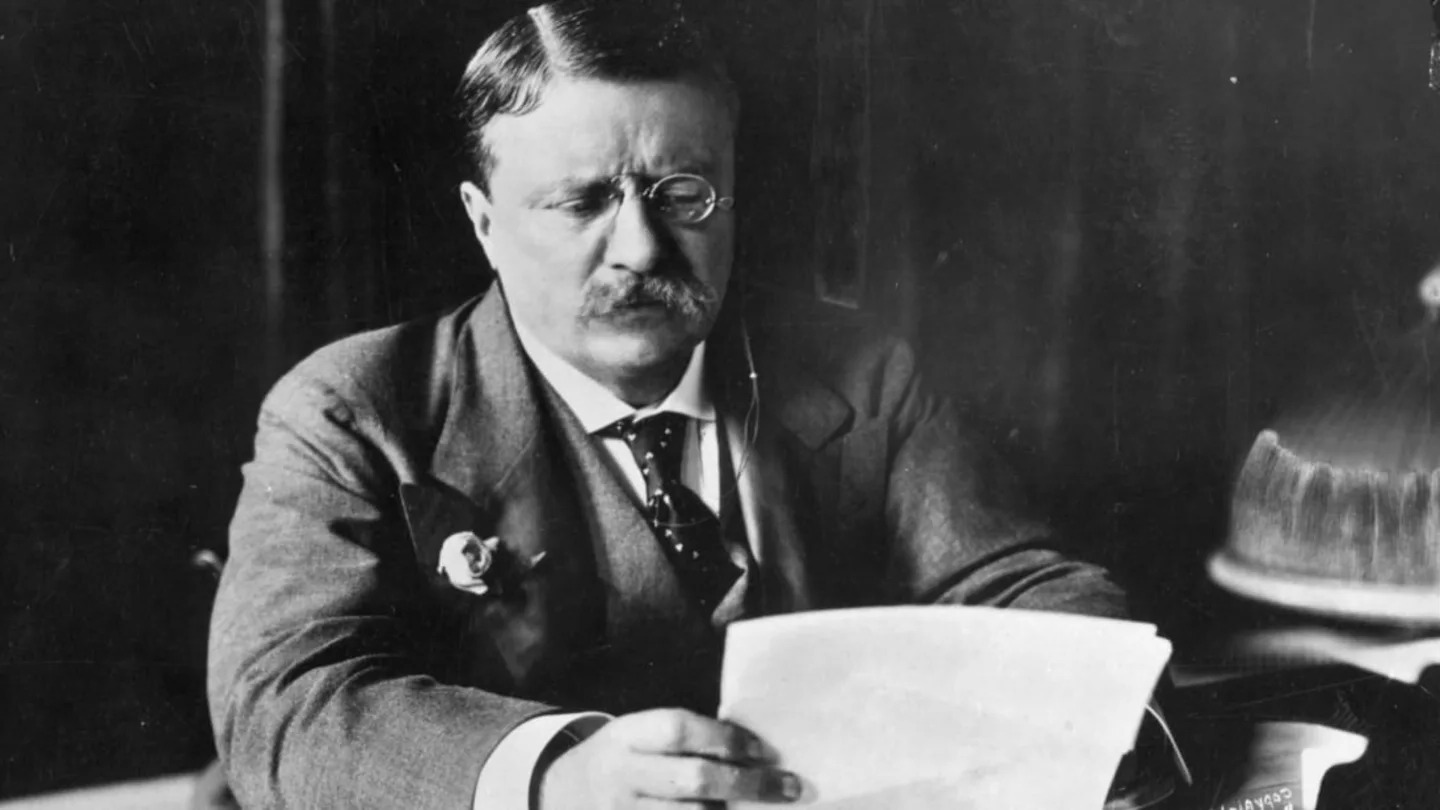
 Source: Mentalfloss.com
Theodore Roosevelt, the 26th President of the United States, was a man of many talents and interests. Did you know he was the youngest president ever to take office at the age of 42? Roosevelt's life was full of adventure, from commanding the Rough Riders during the Spanish-American War to exploring the Amazon rainforest. He was also a prolific writer, penning over 35 books on topics ranging from history to nature. Roosevelt's progressive policies, such as his fight against monopolies and his efforts to preserve nature, left a lasting impact on America. His vibrant personality and tireless energy earned him the nickname "Teddy," which remains relevant today.
Key findings:
- Theodore Roosevelt overcame childhood asthma to become a fearless leader who made a significant impact on American history through his presidency, environmental efforts, and influential foreign policy.
- Known for his adventurous spirit and dedication to public service, Theodore Roosevelt continues to inspire future generations with his commitment to conservation, physical fitness, and progressive politics.
Contents 01 Early Life and Education 02 Political Career 03 Military Service 04 Conservation 05 Personal Life 06 Legacy and Influence 07 Health and Fitness 08 International Relations 09 Later Years and Death 10 Trivia 11 Cultural Impact 12 Roosevelt's Legacy Lives On
Early years and education
Theodore Roosevelt's early years were filled with events that shaped his character and determined his future. Here are some interesting facts about his childhood and education.
- Theodore Roosevelt was born on October 27, 1858, in New York City and came from a wealthy family.
- As a child, he suffered from severe asthma, which led him to develop a love of nature and a desire to improve his health.
- Roosevelt was educated at home by private tutors before entering Harvard University, where he graduated in 1880.
- At Harvard, he studied a wide range of subjects, including natural science, which fueled his lifelong passion for conservation.
Political career
Roosevelt's political career was marked by significant achievements and reforms. Let's look at some key moments in his political career.
- In 1882, at the age of just 23, Roosevelt was elected to the New York State Assembly, becoming its youngest member at the time.
- He served as Assistant Secretary of the Navy under President William McKinley, where he played a critical role in preparing the Navy for the Spanish-American War.
- Roosevelt became the 26th President of the United States in 1901 following the assassination of President McKinley.
- He became the youngest person to become US president at the age of 42.
- In 1906, Roosevelt received the Nobel Peace Prize for his role in negotiating an end to the Russo-Japanese War.
Military service
Roosevelt's military service was another important aspect of his life. His courage and leadership qualities were demonstrated during his military service.
- During the Spanish-American War, Roosevelt commanded the volunteer cavalry regiment, the Rough Riders, at the Battle of San Juan Hill.
- His leadership qualities and bravery in battle brought him national fame and contributed to the development of his political career.
- Roosevelt's military service demonstrated his belief in the importance of a strong national defense.
Conservation efforts
Roosevelt's dedication to conservation left an indelible mark. His efforts to preserve natural resources were groundbreaking.
- In 1905, as president, Roosevelt established the U.S. Forest Service.
- He created five national parks, 18 national monuments, and 150 national forests, protecting approximately 230 million acres of public lands.
- Roosevelt's conservation efforts were driven by his belief in the need to preserve natural resources for future generations.
Personal life
Roosevelt's personal life was as rich as his public career. His interests and hobbies were varied and reflected his adventurous spirit.
- He was an avid reader, reportedly reading one book a day, even during his presidency.
- Roosevelt was a prolific writer, authoring more than 35 books on a variety of subjects, including history, politics, and nature.
- He had a passion for hunting and often went hunting in the United States and Africa.
- Roosevelt's love of nature extended to birdwatching, and he was a member of the American Ornithologists' Union.
- He was a devoted family man, married to Edith Kermit Carow, with whom he had six children.
Legacy and influence
Roosevelt's legacy continues to influence American society and politics. His contributions have had a lasting impact on the country.
- The teddy bear was named after Roosevelt after a 1902 hunting trip during which he famously spared the life of a bear cub.
- Roosevelt's face is one of four carved into Mount Rushmore, symbolizing his significant contributions to American history.
- His progressive policies laid the foundation for future reforms in labor rights, consumer protection, and environmental protection.
- Roosevelt's Fair Deal policy aimed to ensure fairness for workers, consumers, and businesses.
- He was a strong advocate for regulating large corporations, which led to the passage of the Pure Food and Drug Act and the Meat Inspection Act of 1906.
Health and Fitness
Roosevelt's commitment to physical fitness was a defining aspect of his life. He believed in the importance of maintaining a healthy body and mind.
- Despite suffering from asthma as a child, Roosevelt became an accomplished boxer and wrestler during his college years.
- As president, he often engaged in intense physical exercise, including hiking, horseback riding, and swimming.
- Roosevelt's dedication to healthy living inspired him to create the "Roosevelt System" of physical education, which emphasized outdoor activities and exercise.
International relations
Roosevelt's foreign policy was characterized by his belief in American strength and leadership on the world stage.
- He famously formulated his foreign policy with the phrase: "Speak softly, but carry a big stick.".
- Roosevelt played a key role in the construction of the Panama Canal, which greatly contributed to the development of world trade and military strategy.
- He played a major role in brokering the Treaty of Portsmouth, which ended the Russo-Japanese War and for which he was awarded the Nobel Peace Prize.
Later years and death
Roosevelt's final years were marked by continued public service and personal challenges. His legacy continued to grow even after his presidency ended.
- After leaving office, Roosevelt embarked on a year-long expedition to Africa, where he collected specimens for the Smithsonian Institution.
- In 1912, he ran for president again on the Progressive Party ticket, also known as the "Moose Party.".
- Despite his electoral defeat, Roosevelt's campaign brought attention to progressive issues and influenced future political movements.
- In his final years, Roosevelt's health declined, and he died on January 6, 1919, at the age of 60.
Interesting facts
Roosevelt's life was full of interesting and little-known facts that highlight his unique personality and achievements.
- He was the first president to fly in an airplane, be on a submarine, and own a car.
- Roosevelt was an accomplished martial artist and held a brown belt in judo.
- He was a passionate advocate of "active living," urging Americans to work hard and exercise.
- Roosevelt's energetic personality earned him the nickname "Teddy," which he disliked and preferred to be called "Theodore.".
- Once, after being shot in the chest, he gave a 90-minute speech insisting that the bullet had not hit anything vital.
Influence on culture
Roosevelt's influence extended beyond politics and touched American culture. His legacy is reflected in various aspects of society.
- He was a central figure in the development of the American conservation movement, inspiring future generations to protect natural resources.
- Roosevelt's adventurous spirit and his flamboyant, eccentric personality have been reflected in numerous books, films, and television shows.
- His dedication to public service and reform made him a role model for many politicians and activists.
- Roosevelt's speeches and writings continue to be studied for their valuable insights into leadership, politics, and American values.
- His contributions to American society are commemorated by numerous monuments, parks, and institutions bearing his name.
Roosevelt's legacy lives on.
Theodore Roosevelt's life was full of adventures , leadership и reforms . From . military feats before presidential Through his achievements, he left an indelible mark on American history. passion к nature conservation led to the creation of numerous national parks and forests, preserving nature for future generations. Progressive Roosevelt's policies helped shape modern America by advocating workers' rights , consumer rights protection и regulation of corporate activities .
His charismatic personality and unshakable determination continues to inspire many. Whether it was climbing San Juan Hill or fighting monopolies, Roosevelt's actions spoke louder than words. heritage - a testament to what one person can achieve with dedication courage , conviction и pursuit to a better world.
Roosevelt's story reminds us that leadership и dedication to the cause may lead to significant changes. His life remains lighthouse hopes и inspiration for everyone who strives to change the world for the better.
Frequently Asked Questions
Q: Why was Theodore Roosevelt such a significant figure in American history? A: Theodore Roosevelt was more than just a president; he was a man of many firsts and energy. From commanding the Rough Riders during the Spanish-American War to becoming the youngest president in U.S. history at the time, his zest for life and passion for reform left an indelible mark on the country. His work in conservation, his role in building the Panama Canal, and winning the Nobel Peace Prize are just some of the reasons he is remembered as a key figure. Q: What were Theodore Roosevelt's most notable accomplishments as president? A: Where to begin? Roosevelt was a driving force for progress. He famously used his power to protect wildlife and public lands, creating the U.S. Forest Service and establishing national parks, forests, and bird sanctuaries. He also played a vital role in laying the foundations for the Panama Canal, a massive engineering feat that connected the Atlantic and Pacific Oceans. Furthermore, his "Fair Deal" policies aimed to ensure fair treatment for all Americans by addressing issues such as corporate monopolies and consumer protection. How did Theodore Roosevelt impact the environment? Teddy was a true friend of trees and animals. He is often called the "conservation president," and for good reason. During his time in office, he set aside vast tracts of land for national forests, preserves, and wildlife refuges. His efforts not only preserved beautiful landscapes for future generations but also launched the American conservation movement, changing people's attitudes toward natural resources and their conservation. What was Theodore Roosevelt's approach to foreign policy? "Speak softly, but carry a big stick; you will accomplish much." This was Teddy's motto, and he truly lived by it. His approach to foreign policy was one of peaceful negotiation, but also of demonstrating the United States' willingness to use force if necessary. This strategy was evident in his work securing the Panama Canal Zone and in his efforts to resolve conflicts such as the Russo-Japanese War, for which he received the Nobel Peace Prize. How did Roosevelt become president? It's quite a story. Roosevelt first came to public attention as governor of New York, where his progressive reforms attracted the attention of the Republican Party. They made him William McKinley's running mate in the 1900 election, hoping to curb his reformist fervor by removing him from the vice presidency. However, fate decreed otherwise. When McKinley was assassinated in 1901, Roosevelt, at the age of 42, became the youngest president in U.S. history, allowing him to realize his vision for America's future. What personal challenges did Theodore Roosevelt overcome in his life? Teddy's life was not without its challenges. He faced many obstacles, beginning at a young age when he suffered from severe asthma. Despite this, he maintained a strenuous lifestyle, believing it would strengthen his body and spirit. Tragedy struck him in his personal life when his first wife and mother died on the same day—a devastating blow that forced him to seek solace and recovery in the Badlands of North Dakota. This experience shaped his resilient character, teaching him to face life's adversities with courage. Did Theodore Roosevelt have any hobbies or interests outside of politics? Certainly, Roosevelt was a man of many passions. He was an avid nature lover, enjoying hunting, horseback riding, and exploring the wilderness. His love of nature was combined with intellectual curiosity; he was an avid reader and a talented writer, writing extensively about history, biology, and his own adventures. His zest for life extended to physical fitness: he participated in boxing, judo, and tennis. Roosevelt's wide range of interests and hobbies made him a well-rounded individual who brought a unique perspective to the presidency.
Was this page helpful?
Our work is based on a commitment to providing reliable and engaging content. Every fact on our site is contributed by real users just like you, providing a rich and varied experience and information. To ensure the highest standards of accuracy and reliability, our experienced editors carefully review every submission. This process ensures that the facts we share are not only engaging but also trustworthy. Trust our commitment to quality and authenticity as you explore and learn with us.
Share this fact: