






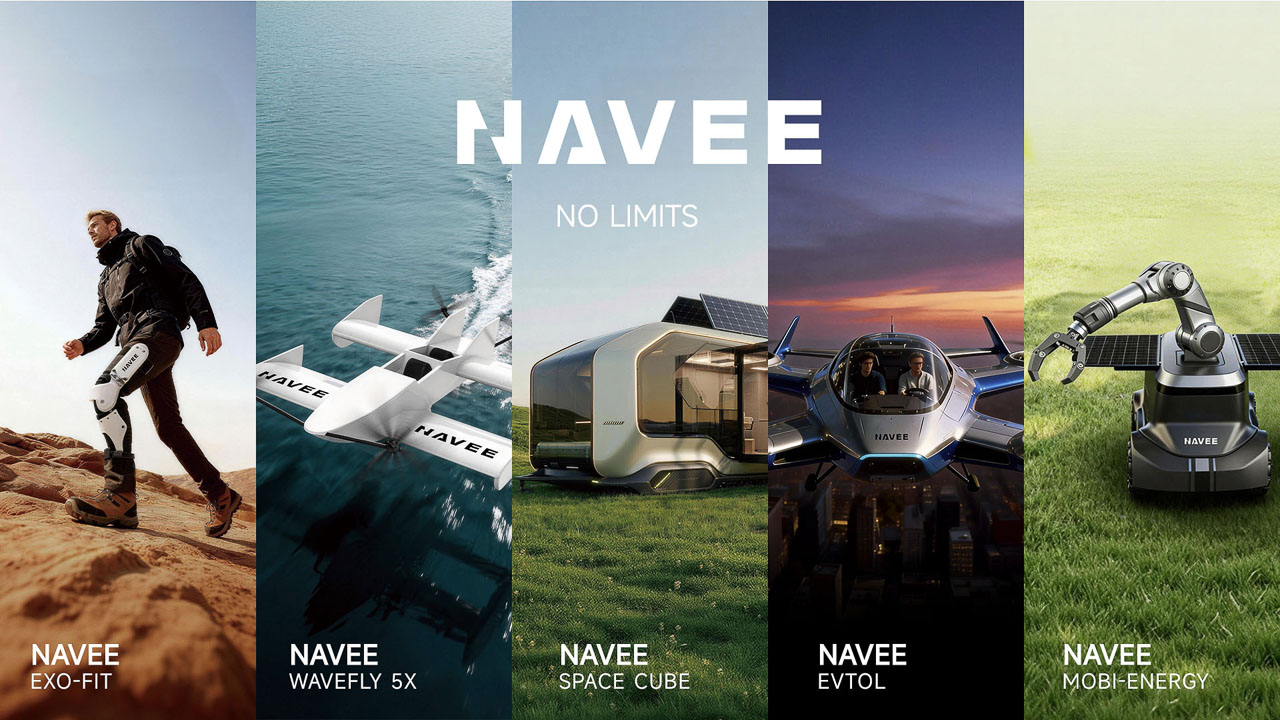
On January 23, 2026, NAVEE held its first global brand strategy event at the Computer History Museum in Silicon Valley. This wasn't a typical product launch. It was a statement of intent. The company is taking a clear step toward transforming itself from a micromobility brand into something much more, what it calls a full-spectrum provider of intelligent mobility solutions.
A five-product lineup was unveiled, covering land, motorized, air, and water vehicles. NAVEE's message is clear: the company wants to be known as more than just a scooter manufacturer.
Five-line mobility ecosystem
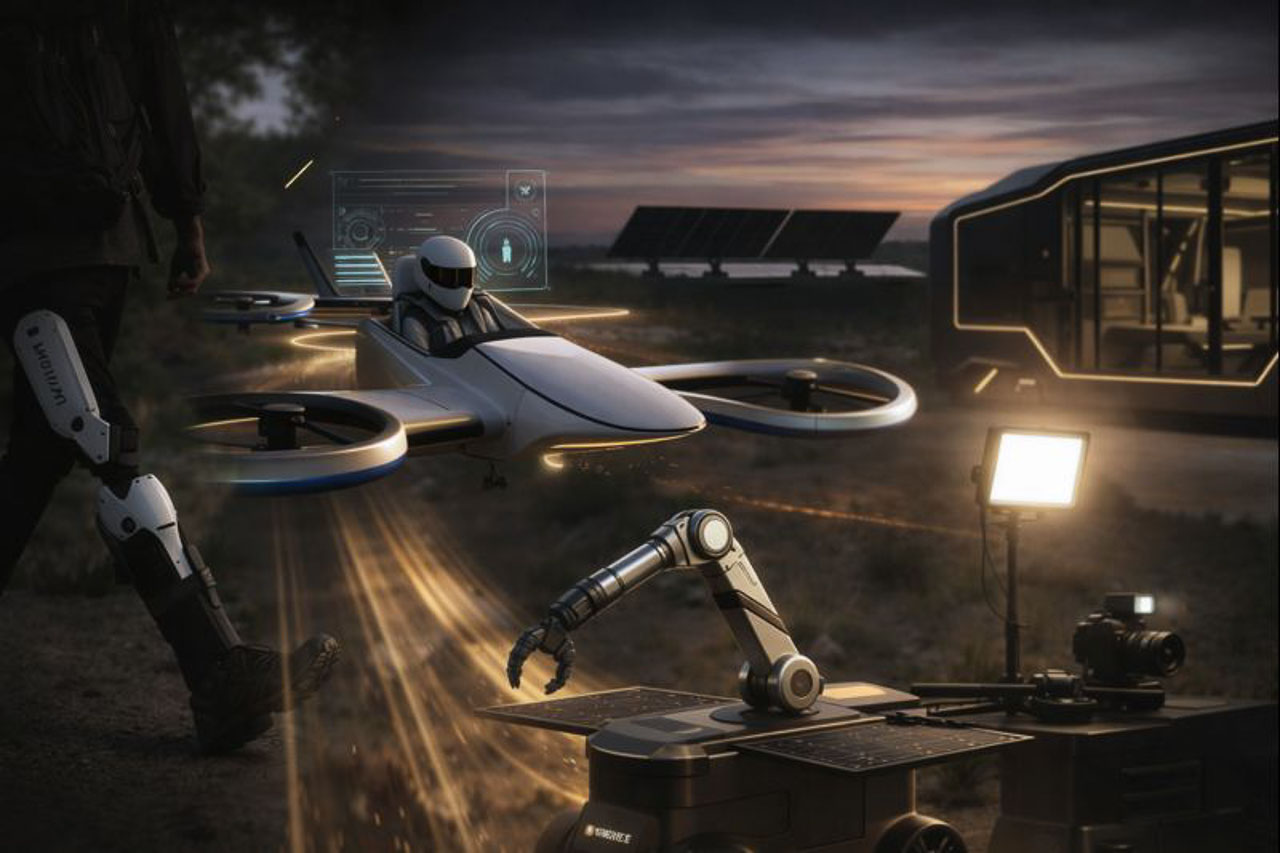
At the event, NAVEE presented five product lines. Each is focused on a specific type of movement, and all are still in the concept stage. The ideas are interesting, and the company's ambitions are hard to ignore.
These five ideas are united not by form factor, but by design. NAVEE views mobility not so much as a vehicle problem, but as an interface problem. How does energy move with you? How does shelter adapt to your location? How does assistance feel unnoticeable, rather than mechanical? This philosophy manifests itself in different forms, but remains constant.
NAVEE calls this moment the Fifth Revolution in mobility, following steam engines, internal combustion engines, electrification, and connectivity. In the words of Polo Huang, "We are now entering the Fifth Revolution: intelligent mobility, autonomous, seamless movement across all physical spaces. This is the future NAVEE is building.".
This mindset is emerging because everyday life is changing faster than the tools we can create for it. Work is becoming increasingly distributed. Energy is becoming increasingly mobile. People increasingly expect technology to adapt to their lifestyles rather than impose fixed behavior patterns.
1. NAVEE Space Cube: A Transformable Travel Camper
In its simplest form, the Space Cube is a camper trailer that expands when parked, transforming its compact body into a living space. According to NAVEE, it expands from 18 square meters to 27 square meters in approximately three minutes, representing a 48 percent increase.
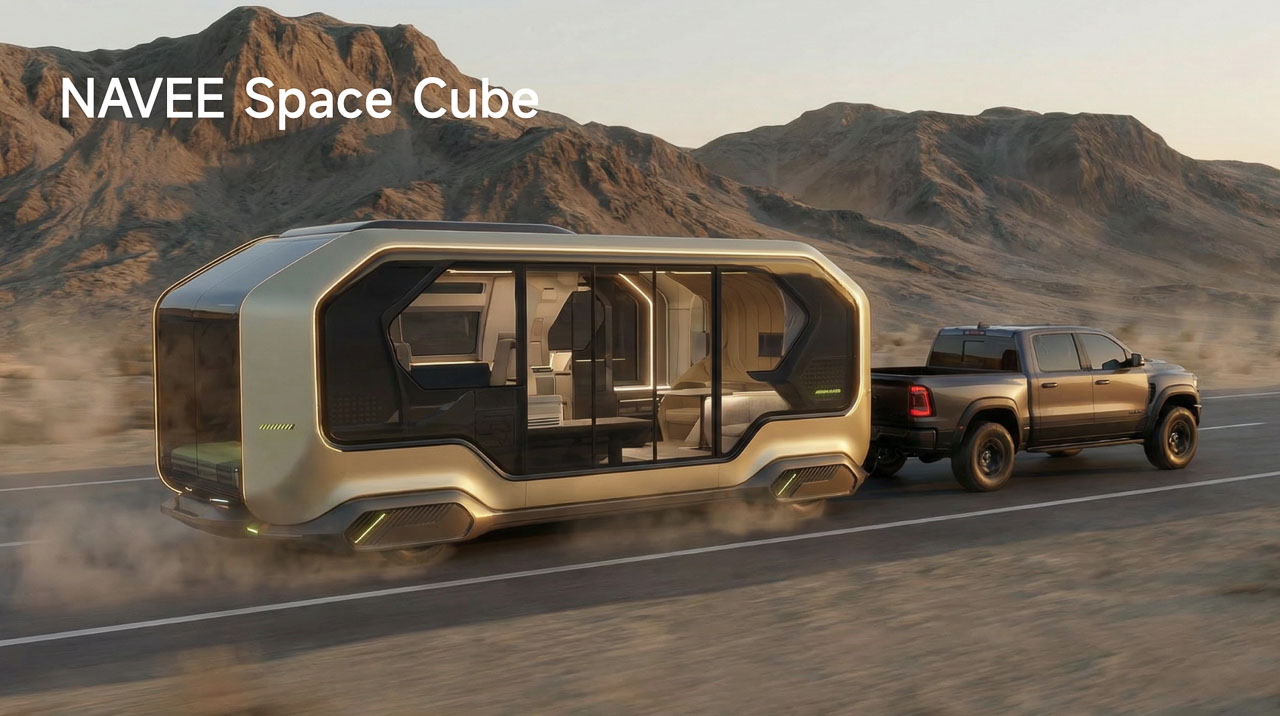
It runs on solar energy thanks to panels that automatically track the sun's position and is designed for off-grid living. NAVEE positions the Space Cube as accessible even for first-time owners, emphasizing that its artificial intelligence systems are designed to simplify the learning process.
As the company states: "Towing and parking? No experience required. Artificial intelligence can handle the complex tasks.".
The mobile home market is booming, and NAVEE is spot on. Industry experts estimate the global RV market is worth $15 billion, with steady, single-digit annual growth projected until the mid-2030s.
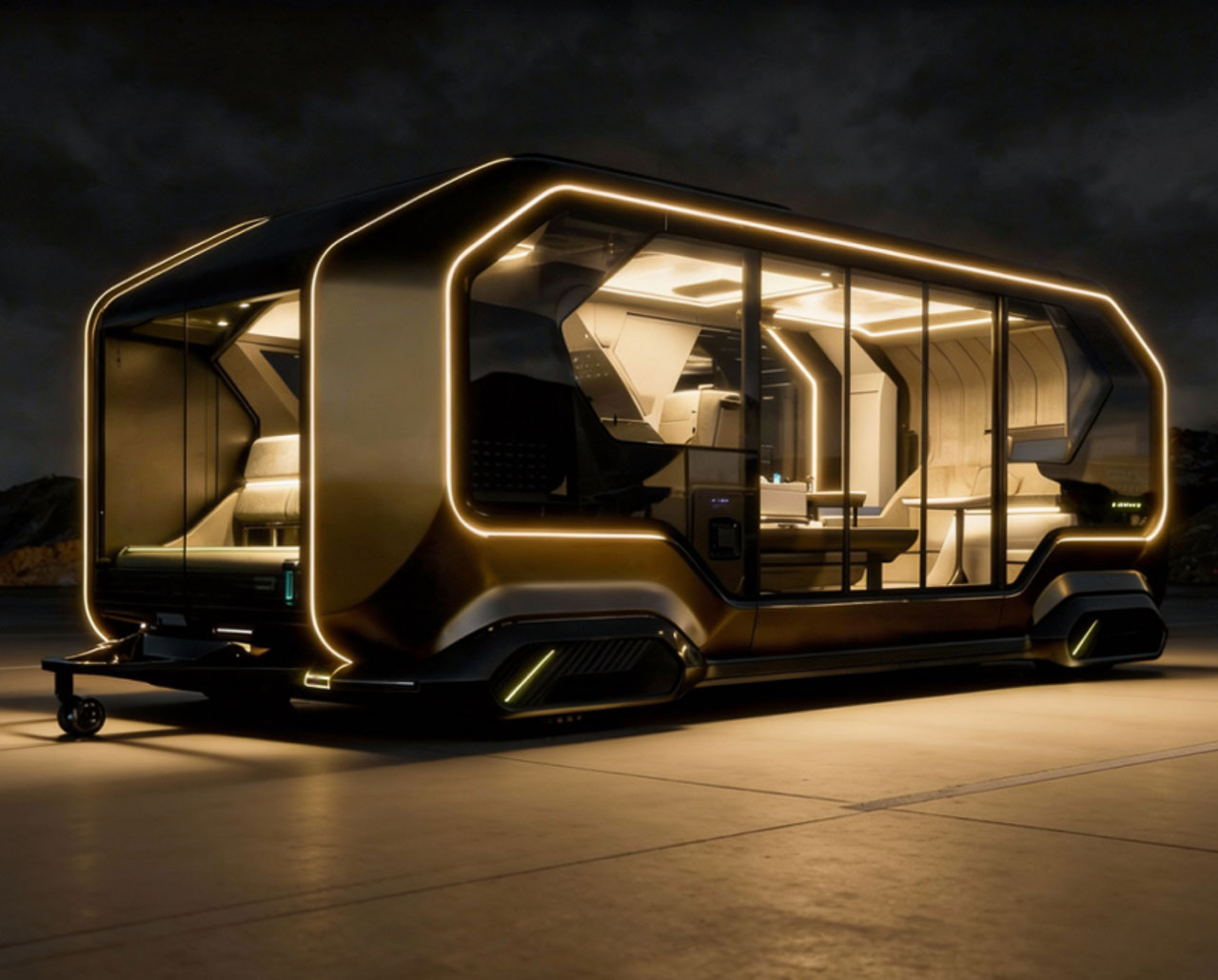
It's not the trailer itself that's sparking interest in the film "Cosmic Cube," but the message it conveys. More and more workers and creative people no longer plan their lives around a specific address. Mobility is no longer about moving between places, but about the ability to work, relax, and lead daily lives wherever you are.
2. NAVEE Mobi-Energy: A mobile robot for energy storage
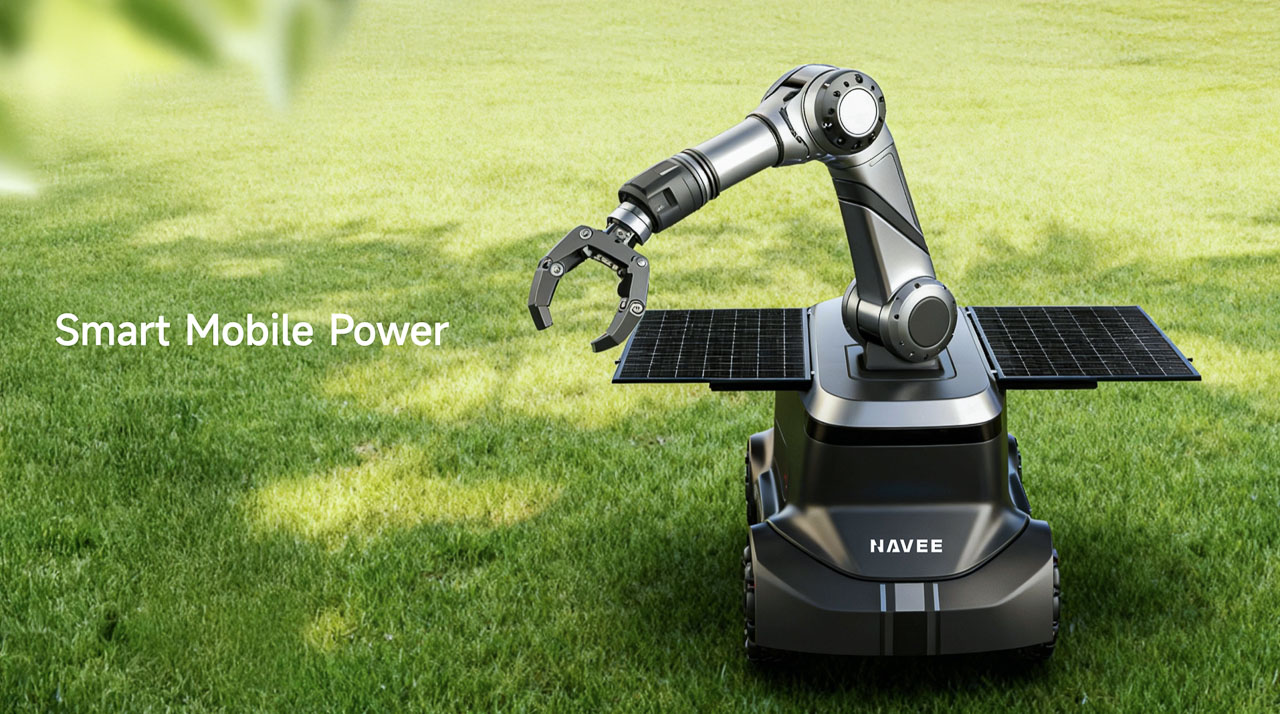
Mobi-Energy can be thought of as a portable battery that moves itself, rather than being carried. It's a power station on legs. It follows the user, charges via solar power, has an independent tilt adjustment, and includes a robotic arm for assistance. NAVEE describes it as a robotic energy assistant that moves with you.
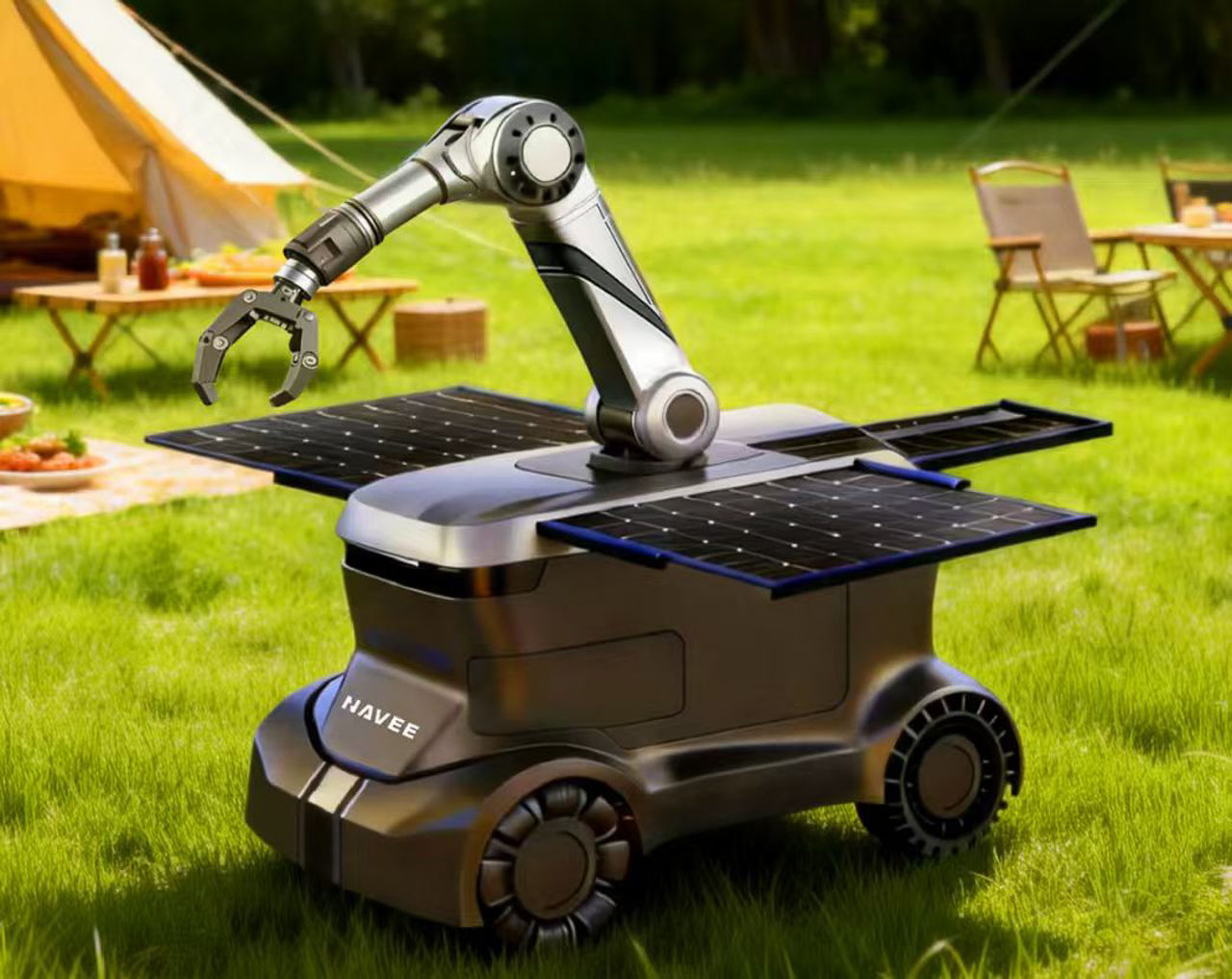
Industry forecasts place the portable power station market at tens of billions of dollars by the early 2030s, with double-digit annual growth expected. The cost of lithium-ion batteries has fallen sharply over the past three decades, making energy storage commercially viable for the first time. However, most products in this category remain stationary boxes that must be carried and maneuvered manually.
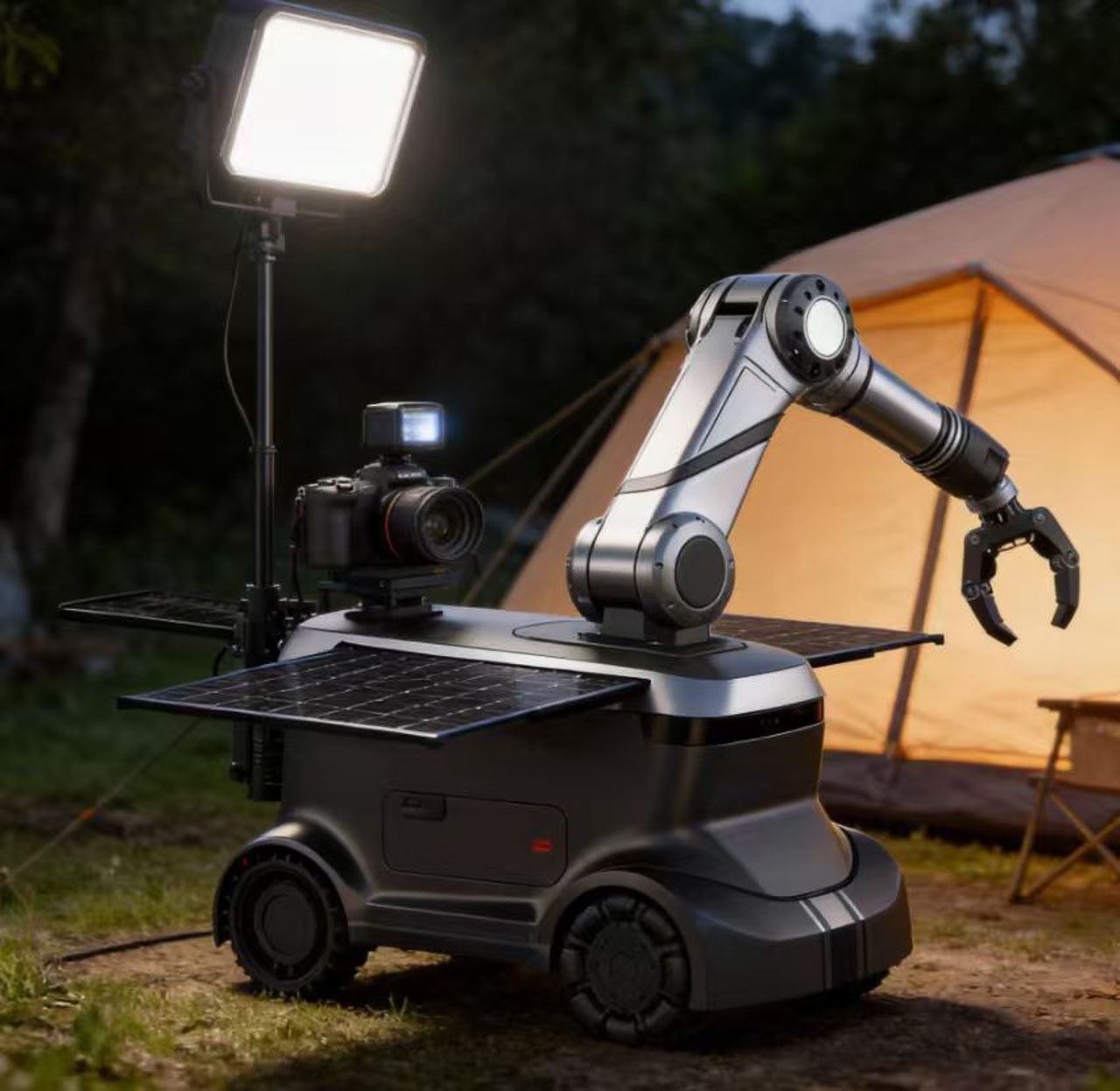
Mobi-Energy reimagines electricity as an active participant rather than a passive object. The system, which eliminates setup complexities and follows the user's path, suggests a shift from passive storage to active assistance, which is important for outdoor operations, emergency response, and mobile operations.
3. NAVEE Exo-Fit: Intelligent exoskeleton for work and rest.
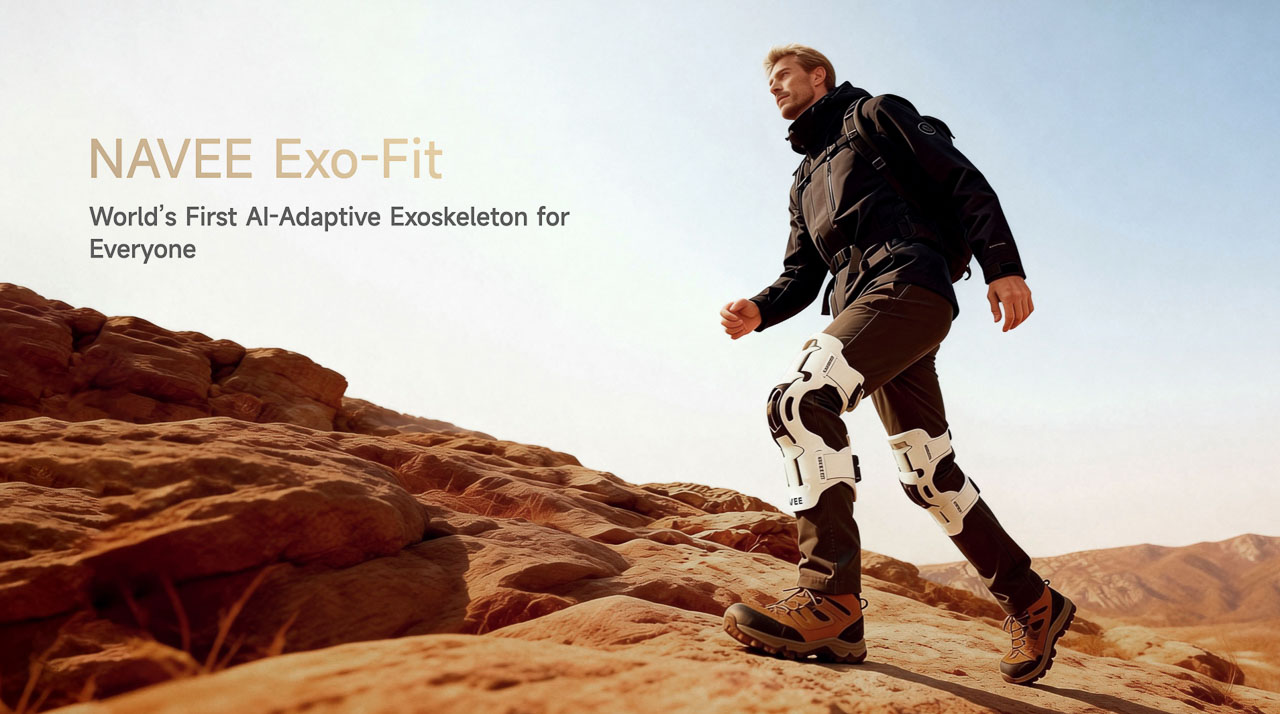
Exo-Fit is a wearable support system designed to help the body perform physical activity with reduced strain. NAVEE claims the system calibrates to the user's body in five minutes, adapts to terrain in real time, and can be worn under clothing. The principle is simple: you move, it adapts.
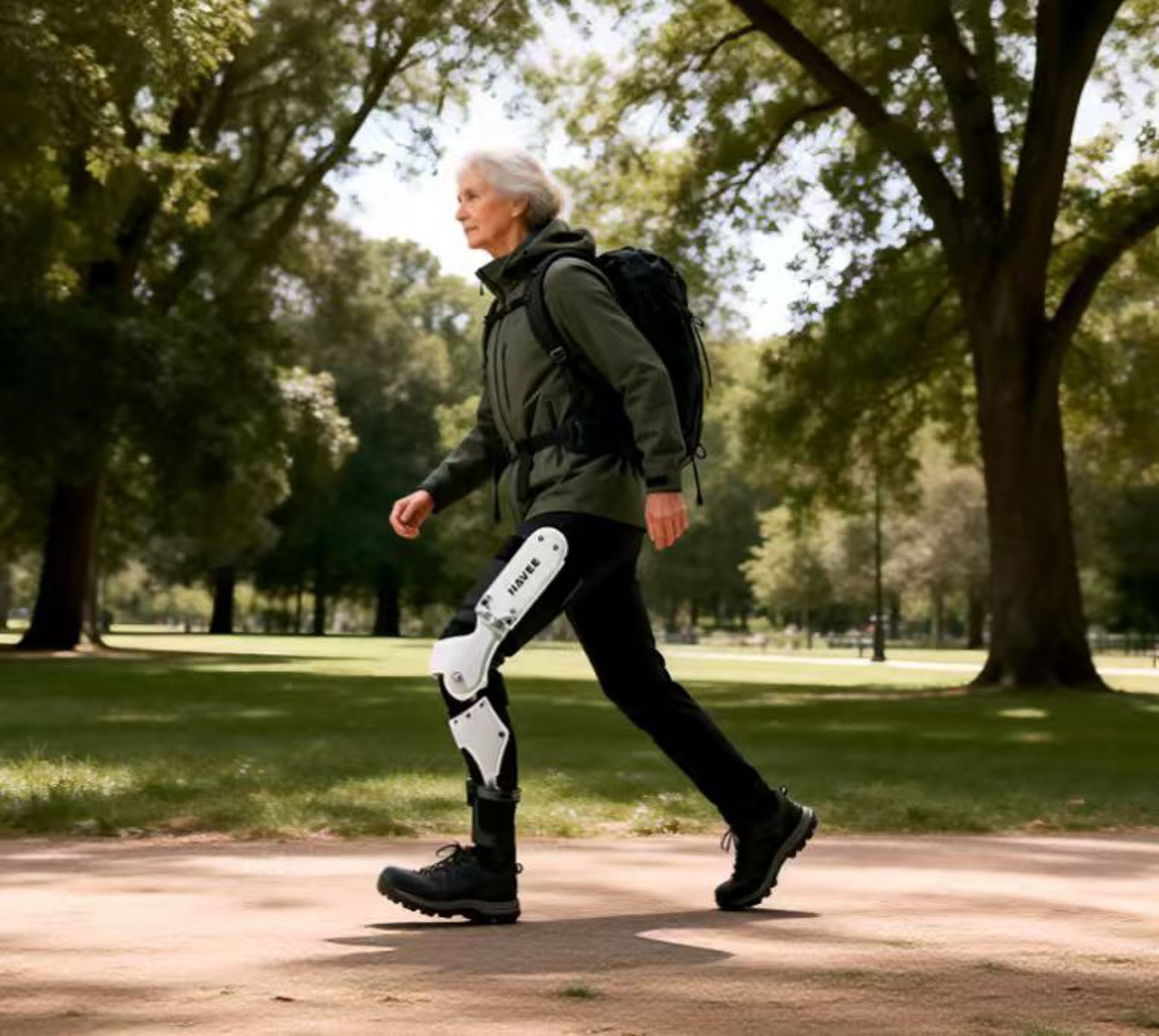
The exoskeleton market is in its early stages. Consumer-facing systems are still largely experimental, and CES 2026 was one of the first shows where several consumer exoskeletons were publicly unveiled. Most remain bulky and mechanical, limiting their adoption.
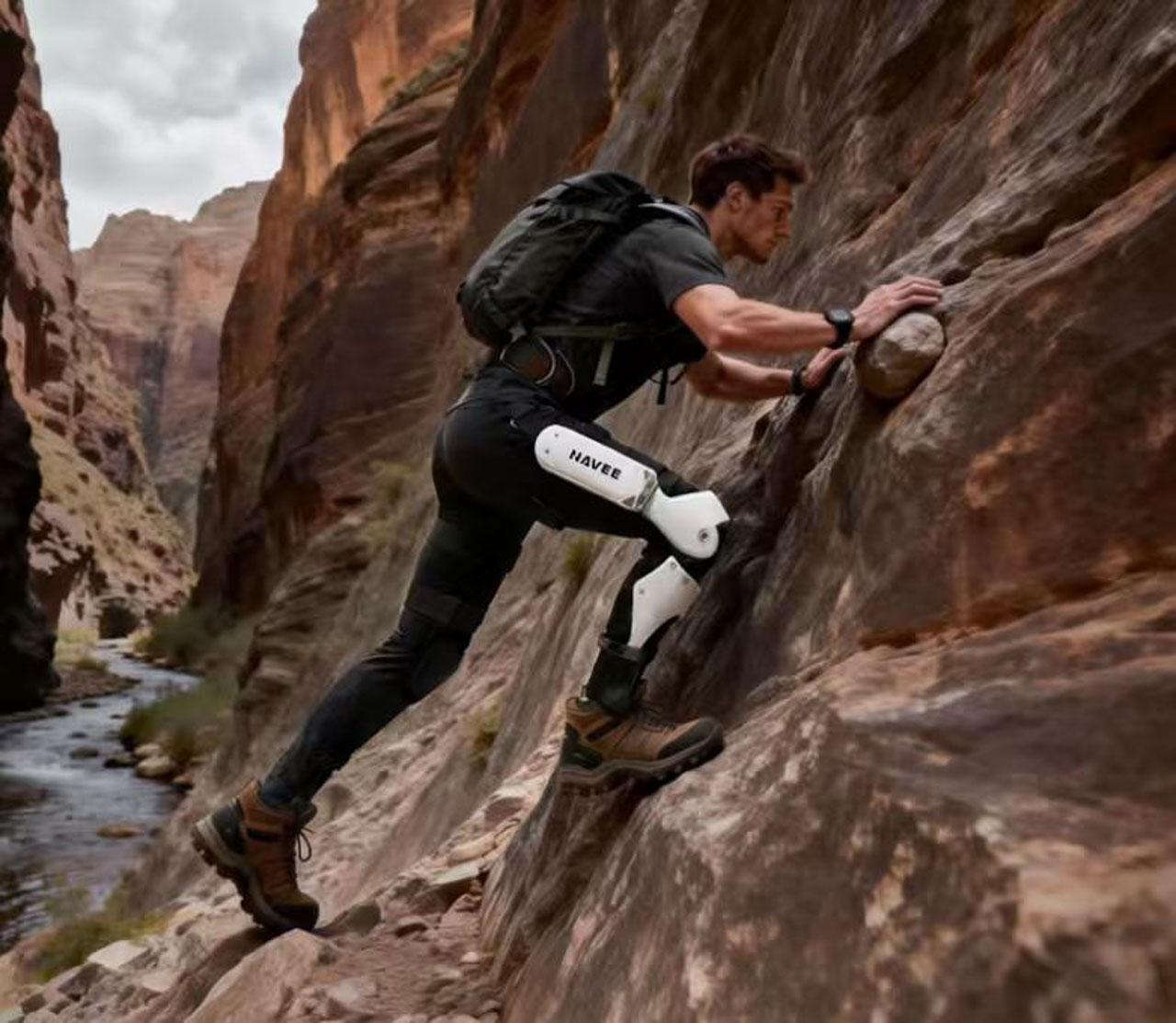
If NAVEE can deliver comfort, wearability, and ease of use, Exo-Fit will overcome the usability barrier that has so far limited exoskeletons to factories and clinics. This will make it suitable not only for workers but also for tourists and mobility users.
4. NAVEE WaveFly 5X: Personal Jet Ski
The WaveFly 5X is a personal watercraft that rises above the water's surface while moving, reducing drag and allowing it to glide rather than push its way through the water. It operates approximately 30 centimeters above the surface and features a quick-change battery system. According to NAVEE, the maximum speed is 85 km/h, the range is up to 80 km, and the flight time is approximately 70 minutes.
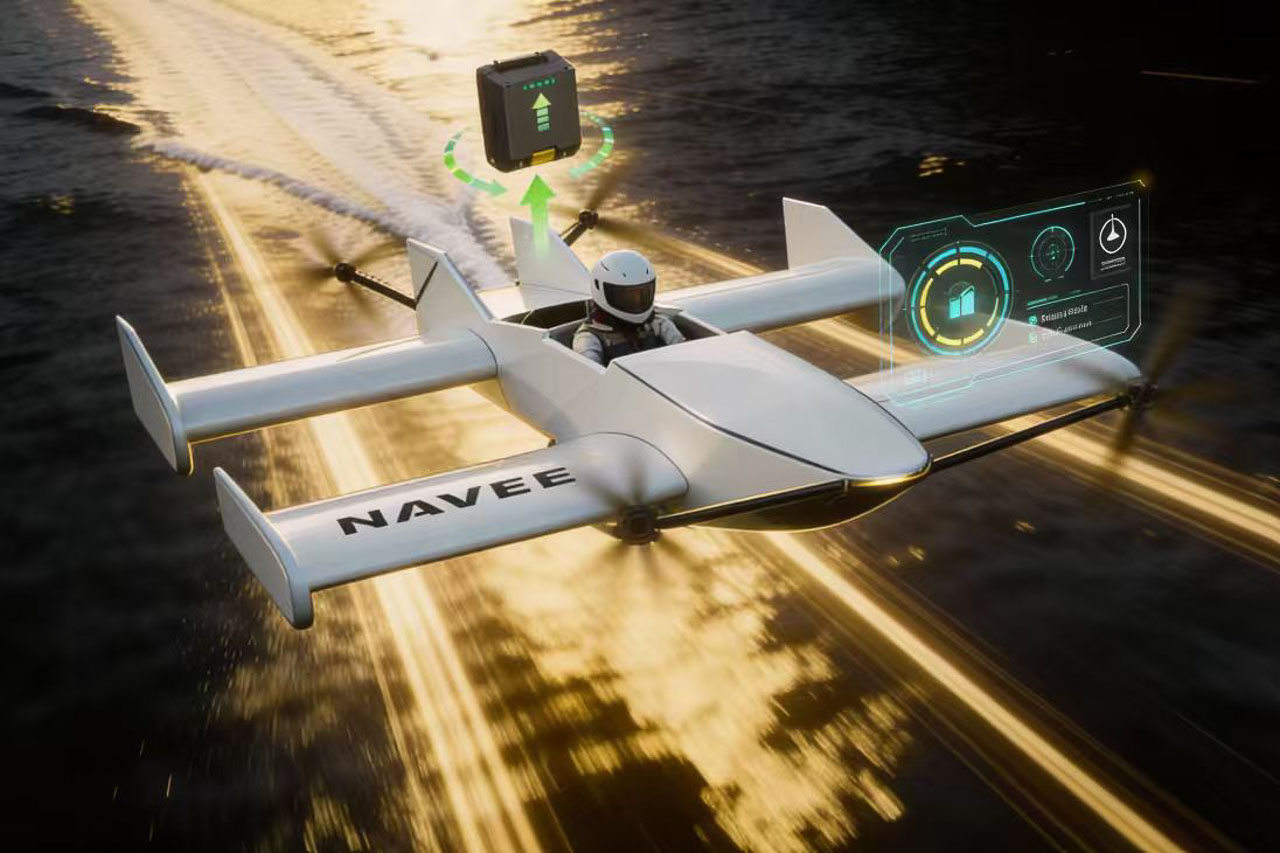
Electric hydrofoils represent a small but rapidly growing segment of maritime mobility. By reducing drag, hydrofoils increase range and improve efficiency compared to traditional hulls. Commercial hydrofoil ferries are already operating in Europe, and interest from major manufacturers is growing.
The WaveFly 5X also plays a strategic role. Water provides a less risky environment for testing control systems and flight dynamics. Thus, it functions as both a recreational product and a stepping stone to more advanced mobility platforms.
5. NAVEE eVTOL: Aircraft for Urban Air Mobility
An eVTOL is an electric aircraft capable of vertical takeoff and landing. The NAVEE concept is aimed at short urban commutes and relies on AI-powered flight control systems and an advanced electric propulsion system.
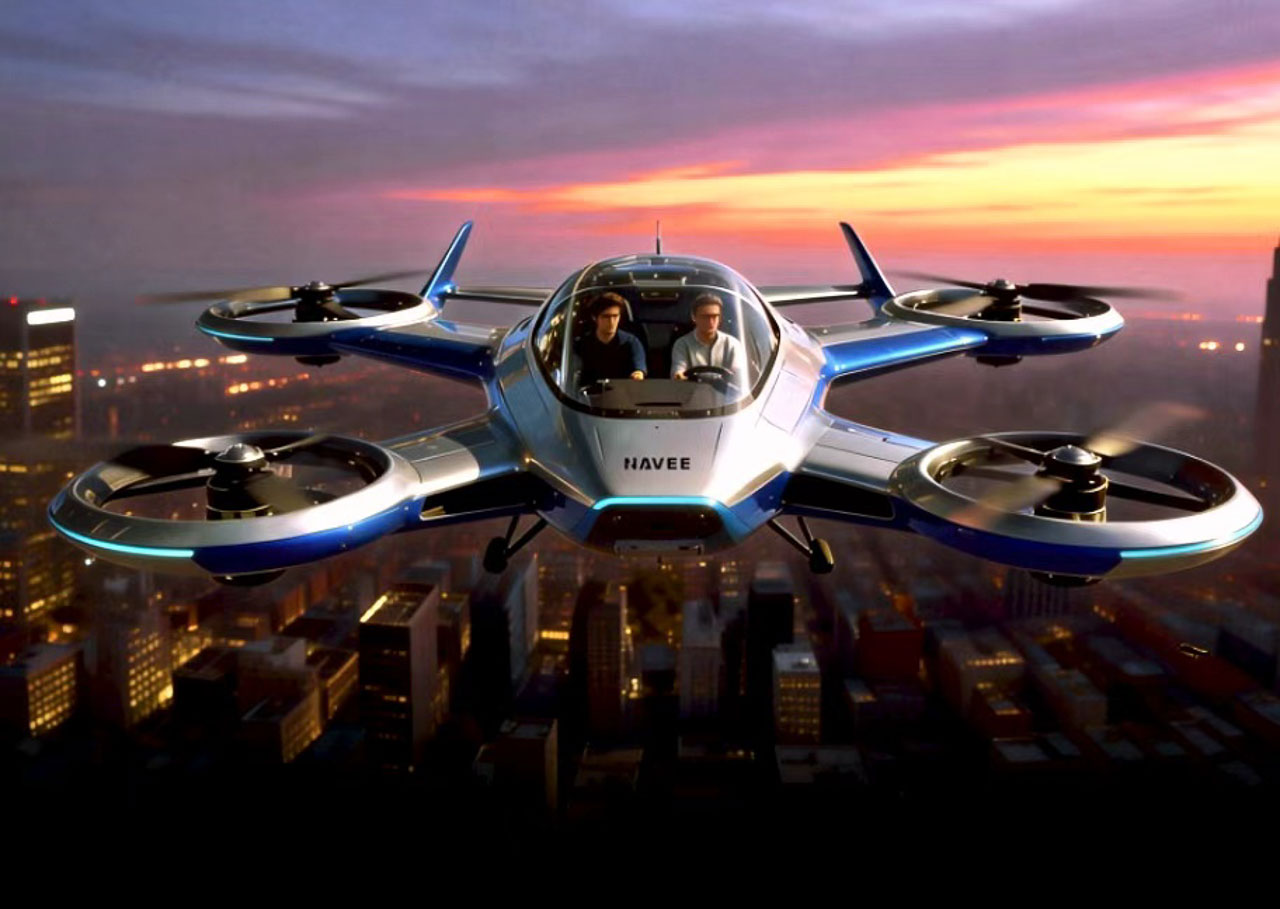
The regulatory framework for powered lift aircraft is becoming increasingly clear, although implementation timelines remain long. In late 2024, the Federal Aviation Administration (FAA) published the Special Federal Aviation Regulation for Powered Lift Aircraft, defining the certification and operational framework for the first new category of aircraft in decades.
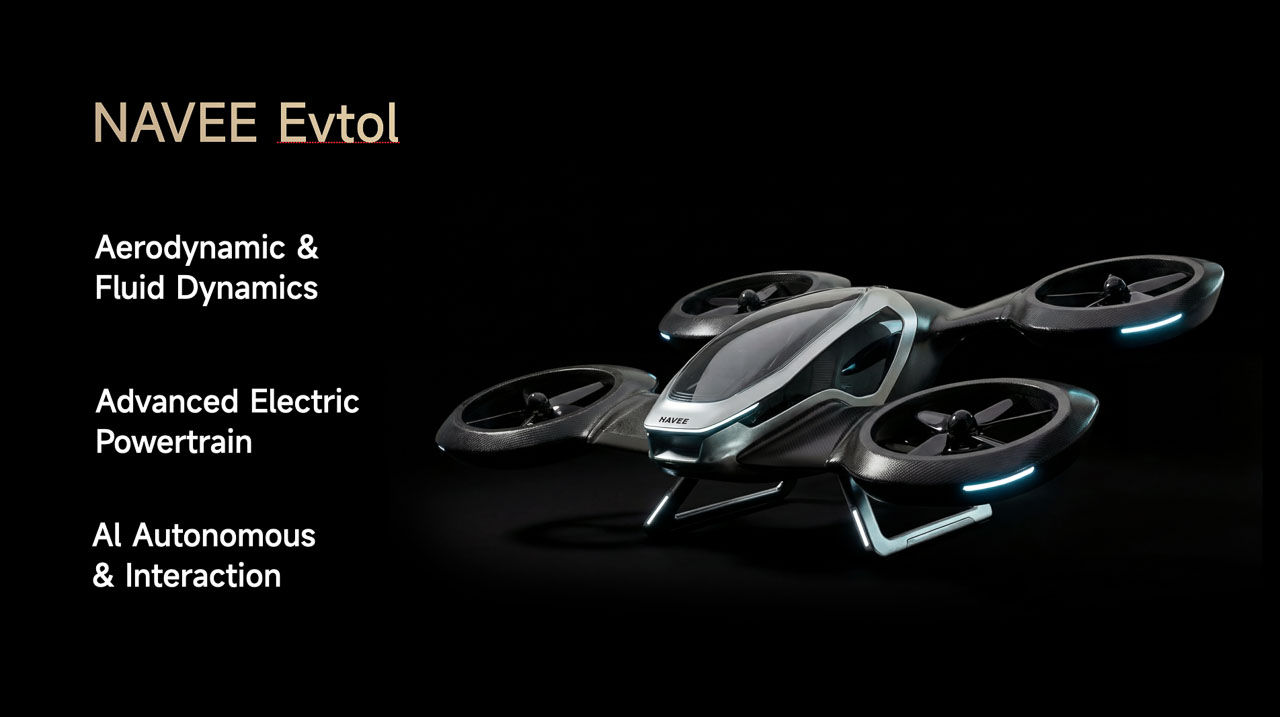
NAVEE isn't positioning this as a short-term product. Instead, the eVTOL concept points to long-term intentions. It reflects a commitment to developing expertise in control, autonomy, and energy efficiency that can be scaled across various mobility applications.
Engineering and Trust
NAVEE emphasizes performance alongside ambition. According to the company, it devotes approximately 20 percent of its resources to research and development and has spent $13.8 million on R&D in 2025 alone.
NAVEE reports 342 patent applications, 199 of which have already been approved, and states that its products undergo over 140 tests in internationally recognized laboratories, including TÜV Rheinland, SGS, BV, and UL. The company also notes its extensive retail presence, including Amazon, Target, Walmart, and its own online store, with operations in over 60 countries.
The goal is clear. NAVEE wants to be perceived as an engineering-focused company with scale and credibility, not as a speculative brand built on conceptual sketches.
What does this launch mean and what happens next?
NAVEE's Silicon Valley event is best viewed more as a repositioning attempt than a new product launch. The company built its reputation on electric scooters. Now, it's trying to reinvent itself as a diversified mobility brand.
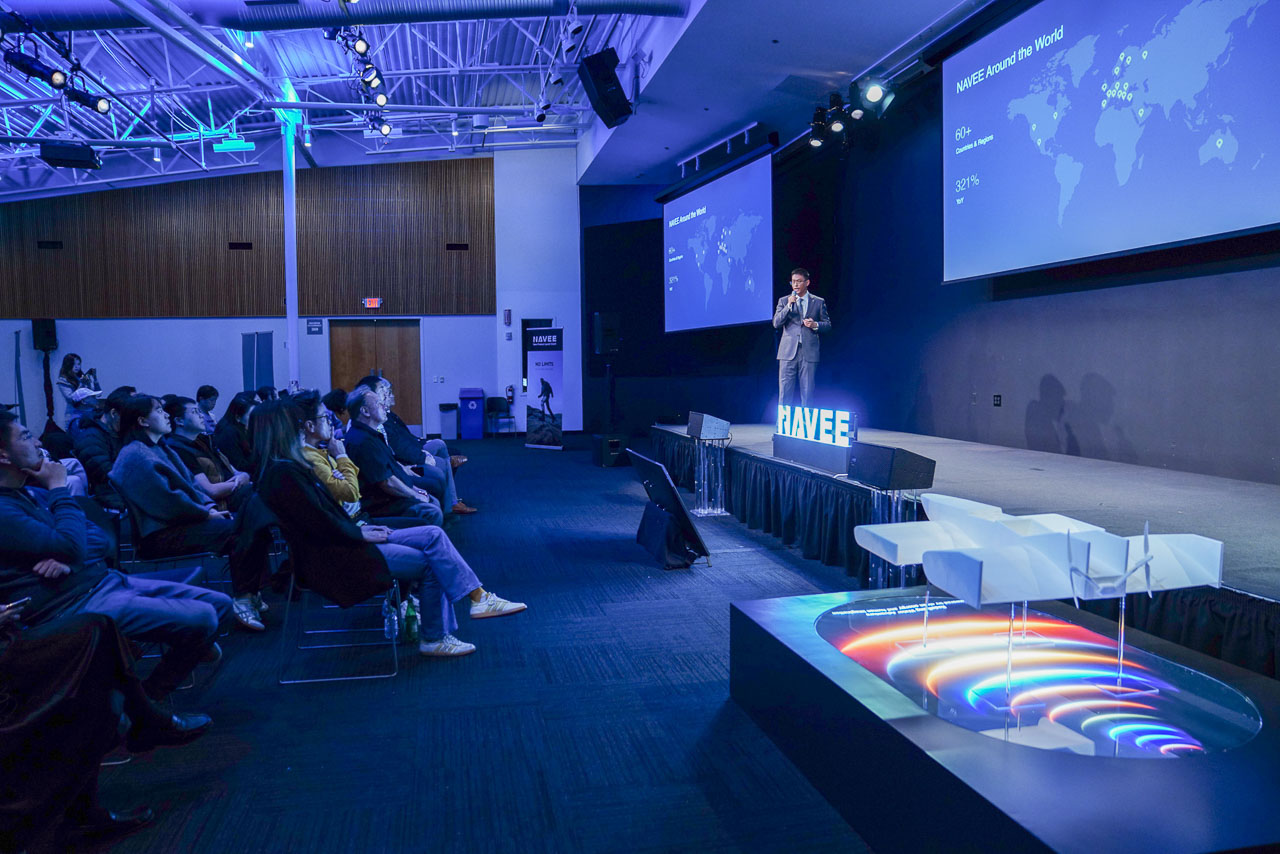
Land, passenger, air, and water mobility present distinct engineering and regulatory challenges. If NAVEE can successfully implement even part of this portfolio, it will stand out from competitors focused on a single category.
Taken together, these concepts suggest a focus on reducing friction and increasing flexibility in everyday movements. The NO LIMITS event was a starting point, not a finish line. The next stage will determine whether NAVEE can translate its ambitions into products that can withstand real-world testing.