







Many travelers, when going to new countries, set themselves the goal of seeing as much as possible.
Our planet is home to countless breathtaking places. A multitude of magnificent landscapes, created by the hands of man and nature. It's impossible to count them all, so below is a list of the five most beautiful places on Earth.
1. Yellowstone Volcano

One of the largest volcanoes on the planet is located in a park of the same name in Wyoming, USA. This supervolcano is located right in the center of the North American tectonic plate. It gained notoriety not only for being one of the largest and most beautiful volcanoes, but also for its potential to "wake up" at any moment, which would cause a terrible catastrophe for the entire planet. The administration even had to close part of the park to visitors. Such is the dangerous beauty that can be found in such a place.
The park is also home to the largest mountain lake in the United States, covering approximately 350 square kilometers and a depth of just over 115 meters. The park boasts just under 300 waterfalls, the largest of which is twice as high as the famous Niagara Falls.
2. Colored rocks
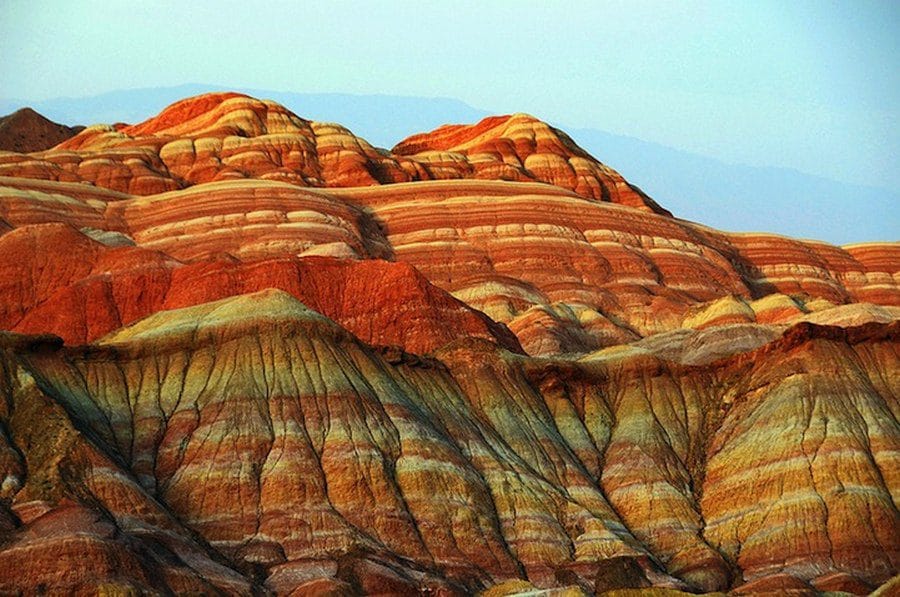
This stunningly beautiful place is located in China's Gansu Province. The mountain formations consist of numerous red sandstones and various rocks, primarily from the Cretaceous period. These unusual rocks were formed 100 million years ago. Back then, Zhangye was a large basin that dried out due to high temperatures. After 30 million years, sediments formed a new basin floor and finally hardened. It is these sediments that give the rocks their reddish hue. Gradually, the basin floor was eroded by the movement of rivers and rocks, forming the Zhangye Mountains. However, according to scientists, Zhangye continues to grow, albeit slowly – only 0.87 meters in 100,000 years. In 2010, UNESCO listed the colorful rocks of Zhangye as a World Heritage Site. Since then, this attraction has become much more popular with tourists. And for good reason – the multicolored mountains seem to have been painted by an artist with quite excellent taste. Looking at this landscape, it feels like you've landed on another planet.
3. Salar de Uyuni
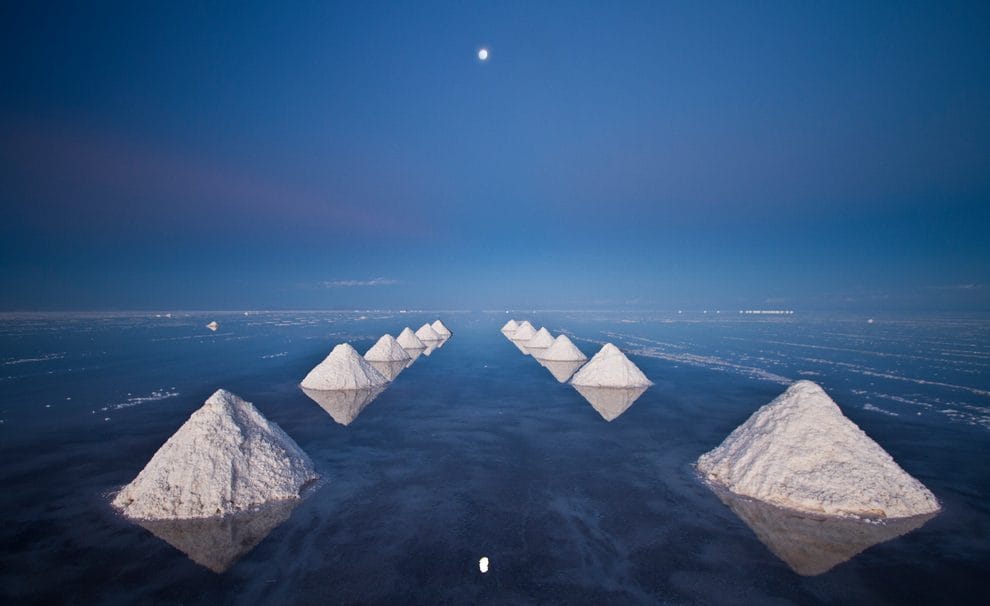
Bolivia is home to the world's largest salt lake, the Salar de Uyuni. It covers approximately 10,000 square kilometers and contains a whopping 10 billion tons of salt. During the rainy season, the dry lake fills with water, forming a "mirror" on the surface. It's then that an unearthly, fantastical landscape emerges, when the scene merges into one, and when the sky is beneath your feet. At such moments, Salar de Uyuni feels more like another planet than another lake. This place is definitely worth a visit.
4. Sea of Stars on Vaadhoo Island, Maldives

There's a truly amazing place where you can immerse yourself in space. But you don't have to be an astronaut to experience it, because it's located on Earth—specifically, on the island of Vaadhoo in the Maldives. Microorganisms living here emit light through a process called bioluminescence, converting it from chemical energy. As a result, the sea is illuminated by a multitude of tiny blue lights. From a distance, this phenomenon looks like a multitude of stars shining brightly in the night sky. It's easy to see why the Sea of Stars earned its name.
This unusual phenomenon is worth seeing during the breeding season for marine organisms—the shore is so illuminated that the fantastic glow can even be seen from space. However, you should avoid touching the water, as during this period the organisms release numerous toxins harmful to humans.
5. Iguazu Falls
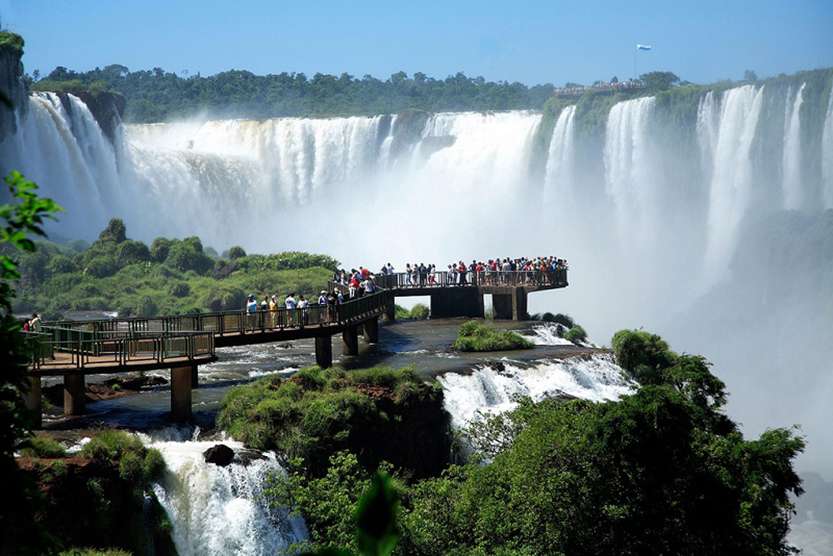
One of the Seven Wonders of Nature is located in South America, on the border of Brazil and Argentina. The complex consists of 275 waterfalls located on the Iguazu River. This place was first discovered by Native Americans. In the Guarani language, "Iguazu" translates as "big water." According to legend, the chosen one of the local god fell in love with a mere mortal and wanted to elope with him by boat downriver. Enraged, the god decided to set a deadly trap for the lovers. That's why the largest waterfall in the entire cascade is still called "The Devil's Throat.".
The entire cascade is just over three kilometers long. The average drop is 60-80 meters. The chain of waterfalls experiences two distinct seasons: the rainy season and the dry season. During the dry season, the river abates, making it possible to approach the falls on foot. The rainy season is particularly favorable because the waterfalls reach their peak, allowing tourists to get very close to the cascade.