








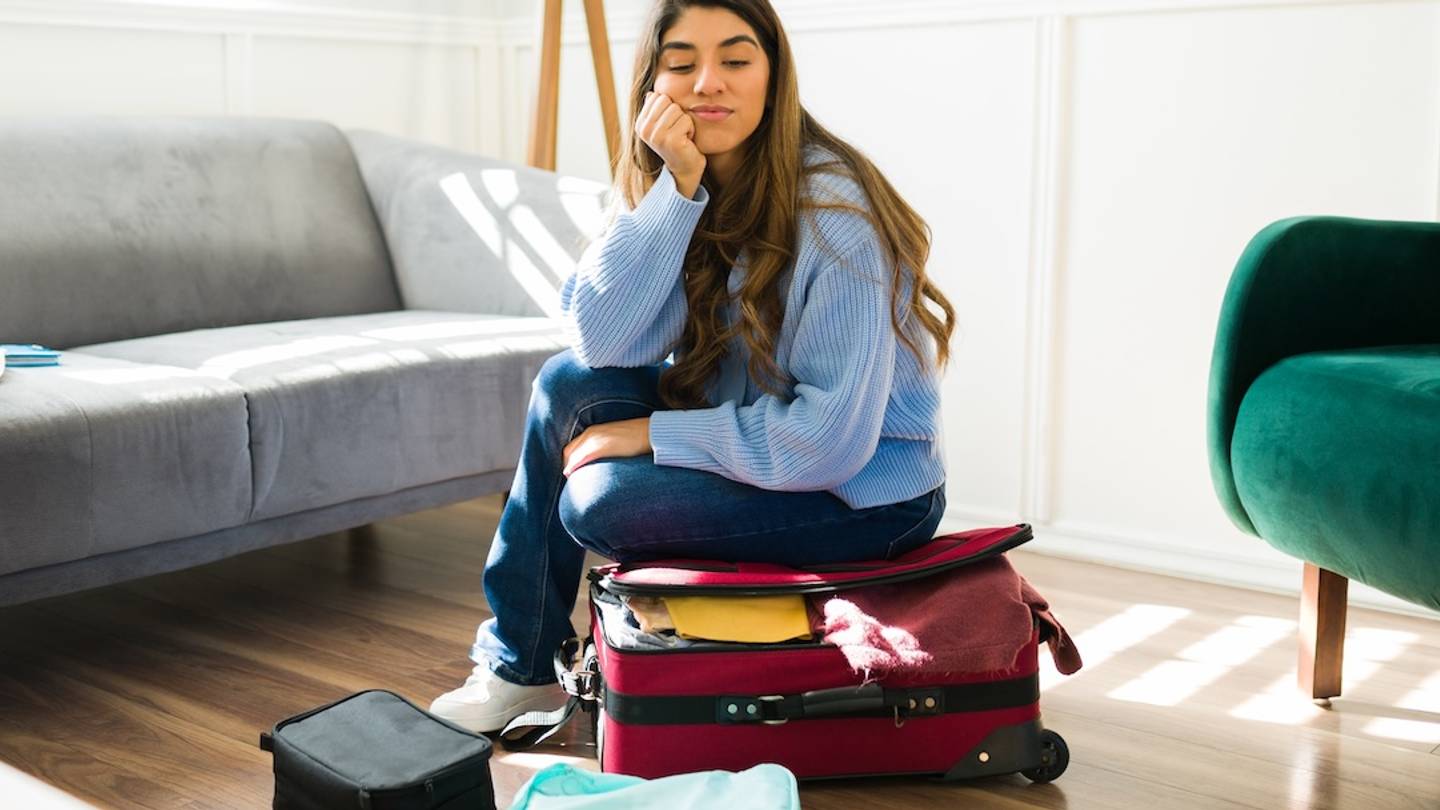
The chances of being struck by lightning are higher than those of being in a plane crash. Yet, travelers around the world still resort to all sorts of tricks—sitting on suitcases, dousing themselves with water, and waving garlic—to ensure a safe journey.
From your neighbor's doorstep to the Far East, people adhere to ancient travel superstitions in hopes of clear skies, smooth transfers, and overall good luck. Whether it's a conscious pause before heading to the airport or carrying a good luck charm, these habits provide a sense of control in an otherwise intimidating situation. For both anxious passengers and seasoned travelers, a little peace of mind at 30,000 feet is worth the seemingly bizarre ritual.
Every country has its own travel-related superstitions: some are rooted in ancient folklore, while others are purely psychological. Here are eight unusual travel-related superstitions that people around the world still practice today.
- How to hide garlic in a suitcase
- «"Splash" over the shoulder
- Sitting on a suitcase
- Drain water after the traveler
- Avoid numbers 4, 13 and 17
- Lowering the broom
- Tapping the plane before landing
- Missed flights on Fridays
How to hide garlic in a suitcase

Garlic isn't just used to ward off vampires or make pasta—at least not in the Balkans. Residents of countries like Bosnia and Herzegovina, Greece, and Italy have long believed that putting a clove of raw garlic in your bag will ward off bad luck while traveling, especially at border control. This superstition stems from ancient folklore that garlic protects against negative energy or the "evil eye." So, if you're willing to risk your clothes smelling like an Italian restaurant, consider adding a clove or two to your packing list for your next trip.
«"Splash" over the shoulder
«A "protective curse" may sound like an oxymoron, but in Norway, it's a time-honored way to see a traveler off safely. Similar to the English expression "break a leg," locals sometimes say goodbye with "Tvi tvi"—an onomatopoeia for spitting. This simple sound, along with the action of spitting over your shoulder three times, is a Scandinavian custom meant to ward off evil spirits and bad luck. While technically a curse, it's essentially a reverse Uno card for bad karma. Superstition holds that the sound of spitting signals your bad luck, causing evil spirits to seek you out elsewhere.
Sitting on a suitcase

For those who regularly pack too much, sitting on their suitcase before a trip has become a familiar ritual. But Slavic superstition holds that squatting on a suitcase does much more than just compress clothes. This pagan tradition of taking a silent pause before departure is believed to cleanse negative energy and ward off evil spirits. So the next time you find yourself struggling with an overstuffed suitcase on departure day, remember that you're not just packing—you're ensuring your safe travels.
Drain water after the traveler
If you've ever felt the urge to dramatically throw a glass of water at an unruly guest as they're leaving, consider moving to Serbia. There, as in the Balkans and the Middle East, splashing water behind a departing guest is considered a true blessing. Water symbolizes lightness and fluidity, so splashing it on the ground is meant to ensure the journey goes as smoothly as flowing water. It can be seen as a regional equivalent of wishing a guest "safe sailing" before heading to the airport.
Avoid numbers 4, 13 and 17
You've likely heard of "angel numbers" like 222 and 1111, but what about their unlucky counterparts? From 13 in the West to four in East Asia, there are numerous numbers across cultures that people try to avoid while traveling. The fear of the number 13 even has a complex name—triskaidekaphobia—so it's no surprise that many airlines and hotels avoid the 13th row and floor altogether.
As for the number four, its bad reputation in China, Japan, and Korea stems from how frightening it sounds when combined with the word "death." This fear, known as tetraphobia, leads to avoidance of the number four in East Asia, much like the number 13 is avoided in Western countries. In Italy, Friday the 13th isn't a day to be feared, but Friday the 17th is. In fact, the number 17 is considered so unlucky that some Italian airlines even skip row 17. The superstition stems from its Roman form (XVII), which can be rearranged to form VIXI—a Latin expression meaning "My life is over.".
Lowering the broom
Planning to clean up after your guests leave? Perhaps you should leave the broom in the closet. In Bulgaria, sweeping the house immediately after guests leave is believed to "sweep away" their luck—or, worse, their life. It's the perfect excuse to put off all your housework until another day.
Tapping the plane before landing

Pre-travel anxiety can cause you to do strange things, including touching the outside of the plane on the way to gate 14B. Next time you're standing in line for the jetway, pay attention and you'll notice many people pat the outside of the plane. Superstitiously, this is a quick blessing before boarding. Psychologically, touching the cold metal simply helps nervous passengers calm down before fully handing over control to the pilots.
Missed flights on Fridays
If you work a standard 40-hour shift, Friday evening is the ideal time to begin your journey. However, for centuries, European travelers avoided Friday departures like the plague. Like many Western superstitions, this ill omen has its roots in Christianity, as Friday is the day of Jesus' crucifixion.
Maritime tradition also dictated that sailors remain on land on Fridays, and the King of Poland famously refused to sail on Mondays and Fridays in 1533. Over time, this superstition evolved into a refusal to fly on Fridays, which perhaps explains why it's one of the cheapest days of the week to fly. So, if a great deal can allay your fears, booking a ticket for Friday could be the smartest decision of your life.