






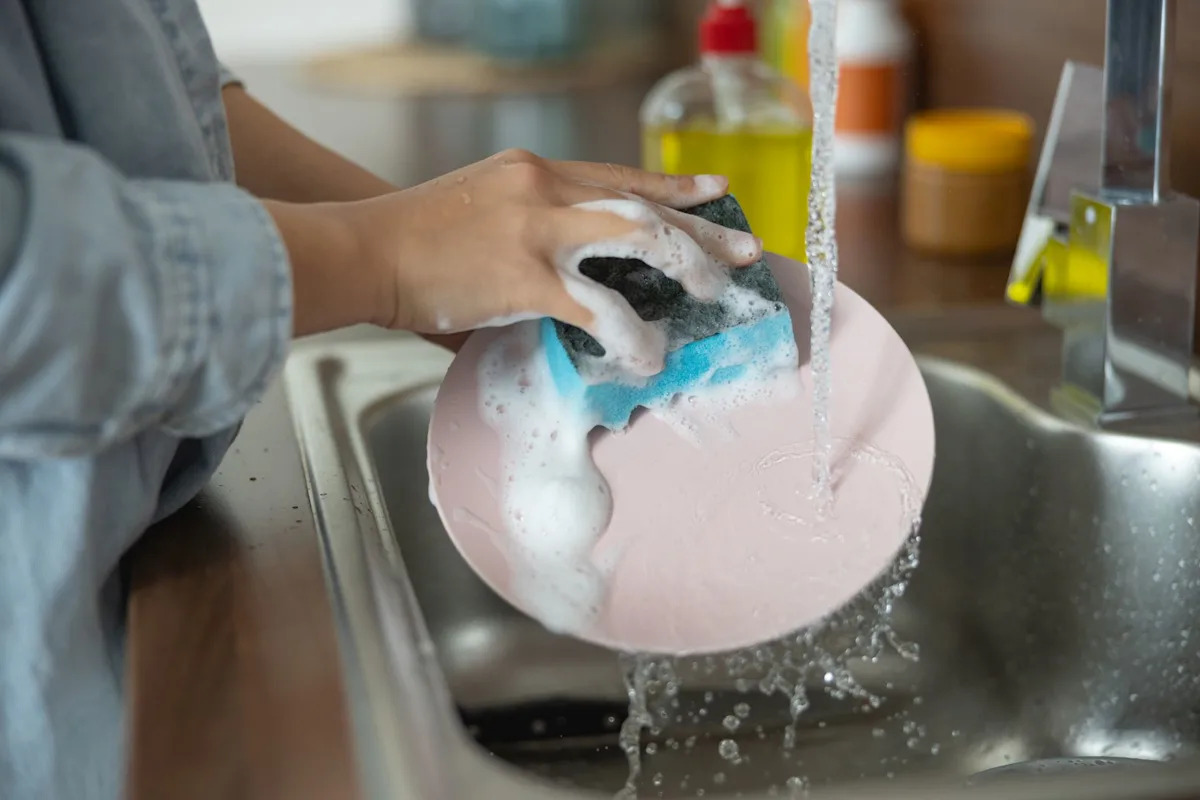
A kitchen sponge kept next to the sink can do more than just wipe away burnt-on food.
New research shows that regular dishwashing can also release tiny plastic particles.
Researchers from the University of Bonn conducted a study to determine whether kitchen sponges release microplastics as they wear down through normal use.
The answer was yes. Every sponge tested lost its material over time, resulting in small plastic particles ending up in wastewater.
To better understand what happens in real homes, researchers combined laboratory studies with citizen science. Households in Germany and North America used one of three types of sponges during their routine dishwashing routine, tracking their use.
The team also conducted controlled experiments using an automated system called "SpongeBot," designed to simulate the mechanical stress sponges experience during washing.
By weighing sponges before and after use, the researchers estimated annual microplastic emissions at approximately 0.68–4.21 grams per person, depending on the type of sponge. While this may seem insignificant, microplastics can accumulate. If all German households used one specific type of sponge, the researchers calculated that approximately 355 tons, or approximately 391 tons, of microplastics would be emitted annually.
Wastewater treatment plants can capture a significant portion of this material, but researchers say several tons can still end up in the environment each year, where microplastics can leak into rivers, lakes, oceans, and soil.
Life cycle analysis showed that between 85% and 97% of the total impact of hand dishwashing comes from water consumption, not from the plastic particles themselves.
The study shows that way Washing dishes can have a greater environmental impact than choosing a sponge.
The greatest impact would be achieved by reducing water consumption when washing dishes, as water consumption accounted for the overwhelming majority of the environmental burden in this study.
The researchers also recommend choosing sponges with less plastic content, as sponges with less plastic content release fewer microplastics during use.
Extending the life of sponges while they are still functional can reduce the need for replacement and reduce overall resource consumption.
Even common household items can contribute to environmental pollution, but research has shown that the greatest environmental impact comes from hand-washing dishes due to the water used.
Subscribe to TCD's free newsletters to receive helpful tips, actionable advice, and a chance to win $5,000 toward your home improvement. To see more stories like this, change your Google preferences here.