






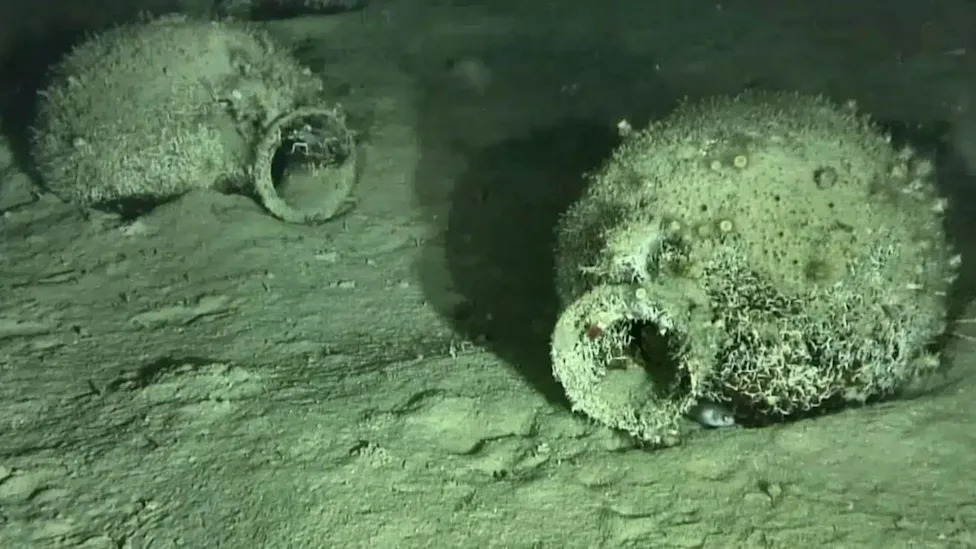
More than 2,400 years after the sinking, a shipwreck found off the coast of southern Italy is shedding light on ancient trading activities. Archaeologists discovered it while surveying the seabed as part of a project to build a modern offshore wind farm.
On the Ionian side of Calabria, there was a ship carrying more than 300 amphorae – clay jars used throughout the Mediterranean to transport staples such as wine and olive oil.
What's happened?
Seabed surveys for an offshore wind farm project led researchers to a shipwreck near Monasterace in the province of Reggio Calabria. Acciona Energia stated that the vessel dates back to approximately the 4th or 5th century BC, and, as Greek Reporter reported, its cargo could help uncover trade links between Greek settlements in southern Italy.
Ceramic vessels were produced at several production sites in Magna Graecia and Sicily, suggesting that they were part of a regional exchange network.
The site is located near Caulonia, a Greek city founded before 700 BC, on a stretch of Calabria that connected colonies, trading posts and settlements.
A photogrammetric survey conducted in 2025 revealed two groups of amphorae located approximately 10 meters apart. Archaeologists believe that modern trawling likely disturbed the sunken vessel and scattered some of its cargo across the seabed.
Why is this important?
This find provides physical evidence of a trading system long studied by historians through written sources, settlement patterns, and scattered artifacts. A cargo of this size reveals how everyday goods moved between communities and how tightly knit the ancient Mediterranean economy was.
This site also demonstrates how fragile underwater heritage can be. The amphorae have survived for centuries, but modern fishing activities may have already displaced some parts of the site. Without careful intervention, other fragments of this history could be damaged or lost.
The shipwreck was discovered during renewable energy development work, demonstrating how development and conservation can intersect when research is conducted responsibly.
What is being done?
As the wreck appears vulnerable to further damage, the Italian Ministry of Culture is supporting efforts to thoroughly document it, recover endangered artifacts, and preserve the cargo, Greek Reporter reports.
Acciona Energia has revised its offshore wind farm design to avoid encroaching on an archaeological site. This change ensures the site's protection while allowing the energy project to proceed.
Previous photogrammetric work should also improve the accuracy of future search and rescue efforts. Detailed surveys allow for the site's layout to be preserved before excavation begins and help researchers determine whether objects were displaced by currents, fishing gear, or the original shipwreck.
Together, these steps could preserve hundreds of amphorae and other evidence of how ancient people traded, traveled, and built a regional economy along Italy's southern coast.
Subscribe to TCD's free newsletters to receive helpful tips, actionable advice, and a chance to win $5,000 toward your home improvement. To see more stories like this, change your Google preferences here.