








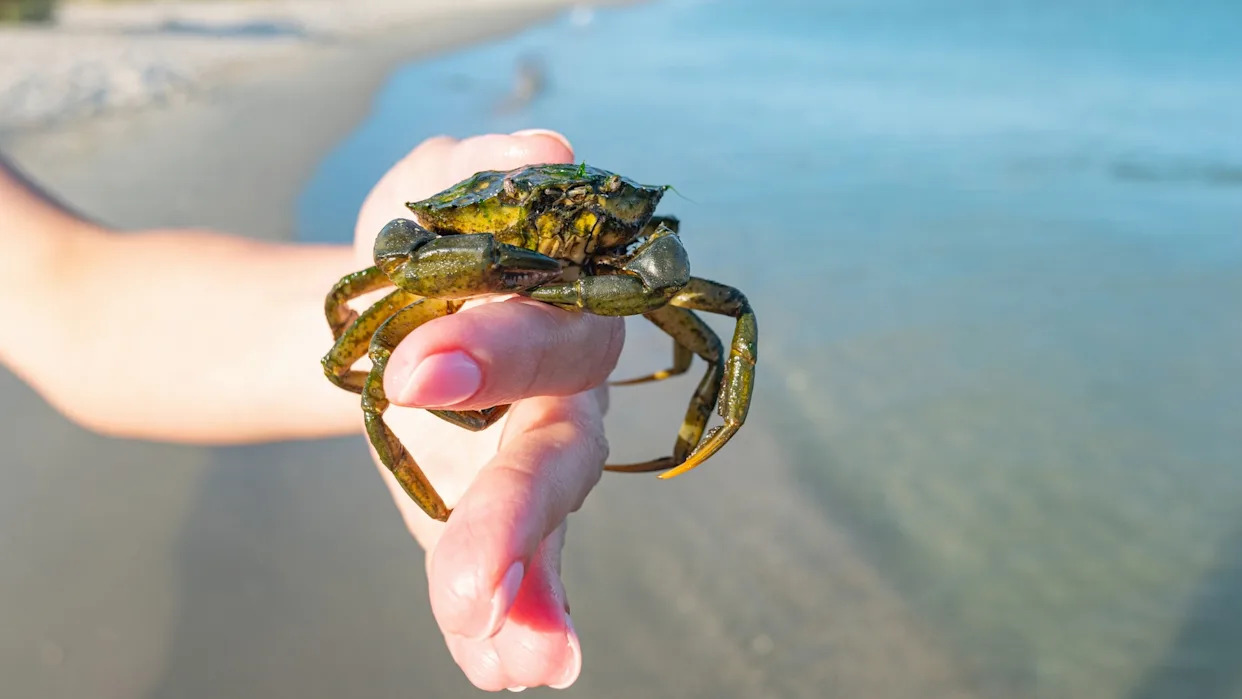
Alaska's fight against European green crabs is becoming more urgent as the invasive species moves north, heightening concerns for coastal communities that rely on healthy fisheries, beaches, and traditional fishing.
What's happening?
State officials are urging residents to look for one telltale sign of a European green crab encounter: the distinctive "5-3-5" pattern.
According to Alaska Native News, the Alaska Department of Fish and Game said the crabs' range has expanded about 90 miles beyond where they were first discovered in the state in 2022 on Annette Island.
Their numbers also appear to be increasing. The number of birds captured in traps is now more than 50 times higher than when the species was first discovered in Alaska.
The northernmost traces of these crabs were discovered on Etolin Island, south of Wrangell, last fall. According to the publication, the species was also discovered on Gravine and Prince of Wales Islands in 2024 and in Ketchikan in the spring of 2025.
Why is this important?
Their spread could impact dinner tables, local harvesting traditions and coastal economies.
As Alaska Native News reports, European green crabs can thrive in a wide variety of coastal environments, making them difficult to control. They can live along rocky shores, mudflats, and tidal marshes, allowing them to spread across coastal ecosystems in a variety of ways.
One of the main problems is the seagrass beds in Alaska, which have been severely damaged by crab infestations. Seagrass serves as a breeding ground for juvenile salmon, Pacific cod, and other fish and shellfish.
If these species' numbers decline due to habitat damage, it will cause a chain reaction in the ecosystem and threaten the fisheries on which many Alaskans depend.
Green crabs feed on small mollusks and may outcompete species such as the Dungeness crab.
What can I do?
Because European green crabs are classified as a prohibited invasive species in Alaska, people are prohibited from keeping or moving them without a permit, Alaska Native News reports.
«"The spread of these crabs is happening rapidly, but it's by no means inevitable," said Tammy Davis, invasive species program coordinator for the Alaska Department of Fish and Game, according to the publication. "We need Alaskans to follow 5-3-5 to help us understand the spread of these dangerous invasive species.".
Anyone who believes they've found a crab should carefully document it. The Arizona Department of Fish and Game asks residents to record the number of crabs they see and their location, then photograph them from different angles next to a common object for scale, such as a pencil, key, or credit card.
Messages can be submitted by phone or email, and anyone interested in joining the volunteer search can call 1-877-INVASIV for more information.
The Alaska Sea Grant program also offers free identification stickers.
Subscribe to TCD's free newsletters to receive helpful tips, actionable advice, and a chance to win $5,000 toward your home improvement. To see more stories like this, change your Google preferences here.