






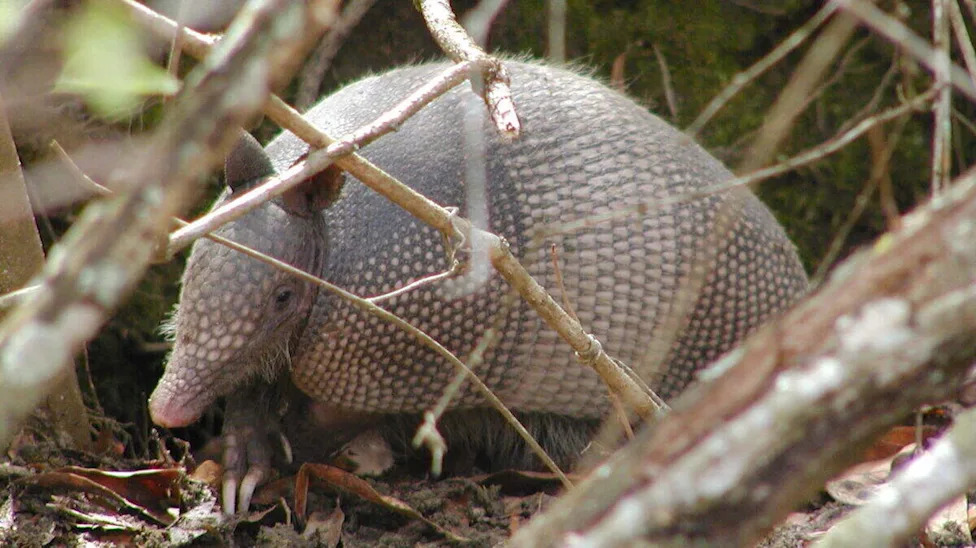
North Carolina residents might need to get used to having a new armored neighbor digging around their yard.
Wildlife experts expect the nine-banded armadillo to become more common in North Carolina as the species moves into other parts of the state, the News & Observer reports.
What's happening?
According to The News & Observer, armadillos have been confirmed in 42 of North Carolina's 100 counties, and state officials expect that number to continue to grow.
«"Armadillos are our new arrivals," Colleen Olfenbuttel, chief of the game mammal survey and inventory unit for the North Carolina Wildlife Resources Commission, told the publication. "Even though they're not native, they're here to stay. We anticipate that within the next 10 to 20 years, we'll have sighting data from all 100 counties.".
The News & Observer reported that the earliest credible report of an armadillo in North Carolina came from Macon County in 2007. The publication noted that most confirmed sightings were in the western part of the state, near areas with existing armadillo populations, although a few cases were also reported in the Triangle area.
Olfenbuttel told The News & Observer that residents will likely see them more often over time.
«"I expect we'll start seeing an increase in the number of observations. Although it may take another five or ten years," she told the publication.
Why is this important?
According to The News & Observer, most people consider armadillos a nuisance rather than a threat. They dig shallow burrows in search of insects, earthworms, and fire ants, which can leave lawns riddled with tiny holes.
«"It could be massive," Olfenbuttel told The News & Observer. "I've seen yards where it felt like 100 little mines had gone off.".
Their spread also reflects a broader trend of increasing wildlife encounters associated with human development. As roads, residential areas, and landscaped yards continue to encroach on natural areas, adaptable animals have more opportunities to wander into places people use every day, increasing the chances of being hit by cars or considered pests.
There's also a health concern, though experts say this should be approached with caution, The News & Observer reports. Armadillos can carry leprosy, but Olfenbuttel told the publication that studies have shown infection rates in populations ranging from zero to 10%.
«"I always jokingly tell people that you don't have to worry about getting leprosy unless you pick up an armadillo and try to kiss it or lick it," she joked in an interview with The News & Observer.
What is being done?
The publication reports that the North Carolina Wildlife Conservation Commission is asking residents to report armadillo sightings so officials can better monitor the species' spread. People can submit their sightings through the NC Armadillo Project on iNaturalist or call the North Carolina Wildlife Hotline at 866-318-2401.
Authorities are requesting, if possible, that you provide photographs or video footage, as well as the date, location, and information on whether the animal was alive or dead. This information will help map the species' future movements.
Homeowners facing damage from excavation work have several options. According to the Texas A&M AgriLife Extension Service, installing fencing can help.
As The News & Observer notes, armadillo hunting is permitted year-round in North Carolina, and trapping is permitted during designated seasons or with a trapping permit. However, relocating an armadillo to another area is illegal, so anyone who captures one must be prepared to either release it elsewhere in the area or euthanize it, the report states.
Subscribe to TCD's free newsletters to receive helpful tips, actionable advice, and a chance to win $5,000 toward your home improvement. To see more stories like this, change your Google preferences here.