








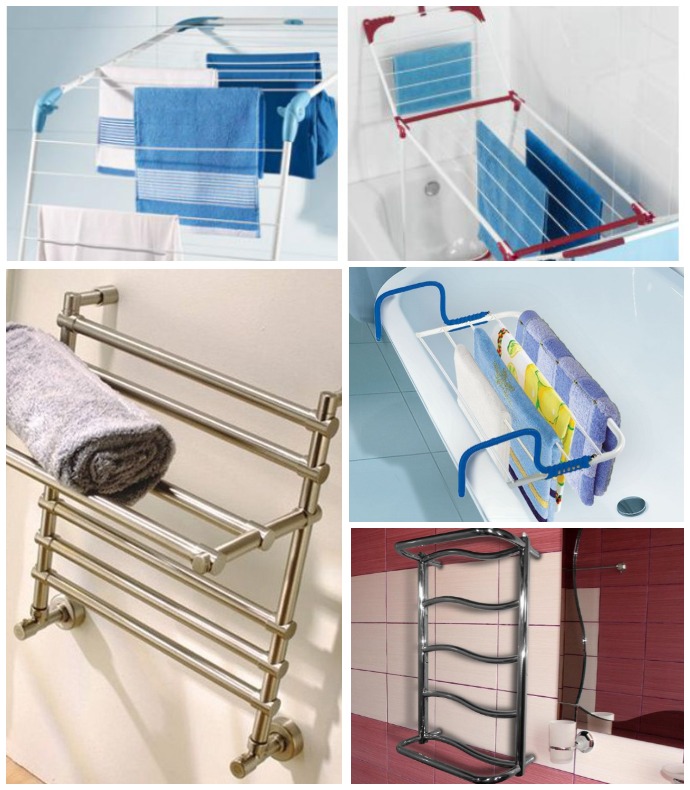
A bathroom clothes dryer should be compact, durable, and spacious. When space is limited, it's important to choose a design that won't hinder movement, can support the weight of wet laundry, and won't ruin the decor. The market offers dozens of solutions, from simple clotheslines to heated electric systems. But not all are equally practical. The right choice depends on the bathroom's size, ceiling height, wall material, and even the heating type.

The first thing to consider is the dryer's intended purpose. If you're only drying towels and socks, a compact console model will suffice. However, if you're drying bed linens or children's clothes, a more spacious design will be needed: a rod, ceiling-mounted, or floor-mounted. It's also important to determine in advance whether the dryer will be used constantly or only as needed—this will influence the choice between a stationary or folding model.
Main types of dryers: pros and cons
Wall-mounted dryers are the most popular choice for city apartments. They don't take up valuable space and are easily mounted on any sturdy wall. Adjustable-height rod models allow you to hang laundry in a ladder-style arrangement, speeding up drying. Rope-based systems with a drum mechanism are convenient, but they require two opposite walls and can be difficult to access. Cantilevered dryers (folding accordion-style) are ideal for cramped bathrooms, but their load capacity is limited—no more than 5–7 kg.

Ceiling-mounted dryers are a great solution for bathrooms with high ceilings. They rise to the ceiling after drying, freeing up space. However, in rooms less than 2.5 meters high, such a design will be in the way and create a feeling of oppression. Floor-mounted folding dryers are versatile: they can be used not only in the bathroom but also on the balcony or hallway. Upright models are suitable for narrow spaces, but their stability depends on the levelness of the floor.
Bathtub dryers are specialized structures that resemble a "roof" or ladder. They're convenient for drying very wet, dripping items, but they prevent you from using the bathtub while drying. Electric heated towel rails dry quickly but increase humidity in the room, requiring good ventilation. Heated towel rails connected to a heating system remain the most economical and durable solution.
How to choose a material: what is more reliable?
The material determines not only the appearance but also the service life. Stainless steel is the best choice: it doesn't rust, can withstand heavy loads, and is easy to clean. Aluminum is lighter but less durable—it can bend under the weight of wet laundry. Plastic is cheaper but less durable: it yellows with moisture, cracks with temperature fluctuations, and creates a breeding ground for mold.

Pay special attention to the fasteners and hinges. Even in a stainless steel dryer, cheap steel rivets will rust over time and stain laundry. It's best to choose models where all parts are made of the same material. Plastic dryers should have metal hinges, otherwise they will break during the first use.
Practical tips for choosing
Before purchasing, measure the dimensions of your bathroom and determine where the dryer will be located. Keep in mind that hanging laundry will require ample space for arm movement. If the bathroom is very cramped, avoid bulky designs in favor of compact console or electric models.
- For a small bathroom. Folding console or floor-standing vertical dryers are ideal. They stay out of the way when closed and are easy to store.
- For families with children. Choose durable wall-mounted or ceiling-mounted models with a load capacity of at least 15 kg—washings are frequent and large.
- For drying bed linen. You will need a long rod or a ceiling structure with adjustable slats.
- For rooms with poor ventilation. Avoid electric hand dryers—they increase humidity. It's better to use a heated towel rail or simple wall-mounted models.

Homemade Dryers: Are They Worth It?
Many people make their own dryers from scrap materials. Wooden structures look cozy, but they don't handle moisture well: even when varnished, they darken and warp over time. Metal DIYs can be durable, but without an anti-corrosion coating, they quickly rust. Therefore, it's better to buy a high-quality factory-made product—it will last longer and won't ruin your laundry.
In conclusion, a good dryer is one you don't even notice. It stays out of the way, doesn't spoil the decor, holds laundry securely, and is easy to clean. By taking a little time to choose, you'll get a convenient and durable solution for daily use.