






Russian roads aren't just asphalt. They're also dirt roads, ruts, potholes left by winter, and sudden curbs. Hitting such an obstacle often ends tragically: a deformed or punctured oil pan, oil leaks, scuffs on the engine internals due to oil starvation, and a major overhaul. The only thing that can prevent this chain of events is... engine crankcase protection. But it's not just a piece of metal. It's an engineered product, and choosing the right one determines not only the engine's integrity but also its safety. In this guide, we'll explore all the nuances: from the types of materials to the hidden downsides that sellers often overlook.
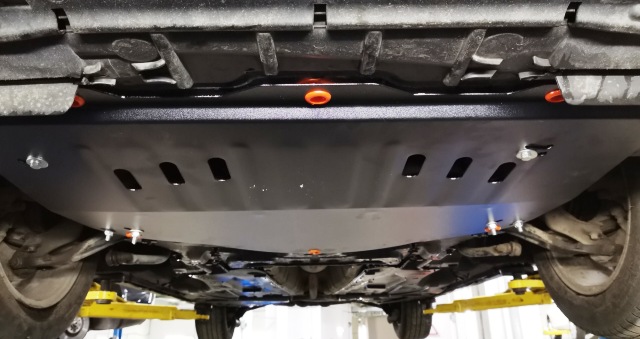
Why is crankcase protection really necessary? Unobvious risks
The primary function is mechanical protection of the vulnerable lower engine section (crankcase) and transmission. However, there are additional aspects worth considering:
- Protection from condensation and dirt: The plate creates a kind of shield that reduces the penetration of dirt, water and anti-icing agents onto engine parts and wiring, slowing down corrosion.
- Preventing damage to standard plastic protection, which on many modern cars serves only for aerodynamics and sound insulation.
- Reducing the risk of fire when hitting and breaking fuel lines or oil filters, which are often located in the lower part of the engine compartment.
Important point: A good defense doesn't just take the blow, it distributes it correctly and absorbs it., without transferring excessive load to the attachment points to the body or subframe.
Defense materials: a detailed analysis of the pros, cons, and myths
Material selection is key. There's no definitive "best" option, only the optimal one for your operating conditions.
1. Steel protection (carbon steel, 2-3 mm)
A classic for harsh conditions.
- Pros: Maximum tensile strength and crush resistance. Excellent price-to-reliability ratio. Under strong impact, it will bend more often than not. Repairable (can be straightened).
- Cons: Heavy weight (8-15 kg). Increased load on attachment points. Without an anti-corrosion coating (powder coating, galvanizing), rusts quickly. May create excessive rigidity, transferring impact energy to the body.
- For whom: For regular off-road driving, logging roads, and areas with very poor road conditions. Ideal for SUVs and crossovers.

2. Aluminum alloy protection (4-6 mm)
Balance between strength and weight.
- Pros: Significantly lighter than steel (approximately 3 times lighter). Corrosion-resistant. Good vibration damping. Often reinforced with ribs for increased strength.
- Cons: High price. Less resistant to impact with sharp objects (stone, rebar) than steel. Under very strong impact, it may crack rather than bend. More difficult to repair.
- Myth: The claim that aluminum protection is only needed for aluminum bodies is a myth. The primary criterion is operating conditions, not the body material.
- For whom: For city dwellers who frequently travel to the countryside or on highway trips where road conditions are unpredictable. Suitable for most passenger cars and SUVs.
3. Composite protection (fiberglass, carbon, Kevlar)
Modern technological solution.
- Pros: Very lightweight (2-5 kg). Completely corrosion-resistant. Excellent vibration and noise dampening. High tensile strength and excellent impact resistance (for example, against a snow plug).
- Cons: The most expensive of all types. They can be brittle and prone to fracture if subjected to a pinpoint impact in extreme cold (depending on the resin composition). They often require more careful handling during installation and maintenance.
- For whom: For owners of modern passenger cars who value weight distribution and performance, primarily city dwellers. Also for sports car models, where every kilogram counts.

Selection criteria: what to look for besides the material?
Material isn't the only factor. Incorrectly selected protection based on other criteria can cause harm.
1. Design and geometry
- Completeness of closure: It should protect not only the oil pan, but also the timing belt cover (if it's underneath), steering components, and sensors. A good option is to combine engine and transmission protection in a single shield.
- Technological hatches and openings: These are essential for draining the oil, accessing the oil filter, and the oil pan mounting bolts. The lack of these windows will turn a simple maintenance check into a multi-hour ordeal.
- Fastening system: Must use the standard power points on the body/subframe. Makeshift fastenings to thin body metal are unacceptable. Pay attention to the eyelets and rubber dampers—they dampen vibrations.
2. Ventilation and aerodynamics
A solid sheet of metal can disrupt the normal airflow for cooling the engine and transmission. High-quality protection is perforated or has guide ribs to ensure ventilation. This is especially critical for turbocharged engines and automatic transmissions.
3. Thickness and stiffening ribs
The thickness must be adequate for the material. For steel, 2-3 mm is sufficient. For aluminum, 4 mm and above is sufficient. But the most important thing is the presence stamped stiffeners. They prevent the plate from bending upon impact, transforming it from a simple sheet into a structural element.
Installation and Maintenance: Critical Points
- No screws in the body! Only bolts should be used in the standard threaded holes. If these are not available, reinforcement plates or a subframe will need to be installed.
- Gap: After installation, there should be a gap (at least 1-2 cm) between the guard and the units being protected. This is necessary to cushion the impact—the guard should absorb the energy rather than transfer it directly to the pallet.
- Regular check: Once a season (especially after winter), remove the guard, clean it of dirt, and inspect it for cracks and the condition of the fasteners. This is also a good opportunity to inspect the vehicle components it conceals.
- Winter specifics: Snow and ice can freeze onto the guard, forming a heavy block. Composite materials have an advantage here, as ice adheres less to them.
Summary: A selection algorithm for your car
- Rate the operating mode: City/highway (aluminum, composite) or regular off-road (steel).
- Choose a trusted manufacturer, which makes protection specifically for your model, and not «universal» ones.
- Explore a specific model: Availability of hatches, stiffeners, fastening system, reviews.
- Plan a smart installation in a specialized service center if you are not confident in your abilities.
A properly selected and installed crankcase guard is not a paranoid precaution, but a sensible insurance for the heart of your car. It will pay for itself with one prevented hit, saving you an engine, money, time and nerves.