






The article "How eDNA can find endangered gorillas without touching them" first appeared on the AZ Animals website.
Rwanda is home to 26 different primate species. From great apes to gorillas, each has its own unique habitat and conservation needs. To more effectively address these needs, Rwanda uses wild animal DNA to identify hidden primates, particularly those at risk of extinction. This process allows for information to be gathered not only about primates but also about other species living in a given environment, without interacting with wild animals.
Environmental DNA is being used to track endangered primates in Rwanda.
Traditionally, obtaining high-quality DNA from wild animals often requires directly detecting the animals or collecting biological samples from their recent locations. This is a labor-intensive process that can cause stress to the animals.
Researchers have developed another method for collecting DNA from primates. This process is carried out using eDNA technology, which saves time and significantly reduces stress on the species being studied.
Rwanda is home to several endangered primate species. Two of them—the golden monkey and the mountain gorilla—have found a safe haven in Volcanoes National Park. However, tracking these primates has proven challenging. Due to the park's terrain and the ease with which these animals can hide, collecting DNA information can be challenging at best.
Environmental DNA (eDNA) analysis can be used to more effectively track endangered species such as golden monkeys.
©Tony Campbell/Shutterstock.com
The African Wildlife Foundation, in partnership with the government of Rwanda, pioneered the use of eDNA technology for biodiversity conservation. The goal was to compile a list of all animal and plant species native to the country.
However, the goal has shifted somewhat. Now, instead of simply compiling a list of species, it's possible to better track those that are endangered, says Deogratias Tuyisingise, a researcher at the Dian Fossey Gorilla Fund involved in the project. This is all being done using a simple DNA collection method that doesn't involve any contact with the animal.
«With a single sample, you can detect many species: mammals, birds, amphibians and many others,» Tuyisingize told the agency. Associated Press. «"We can see how species colonize these areas over time.".
Understanding species movements within an ecosystem can help conservationists and rangers in national parks better protect them. Environmental DNA analysis can be used to address a wide range of issues, from preventing the spread of invasive species to improving anti-poaching patrols.
What is eDNA technology?
The technology used by researchers to track golden monkeys, mountain gorillas, and other species is called environmental DNA (eDNA). It represents a significant advance in tracking endangered species. This is especially relevant in places like Volcanoes National Park, where the terrain is steep and animals have numerous hiding places.
The eDNA method allows DNA to be collected from natural habitats without disturbing wild animals.
©Marchu Studio/Shutterstock.com
eDNA is DNA that animals secrete in their environment. The most common sources of DNA include:
-
Feces
-
Hair
-
Mucus
-
Skin cells
-
Carcasses
These substances can be detected in water, soil, air and other environments to determine whether a particular species is present.
Advantages and disadvantages of using eDNA
One of the main advantages of eDNA collection is the non-invasive nature of the process. Animals experience no stress, as DNA is collected directly from their bodies. Furthermore, eDNA collection and analysis is a relatively inexpensive process. Furthermore, this procedure allows for the identification of other species in the environment that may have been previously unknown.
Despite the advantages of using eDNA, such as the absence of stress for animals, there are also limitations.
©H_Ko/Shutterstock.com
Using environmental DNA (eDNA) alone has some limitations. The main one is that while eDNA can show that a species was present in the environment, it cannot determine when exactly that species was present.
Why is it important to track endangered primates in Rwanda?
Rwanda is making significant efforts to save endangered primates. Therefore, tracking their numbers to maintain up-to-date population data may be a sufficient reason to use environmental DNA (eDNA). However, this is only one reason why tracking endangered primates is so important.
Tracking endangered primates like the golden monkey can help better protect them and their habitat.
©Hyserb/Shutterstock.com
Here are some of the reasons why tracking endangered primates in Rwanda is necessary:
-
Illegal hunting can be tracked.
-
Traps can be removed before they cause harm to wildlife.
-
The stress caused by invasion of a person's privacy can be observed in real time.
-
Restoration and conservation of habitat can be solved.
Tracking endangered primates also allows researchers to gain information about the overall health of the ecosystems in which the animals live, how policy decisions positively or negatively impact the species, and how the primate tourism industry impacts the species and its habitat. Tracking provides a wealth of information. Now that eDNA makes it possible to do this without disturbing the apes or gorillas, it has become even more beneficial.
What led to primates becoming an endangered species in Rwanda?
In Rwanda, primates such as golden monkeys and mountain gorillas have been hunted for decades. Although conservation efforts in Volcanoes National Park have led to a slow recovery, these species remain endangered.
Golden apes, and mountain gorillas in particular, face both environmental and anthropogenic pressures. Factors that have led to these primates becoming endangered include:
-
Habitat loss
-
habitat fragmentation
-
Conflicts between humans and primates lead to the capture and killing of primates.
-
Poaching
-
Illegal trade
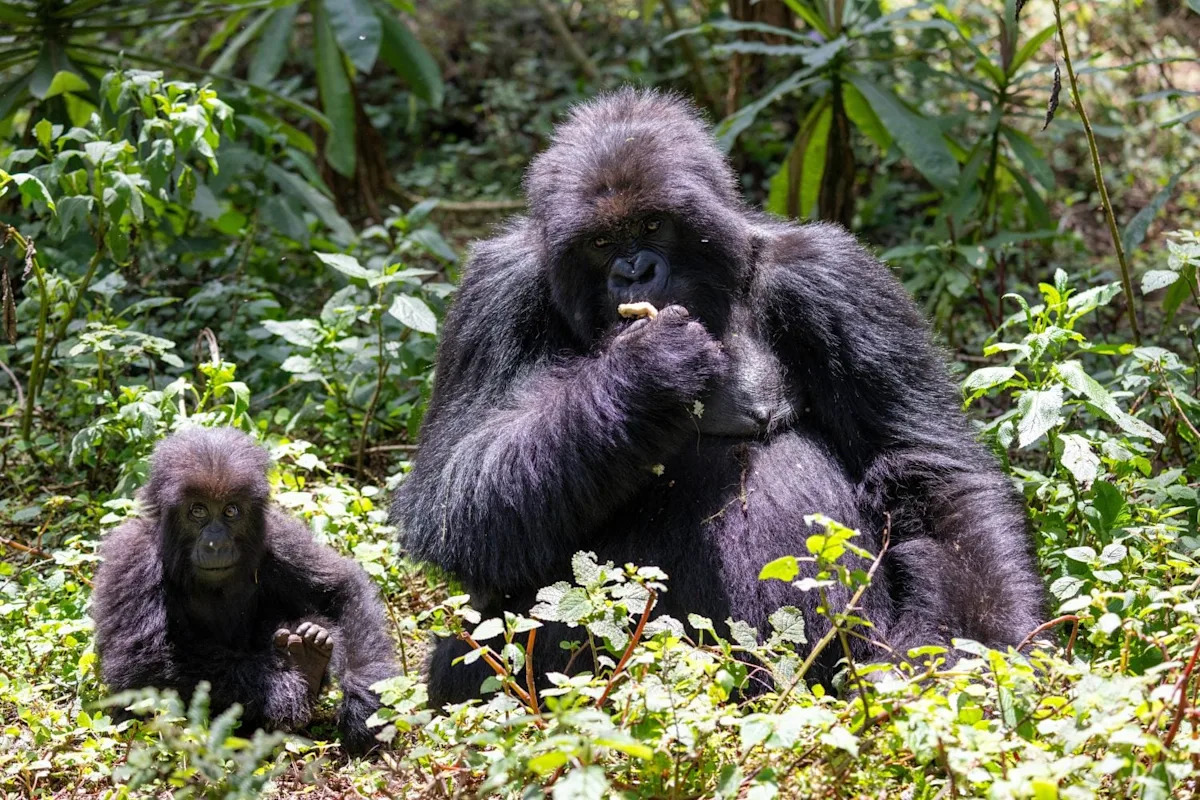
Mountain gorillas are endangered due to poaching, illegal trade and habitat loss.
©Jane Rix/Shutterstock.com
The current population size of golden monkeys in Rwanda is unknown. However, the global population is believed to be between 3,000 and 4,000 individuals.
Conservation efforts for the mountain gorilla population in Volcanoes National Park have played a significant role in increasing their numbers. In the 1980s, their population was around 400 individuals, but today it has grown to approximately 1,000. Of these, 604 live in the national park.
While securing the future of golden monkeys, mountain gorillas, and other endangered primates in Rwanda remains a long way off, conservation efforts have already borne fruit. Now, thanks to the introduction of eDNA technology, understanding the habitats of these species will further aid in efforts to protect them and save them from extinction—an outcome that seemed almost inevitable just a few decades ago.
The article "How eDNA can find endangered gorillas without touching them" first appeared on the AZ Animals website.