








Mid-century coastal modern design is a harmonious blend of two distinct styles. On the one hand, the mid-century modern aesthetic, known for its clean lines, organic forms, and strong emphasis on functionality, perfectly complements the light, airy atmosphere of coastal style and its connection to nature. This fusion creates an atmosphere that is both calm and elegantly modern.
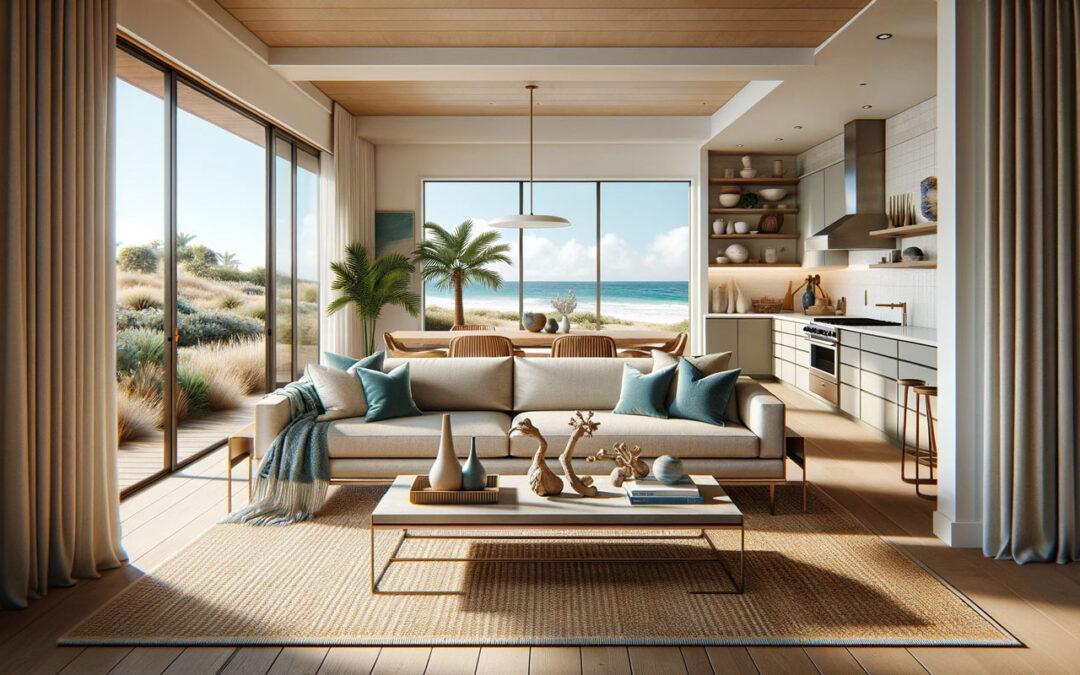
The key to this combination lies in its subtlety and balance. Furniture pieces typical of the mid-20th century, such as Eames chairs and teak consoles, are complemented by nautical elements, such as soft linen fabrics, nautical artwork, and a color palette that echoes the hues of the beach and sea. The result is a living space that feels both timeless and deeply connected to the natural surroundings.
Evolving Interior Design Trends: From Mid-Century Modernism to Biophilic and Coastal Inspiration
Interior design is a constantly evolving field, reflecting changing cultural trends and human needs. The Mid-Century Modern movement, which emerged in the mid-20th century, focused on simplicity, functionality, and the integration of nature into design—a response to the pretentious and overstuffed styles of the previous era. This design philosophy not only persisted but also evolved to incorporate more explicit connections to nature, leading to the emergence of biophilic design.
Biophilic design goes beyond simple aesthetics, incorporating the essence of nature into living spaces to enhance well-being. It incorporates the use of natural materials, the integration of living plants, and the maximization of natural light and air circulation. Combined with coastal design elements, it represents a holistic approach that not only looks good but also creates a sense of well-being. The integration of natural elements such as wood, stone, and fiber, along with a nature-inspired color palette, brings a sense of calm and serenity to the home.
This evolution marks a shift towards a more conscious and sustainable lifestyle, where design serves not only aesthetic purposes but also promotes health and well-being.
Incorporating Mid-Century Coastal Modern Design into Your Home
Master Bedroom: A Combination of Coastal Tranquility and Mid-Century Modern Furniture
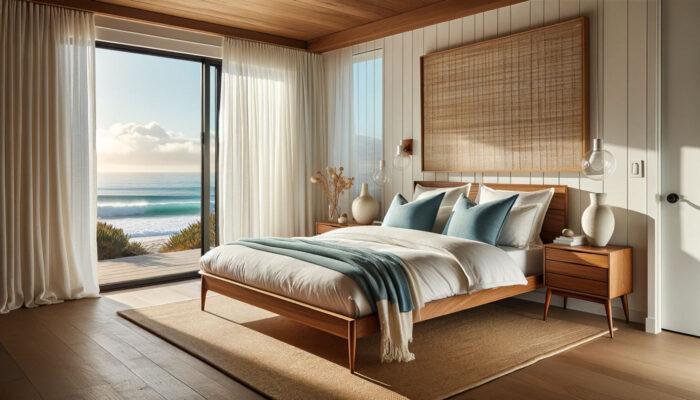
In the master bedroom, the goal is to create a serene retreat, combining the clean lines of Mid-Century Modern furniture with calming coastal design elements. Choose a simple yet elegant bed with a natural wood finish—a hallmark of Mid-Century style. Pair it with soft, natural textiles in a neutral palette—such as sand, navy, and azure. Add elements like a jute rug or woven wall hangings for texture and comfort.
Lighting plays a key role in achieving this combination. Choose lamps with geometric shapes typical of mid-20th-century aesthetics, but in materials or colors reminiscent of the coast, such as frosted glass or a light driftwood finish. Large windows are ideal, allowing natural light into the room throughout the day. For artwork, choose works depicting tranquil seascapes or abstract paintings in calming tones.
Master Bathroom: Achieving Harmony with the Bedroom Through Design and Decor
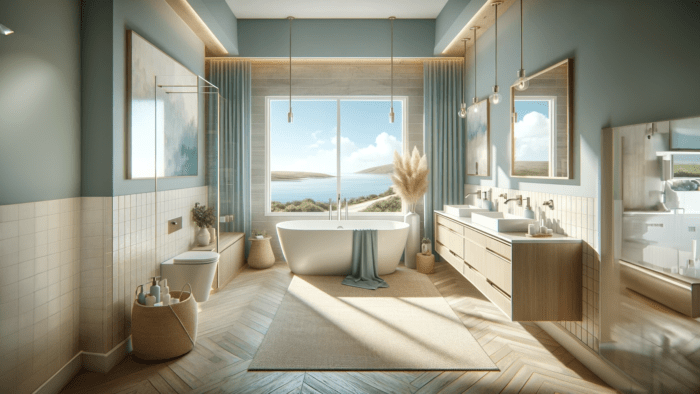
Combining the master bedroom and bathroom enhances the overall aesthetic and smoothness of the space. Use the same color palette in the bathroom, using tiles and textiles in soft, coastal tones. The mid-century influence can be seen in the clean lines of the vanity and fixtures, perhaps in a vintage style with modern functionality.
Add natural elements, such as a wooden stool or bath mat, to warm the space. Plants that thrive in humid climates can add a touch of greenery, emphasizing the biophilic approach. Decorative elements, such as glass jars filled with sand, shells, or sea glass, can serve as a subtle nod to the coastal theme.
Living room: a combination of natural and modern design elements
This beautiful mid-century coastal living room exudes an air of serene elegance and effortless sophistication. The space's design approach is a masterful blend of simplicity and thoughtful design, embodying the essence of both coastal tranquility and mid-century modern aesthetics.

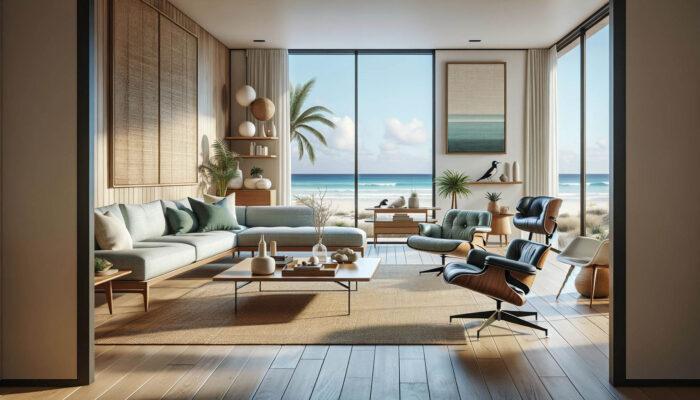
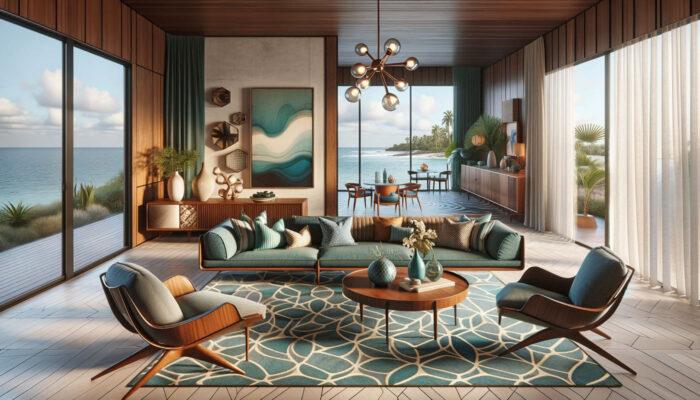
The iconic Eames chairs not only evoke mid-century modernism but also offer a comfortable place to relax and contemplate. Their elegant design and warm tones perfectly complement the nautical theme. A minimalist teak coffee table complements the chair; its clean lines and warm wood tone add a touch of organic warmth to the space. A modern, understated sofa serves as the focal point of the room, creating a cozy atmosphere with its soft cushions and inviting shape.
The color palette is a calming blend of soft neutrals, blues, and greens, reminiscent of a tranquil coastal landscape. These colors play a crucial role in creating a peaceful and harmonious atmosphere, reflecting the serenity of the sea and sky. The walls are adorned with minimalist wood elements and abstract paintings, adding a touch of artistic charm that unites all elements.
One of the room's most striking features is the large, expansive windows, which offer panoramic views of the serene coastal landscape. These windows are more than just architectural elements; they are portals to the natural world, letting in streams of natural light that fill the room with a soft, calming glow.
Greenery is strategically placed throughout the space, with individual plants adding a fresh and vibrant feel. These natural elements enhance the biophilic aspect of the design, connecting the indoors with the outdoors and enhancing the overall sense of well-being.
In these living rooms, every element was carefully selected to create a space that is not only aesthetically pleasing but also emotionally soothing. It's a room where one can effortlessly relax, surrounded by the tranquil beauty of nature-inspired design. The overall atmosphere invites relaxation and reflection, making it the perfect retreat from the hustle and bustle of everyday life.
Coastal kitchens with a mid-century modern twist
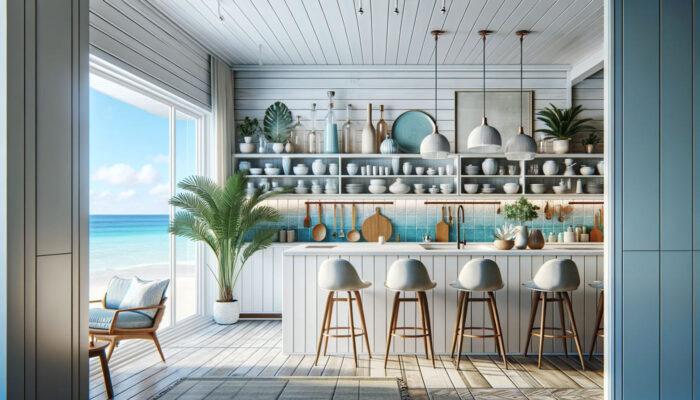
This luxurious mid-century coastal kitchen combines the timeless elegance of mid-century design with the easy, natural feel of the coastal area, creating a space that is both sophisticated and inviting.
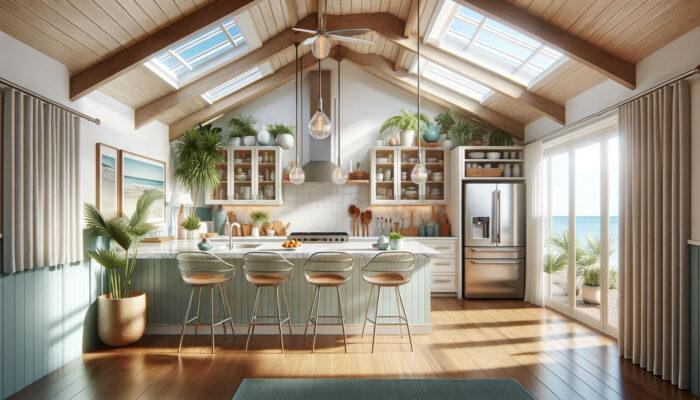
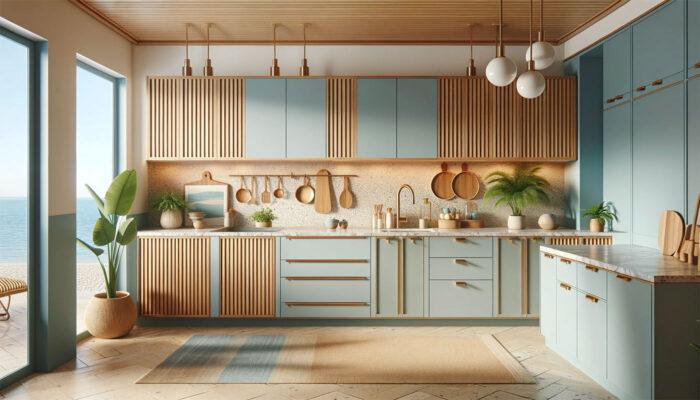
Layout and furnishings
- Open plan: The kitchen has an open floor plan, creating a feeling of spaciousness and openness. This design encourages conversation and provides a seamless transition to other areas of the home, such as the dining room and living room.
- Central Island: A large central island, topped with a white quartz countertop, serves as the kitchen's focal point. It serves not only as a food prep area but also as a casual dining spot, furnished with stylish bar stools in a minimalist mid-century design. Below the island are spacious flat-panel cabinets, providing neat and clutter-free storage.
Color range and materials
- Color palette: The predominant colors used are white and light blue, reflecting the coastal theme. Accents of soft sand and turquoise enhance the tranquil atmosphere.
- Materials: Light paint on the cabinets and shelves adds warmth while maintaining the clean lines characteristic of mid-century aesthetics. Stainless steel appliances add a touch of modernity and luxury to the kitchen, ensuring functionality and style.
Lighting and views
- Natural lighting: Large windows and possibly skylights fill the space with natural light, making the kitchen feel bright and spacious.
- Types: These windows frame stunning views of the surrounding coastal landscape—whether a sandy beach, a rocky coastline, or the vast ocean—connecting the interior with the natural beauty outside.
- Accent lighting: Geometric pendant lights, a signature feature of mid-century design, hang above the kitchen island and dining area, providing directional lighting and adding an artistic touch.
Decorative elements
- Green: Houseplants are strategically placed throughout the kitchen, adding a touch of greenery and highlighting the biophilic design elements.
- Open shelves: The walls can feature carefully selected artwork that complements the color scheme, with abstract coastal landscapes or mid-century modernist motifs.
General atmosphere
The kitchen exudes an atmosphere of effortless luxury. It's a space where functionality meets art, and the serene natural beauty of the coast blends seamlessly with the clean, refined lines of mid-20th-century design. More than just a place to cook, it's the heart of the home, where you can enjoy the beauty of nature while indulging in culinary delights.
How to Add Coastal Flavor to Mid-Century Modern Interiors
To bring coastal charm to your mid-century modern home, start with your color palette. Soft neutrals paired with blues and greens reflect the color palette of modern coastal homes. Use these hues in textiles, wall colors, and decorative accents.
Furniture should be functional and simple, with clean lines typical of mid-20th-century design. To soften this style, add textured elements such as knitted throws, linen pillows, and natural fiber rugs.
Consider incorporating organic shapes into your space through accessories like mirrors or artwork, and use natural materials wherever possible—wood, stone, and glass are all great options.
Lighting is another area where these two styles can coexist harmoniously. Choose simple yet elegant fixtures, and consider using natural materials or colors that evoke the coastal theme.
Finally, add personal touches with antiques or custom pieces. These items can infuse your space with character and uniqueness, ensuring your home is a true reflection of your style.
Frequently Asked Questions Section
What are the key elements of mid-century coastal modern design?
Key elements include a neutral and calming coastal-inspired color palette, clean lines and functional furniture, and the integration of natural materials and textures.
How can I balance mid-century and coastal style in my home?
Balance can be achieved by choosing Mid-Century Modern furniture and complementing it with coastal-inspired colors, textures, and decorative elements. Maintaining a clean and orderly space is essential.
What color palette is best for a mid-century modern coastal home?
To create a calming and harmonious space, a color palette that includes soft neutrals paired with blues, greens, and occasional earth tones works best.