






WhatsAppRedditShareEmailTweetPin0 Shares
Science fiction often relies on the idea that the universe contains countless places where humans or human-like creatures could thrive. In Star Wars and Star Trek, hundreds of planets teem with life. You could wander around them as if they were your own. But in our reality, we've only found one place where any living creature could thrive, and that's Earth.
While we haven't yet discovered life or other similar worlds, that doesn't mean we haven't found other worlds that could potentially support life. It's important to remember that a planet capable of supporting life is roughly equivalent to a place you could call home. A shipping container might be a home, but it would need some repairs. Likewise, a planet capable of supporting life would likely need a bit of polishing before you could raise pigs and plant crops there. However, we have identified some potential possibilities. Emphasis on "potential.".
Goldilocks Zone

One of the first criteria astronomers look for when searching for a planet capable of supporting life is its location in the so-called habitable zone, or Goldilocks zone. This, of course, is a reference to the fairy tale of Goldilocks and the Three Bears, where one porridge was too hot, one too cold, and one was just right. For life to exist, a planet must be in this "perfect zone"; otherwise, it would be too hot or too cold for life as we know it.
The Goldilocks zone is the region around a star where a planet capable of supporting liquid water could exist. Again, the temperature shouldn't be too high, otherwise the water would evaporate, and it shouldn't be too low, otherwise the water would freeze. Earth, of course, is in the Goldilocks zone around our Sun. So something roughly equivalent is needed, but of course, the conditions vary slightly depending on the type of star and the size of the planet.
It's worth noting that the concept of "as we know it" plays a crucial role here. There are many potential ways life could thrive in conditions we're not accustomed to. Recall that even on Earth, life has found a way to exist around toxic hydrothermal vents on the ocean floor—substances that would kill most living things on our planet. But some organisms have adapted and can't survive. For the purposes of searching for a habitable planet, however, we'll stick to the basic principles.
There is a theory that life could exist on planets beyond the so-called "Goldilocks zone," even in our own solar system. For example, liquid water may not be necessary for life, but liquid methane could potentially support it. Saturn's moon Titan has abundant liquid methane, and it has been suggested that it could support life. Although much colder than Earth, bodies of liquid water, such as seas and rivers, have been observed there. The presence of life is unlikely, but further research is needed.
The Twilight Zone
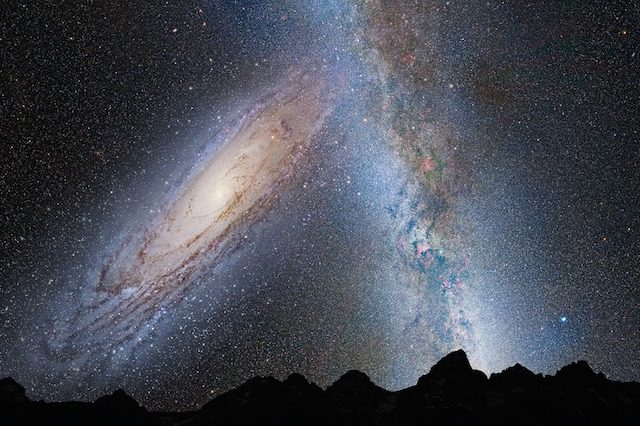
The Goldilocks Zone isn't the only zone in space worth exploring. There's also the Twilight Zone. You know, some scientist would be thrilled to have the chance to name it?
The Twilight Zone exists on a planet, not in space. It refers to a narrow band on a tidally locked planet. Imagine the Earth doesn't rotate on its axis like it does around the Sun. It's simply a stationary planet, where one side is perpetually night and the other is perpetually day. One side is frozen, the other is heated, and neither side can support life. But right in the center is a band that is the Twilight Zone—a place where life can exist within a very narrow range of conditions.
This is, of course, just a theory, but, like the "Goldilocks zone," it opens up the possibility that other planets might have conditions, albeit very narrow, that could support life as we understand it.
So how does a planet become tidally locked in the first place? Our galaxy contains many stars smaller than our sun. Because of this, a planet must be closer to its star to fall into the "Goldilocks zone." But when a planet gets too close to its star, it becomes gravitationally locked. This means it can only orbit, unable to rotate, so one side always faces the star. This is what's called a tidally locked planet. And because it's in the "Goldilocks zone," liquid water could potentially exist, but only within a narrow band of the "twilight zone.".
It sounds a bit unbelievable, like something out of science fiction, but it's more common than you might think. For example, the Moon always looks the same at night because it's tidally locked with the Earth. It orbits the planet but can't rotate on its own axis.
In numbers
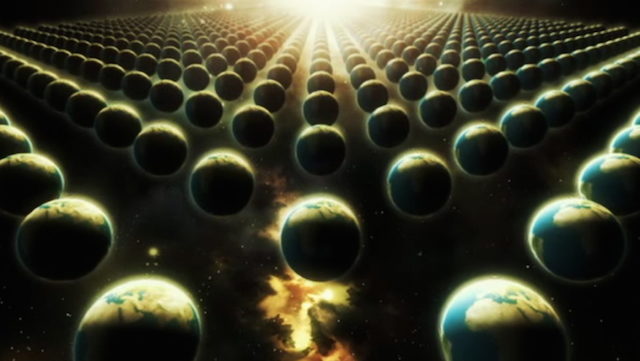
So, if a planet can potentially be habitable only within the so-called "Goldilocks zone," how many planets are we talking about? Our Solar System has one, and we live on it. But the Milky Way Galaxy has about 3,200 stars with planets orbiting it. At least, that's what we've discovered so far. And in the universe as a whole? There could be up to 200 sextillion stars, each with its own planetary system.
If every star had a planet, that's 200 sextillion planets. But our star has eight planets in orbit, which is actually the largest number of planets we've discovered around a star so far. If other stars have at least four planets, that's 800 sextillion worlds in the Universe.
Zooming out a bit, researchers estimate that our galaxy alone could contain up to 300 million potentially habitable planets. Data from the Kepler telescope and the European Space Agency's Gaia mission were used to calculate this potential number.
The 300 million figure is by no means an optimistic estimate. It's considered quite conservative, based on the probability that only 7% Sun-like stars harbor potentially habitable planets. The actual number could be significantly higher, as the average expected percentage is 50%, meaning 300 million could turn into approximately 2.1 billion. Some of these planets are relatively close to us, but "relatively" plays an important role here. For example, in an interstellar context, the closest planet to us is extremely close, but still 20 light-years away.
The closest star to us is Proxima Centauri, located 4.3 light-years away. With current technology, we could reach it in 6,300 years. Therefore, it would probably take us about 30,000 years to reach our friendly planet, located 20 light-years away. In other words, we won't be able to visit these planets anytime soon.
Using the Drake equation, formulated by astronomer Frank Drake to determine the number of habitable planets, the results look somewhat different. Again, this is a highly speculative assumption, but it multiplies the average star formation rate by the fraction of stars with planets, by the average number of planets potentially capable of supporting life on a star, and by the average lifespan of a planet. As you can see, some values will be imprecise. But the answer, depending on how you prefer to do the calculations, is somewhere between 1.4 billion and 2.65 billion.
What does the planet need?

Being in the "Goldilocks zone" doesn't necessarily make a planet habitable. It simply means it's in a region suitable for life. For life to emerge, everything needs to be carefully considered. There are several conditions a planet must meet for life to exist. Then again, there are likely all sorts of circumstances we've never considered where different types of life could arise. But for the sake of argument, we'll stick with what we know.
Planetologist Alessandro Morbidelli believes that seven factors must be present for a planet to be habitable. We've already discussed the first: it must be located at the right distance from its star.
The second factor is the correct orbit. If the orbit is too elliptical, rather than close to a perfect circle, there will be periods of sharp temperature fluctuations throughout the year: extremely cold winters, incredibly hot summers. Such a temperature spread would make the survival of life in such orbits unlikely.
The next important point is a stable rotation axis. Compared to Earth, Mars lacks a stable rotation axis, and this led to the loss of its atmosphere. Our rotation axis remains relatively stable thanks to the Moon.
The fourth identified factor is water. Yes, we've already discussed how other liquids might support life, but for Earth-like conditions, we need water. But not too much! Too much and layers of ice form, preventing the formation of organic life.
The composition of the atmosphere is also important. Our planet is rich in nitrogen and oxygen. But if the planet had formed more quickly, we might have had an atmosphere rich in hydrogen and helium, like Neptune, and we wouldn't be able to support life.
The next factor is plate tectonics. You may not realize it, but plate tectonics is what maintains our climate. Volcanoes emit greenhouse gases, rain washes them away, and the CO2 cycle continues. On planets like Venus, this doesn't happen.
Last but not least, the planet needs a magnetic field. It's provided by the Earth's spinning molten core. It protects us from the deadly charged particles floating in space, which would destroy all life on Earth by destroying our atmosphere if we didn't have what is essentially a force field.
Another factor, not mentioned in the list of seven, but quite important, is the actual building blocks of life as we know it. Carbon, oxygen, nitrogen, hydrogen, phosphorus, and sulfur are what enabled the origin of life on Earth.
How do we find them?

So now we know what we're looking for. How exactly do we find them? It takes some effort. Astronomers need to find a star, and fortunately, there are plenty of them out there. Then they need to see what planets orbit that star. You're looking for something in the "Goldilocks zone," roughly the size of Earth.
Because of the distances we're talking about, you can't simply point a telescope at an exoplanet and peer at it, as if you were spying on your neighbor through binoculars. Instead, we look for dips in the star's light that indicate the planet may be in front of it. This means you can only see them when they orbit the star from that direction.
Next, we need to analyze the wavelengths to determine what type of atmosphere we're dealing with. Some planets are composed entirely of gas, so we need to determine whether the world is solid. The wavelengths of light absorbed or reflected by the planet then help us understand its atmosphere, as different atmospheres absorb or reflect light differently.
As we continue to discover these planets, it's worth remembering that we've been transmitting signals from our own planet for many years. Scientists believe that at least 29 potentially habitable planets would have received a signal from Earth by now.
Other articles that may interest you