






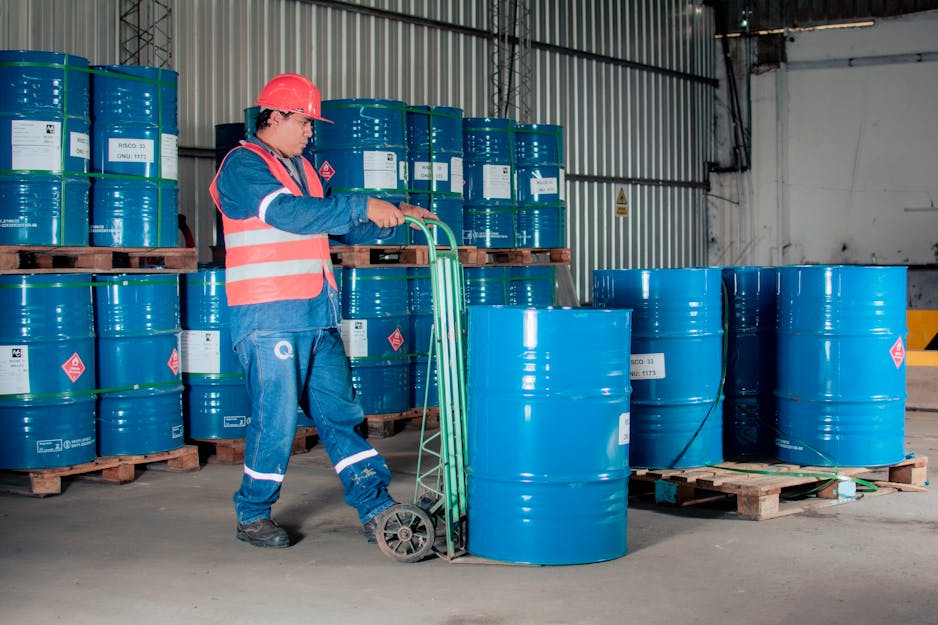
Photo: Martin Zapata
Main
- When evaluating chemical suppliers, total cost of ownership is more important than unit price.
- Ordering quantities in excess of actual consumption often results in funds being frozen and increased write-offs.
- Errors in acceptance and documentation lead to hidden costs due to rework, defects, and delays.
- Damage during transportation and improper handling of goods silently reduce profitability.
- Standardized specifications and packaging reduce variability, waste, and operational complexity.
Profits often leak out unnoticed, through small details. In chemical procurement, these hidden losses accumulate faster than most teams realize, especially when it comes to suppliers like Ohana Chem Co. By making a few minor adjustments, you can protect your budget and your business.
Consider the total cost, not just the unit price.
Negotiations typically begin with a price per kilogram or per barrel. This figure is important, but it only represents a small portion of the total cost. The total cost of the product will include freight, additional fees, payment terms, and minimum order quantities, all of which will impact how much you actually pay.
Sometimes a supplier offering a slightly higher unit price with better delivery terms may be a cheaper option overall. A local supplier with reliable partial deliveries may outperform a remote supplier with attractive list prices. Consider the annual cost, not just the cost of a single order.
Furthermore, time and risk are factors that come at a cost. Unpredictable delivery times require large safety stocks and last-minute expedited delivery. Considering all these costs, a supplier labeled as "cheaper" may actually end up being more expensive.
Order the quantity of the product that corresponds to your actual consumption.
Purchasing large quantities may seem like a sensible solution; however, it often leads to hidden losses. Excess barrels and containers sit in warehouses, aging, and limiting cash flow. Materials that are not very stable may lose their properties or fail before use.
First, analyze your actual consumption over the past year. Pay attention to chemicals that were purchased too frequently and then discarded, recycled, or sold at a loss. Then you can decide whether it's worth buying them less frequently, but more often.
It will be necessary to contact suppliers to lower minimum order quantities or negotiate shipping arrangements. Even a small shift from quarterly to monthly deliveries can lead to a reduction in business volumes and waste. Simply put, the goal is to order only what can be used within a certain safe timeframe.
Eliminate common errors in acceptance and documentation.
The first stage of waste generation is receiving at the warehouse, where it is rushed or incomplete. If labels, batch numbers, or certificates of analysis are not checked thoroughly, the wrong material may be sent to production, and vice versa. This leads to defective batches, rework, and hours of troubleshooting.
Provide receiving teams with simple, concise, and clear checklists. Before signing the acceptance report, verify the product name, concentration, batch numbers, and any special handling requirements. Ensure that suspicious shipments can be placed in a quarantine area until they are inspected.
Documentation errors also incur additional costs. Missing or incorrect data can delay payments, cause confusion in inventory systems, or lead to duplicate orders. A quick re-check of documents saves far more time and money than it costs.
Photo courtesy of Rawpixel.com.
Reducing waste in transportation and loading/unloading processes
Shipping costs don't just reduce rates. Damage, leaks, and contamination during transit also reduce profits. Review your claims and return history to see where your money is going unnoticed.
Partner with carriers who understand chemical products and the hazards associated with them. Ensure they use the appropriate trailers, secure cargo, and, where necessary, temperature control. A cheaper carrier that handles products improperly won't actually be more profitable.
In your own warehouse, cargo handling is just as crucial. Improper forklift technique, careless handling, and overcrowded aisles lead to punctures, dropped barrels, and lost labels. Regular and simple training for warehouse personnel can significantly reduce these losses.
Use specifications and standardization to reduce variability.
Loose specifications seem flexible, but they often lead to additional costs downstream. If the tolerance range is wide, your process may only perform well within a narrow range. This necessitates additional adjustments, laboratory testing, and, sometimes, batch rejects.
Collaborate with suppliers to tighten key specifications where they truly matter. Share your process data so they understand why you need a narrower range of parameters. In return, you can relax requirements for parameters that don't impact performance.
Standardizing grades and packaging also helps. If multiple plants or production lines can use the same grade or barrel size, you gain a production volume advantage. For example, an ethanol distributor can simplify the process by aligning common standards across all terminals.
Frequently Asked Questions
Why is unit price a poor indicator of the real costs of chemicals?
The unit price does not include shipping costs, additional fees, delivery times, and risks, which can all add up to make a "cheaper" supplier more expensive.
How do excessive chemical order volumes affect profitability?
Excess inventory ties up cash, increases storage costs, and increases the risk of materials wearing out or not meeting specifications.
What is the role of the reception process in waste prevention?
Careful inspection at the pier prevents the use of incorrect materials, documentation errors, and costly rework or defective batches of products at subsequent stages of production.
How can losses during transportation and cargo handling be reduced?
Using experienced carriers and improving internal cargo handling helps reduce damage, leaks, and contamination that can reduce profitability.
Why is standardization important in chemical procurement?
Standardized specifications and packaging simplify operations, reduce variability, and improve the efficiency of interactions with suppliers.
Conclusion
Chemical procurement leads to lost profits when no one looks beyond the invoice price. By streamlining ordering, delivery, and warehousing processes, partners like Ohana Chem Co. become part of a cleaner and more efficient supply chain, not just a line item on a product list. Small but consistent improvements in these areas protect your profits and ensure smoother operations.