








We tend to focus only on the dark and terrible parts of history, but not everything is so bad. Amidst all the wars, diseases, and other tragedies of history, there have also been many periods of unprecedented peace and prosperity. Historians sometimes call these "golden ages," when cultures around the world reached new heights in science, medicine, literature, economics, philosophy, and many other fields.
10. 14th-16th century, Mali
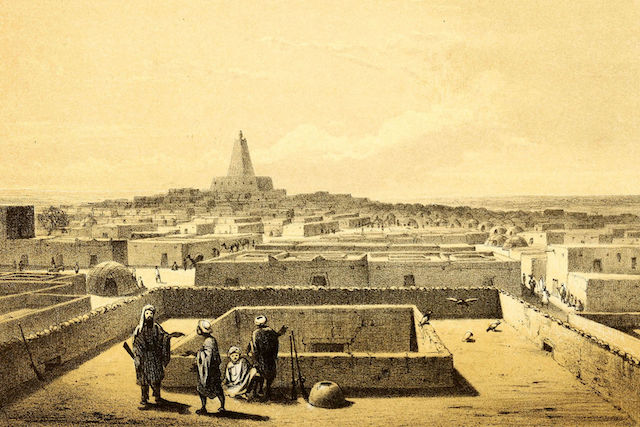
Timbuktu was founded as a seasonal trading camp on the southern edge of the Sahara Desert sometime in the 12th century, providing West African kingdoms with an opportunity to trade with salt-rich kingdoms to the east and beyond. 1300s , When it was annexed by the Kingdom of Mali, Timbuktu had already become the most important trading center in West Africa. According to legend, the city was so rich in gold that when Emperor Mansa Musa donated a heap of gold to Egypt in 1324, the price of the precious metal nationwide fell by 12%. years !
It wasn't just about wealth—during the reign of Mansa Musa, which began in 1312, Mali was also one of the most important centers of culture and learning in the African Islamic world. Scholars, architects, doctors, and other specialists were invited from all over the known world—at its peak, the city could accommodate more than 25 000 students, and its archives contained more than 800,000 manuscripts. This period lasted until approximately the end of the 16th century, when Timbuktu was occupied by Moroccan troops.
9. New Kingdom, Ancient Egypt

The New Kingdom of Egypt was a period between 16th and 11th centuries BC. This nearly 500-year era is remembered as the most prosperous time in the history of Ancient Egypt, when the pharaohs, belonging By the 18th, 19th and 20th dynasties, they had transformed the Egyptian kingdom into the most advanced civilization of the ancient world.
This growth was driven by several factors. While the fertile Nile Delta provided a rich source of food and other natural resources, the gold mines of the Nubian Desert made the pharaohs incredibly wealthy. This spread to the rest of Egyptian society in the form of extensive architectural projects such as temples and tombs, as Egyptian architecture became more sophisticated and complex than ever before. This was also when Egypt reached the peak of its territorial expansion, both through conquest and diplomacy, as we know it today. pharaohs , such as Tutankhamun, Ramses II and Hatshepsut.
8. Tang Dynasty, China
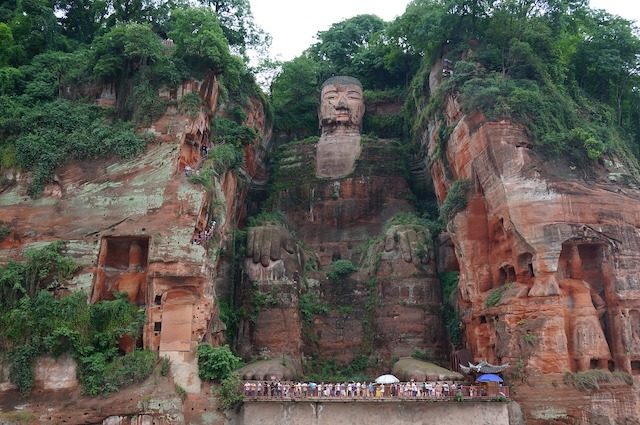
The Chinese Tang Dynasty was replaced Sui Dynasty in the early 7th century. Under his rule, China reached the peak of its territorial and cultural influence in the region, lasting more than three centuries until its fall in 907 CE. It was one of the greatest civilizations of its time, widely known for its ethnically diverse and cosmopolitan urban settlements. During the seventh and eighth centuries, many Chinese cities grew into large, bustling metropolises—the capital, Chang'an, was the most populous city in the world at its peak, with a population of over a million. residents .
The Tang Dynasty saw many far-reaching advances in fields such as art, literature, architecture, urban planning, and many others. It was during this period that woodblock printing was first invented in China, providing scholars and thinkers with a new way to produce and disseminate knowledge. This period is particularly notable for its contributions to ancient Chinese poetry, particularly during the reign of Emperor Xuanzong , who established a separate institution dedicated to poetry called the Academy letters .
7. Pax Romana, Ancient Rome
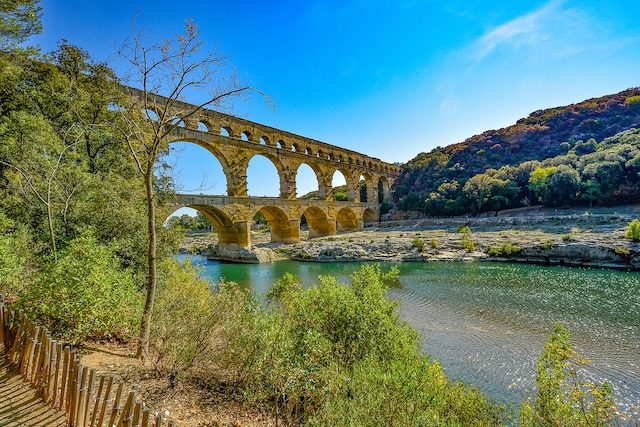
Pax Romana - or "« Roman world »"—was a period of relative calm in the Roman world. From the reign of Augustus Caesar in 27 BC to the death of Marcus Aurelius in 180 BC, over these two centuries, the relatively small Roman Republic transformed into one of the largest empires in history. Despite the turbulent early years of Augustus' reign, Rome flourished enormously during this time, ushering in an era of peace and prosperity for many of its citizens, especially in the capital.
At this time, the empire reached its territorial peak, with a population of over 70 million. Roman scholars made new advances in various fields, particularly architecture and urban infrastructure. A complex network of roads and aqueducts was built across the territory, further facilitating trade between distant provinces.
While it's arguable that it was a good time for everyone involved—as the empire was still experiencing numerous conflicts in its border regions throughout this period—the Pax Romana was generally a peaceful era for most citizens. It came to an abrupt end with the death of Emperor Marcus Aurelius, followed by the catastrophic board his son Commodus.
6. Gupta Empire, India

The Gupta Empire was a Hindu empire founded in 320 CE, after nearly five centuries of chaos and warfare between smaller kingdoms and principalities across India. The first Gupta ruler, Chandragupta I , expanded it into a formidable geopolitical entity stretching across vast areas of northern, eastern and central India.
From its rise to its collapse in the 6th century, the Gupta period remained the high point in the history of Indian civilization. It was during this period that the modern decimal system—now known as Arabic numerals — along with other fundamental discoveries by thinkers such as Aryabhata and Sushruta. Indian architecture also reached new heights during this time, as the Gupta rulers, especially Chandragupta II , built massive palaces and temples throughout the empire.
5. After World War II, the United States

When World War II ended in 1945, America found itself in a uniquely profitable While pre-war powers like Great Britain and France lay in ruins and much of their populations perished, the US economy was about to experience some of its most productive years.
Also sometimes known as the Golden Age of Capitalism, it was a period of rapid growth and reindustrialization across the country, particularly in the western and southwestern states. Cities like Los Angeles, Houston, Albuquerque, Phoenix, and others expanded rapidly as more and more Americans moved from densely populated urban areas to the suburbs, thanks to higher wages and living standards. During this time, massive infrastructure projects were undertaken, such as The Highways Act 1956 , under which about 40,000 miles of roads and highways were built, connecting different parts of the country. During this period gross national product grew from $200 billion in 1940 to $500 billion in 1960 as the American worker shifted to high-skilled service jobs.
4. The Golden Age of Islam
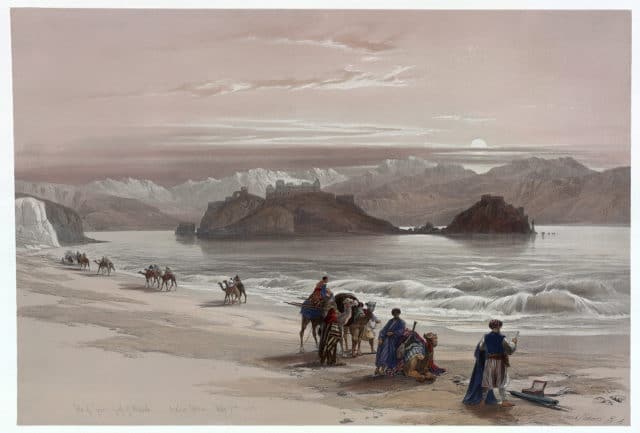
The Golden Age of Islam began in the 8th century with the founding of the Abbasid Caliphate. Islamic scholars, concentrated in the capital Baghdad, were financed and supported by the caliph. и and other members of the royal family, made numerous fundamental discoveries in science, technology, medicine, theology, military affairs, and other fields. Building on the knowledge of ancient cultures such as India, China, and Greece, many of these discoveries laid the foundation for the scientific revolution in Europe.
Unfortunately, all this came to an abrupt end in In 1258 , when Baghdad was captured and brutally sacked by Mongol forces in 1258, and most of its population was put to the sword. This included the House of Wisdom, or Great Library of Baghdad, where hundreds of thousands of manuscripts were burned or thrown into the river .
3. 5th century, Athens

The Golden Age of Athens lasted for most of the 5th century BC, particularly during the reign of Pericles from approximately 461 to 429 BC. At the time, Athens was just one of many city-states in Greece, ruling over a league of more than a dozen other states called the Delian Empire. league . In essence, it acted more like an Athenian empire than a union, making the city richer and more powerful than ever before.
During this time, the Athenians made so many advances in areas such as philosophy, science, logic, mathematics, theatre and art that it is often called the foundation of Western democracy . In mathematics, Athenian thinkers such as Euclid and Pythagoras formulated the first laws of modern mathematics. geometry . Playwrights such as Sophocles and Euripides lived in Athens around this time, along with physicians such as Hippocrates, philosophers such as Plato and Socrates, and historians such as Herodotus and Thucydides.
2. Timurid Renaissance
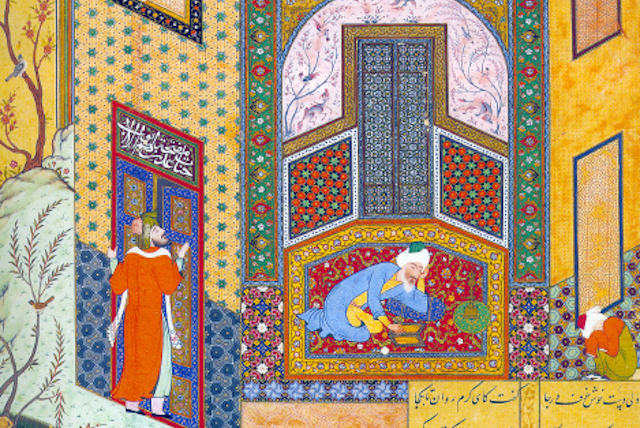
The Timurid dynasty was founded by Timur, a Turkic-Mongol military leader , who conquered and created a vast empire in Central Asia and Persia in the 14th century. This was the golden age of Persian culture—from the late 14th century to approximately the early 16th century, the Timurid Empire achieved unprecedented advances in astronomy, architecture, poetry, performing arts, metalworking, military science, and other fields.
This period, now known as Timurid Renaissance , is particularly famous for developing the technique known as Persian miniature painting - an abstract style of colorful arts , practiced in the cities of Iran and Central Asia. Calligraphy developed as a distinct art form throughout this period, as artists from around the world flocked to the rapidly developing cities to practice their craft. Many members of the dynasty were themselves artists , as they financed and encouraged large-scale architectural and artistic projects throughout the empire.
1. Italian Renaissance

The Italian Renaissance began in the early 15th century. Centered in the Florentine Republic—then one of many separately governed city-states on the Italian peninsula—this period soon became known as the zenith of European arts and sciences, sparking other revivals in countries such as Great Britain, Spain, France, Germany, and elsewhere.
By the end of the 14th century, Florence was an important center banking and other commercial activities in Europe. As tributary wealth The harsh, toil-based lifestyle of the Middle Ages gave way to a more individualistic and free approach to life, also known as "humanism." Wealthy Florentine citizens were now more willing to invest time and money in art and culture, which had a profound impact on Florentine society.
This shift in the popular worldview - combined with advances in technology - produced many outstanding artists, thinkers, writers, scientists and engineers throughout Florence, including such names as Filippo Brunelleschi, Leonardo da Vinci, Galileo Galilei, Michelangelo, Machiavelli and others.