






Today's personal computers are a far cry from the massive, clunky devices that emerged during World War II, and the difference isn't just in their size. The "fathers" and "grandfathers" of modern desktops and laptops couldn't do many of the things that modern machines handle with ease. However, The world's first computer was a breakthrough in science and technology.. Get comfortable in front of your monitor, and we'll tell you how the PC era began.
Who created the world's first computer?
In the 1940s, there were several devices that could claim to be the first computer.
Z3
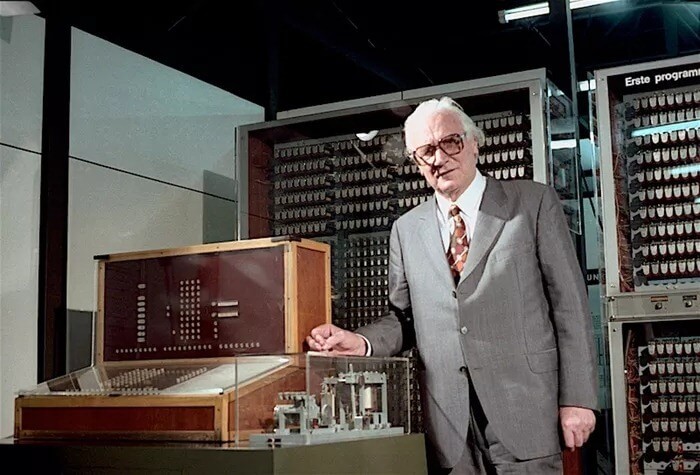
An early computer created by German engineer Konrad Zuse, who worked in complete isolation from the work of other scientists. It had a separate memory unit and a separate console for data entry. The data storage medium was an eight-track punch card, made by Zuse from 35mm film.
The machine contained 2,600 telephone relays and was freely programmable in binary floating-point code. The Z3 was used for aerodynamic calculations but was destroyed in the bombing of Berlin in late 1943. Zuse oversaw the reconstruction of his brainchild in the 1960s, and this programmable machine is now on display in a museum in Munich.
Mark 1
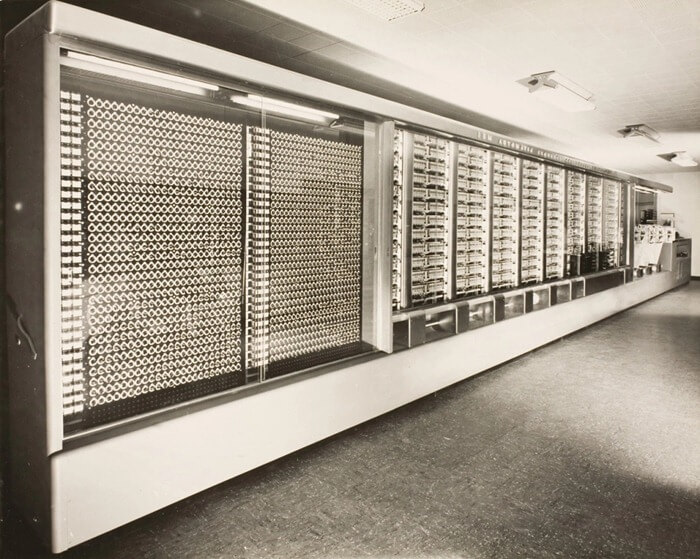
The Mark 1, conceived by Professor Howard Aiken and released by IBM in 1941, was America's first programmable computer. The machine cost half a million dollars and was used to develop equipment for the US Navy, such as torpedoes and underwater detection systems. The Mark 1 was also used to develop implosion devices for the atomic bomb.
The Mark 1 can be considered the world's first computer. Its specifications, unlike those of the German Z3, allowed for automated calculations, requiring no human intervention.
Atanasoff-Berry Computer (ABC)
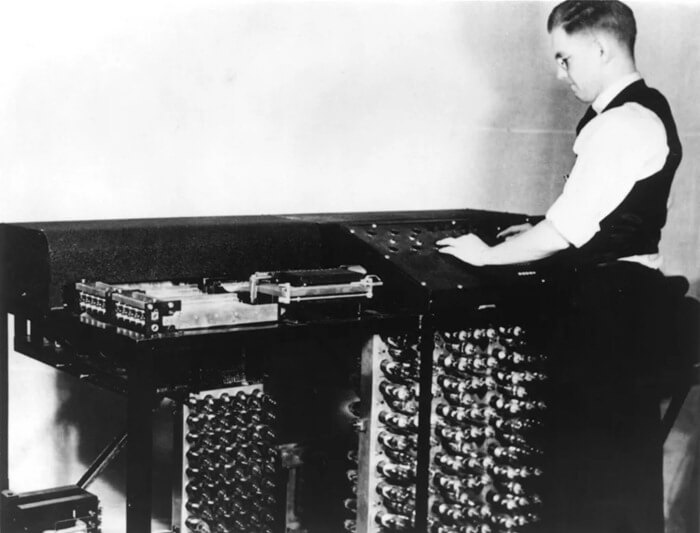
In 1939, Professor John Vincent Atanasoff received funding to build a machine called the Atanasoff-Berry Computer (ABC). It was designed and built by Atanasoff and graduate student Clifford Berry in 1942. However, the ABC device was not widely known until a patent dispute related to the invention of the computer. It was only resolved in 1973, when it was proven that ENIAC co-inventor John Mauchly had seen the ABC computer shortly after it became operational.
The legal outcome of the lawsuits was significant: Atanasoff was declared the originator of several key computer ideas, but the computer as a concept was declared unpatentable and therefore freely available to all developers. A full-scale working replica of the ABC was completed in 1997, proving that the ABC machine functioned as Atanasoff claimed.
ENIAC
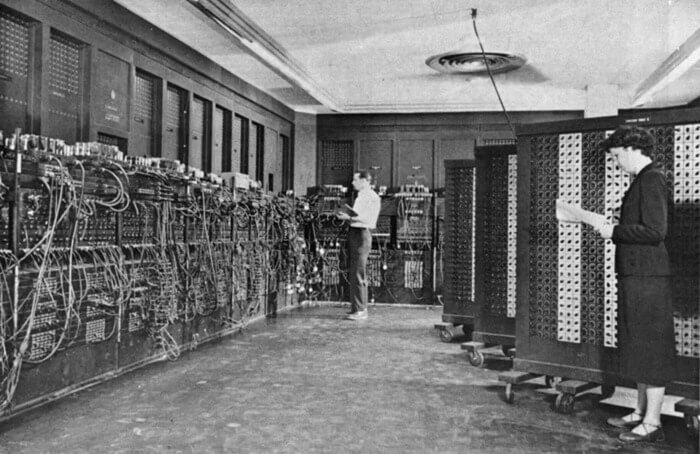
ENIAC was developed by two scientists from the University of Pennsylvania, John Eckert and John Mauchly. It could solve a "wide range of numerical problems" through reprogramming. Although the machine was unveiled to the public after the war, in 1946, it was essential for calculations during subsequent conflicts, such as the Cold War and the Korean War. It was used for calculations during the development of the hydrogen bomb, engineering calculations, and the creation of firing tables. It also provided weather forecasts for the USSR, so that Americans could know where radioactive fallout might fall in the event of a nuclear war.
Unlike the Mark 1 with its electromechanical relays, ENIAC used vacuum tubes. It is believed that ENIAC performed more calculations during its ten years of operation than all of humanity combined up to that time.
EDSAC
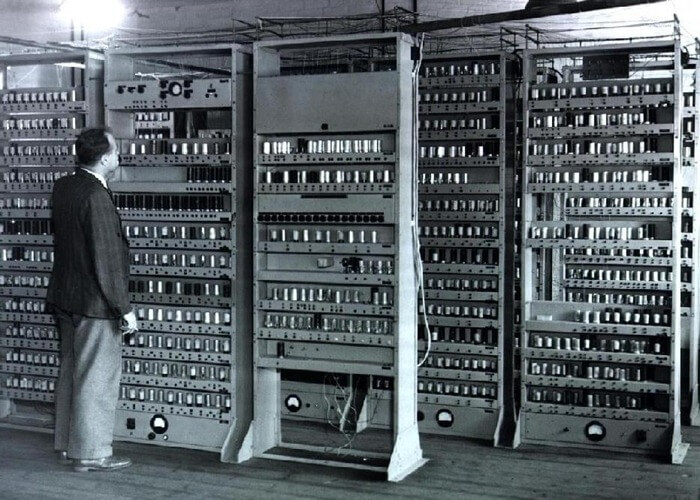
The first computer with stored-program memory was called EDSAC. It was built in 1949 at the University of Cambridge. The project was led by Cambridge professor and director of the Cambridge Computing Research Laboratory, Maurice Wilkes.
One of Wilkes's major advances in programming was his use of a library of short programs called "subroutines." These were stored on punched cards and used to perform common, repetitive calculations within a lager program.
What did the world's first computer look like?
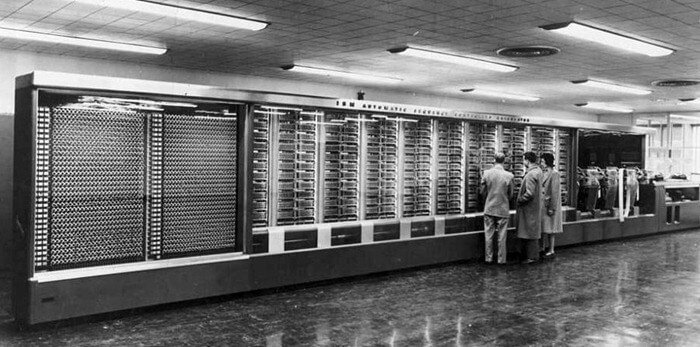
The American Mark 1 was enormous, measuring over 17 meters in length and over 2.5 meters in height. Encased in glass and stainless steel, the machine weighed 4.5 tons, and the total length of its connecting cables was just under 800 km. A fifteen-meter shaft, driven by a 4 kW electric motor, was responsible for synchronizing the main computing modules.
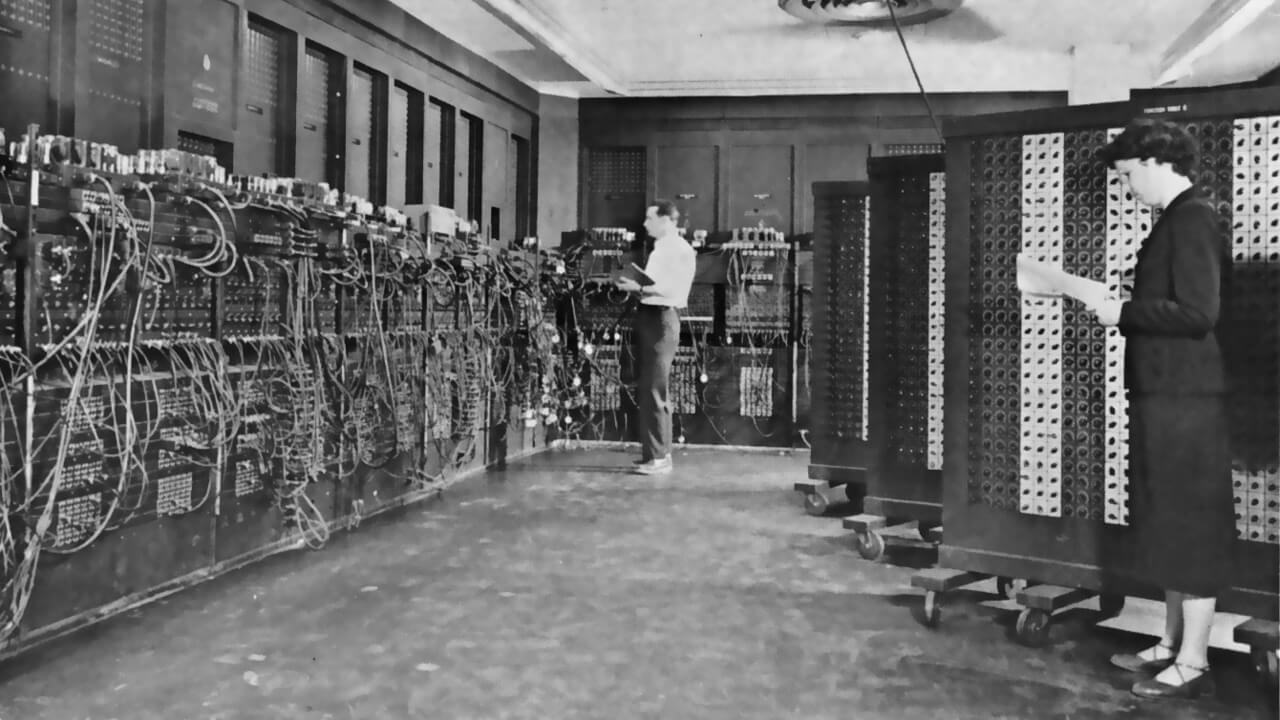
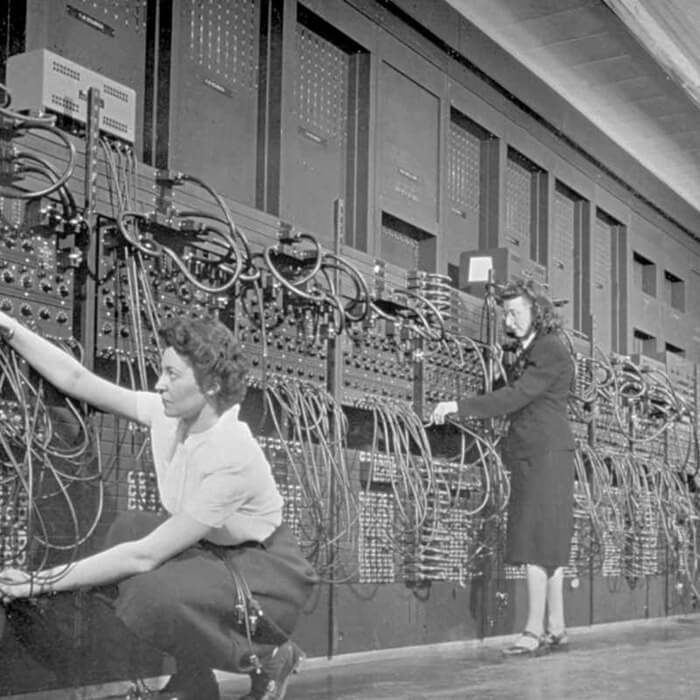
Even heavier than the Mark 1 was the ENIAC. It weighed 27 tons and required 174 kW of power. When it was turned on, the city lights dimmed. The machine had no keyboard or monitor, occupied a floor area of 135 square meters, and was entangled with kilometers of wires. To get an idea of ENIAC's appearance, imagine a long row of metal cabinets stacked top to bottom with light bulbs. Since the computer didn't yet have proper cooling, the room it was in was extremely hot, causing ENIAC to malfunction.
The first Soviet computer
The USSR did not want to lag behind the West and carried out its own developments in the creation of computers. The result of the efforts of Soviet scientists was «Small Electronic Calculating Machine» (MESM). Its first launch took place in 1950. MESM used 6,000 vacuum tubes, occupied an area of 60 square meters, and required up to 25 kW of power to operate.
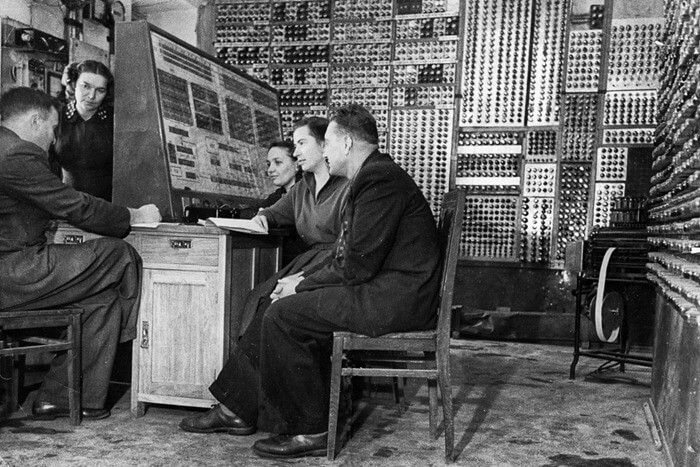
The device could perform up to 3,000 operations per second. MESM was used for complex scientific calculations, then as a teaching aid, and in 1959, the machine was dismantled.
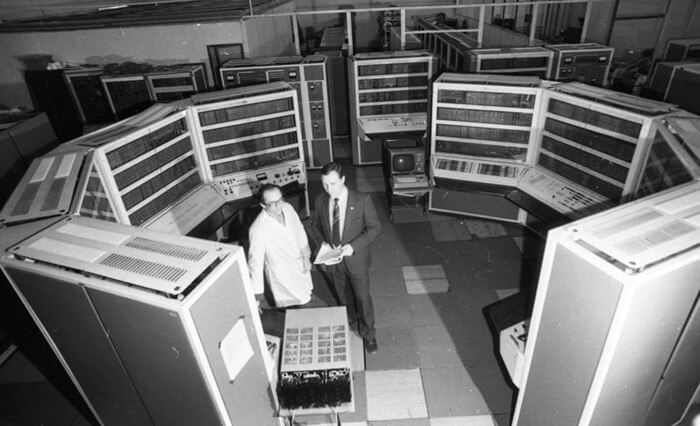
In 1952, MESM got an older sister - «Large Electronic Calculating Machine» (BESM). The number of vacuum tubes in it increased to 5,000, and the number of operations per second also increased from 8,000 to 10,000.
The world's first commercial computer
UNIVAC 1, introduced in the United States in 1951, can be called the first computer intended for commercial use.
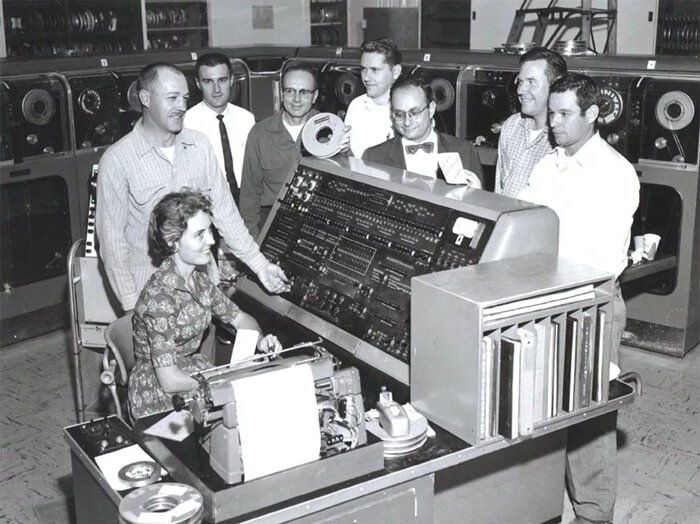
He became famous after using data from the 1% poll of eligible voters to correctly predict that General Dwight Eisenhower would win the 1952 election. As people realized the power of computer data processing, many businesses began acquiring the machine for their needs.
The world's first personal computer
The term "personal computer" was first applied to the creation of the Italian engineer Pier Giorgio Perotto, called Programma 101. It was produced by the Olivetti company.
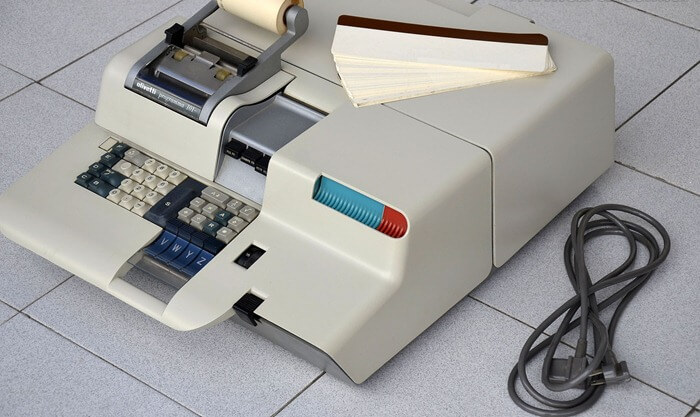
The device cost $3,200 and sold approximately 44,000 copies. NASA purchased ten of them for use in calculating the Apollo 11 moon landing in 1969. ABC (American Broadcasting Company) used Programma 101 to forecast the 1968 presidential election. The US military used it to plan its operations during the Vietnam War. It was also purchased by schools, hospitals, and government agencies, marking the beginning of an era of rapid PC development and sales.
The first mass-produced home computer abroad
In 1975, an issue of Popular Electronics magazine featured an article about a new computer kit—the Altair 8800. Within weeks of its release, customers flooded its manufacturer, MITS, with orders. The machine featured 256-byte memory (expandable to 64 KB) and a universal interface bus, which evolved into the S-100 standard, widely used in hobby and personal computers of the era.
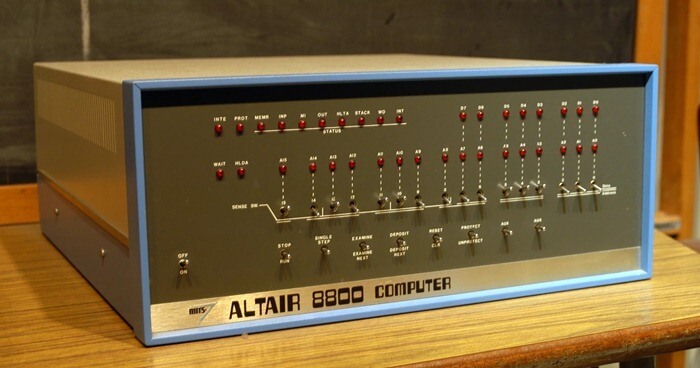
«The Altair 8800 could be purchased for $397. After purchase, the amateur radio owner had to solder and test the assembled components themselves. The difficulties didn't end there; they still had to master programming using ones and zeros. The Altair 8800 had no keyboard or monitor, no hard drive, and no floppy disk drive. To enter the desired program, the user flicked switches on the front panel of the device. The results were verified by observing the blinking lights on the front panel.
А In 1976, the first Apple computer was released., designed and handcrafted by Steve Wozniak and promoted by his friend Steve Jobs as the first product of the Apple Computer Company. The Apple 1 is considered the first personal computer to ship pre-assembled.
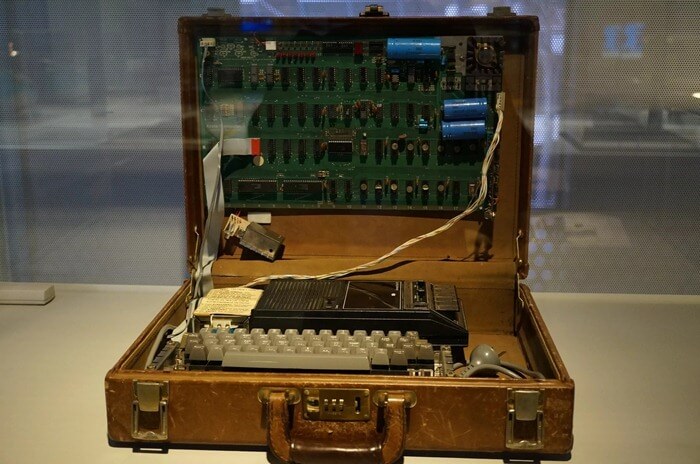
In reality, the device had neither a monitor nor a keyboard (provision was made for connecting them). However, it did have a fully assembled circuit board containing 30 integrated circuits. The Altair 8800 and other devices that came to market lacked this feature; they had to be assembled from a kit. Initially, the Apple 1 had a near-hellish price of $666.66, but a year later it was reduced to $475. Later, an additional board was released that allowed data recording to a cassette recorder. It cost $75.
The first mass-produced home computer in the USSR
Since the 1980s, a computer called the Pravets has been produced in Bulgaria. It was a clone of the Apple II. Another clone in the Pravets line was the "Soviet" IBM PC, based on Intel 8088 and 8086 processors. A later clone of the Oric Atmos was the "home" model "Pravets 8D," featuring a small case and a built-in keyboard. It was produced from 1985 to 1992. Pravets computers were installed in many schools across the Soviet Union.
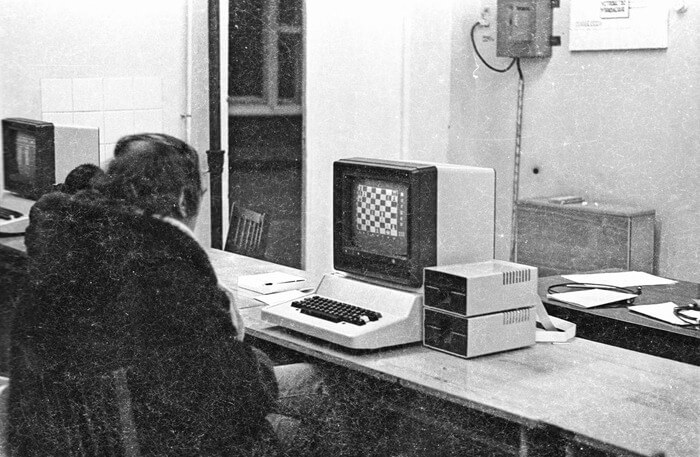
Those wishing to build a home computer could follow instructions in the 1982-83 issue of Radio magazine and replicate a model called the "Micro-80." It was based on the KR580VM80 microprocessor, similar to the Intel i8080.
In 1984, the Agat computer, quite powerful compared to Western models, debuted in the Soviet Union. Its RAM capacity was 128 KB, twice that of Apple models from the early 1980s. The computer was available in several models, with an external 74-key keyboard and a black-and-white or color screen.
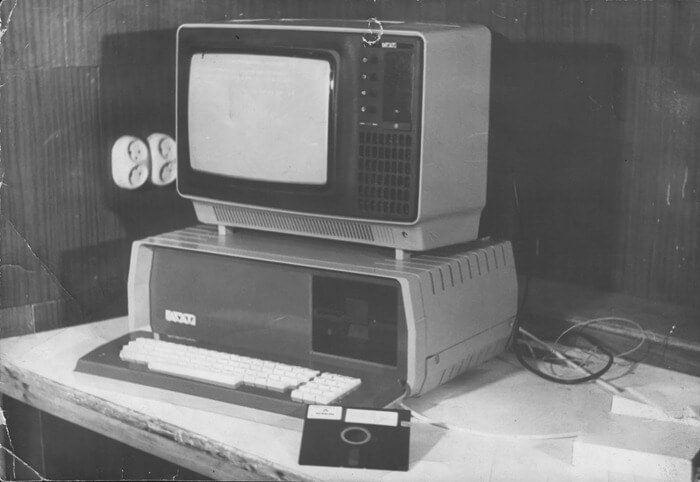
The production of "Agates" continued until 1993.
Modern computers
These days, modern computer technology is changing rapidly. The most powerful computers today are billions of times faster than their predecessors. Every company wants to impress already jaded users, and many are still succeeding. Here are just a few of the key trends in recent years:
- The laptop that had a major impact on the industry: Apple Macbook (2006).
- The smartphone that had a major impact on the industry: Apple iPhone (2007).
- The tablet that had a major impact on the industry: Apple iPad (2010).
- The first smartwatch: the Pulsar Time Computer (1972). It can be seen on James Bond's wrist in the 1973 action film Live and Let Die.
And, of course, various gaming consoles: PlayStation, Xbox, Nintendo, etc.
We live in interesting times (though it sounds like a Chinese curse). And who knows what the near future holds. Neural computers? Quantum computers? We'll see.