






A total solar eclipse is one of the most spectacular astronomical events on Earth. In 2026, it will be visible across parts of Europe, North America, and the Atlantic Ocean. If you plan to observe this event, it's important to know the exact date, the path of the shadow, safety precautions, and the best viewing locations. This article covers everything you need to know about the eclipse on August 12, 2026.
What is a total solar eclipse?
A total solar eclipse occurs when the Moon completely covers the Sun's disk, blocking all sunlight for a brief period of time. For this to occur, the three bodies—the Sun, the Moon, and the Earth—must be almost perfectly aligned.
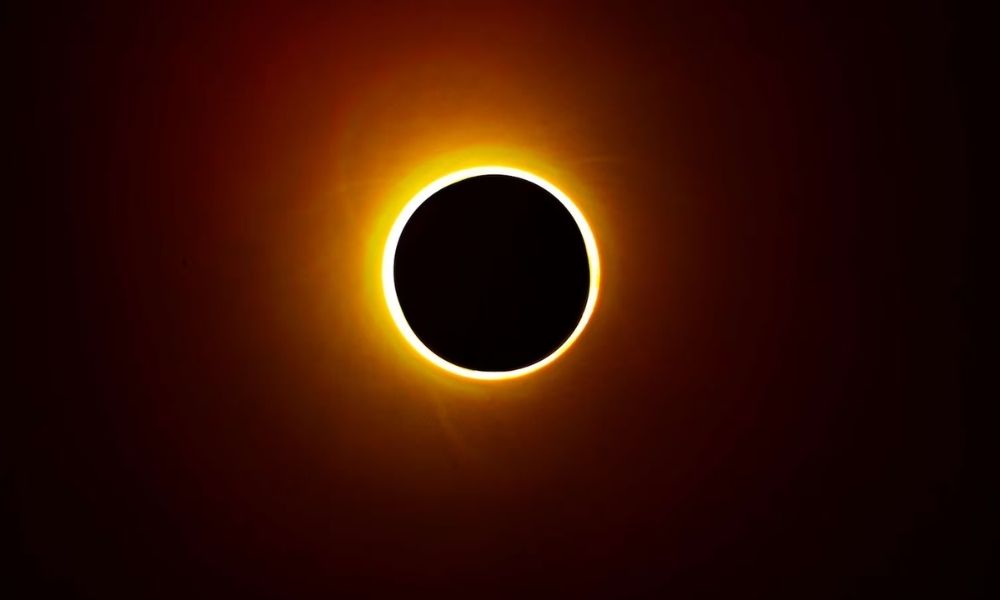
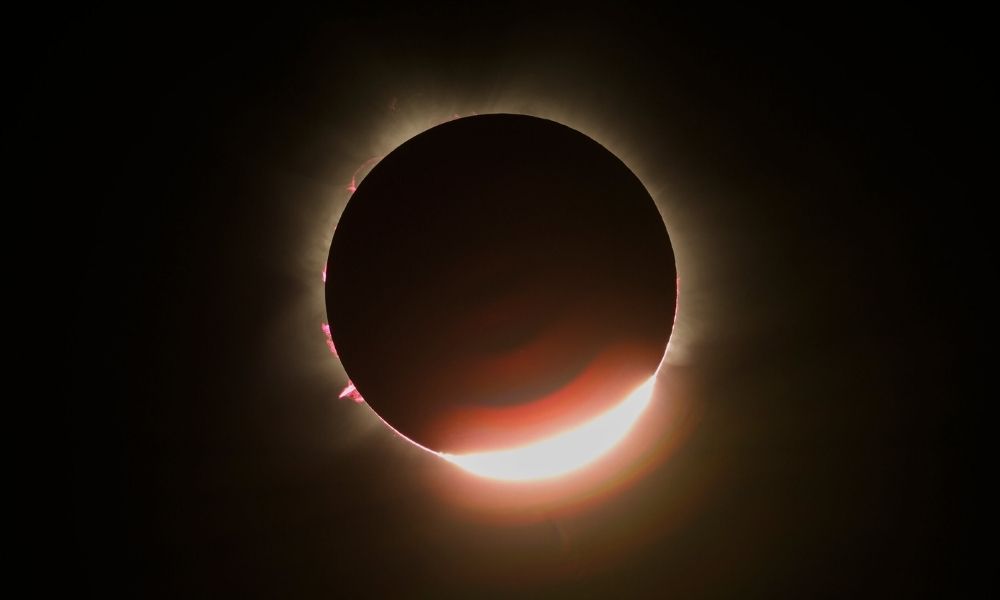
At this moment, observers located in the so-called «band of full shadow» see the black disk of the Moon, surrounded by a pearly white solar corona — the upper layer of the Sun's atmosphere, which is usually hidden by bright light.
Beyond this strip (about 100–200 km wide) one can only see partial solar eclipse, when the Moon covers only part of the Sun.
When will the total solar eclipse occur in 2026?
The date of the total solar eclipse is August 12, 2026. Please note: some sources incorrectly list the date as "August 8"—this is an inaccuracy. The exact date is confirmed by NASA and international astronomical agencies.
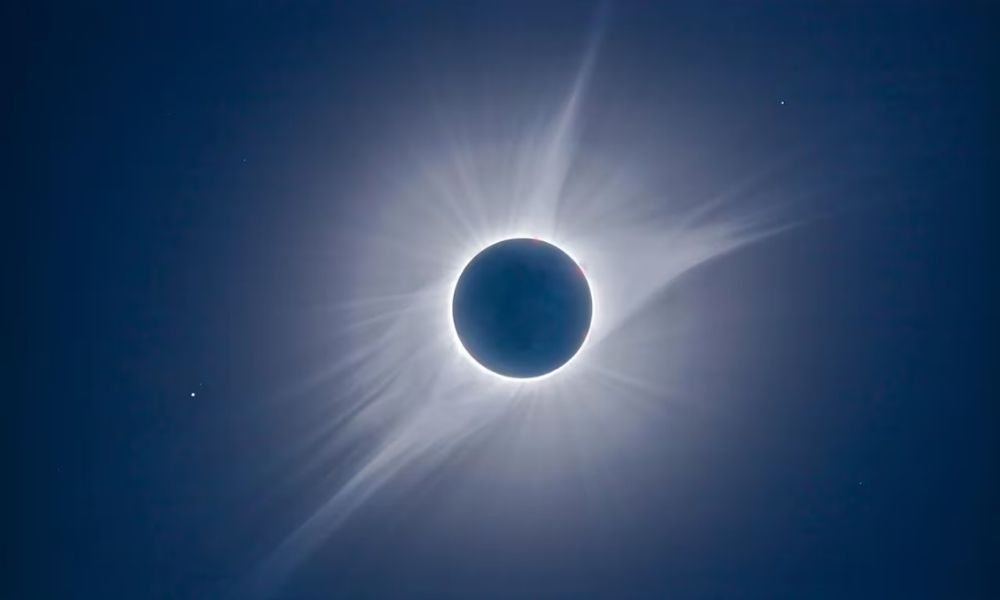
The eclipse will begin over Greenland, pass through Iceland and Spain, and end over North Africa and the Atlantic Ocean. The maximum duration of totality is 2 minutes 18 seconds — will be observed north of Iceland.
Where will the total solar eclipse on August 12, 2026 be visible?
The total eclipse will be visible in the following regions:
- Greenland - northern and eastern coasts
- Iceland — the entire territory, including Reykjavik
- Spain — northern regions: Galicia, Asturias, Cantabria
- Portugal - northwestern regions (partially)
The partial eclipse will be visible across much of Europe, North Africa, eastern North America and western Asia.
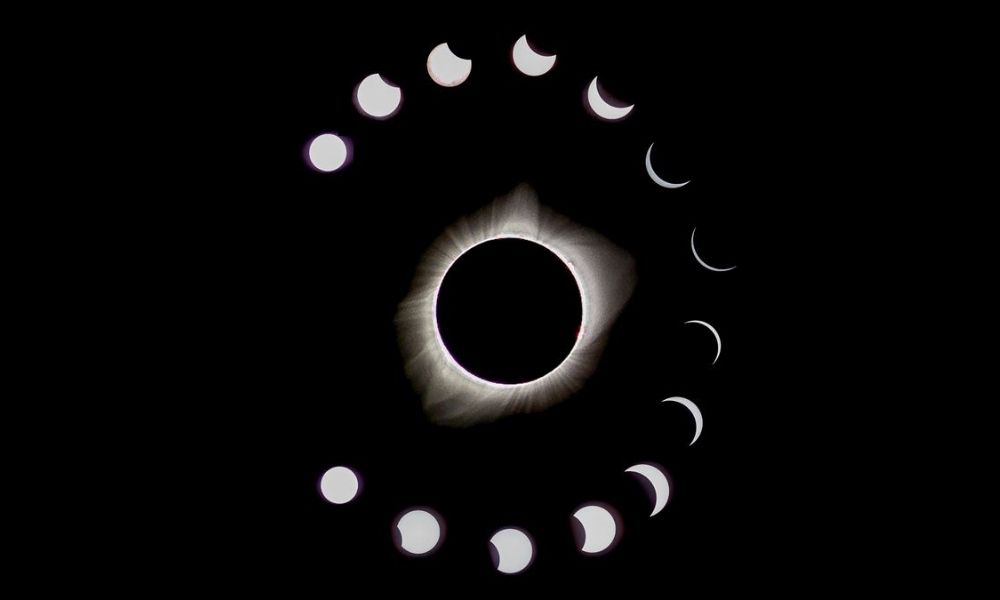
Examples of maximum phase times (local time)
| City | Beginning of the partial phase | Beginning of the full phase | End of the full phase | The end of the eclipse |
|---|---|---|---|---|
| Reykjavik (Iceland) | 16:27 | 17:39 | 17:41 | 18:45 |
| Santiago de Compostela (Spain) | 18:43 | 20:02 | 20:04 | 21:09 |
The exact time depends on your location. We recommend using the interactive eclipse map at timeanddate.com or the app. Eclipse Safari.
Time of partial solar eclipse in the capitals of the CIS countries (August 12, 2026)
| City | The beginning of the eclipse | Maximum of the eclipse | The end of the eclipse | Eclipse phase* |
|---|---|---|---|---|
| Moscow (Russia) | 20:32 | 21:16 | 21:54 | ~10% |
| Saint Petersburg (Russia) | 20:21 | 21:04 | 21:42 | ~9% |
| Minsk (Belarus) | 20:36 | 21:20 | 21:58 | ~11% |
| Nur-Sultan (Kazakhstan) | — | — | — | Not visible |
| Kyiv (Ukraine) | 20:42 | 21:27 | 22:04 | ~13% |
| Yerevan (Armenia) | — | — | — | Not visible |
| Baku (Azerbaijan) | — | — | — | Not visible |
*The eclipse phase is the fraction of the Sun's diameter obscured by the Moon (as a percentage). The higher the value, the more noticeable the obscuration.
Attention: in most CIS capitals, an eclipse will occur in the evening, low above the horizon. This means that observation will require clear view to the west without buildings or hills. In the southern regions of Kazakhstan, Central Asia and the Caucasus, there will be an eclipse. will not be visible, since the Sun will already have set before the phenomenon begins.
How to safely observe a solar eclipse?
You should not look at the Sun without protection, even during a total eclipse, except for the short phase of total shadow. Looking directly at a partially obscured Sun may cause retinal sunburn (solar retinopathy), which often does not cause pain but leads to irreversible damage to vision.

Permitted methods of observation:
- Certified sunglasses (comply with ISO 12312-2 standard)
- A telescope or binoculars with a solar filter on the lens (NOT on the eyepiece!)
- Projection through a pinhole camera (camera obscura) - a safe method for children
What NOT to use:
- Regular sunglasses
- CDs, welding masks without Shade 14 markings
- Photographic film, dark glass, smoked glass
During full phase (When the Sun is completely covered), you can remove your glasses and observe the corona with the naked eye. But as soon as the first "diamond glare" appears, put your glasses back on immediately.
Interesting facts about a total solar eclipse
- Total solar eclipses in the same place occur on average once every 360–410 years.
- During the eclipse, the temperature can drop by 5–10°C, and animals behave as if it were night: birds fall silent, crickets begin to chirp.
- The solar corona during an eclipse reaches a temperature of up to 2 million degrees Celsius, although the surface of the Sun is only about 5500°C.
Astrology and Solar Eclipses: What Do the Stars Say?
From an astrological perspective, solar eclipses are considered moments of change. The eclipse on August 12, 2026, will occur in the sign Leo and can symbolize new beginnings in creativity, self-expression, and personal projects. However, it's important to remember: astrology is a faith, not a science. Astronomical data is confirmed by observations, while astrological interpretations remain subjective.
How to prepare for the eclipse?
- Book your accommodation in advance – popular destinations (Iceland, northern Spain) will be crowded with tourists.
- Check the weather: clouds may obscure the view. It's best to have a backup route.
- Buy ISO-certified sunglasses a few months in advance—they may not be available for purchase near the expiration date.
- Download apps like Time and Date or Solar Eclipse Timer to synchronize with phases.
Conclusion
The total solar eclipse of August 12, 2026, is a rare opportunity to witness one of nature's greatest wonders. With planning, safety, and the right information, you can enjoy this event safely and with maximum impact. Remember: accuracy, eye protection, and clear skies are the three keys to a perfect viewing.
Sources: NASA, TimeandDate.com, International Astronomical Union (IAU)