









Think of a famous crime boss from history, and you probably picture a man. Al Capone, Pablo Escobar, El Chapo, Lucky Luciano, Carlo Gambino, CIA …
However, many women were at the helm—and not just as brothel owners. Here are 10 of the most famous.
10. Cheng Chui Ping, "Sister Ping" (1949-2014)
More than ten years Sister Pin , as she was known in New York's Chinatown, smuggled up to 3,000 Chinese immigrants to the United States, amassing a fortune of over $40 million. Her fees were extortionate—$40,000 per person—and those who couldn't pay in full were pursued for the remainder, threatened with violence, and even imprisoned. Conditions aboard the smuggling vessels were also inhumane. In June 1993, one vessel carrying 300 immigrants ran aground in Queens, and 10 drowned before reaching safety.
Ping set up her human smuggling operation (the "snakehead") shortly after arriving in the United States in 1981. From her shop in Manhattan's Chinatown, she joined the other snakeheads and steadily expanded her operations. With the proceeds, she opened legitimate businesses—a travel agency, a real estate agency, restaurants, and a clothing store. She also purchased property in Chinatown, apartments in Hong Kong, and a farm in South Africa.
After being charged, she fled to China and continued her operation. In 2000, she was captured by Hong Kong police and extradited back to the United States three years later. Witnesses from all over the world testified against her.
9. Thelma Wright, "Boss Lady" (b. 1951)
Raised Catholic in a loving family, Thelma didn't seem to be meant to be for a life of crime. But she fell in love with Philadelphia heroin dealer Jackie Wright. Together, they enjoyed the lifestyle only crime can provide. And she was so in love that when Jackie was eventually killed, she impulsively agreed to continue his work. She reasoned that at least it would help her son put himself through college. In reality, she wasn't ready to give up the life she'd become accustomed to.
In any case, the new Lady Boss ran the coast-to-coast heroin and cocaine empire differently than her husband. First, she had no employees, only the people she supplied. And her cautious, calculating approach earned her more respect and success than her husband. She continued to live the high life—private jets, custom cars, speedboats—until she was caught in a shootout in 1991. One of her friends was killed along with several of her associates, and she felt an urgent need to get out of the business.
So she became an administrator and kept her head down. Thelma Wrightthey never caught him , and perhaps that's a good thing. Now she's doing much more good, helping vulnerable women and teenagers avoid the path she took.
8. Tilly Devine, "Queen of the Toilet" (1900–1970)
Tilly started out as a prostitute in London, earning £20 a week in the period between the two world wars (when the average wage was less than 3 pounds sterling per week ). Then, at 17, she married one of her suitors, Australian serviceman Jim Devine, who three years later became her pimp in Sydney.
Having settled in Woolomooloo (or "Loo" as the locals call it), Tilly felt in her element. It didn't take her long to build a reputation in the seedy seaside entertainment district. Within the first five years, she had earned 79 convictions , the last of which, for cutting a man with a razor, earned her two years in prison.
But even that didn't deter her ambition. When she got out, she opened a brothel. It was actually legal for a woman, thanks to the naive wording of the Police Offences Act (1908), which made it a crime only for men. In her new role as madam, she pampered her girls and took half their money, while Jim kept them hooked on cocaine. It was a winning formula. By the end of the decade, she had opened 18 brothels and amassed more diamonds than the Queen of England. «"and better," (she loved to say). She dressed in furs, traveled the world , and in between lavish parties, she even helped pay for Australia's war effort. She also dumped Jim. The press dubbed her "The Queen of the Night," "The Queen of the Toilet," or simply "Sydney's Worst Woman.".
7. Marika Licciardi, The Godmother (b. 1951)

Maria Licciardi was born into the mafia. Her father and brother were Camorra bosses. When was killed nephew , next in line of succession, she took over as La Madrina ("Godmother").
Under her leadership, Licciardi, the Camorra was involved in extortion, drug trafficking and seizure of public works contracts . After one of the bloodiest mafia wars in living memory, she also formed an alliance between the Camorra clans, convincing her fellow leaders that cooperation was more profitable than war. She always had more common sense than her colleagues. In 1999, when a large shipment of heroin so pure it was lethal arrived from Istanbul, Licciardi ordered the clans not to sell it. The Lo Russo clan defied her, killing numerous addicts and sparking public outrage, police crackdowns, and the collapse of the Licciardi alliance.
Even the police respected her approach, even though she became one of the most wanted in Italy.
6. Stephanie St. Clair, "Queenie" (1887/97–1969)
Born in Guadeloupe in the late 1800s, Stephanie St. Clair traveled to New York City by steamboat and settled in Harlem. at the age of 13 or 23 (Her year of birth is disputed). Because she spoke not only English but also her native French, she could pass for a French immigrant, and a sophisticated one at that, given her education. At a time when African Americans were arriving en masse, fleeing segregation in the South, this proved an advantage.
Calling herself the boss of 40 Thieves, she set about «"political banking"» — a numbers racket involving extortion and theft. And she was good at it, too, maybe even too good. Soon, her success (and notoriety) attracted unwanted attention from New York's leading mobsters, especially after the end of Prohibition. Dutch Schultz, one of the city's leading gangsters, began to close in on her racket.
And he likely would have fired her if his plan to kill the district attorney hadn't attracted the attention of a kingpin. Lucky Luciano, the "chairman of the board" of the New York Five Families, warned Schultz against the attack. When Schultz continued, Luciano shot him. It took Schultz a full day to die—just long enough for St. Clair to send him a telegram: "What goes around comes around.".
5. Alice Diamond, "Queen of the Forty Elephants" (1896–1952)
«Forty Elephants» The Swindlers were a gang of working-class women who specialized in shoplifting, blackmail, and extortion. Led by various female bosses, or "queens," they operated in London for nearly a century, from the 1870s to the 1950s. Their modus operandi consisted of shopping around department stores and stuffing dresses with the most expensive merchandise. The fashion scene of the time had plenty of room for this.
The most famous Queen of the Forty Elephants was Alice Diamond, who, at 5 feet 9 inches tall and with a full figure that rivaled most men of the time, was known for her diamond rings and brass knuckles, as well as for reorganizing the gang into separate cells., which made it possible to commit simultaneous robberies . She reasoned that this would distract the police and catch their targets off guard.
She also developed the Hoist Code, which outlined how they were to operate. Among other things, it prescribed: equal division of money; care for prisoners' relatives; providing alibis for each other; and absolute loyalty under penalty of "ridicule or beating.".
Unfortunately, it was this Code that ultimately brought her reign to an end. She became too controlling, forbidding members to do anything without her permission, including marrying. When one of the Elephants challenged her on this issue, she led an attack on the newlyweds, earning her a year and a half in prison. By the time she was released, she had been replaced by a new queen.
4. Phoolan Devi, "Bandit Queen" (1963–2001)
As a low-caste woman in India, Phoolan Devi, who was stubborn by nature, was it's hard to grow . In fact, her family hated her. When she was 10, her uncle hit her with a brick for saying he'd stolen her father's land. He then married her off to a 45-year-old man to get rid of her. When she returned at 12, no longer a virgin, her mother told her to jump into a well. She didn't, so her uncle arranged for local bandits to take her away for good.
In captivity, Phoolan might have been subjected to gang rape for the rest of her life, if not for an unexpected rescuer. Bikram Singh, a bandit from the same low caste as her, shot and killed a high-caste leader. The two became lovers, but not for long; Singh was killed in retaliation, and Phoolan was locked away in the village.
When she escaped, she gathered followers and avenged her own. Valentine's Day 1981 , Dressed in a khaki police jacket, blue jeans, boots, and lipstick, with a pistol and ammunition slung over her shoulders, she led her men into the village and demanded the location of her kidnappers. The villagers didn't know, so she lined up 30 of them (all men) and shot them. Because they were all from the landowning warrior caste, she became the most wanted person in India, with a $10,000 bounty on her head.
Two years later, at the age of 20, she surrendered. By this time, she had won the hearts of the Indian public; 8,000 people gathered at her hideout to surrender. Clearly moved, she got involved in politics , when I got out of prison.
3. Ma Barker, "Machine-Gun Kate" (1872–1935)
Once Upon a Time J. Edgar Hoover« the most cruel, dangerous and inventive criminal"» In America, Ma Barker was once as infamous as Bonnie and Clyde, John Dillinger, Baby Face Nelson, and even Al Capone. She was a mother groups of criminals , who terrorized the Midwest in the early 1930s. Ma aided them and knew all their plans. She was also skilled with a Tommy gun, earning her the nickname "Machine Gun Kate.".
Together, she and her boys "swept across the country like a spring tornado," as one newspaper put it, amassing a fortune of up to $2 million. Their specialties were highway robberies, bank and post office robberies, extortion, and kidnapping. They also killed police officers. One of her sons, Herman, had already been accused of murdering a police officer when he shot himself to escape arrest at a roadblock in 1927. A few years later, the remaining Barker boys killed the police chief of Pocahontas, Arkansas, and the sheriff of Howell County, Missouri.
However, when kidnapping became a federal crime, they came to the attention of the FBI. So they separated. Ma took her son Fred to Florida, while the other, Arthur, hid alone. Unfortunately for everyone, when Arthur was arrested, the feds found a map in his hideout showing the location of his mother and brother. Surrounding the house before sunrise, agents threw tear gas inside, to which Ma and Fred responded by opening fire from the second-story windows. This escalated into a shootout—the "Battle of the Ocklawaha"—and when the smoke finally cleared, Ma was found dead in an upstairs bedroom, holding a machine gun.
2. Maria Dolores Estevez Zuleta, «Lola la Chata» (1906–1959)
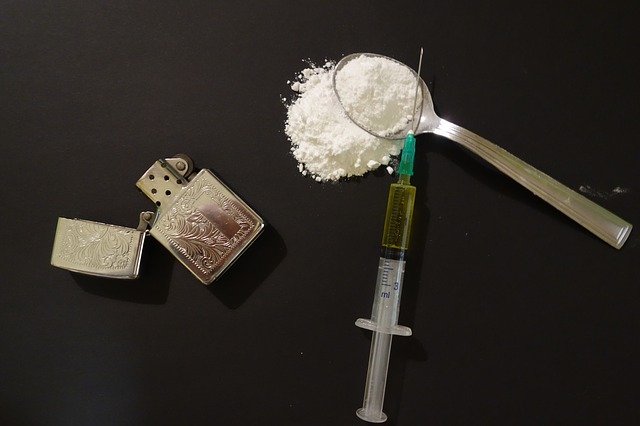
Lola la Chata grew up in La Merced , one of Mexico City's oldest neighborhoods, selling drugs for her mother at the market. Here, in a neighborhood so crime-ridden that the police were afraid to invade, the young girl learned lessons that prepared her for life. She learned the city's layout, how to evade pursuers, and—from her prostitute friends—how to manipulate men.
After finishing her education smuggling heroin for an international drug lord, Lola returned to La Merced to build her own empire. Like her mother, she started with a kiosk. She paid off the police and forced children to smuggle heroin in yo-yos. And she branded her products (a first in Mexico City) to increase customer loyalty. also offered loans members of their community who might not otherwise receive them.
By the 1950s, it was known as «"drug empress"» , and her fame reached the United States.
1. Griselda Blanco Restrepo, "The Cocaine Godmother" (1943–2012)
Raised by an abusive mother in Colombia, Griselda turned to crime and prostitution at an early age. But it wasn't until she met her second husband , she began trafficking cocaine in the United States. Her contribution to the existing Medellin Cartel infrastructure was the design of specialized underwear for smuggling cocaine across the border.
She is also known for killing her husbands, earning her the nickname "Black Widow." She killed her second husband in a parking lot shootout along with six of his bodyguards, and her third husband for infidelity.
By this time, her position in the criminal underworld rivaled that of Pablo Escobar, and the DEA was trying to catch her. She was the godmother of Miami's cocaine underworld during the 1970s and '80s, but was eventually arrested for the murders of her husbands, as well as several others—though it is estimated she killed up to 200 people. Blanco was sentenced to nearly 20 years in a U.S. prison before being deported to Colombia. There, shortly before her 70th birthday, she was shot near a butcher shop in Medellin.