








The exchange of gifts, or simply the giving of gifts, is a long-standing tradition between nations, dating back to ancient times. Emissaries between governments often arrived at their new station bearing gifts from their sovereign, a sign of friendship. Some believe the famous legendary Trojan Horse was a gift, although in the Aeneid« It is clearly stated that this was a vow to the goddess Athena.
One of the first gifts the United States made to another nation was a new warship,« America", Built in Portsmouth during the Revolutionary War, the ship was given to France by Congress to replace another lost in a grounding, and with the war's end, the United States no longer had a navy. But it was a convenient way to express gratitude to the King of France for his assistance during the war.
It is a tradition that continues a number of reasons . Here are ten striking examples of gifts between nations.
10. Morocco gave lions to the United States in the 1830s… twice.
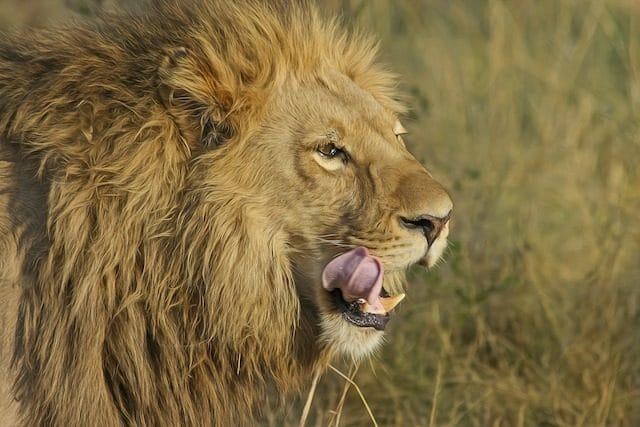
Morocco was the first country to recognize the independence of the United States, and the treaty of friendship between the two countries is the oldest active American treaty. In the 1830s, two different sultans gave United States Lviv , and in both cases they were delivered to the American mission in Tangier. In both cases, the American consul in Tangier wrote to Washington for instructions. The first case concerned a lion and two Arabian horses intended as gifts for President Andrew Jackson.
The animals remained at the mission at the expense of Consul James Lobe, while Congress hesitated. Returning the animals to the Sultan was unthinkable. Finally, Congress adopted a resolution The sale of the animals was authorized, with the proceeds being donated to Washington sanctuaries. When Loeb's successor, Thomas Carr, presented his credentials to the Sultan, he received notification of a gift of two identical lions, as well as a larger number of horses, intended for the President. Once again, the consul awaited instructions from Congress, writing to them about the excessive expenses he had incurred to feed the lions while he awaited Congressional action.
While he waited for Congress, Carr informed the Sultan that the President and Congress could not accept gifts. The Sultan replied that the lions were a gift to the American people and insisted that they be accepted, which Carr reported to Washington. Congress finally, passed the law , which directed the president to deposit gifts from foreign dignitaries and rulers in the State Department or "to dispose of at such time and in such manner as he may deem proper" gifts that could not be deposited. When the lions arrived in America, they were quietly sold, and the proceeds were deposited in the Treasury, as mandated by Congress.
9. France gave the Statue of Liberty to the United States in 1886.

France's plans to donate the Statue of Liberty began in the 1860s, when the French intended to donate the statue to commemorate America's centennial in 1876. In 1865, Edouard René Laboulaye, a French lawyer and writer, proposed the statue as a gift . from France to the United States. The statue presented serious engineering problems with both its frame and its copper sheathing, and it was not installed in Paris until 1884, where it towered over the city for a short period of time before being dismantled and shipped to New York in more than 300 pieces aboard a frigate. Iser . It was kept there until the pedestal was completed.
France raised money for the statue through a lottery and charity events. In the United States, less money was raised for the pedestal. From Joseph Pulitzer and his New York World it took a lot of effort , To raise money, supported by funds raised through prize fights, charity events, and private donations, the statue finally began to rise to its pedestal overlooking New York Harbor in 1886. Final design Frederic-Auguste Garibaldi The statue featured broken shackles beneath Liberty's foot, symbolizing the end of slavery in the United States. The statue, holding a raised torch, was built on a frame designed by Gustave Eiffel, the builder of the Eiffel Tower in Paris.
In October 1886, officials from France and the United States attended the dedication of the Statue of Liberty, now known as the New Colossus, under the presidency of President Grover Cleveland. Over the years, the statue has undergone numerous modifications and repairs, including the replacement of most of Garibaldi's torch with a replica in the 1980s. It is perhaps the most famous of all gifts from one nation to another, and certainly the most recognizable.
8. Queen Victoria and Great Britain gave the Resolute table to the United States in 1880.
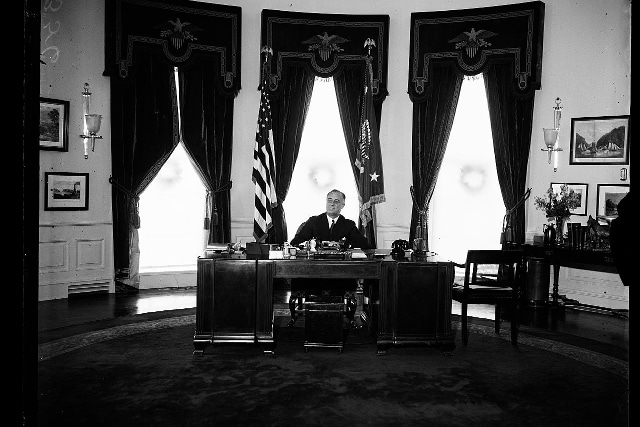
HMS Resolute was a Royal Navy barque that took part in Belcher expedition of 1852-54 , the Royal Navy's attempt to determine the fate of Franklin's ill-fated expedition. Icebound in 1854, Resolute The ship was abandoned by its crew. An American whaler found the derelict and returned it to New London. The US Congress purchased the ship as a trophy, paid for its restoration, and then sent it to the US Navy in England as a sign of friendship between the United States and Great Britain. The ship served for over 20 years in the Royal Navy before being sold for scrap.
Three tables were ordered to be made from oak frames. Resolute. One of these, known as the Partner Desk, was later given to the United States by Queen Victoria, in the person of President Rutherford B. Hayes. Hayes took possession of the desk in 1880. Her Majesty retained one of the three desks remaining in the Royal Collection, and the third was given to the widow of Henry Grinnell in gratitude for his efforts in determining the fate of the Franklin expedition. . This table It is now housed at the New Bedford Whaling Museum in Massachusetts.
Since President Hayes accepted the Resolute desk on behalf of the American people, it has been used by every subsequent American president except Lyndon Johnson, Richard Nixon, and Gerald Ford. Johnson retired it because of the many photographs of the Kennedy children playing near it while their father worked at the desk. He loaned the desk to the Kennedy Library Touring Expedition, after which it was displayed at the Smithsonian Institution. Jimmy Carter returned it to the White House. Thus, the Resolute desk represents two gifts between countries: the plaque,attached to the table, confirms this fact.
7. The mayor of Tokyo sent about 3,000 Yoshino cherry trees to the United States in 1912.
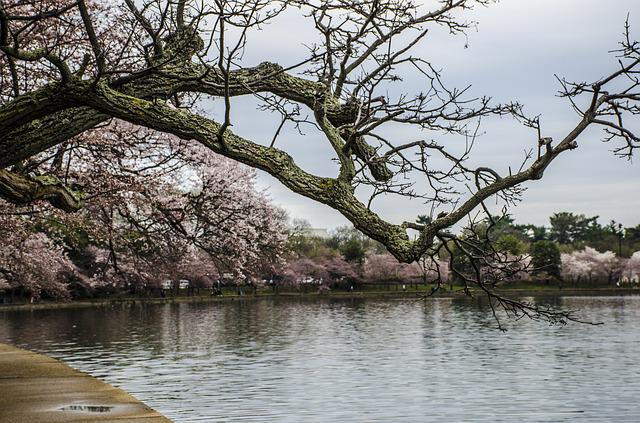
Famous cherry trees Washington did not arise from a gift from Japan, as is often claimed. In the early 1900s, several attempts were made to plant cherry trees in the capital, including experiments with various Japanese varieties to determine their climate tolerance. During this period, a Japanese scientist Dr. Yokichi Takemine (the man who discovered adrenaline) visited Washington, accompanied by the Japanese consul in New York. Takemin offered to donate several thousand trees to the Japanese, the consul agreed, and Tokyo Mayor Yukio Ozaki convinced him to donate the trees to the United States.
The first shipment of 2,000 trees arrived in Washington in 1910, where they were found to be infected with a plague, a potentially dangerous invasive species. The trees were gathered together and burned by order of President William Howard Taft. After the Americans expressed their regret to Japan, a decision was made to send a second shipment of carefully grown and pre-screened trees. This shipment, over 3,000 trees, arrived in 1912. The first two trees were ceremoniously planted in March 1912, and over the next eight years, the rest took root in the Washington area.
President Taft expressed his gratitude to the Japanese with a gift of flowering dogwoods in 1915. After World War II, cuttings from the trees in Washington were sent to Japan to help restore the groves from which they originated, which had been severely damaged during the war. In 1965, an additional gift of 3,800 trees arrived from Japan in support of Lady Bird Johnson's efforts to beautify the American capital. The Japanese cherry trees in Washington represent not just one, but series of gifts between two peoples who continue to this day .
6. Great Britain presented the Soviet Union with the Stalingrad Sword, signed by King George VI and presented by Churchill at the Tehran Conference.
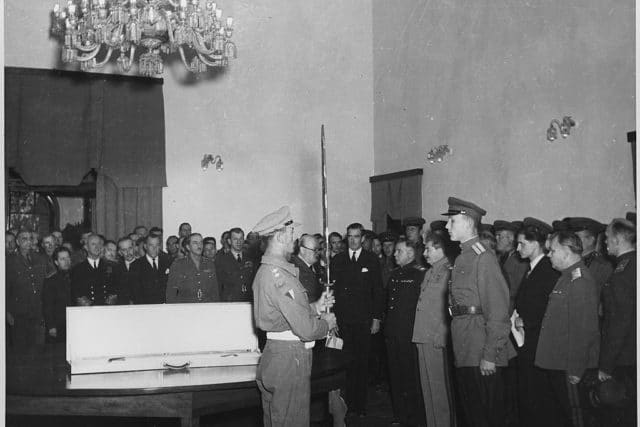
The Battle of Stalingrad was one of the largest and most decisive battles in human history. The entire German army was destroyed, with 750,000 casualties, while the victorious Red Army lost nearly half a million. It ended the German offensive on the Eastern Front and became a turning point in the war. In 1943, as Winston Churchill prepared to visit Tehran Conference with President Roosevelt and Soviet Prime Minister Stalin, he proposed to the British prepare a gift to the Soviet people in recognition of their victory and their enormous suffering at that time in the conflict.
King George VI commissioned the Wilkinson Sword Company To create a unique commemorative sword known as the Stalingrad Sword. The sword's hilt was adorned with 18-karat gold, its crossguard was made of silver, and its pommel was made of crystal. Its blade was crafted from the finest Sheffield steel, and the words "To a cruel citizen of Stalingrad—a gift from King George VI—as a token of respect to the British people" were engraved on the sides. The two-handed sword was delivered to Tehran by Churchill's entourage in November 1943.
Churchill presented the Sword of Stalingrad to Stalin during a break in the conference, in the presence of Roosevelt, who approved of its concept and significance. Stalin viewed it as a gift between the Allies during the war, although he used the conference to press for more Lend-Lease aid and the immediate opening of a second front in Europe. By 21 century A sword donated by Great Britain to the Soviet Union was abandoned in a Volgograd museum. In the post-war years, it three times was returning to the UK on tour, but then returned to the Soviet Union and maintained relative anonymity.
5. Since the end of World War II, the people of the Netherlands have donated 20,000 tulip bulbs to Canada every year.
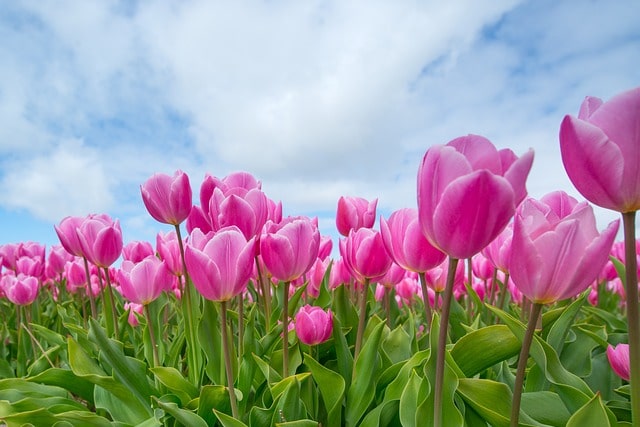
During World War II, Dutch Princess Juliana and her two children fled their native Netherlands when the Germans invaded and captured the country in 1940. She went to Canada, settling in Ottawa, where her third child was born. child . She remained in Canada until the end of the war. Several other prominent Dutch citizens and members of the nobility sought refuge in exile in Canada during the war, where they received warm welcomes and treatment from the Canadian government and citizens.
At the end of the war, most of them went home, but their gratitude for the shelter provided by the Canadians lives on to this day. Since 1945, the Dutch have sent thousands of tulip bulbs to Canada as a sign of friendship and gratitude. It's difficult to determine the exact number of bulbs , arriving in Canada every year, but the Dutch royal family and the people of the Netherlands send thousands, up to 20,000 bulbs, to Canada, where they are planted in flower beds throughout Ottawa.
Tulips are more than just an annual thank you for Canadian hospitality. They also represent the sacrifices made by Canadian troops during the liberation Netherlands and Belgium during the movement through Europe in 1944 and 1945 . visitors every spring.
4. China gave the United States two giant pandas in 1972.
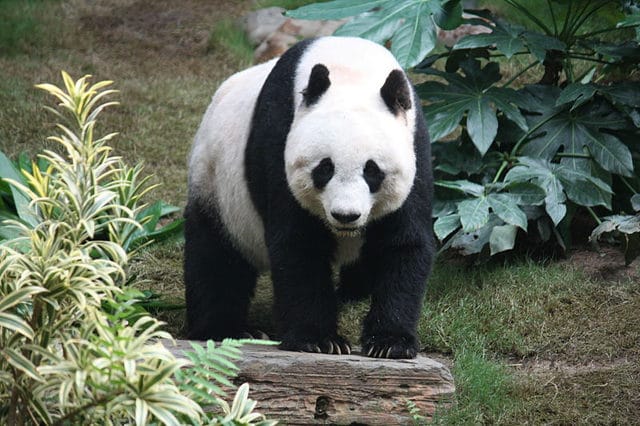
President Nixon's visit to China in 1972 was a stunning event of the 20th century. centuries . In essence, it was a new opening of China to the West. During his visit, numerous cultural exchanges were held or announced for the future. Mr. and Mrs. Nixon, Chairman Mao and his wife exchanged personal gifts. One of the gifts, which was of a national nature, was China's gift to the United States of two giant pandas, the first ever born in America. The gift was placed in National Zoo Smithsonian Institution in Washington.
In return, the Chinese received a gift of animals, two American musk oxen, although it's doubtful they caused the same excitement in China as pandas did in America. They quickly became the National Zoo's most popular exhibit. The pandas, Ling Ling and Hsing Hsing, were expected to breed. When they delayed, President Nixon expressed doubts, Do they know what to do? And so it happened, because together they produced five cubs, although none of them lived more than a few days.
Ling Ling died in 1992, Hsing Hsing in 1999. A year later, new pandas arrived from China. The gift of two giant pandas, made in response to Pat Nixon's remark to Zhou En-Lai about her liking of the species, marked the beginning of a fifty-year partnership. between Chinese researchers and scientists, as well as the Smithsonian Institution and its affiliates, in animal research and conservation of many species native to both countries.
3. President Nixon gave the Soviet Union a custom-made porcelain chess set from the people of the United States in 1972.
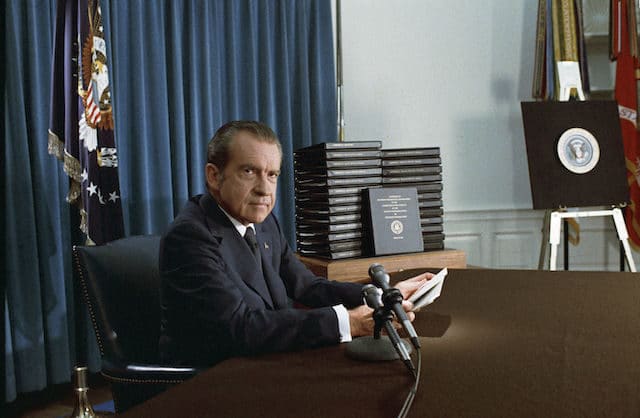
Chess was the national game of the Soviet Union and remains so in many of its now-independent republics. Before his visit to the Soviet Union in 1972, Richard Nixon ordered a custom chess set a set that was to be presented to Soviet Premier Brezhnev as a gift from the people of the United States to the people of the Soviet Union. The game elements of the set are based on tapestries from the 14th century. centuries « Nine Heroes"» , which depict characters from the legends of King Arthur.
Board for special set The case was three feet by three feet. The light squares were made of North American curly maple, the dark ones of black walnut, both from trees in Buck County, Pennsylvania. The pieces were made of porcelain, gilded with precious metals, and stood approximately seven inches tall. Cybis Porcelain Studio in Trenton, New Jersey, designed the pieces and the details from which they were made. The case was inscribed, "To the people of the Union of Soviet Socialist Republics, from President and Mrs. Richard Nixon and the people of the United States of America, May 1972.".
Later, during Brezhnev's visit to the United States, Nixon met with the Soviet premier at Camp David and presented him with a much more personal gift—a new Lincoln Continental, donated by Ford Motor Company. An exuberant Brezhnev, with Nixon in the passenger seat, sped off, reaching speeds of 60 mph along the winding roads of Catoctin Mountain.« That was something »"," a shocked Nixon commented as the impromptu tour came to an end.
2. The Dutch carillon was a gift from the people of the Netherlands to the people of the United States.
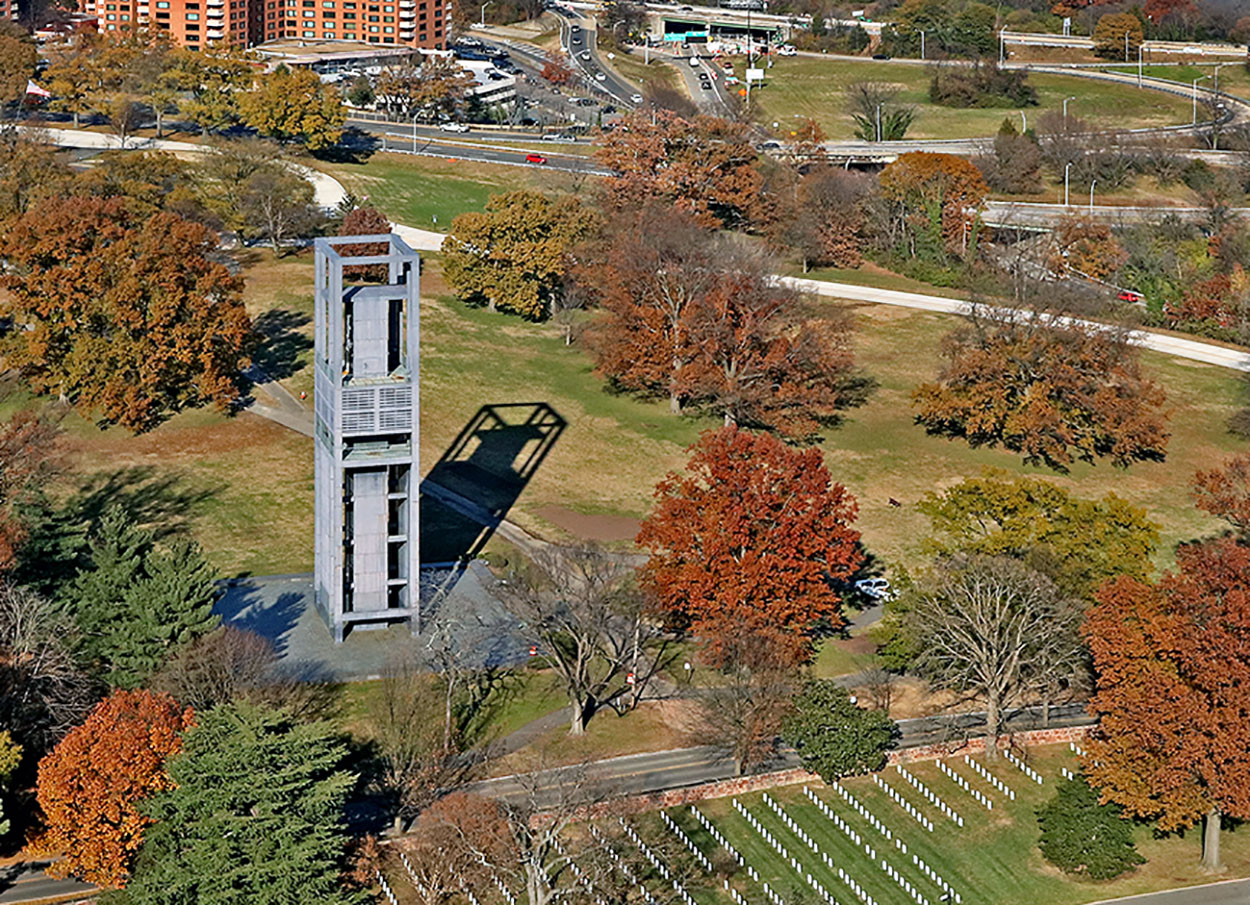
In Arlington, Virginia, just off the George Washington Parkway, within sight of Arlington National Cemetery and Marine Corps War Memorial A 127-foot steel tower rises above. Every fifteen minutes, the tower's bells ring. Attracted by its sound, which includes concerts by guest artists during the summer months, visitors discover the Netherlands. carillon , a large carillon with 53 bells, all made in Holland. Hand-cast and manufactured, the bells were inscribed with poems and engraved with symbols before being delivered for installation. The etchings reflect Dutch culture and art.
The Dutch carillon is gift of the people The Netherlands presented the bell tower to the United States in gratitude for America's efforts to liberate the Dutch people from the Nazis during World War II. Surrounded by flower beds, which, of course, bloom with tulips in the spring, the gift is more than just a bell tower. It is a musical instrument available for concerts and private events. As an instrument, it requires periodic maintenance of its operating parts, including the bells and the keyboard used to play them.
Originally dedicated on May 5, 1960 with 49 bells, the carillon was expanded first to 50 bells in 1995 and to 53 in 2021. During renovations in the 21st century, all bells were The towers were removed and returned to the Netherlands for repairs, and the steel tower was renovated. The renovations were and are being financed by the Netherlands-America Foundation. A gift to be visited, seen and heard, the Dutch carillon is a symbol of Dutch gratitude and a symbol of friendship between the people of the Netherlands and the people of the United States.
1. China paid for and built the Estadio Nacional, a multi-purpose football stadium, as a gift to Costa Rica in 2011.
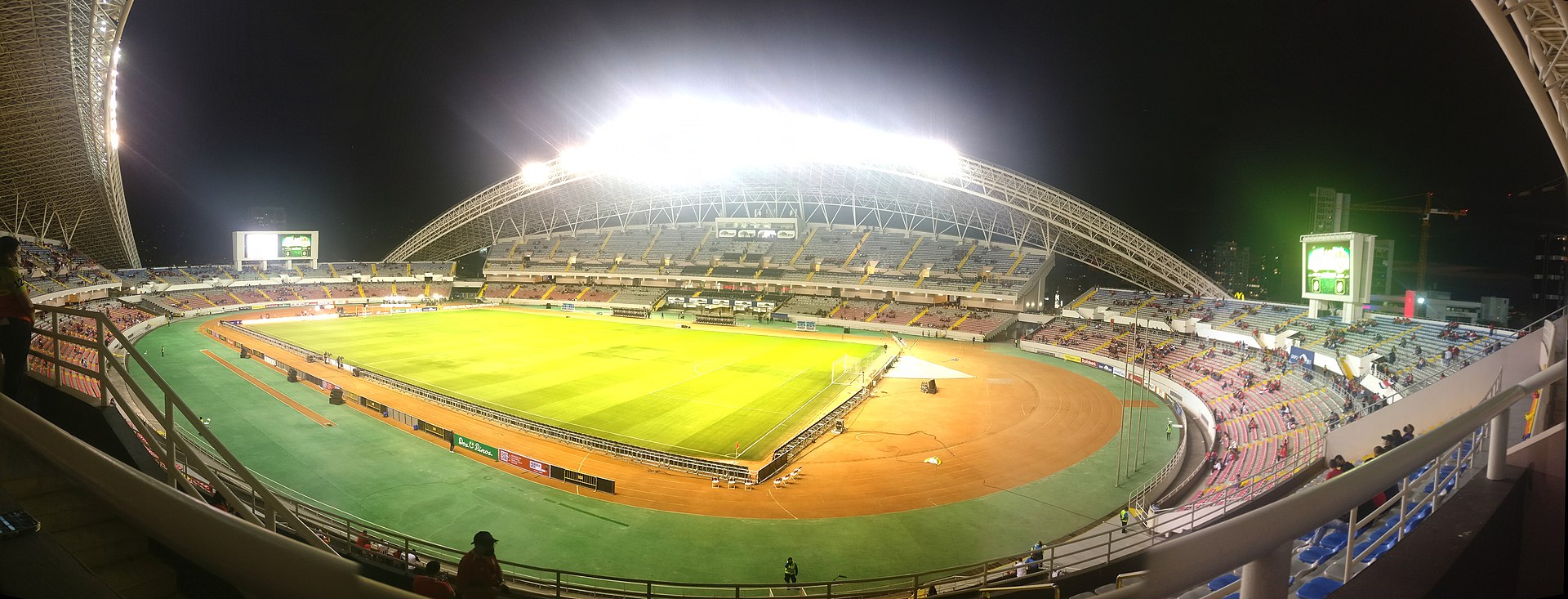
China didn't just pay for Costa Rica's $100 million Estadio Nacional. It supplied the workers to build it, as well as much of the steel and other materials used in the state-of-the-art 35,000-seat soccer stadium that opened in 2011. More than a hint service regarding its construction and financing.
The agreement to finance and build the stadium was part of several agreements reached between Costa Rican President Oscar Arias and China's Hu Jintao during Arias's visit to Asia in October 2007. The agreements stipulated the use of Chinese labor, exempt from Costa Rican labor laws. They also included Costa Rica's cessation of diplomatic relations with Taiwan. In exchange, Costa Rica received a brand-new, state-of-the-art football facility as a gift from the Chinese.
After stadium opening In March 2011, China and Costa Rica signed a free trade agreement, another agreement having been signed in 2007. So, while the stadium has been called a gift from one nation to another, others take a more cynical view. vision . In any case, Costa Rica received the facility, which has since hosted football matches, other sporting events, and concerts, including the opening concert of the British band Coldplay's Music of the Spheres world tour in March 2023.