








When we think about people in past centuries, we often wonder how they managed without the modern conveniences and technologies we rely on today. But humans have always been curious about the world around them, and they explored, discovered, and invented just as efficiently as we do today. Much of this knowledge is lost after the decline of an empire, due to lack of documentation, or due to secrecy. But when faced with the same problems, people tend to find similar solutions, and thus lost knowledge is rediscovered. Here are some of these inventions lost to history, most of which remain a mystery to this day, although some have been rediscovered.
1. Developed in 672 AD, "Greek fire" was used by the Byzantine Empire in naval battles to attack ships, as it could burn even on water. However, its composition is lost to history, and attempts to reproduce it have so far been unsuccessful.
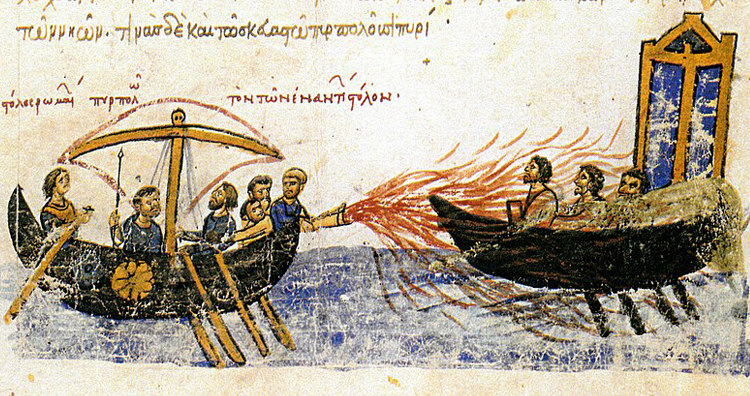
Byzantine "Greek fire" was a closely guarded state secret that helped the empire win many wars, especially against the Arabs during the two sieges of Constantinople. The fire was deployed using pressurized nozzles or tubular projectors mounted on warships, hand-held projectors, or early grenades, shaped like balls wrapped in cloth. There are several theories about what it was made of, including saltpeter, quicklime, pine resin, calcium phosphate, sulfur, naphtha, or saltpeter. (source)
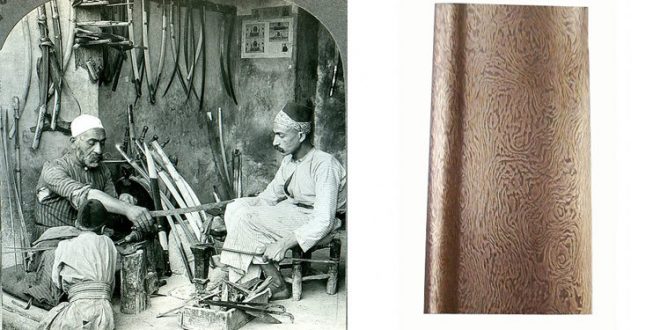
2. Damascus steel swords, produced before the 17th century, contained carbon nanotubes and nanowires, which gave them exceptional strength and sharpness. Production of these swords ceased in the 1750s, and the technology for their manufacture has since been lost.
Damascus steel was named after the capital of Syria. Damascus swords were forged from wootz steel ingots imported from India and Sri Lanka between the 3rd and 17th centuries. The production process for wootz steel is unknown, and attempts to replicate it have been largely unsuccessful. It is believed that leaves and other woody biomass were used to add carbon to the metal, and recent research has shown that plant fibers can lead to the formation of carbon nanotubes.
Several theories have been put forward regarding the decline of Damascus steel sword production. It could be due to the disruption of trade routes, a shortage of alloying elements such as tungsten or vanadium, secrecy, suppression of the industry by the British colonial government, or a combination of these factors. (source)
3. In the 1970s and '80s, amateur chemist and hairdresser Maurice Ward invented a heat-shielding material called "Starlite," capable of withstanding temperatures up to 10,000°C. Despite interest from NASA and other companies, he never disclosed its composition or provided samples for fear of reverse engineering and loss of control.
Maurice Ward allowed various tests to be carried out on Starlite samples and received widespread publicity after being featured on a BBC programme «Tomorrow's World» . A live broadcast of the show showed an egg coated with Starlite and subjected to a blowtorch for five minutes, showing that it was still cool enough to touch with a bare hand and remained raw.
The Atomic Weapons Agency and Imperial Chemical Industries also conducted tests, but Ward refused to allow samples to be kept. When companies expressed interest, he demanded 51% shares of the formula, valuing the invention at billions of dollars. He died in 2011 without revealing the formula's composition to anyone, although the anonymous author The Guardian claimed that the material had a limited lifespan, making it impossible for Ward to sell. (source)
4. Created in the 4th century, the Lycurgus Cup is a Roman goblet made of dichroic glass, which appears red when illuminated from the back and green when illuminated from the front. This effect is achieved by gold and silver nanoparticles dispersed within the glass, and how this composition was achieved in those days remains unclear.
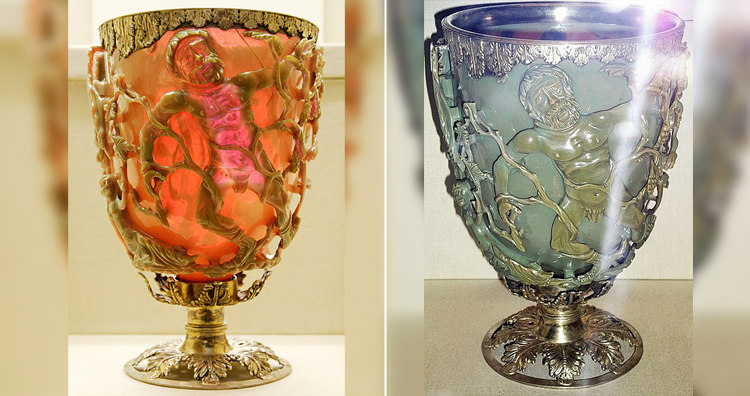
The Lycurgus Cup is the only known surviving Roman artifact made of dichroic glass and painstakingly carved by gem cutters. It depicts a scene in which the mythical king Lycurgus attempts to kill Ambrosia, a follower of Dionysus or Bacchus, but she transforms into a grapevine and kills him.
The carvers likely exploited a manufacturing defect in the glass by carving an image of Lycurgus into it, creating the impression that he glows with rage when the bowl is illuminated from behind. The process by which this glass was made remains unknown, although some believe it could have been accidentally contaminated with fine gold and silver dust. (source)
5. Roman concrete is a material used in construction during the Roman Empire, which has survived to this day virtually unscathed. After the fall of the Roman Empire, this technology was forgotten and lost for nearly 1,000 years.

Roman concrete, also known as "« opus caementicium »"," was widely used between 300 BC and 476 AD. It is almost as durable as modern Portland cement concrete, but also has many other distinct properties. Its composition included quicklime, pumice, and pozzolana—volcanic ash from Pozzuoli—making it durable and crack-resistant over time. Intact examples of Roman concrete structures dating back 2,000 years have been found.
The use of Roman concrete declined and was forgotten between 500 AD and the 14th century after the fall of the Roman Empire, then gradually resumed until the 18th century. The unusual strength and reduced environmental impact of Roman concrete attracted the attention of industry and the media to the idea of replacing coal ash with volcanic ash. Some even believe that concrete made using volcanic ash is cheaper. (1, 2)