






Beer is a drink with a millennia-old history, but even in our enlightened age, it continues to surprise. Somewhere it's brewed using ancient recipes, somewhere from bread, and still others in conditions close to space. We've compiled ten truly curious facts about beer that you're unlikely to have heard over your average mug.
1. Beer is older than writing
Archaeologists claim that beer was brewed before humans learned to write. The first mentions of the drink date back to the Sumerian civilization, approximately 6,000 years ago. Moreover, the recipe for beer back then was, to put it mildly, unconventional: a fermented bread infusion, cloudy and with sediment. It was drunk through special straws to avoid swallowing too much.
And it wasn't just any drink—the Sumerians considered beer a gift from the gods. In one myth, the goddess Ninkasi (her name even translates as "she who brews beer") taught humanity how to brew this miraculous elixir. So, if anyone tells you that beer is frivolous, remind them: it's an ancient tradition, proven over millennia.
2. Beer has an international day.
Every first Friday in August, beer lovers gather together to celebrate International Beer Day. It was first celebrated in 2007 in Santa Cruz, California, and since then the tradition has spread throughout the world.
It's not just an excuse to drink, but a day to thank brewers, waiters, and everyone who keeps beer culture alive. And, of course, rare varieties are exchanged, tastings, competitions, and festivals are held.
3. The oldest brewery in the world is still operating.
And this isn't a museum—it's a fully functioning business. We're talking about Weihenstephan, a brewery founded in 1040 in Germany. It's located in Bavaria, near Munich. It's been around for over a thousand years—and it's still on the market.
The secret to its longevity is simple: strict adherence to tradition, moderation in innovation and, of course, the famous «German Beer Pure Rule» (Reinheitsgebot) of 1516, which allows the use of only water, malt, hops and yeast in beer.
4. Beer Revolution: What is IPA and Where Did It Come From?
If you haven't heard of IPA, you haven't been to a craft bar in the last ten years. IPA stands for India Pale Ale. Despite its name, it has only a tangential connection to India: it was first brewed in England in the 18th century to better withstand the long sea voyage to the colonies.
How did they achieve this? They added more hops—and voila, the result is a strong, bitter, aromatic variety. Today, IPAs are a whole subculture. There are dry ones, fruity ones, tropical ones, bitter to the point of tears, and soft as a cloud. And almost every craft brewery considers it a point of honor to brew their own version.
5. Beer in space is not science fiction
No, no one opens a can of Bud Light in orbit. But research is ongoing. Fermentation proceeds differently in zero-gravity conditions: the yeast gets confused, the bubbles don't rise, and the entire fermentation process becomes more complex.
However, Australian and Japanese companies have already experimented with brewing "space" beer—from barley grown in a space environment. It sounds like a joke, but these are serious scientific projects. One day, beer will be brewed on Mars. We're almost certain.
6. In Egypt, workers were paid with beer.
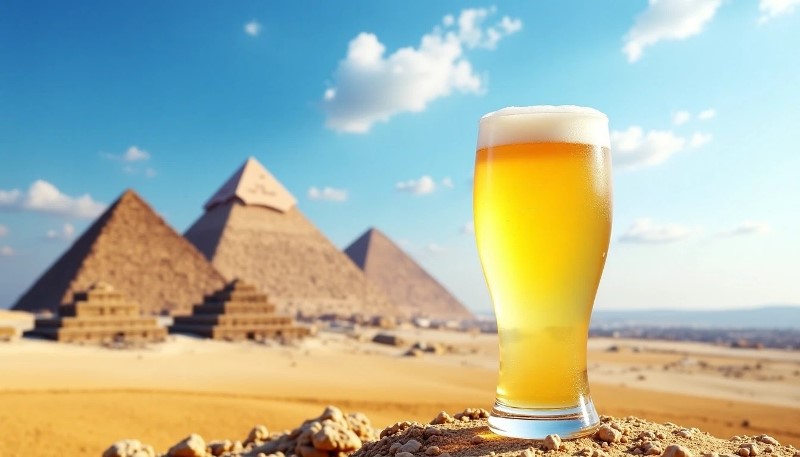
In Ancient Egypt, beer wasn't just a drink, it was currency. It was used to pay the pyramid builders. And anyone who thinks the great monuments were erected solely under the whip is greatly mistaken. Research shows that labor was paid, and rations included about four liters of beer per day.
So it's entirely possible that the Great Pyramid of Giza was fueled by sheer enthusiasm. Literally.
7. Beer can be non-alcoholic. And delicious.
For a long time, non-alcoholic beer was considered a poor imitation—watery, bland, and soulless. But that has changed. Modern technologies allow for the alcohol to be removed at a late stage, preserving the flavor and aroma.
Today, there are non-alcoholic IPAs, stouts, and vits—and they're truly delicious. They're an ideal option for those driving, dieting, or simply wanting to enjoy a taste without the consequences. Incidentally, in some countries, these beers are already outselling their alcoholic counterparts.
8. There is a beer stronger than whiskey.
It's hard to believe, but true: there are beers with ABVs exceeding 40%. For example, BrewDog's "The End of History" is 55%. It was sold in bottles inserted into... stuffed squirrels (yes, the marketing there is quite serious).
These varieties are called "extreme beers." They typically undergo a complex process of freezing, water separation, and re-fermentation. They're more of a collector's item than a casual evening drink.
9. Russian beer: not just «three varieties»
Many people underestimate Russian beer culture, and they shouldn't. Yes, in the 1990s, the market was dominated by generic light lagers, but over the past 15 years, everything has changed. Today, Russia's craft beer scene is actively developing. For example, breweries in St. Petersburg, Moscow, Yekaterinburg, and Novosibirsk are brewing beers that can compete with their European and American counterparts.
There's, for example, a Russian stout brewed with birch sap, or a sour beer with sea buckthorn, aged in oak barrels. Some breweries are experimenting with ancient Slavic recipes, using hops from Russian fields, honey, herbs, and even smoked malt, following the tradition of northern villages.
And if you think Siberia is no place for beer, just try a bottle from an Irkutsk brewery that brews ales with cedar cones. Russia isn't just vodka. It's also beer with character.
10. In Russia, beer is drunk a lot and on a grand scale.
Russia traditionally ranks among the top ten countries in terms of beer consumption. While imported brands once dominated the shelves, today, domestic producers are increasingly preferred. This applies not only to those who just want to grab a couple of bottles for home, but also to the food service industry, wholesale trade, festivals, and events.
This is easily explained: Russian beer today is no longer about "what's cheapest," but about variety and quality. The selection covers everything from classic lagers to signature beers with spices, citrus, or Altai hops. The country boasts dozens of breweries, hundreds of craft microbreweries, thousands of varieties—and millions of consumers.