






For some people, there's nothing more satisfying than pushing their personal boundaries and seeing the extremes they can go to. Whether it's climbing a mountain or traversing impassable terrain, there's no challenge we wouldn't embrace. For others, nothing so sublime or exciting consumes their lives, but they are susceptible to accidents that can be just as extreme. In both cases, when something goes wrong, the consequences can be not only deadly but also irreparable, with victims lost, never to be found or brought back.
10. John Jones died in Nutty Putty Cave.
Nutty Putty Cave is located in Utah, and its name almost makes it seem cartoonish. Until 2009, it was open for exploration and was a favorite among cavers of all ages and skill levels. Even Boy Scout troops visited. That changed. November 24, 2009 . That was the day John Jones disappeared. He remains in the cave to this day.
Jones had been an avid cave explorer since childhood. Like others before him, he likely crawled through the cave entrance, into the channel, and then down what people called the Big Slide. There was a lot of crawling in the cave, but overall, it was considered easy , hence all the scouting tours.
Jones was 26 years old and in good shape, though he hadn't been caving since childhood. He entered the cave with nine others. He reached a spot he thought he knew, crawling through a space measuring 10 by 18 inches. He found himself stuck upside down, unable to move forward or backward.
His family was unable to pull him free, and he was trapped 400 feet inside the cave. The others went for help. Over the course of several hours, more than 100 people tried to rescue him using a system of ropes and pulleys, even though they could only see his legs.
The rescue failed. The strain on Jones's heart was greater than normal due to the angle at which he was trapped. He was pronounced dead of cardiac arrest after 27 hours of the rescue attempt. Since his body could not be recovered, the cave was filled with concrete, and a memorial plaque was erected at the site in Jones's memory.
9. Green Boots and 150 other people on Everest
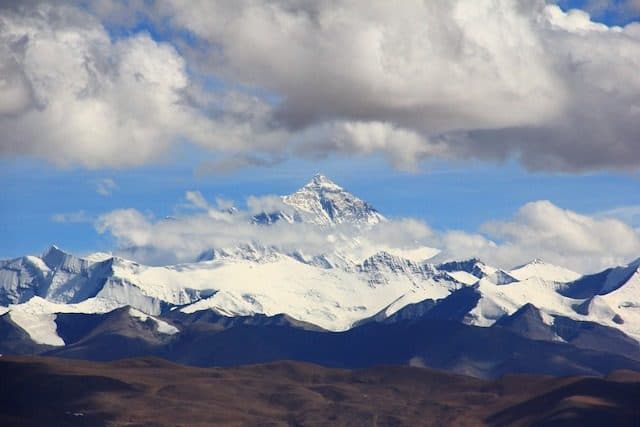
In the entire world, few places represent the idea of conquering fear, conquering nature, and conquering life itself quite like Mount Everest. Those who reach the summit are considered great. But what about those who refuse to give up? There are many of them.
The number changes over the years due to thawing and cooling, as well as changes in technology that allow some of them to be extracted. Ten years ago on Everest there were more 200 bodies . Many potential climbers die from cold, oxygen deprivation, or as a result of falls and accidents. Some of them, for example, «Green Boots »" have become landmarks for other climbers. This is because many bodies cannot be recovered.
The cost of recovering one body in 2017 amounted to $200,000 . These are just dollars and cents, without taking into account the dangers facing potential rescuers. While warm weather made it possible to free some bodies, others may never be reached due to their precarious position.
8. John Allen Chau on Sentinel Island
In the Bay of Bengal, India, there's an island called North Sentinel Island. It's one of the last truly isolated places on Earth. The people who live there, the Sentinelese, are an indigenous tribe protected by law and have made it clear they have no interest in meeting outsiders. This became horribly clear in 2017, when American missionary John Allen Chau attempted to convert the locals to Christianity.
Chau knew that the local population hostile . The fishermen warned him to stay away. Despite this, he landed on the island, attempting to befriend the inhabitants. By law, no one is allowed to even approach the island. The tribe living there had had almost no contact with the outside world, and hadn't for decades. They would have no immunity to disease, and they would have lived a primitive and simple life.
When Chau arrived, the islanders quickly attacked. Witnesses saw Chau struck by an arrow. Later, tribesmen buried his body , and the authorities decided it would be too dangerous to even try to get it back.
7. Clarabelle Lansing was thrown out of a plane
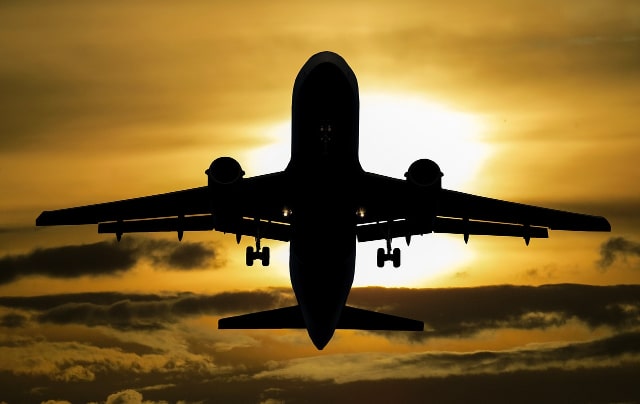
On April 28, 1988, an Aloha Airlines flight to Honolulu suffered a catastrophic accident. Without warning, a massive section of the Boeing 737's fuselage broke away, causing an explosive decompression. An 18-foot section of the roof disappeared in an instant, and with it, flight attendant Clarabelle Lansing. She had just served drinks passengers.
Sixty passengers There were injuries on the flight, but none were fatal. Only Lansing was lost, pulled out in the blink of an eye. Her body was never found. A subsequent investigation revealed that poor maintenance and age were likely the causes of the accident.
6. Two climbers got lost on an Alaskan mountain.
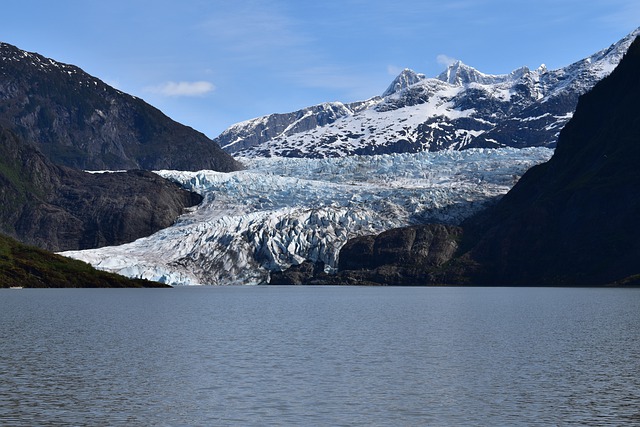
Many things can potentially go wrong when climbing a mountain. Bad weather, equipment failure, rockfalls, and much more are all risks. Avalanches are no exception.
Back in 2018, climbers Marc-André Leclerc and Ryan Johnson climbed the Mendenhall Towers, a pair of jagged peaks that reach 7000 feet above The Alaskan ice fields. Both men were highly experienced, but in 2018, all their skills couldn't help them.
At one point, the men posted a photo from one of the peaks, having taken a route previously unused by other climbers. However, nothing more was heard from them after that, and helicopter search teams were only able to find ropes, abandoned by men.
Rescue efforts were repeatedly thwarted because the avalanche risk was deemed too high. The bodies of the two men were never recovered, and despite numerous agencies offering assistance, the rescue operation was abandoned after several months.
5. A Kelowna hiker got lost in a creek.
In 2011, Scott Lawler and a friend were hiking along a deer trail near Kelowna, British Columbia. Lawler and his friend, Daniel Lovegrove, slipped and fell 200 feet into the Monashee River. Both men died, but only Lovegrove's body was recovered.
Search and rescue teams went looking for the two men and found Lawler for a moment. He was in a traffic jam in the stream. During the rescue attempt, the logjam broke apart, and Lawler became lost again.
The entire creek bank collapsed, a massive section 12 to 15 feet long and eight feet high. A chasm, believed to be about 10 feet deep, formed, and Lawler's body was pulled into it before being covered by rocks, some of which weighed more than a ton . Combined with the current at the site, the prospect of retrieving the body became impossible.
4. A house in Florida was swallowed by a sinkhole.
Unlike some of the people we've mentioned, Jeffrey Bush wasn't even close to danger when he lost his life. In fact, he was at home in bed. It was in 2013, when a sinkhole opened under the Florida man's home., swallowed up the foundation under the room.
The bedroom collapsed, crushing Bush, but the remaining structure was deemed too unstable for rescue efforts. The situation only worsened over time. What began as a 15-foot-deep hole began to grow. By the next night, they estimated, the depth reached 100 feet .
Bush's brother tried to save him by digging through the wreckage of the ever-sinking structure until he himself needed rescuing.
Authorities deemed the property so unstable that they demolished both the house and the buildings on either side. A hole even appeared two years later. But due to the nature of the instability, rescue efforts could not continue. Bush remained in the collapsed portion of his house, trapped in the sinkhole.
Today there are trees growing on the earth, and in his honor a memorial plaque was installed , but the ground is still unstable, and no one can get there.
3. Valeriy Khodemchuk was buried in Chernobyl.
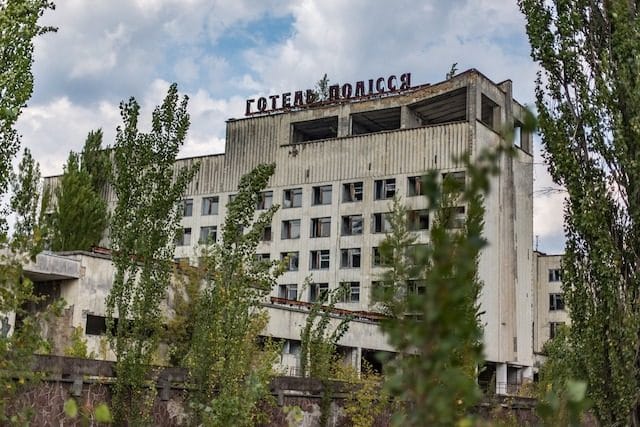
Valeriy Khodemchuk was an engineer and the first victim of the Chernobyl nuclear disaster in 1986. He was on duty that night In or near one of the pump rooms of reactor number four. When the reactor exploded, if he had been where he was supposed to be, and there's no reason to believe he wasn't, he likely would have been killed instantly.
His body was never found after the disaster, presumably buried under the rubble of the reactor explosion. Due to the nature of the disaster and the need for rapid containment, there was simply no one to search for him. One employee, a man named Vladimir Shashenok, tried to save his colleague, but failed and died in the process. However, his body was recovered.
As for Khodemchuk, he has since been buried in what remains of the reactor. The reactor was concreted after the accident to prevent the spread of nuclear materials, and Khodemchuk's body was also sealed.
2. Devin Westenskow got lost in a mine
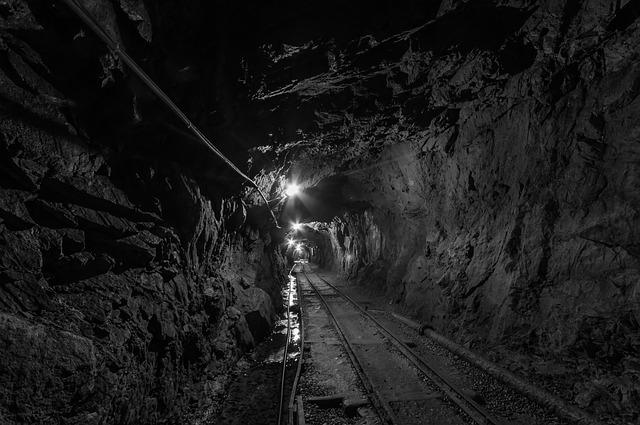
In 2014, Devin Westenskow and some friends went exploring in Nevada. Somewhere northwest of Reno, he fell into the open shaft of an abandoned mine, plummeting 200 feet. Incredibly, he survived the fall, trapped under rubble. Rescue efforts were quickly organized, but rescuers soon learned a dangerous fact: the shaft was incredibly unstable. Attempts to reach Westenskow put him at even greater risk of being crushed by rocks and the rescuers themselves at risk.
Two attempts were made to lower the rope. During one of the attempts, a rock hit the potential rescuer with such force that his helmet split . The 100-year-old mine was too unstable. The mission had to be cancelled, even though Westenskow was still alive.
Authorities and the family could only wait, watching on camera as the father of five succumbed to his injuries. The decision was not the one everyone agreed on , but the result was still there. The authorities planned to permanently seal the mine with Westenskow inside.
1. Volcanologist David Johnston went missing during the eruption of Mount St. Helens.
A volcanologist's job isn't for everyone. Besides, most of us probably don't even know what it fully entails. Volcanoes, probably. Much of their work involves studying emissions, rocks, and seismology. And sometimes, that means physically going to an active volcano to take readings and conduct observations. As you can imagine, that can be dangerous.
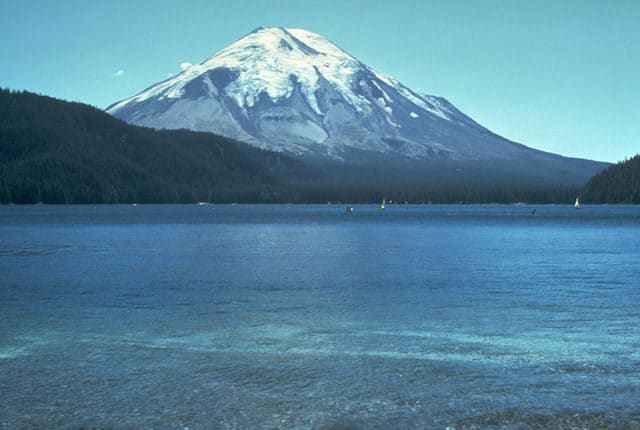
Volcanologist David Johnston was studying Mount St. Helens back in 1980, just before its eruption. And by "just before," we mean literally moments before. He set up camp on the ridge. five miles north from the volcano when it exploded. He was on the radio at the time, and his last broadcast, which became his last words, was "« Vancouver! Vancouver! This is it! They received it just as the volcano erupted.
The eruption tore off the top 1,000 feet of the volcano's cone. Magma overtook a landslide of debris moving at 300 miles per hour . An entire forest for six miles around the summit was destroyed. Johnston was never recovered, although parts of his wagon and camp were recovered.