







What are you willing to sacrifice in exchange for fame and fortune? Or perhaps you're not interested in material wealth, preferring instead access to secret and forbidden knowledge? Or perhaps you seek an otherworldly talent that would allow you to rise above your peers?
Whatever you seek, they say the devil is ready to provide, and all he wants in return is one meager soul. Today, we'll look at some people who may have taken the deal and signed their names on the dotted line.
10. The Flying Dutchman
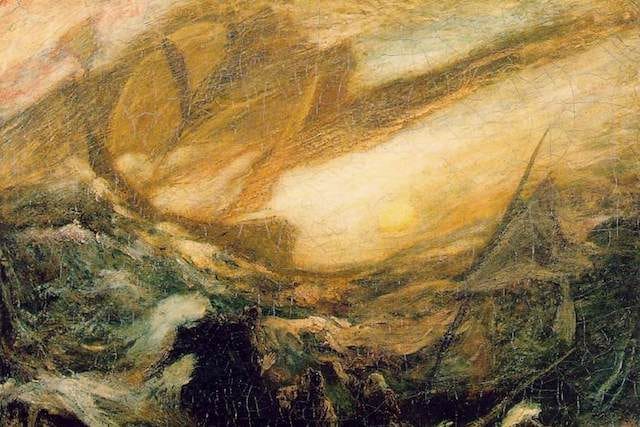
Many of you have heard the story about The Flying Dutchman , an infamous ghost ship that is doomed to sail the seas forever, never able to enter port and acting as a harbinger of doom for all who see it.
Origin This legend is a bit vague, although it is generally accepted that it originated sometime in the 17th century, when the Dutch Empire was a global maritime power.. But was there ever a real "Flying Dutchman"?
Several candidates were put forward, but one version History tells us of Bernard Fokke, a Dutch captain who was known for the otherworldly speed of his voyages between Europe and the Dutch East Indies. This led people to believe that Focke was in league with the devil, so when the captain's ship never returned from one voyage, everyone assumed that the devil had his way, and now Focke and his damned crew would sail the seas forever.
9. Two violinists

The idea of an artist willing to sell his soul to the devil in exchange for unholy talents has been popular for hundreds of years. A typical example is Italian violinist Niccolò Paganini . His virtuosity with the instrument was unlike anything people had seen before, so it is not particularly surprising that people thought his abilities came from an unholy source.
But even before Paganini, another Italian violinist named Giuseppe Tartini claimed that the devil appeared to him in a dream and played for him the most incredible piece of music he had ever heard. Here's how he described his experience in an interview:
«"One night in 1713, I dreamed I made a pact with the devil for my soul. Everything went as I had hoped: my new servant anticipated my every wish. Among other things, I gave him my violin to see if he could play. How great was my amazement when I heard such a marvelous and beautiful sonata, played with such skill and intelligence that I could not have imagined even in my wildest flights of fancy.".
Waking up, Tartini tried to recreate it, and it became his an outstanding work , known as Sonata «"Devil's Trills"» .
8. The Man Who Deceived the Devil

Jonathan Moulton was an American colonist who was a colonel in the New Hampshire militia when the American Revolution began and ended the war with the rank of brigadier general.
When not at war, Moulton was an incredibly successful businessman, renowned for his ruthlessness and willingness to bribe, seduce, or intimidate others into submitting to his whims. Unsurprisingly, his business tactics earned him the scorn of many of his neighbors, as well as a reputation for selling his soul for untold riches.
According to legend , Moulton was a meager frontier trader in his early years until he sold his soul to the Prince of Darkness in exchange for two boots full of gold coins. But ever cunning, Moulton even found a way to trick the devil by poking holes in the soles of his boots, as well as in the floor of his house. So the devil continued to add gold to the boots, yet they weren't filled until Moulton's cellar was full of coins.
When Moulton died, one of his bearers said the body simply vanished from the coffin just before it was to be buried. In its place was a bag of coins, a sign that the devil was ready to collect on the deal.
7. The Unholy Pope
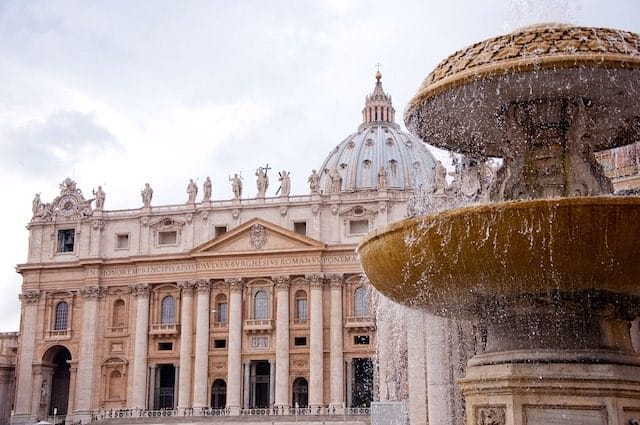
There is a long list of popes who were less than holy and were accused of all sorts of atrocities, and one of them was even accused of making a deal with the devil.
This distinction belongs to the Pope Sylvester II, formerly known as Gerbert of Aurillac. A dedicated scholar and teacher, Gerbert was passionate about mathematics and astronomy. Therefore, when he became pope in 999, he used his new power to advance his interests. He is credited with popularizing Hindu-Arabic numerals in Western Europe, as well as the use of accounts . He had his own astrolabe, collected manuscripts and even wrote an article on Euclidean geometry.
But that was 1,000 years ago, and not everyone viewed Pope Sylvester's scientific curiosity as a positive, especially when it came to mathematical knowledge coming from the Arab world. Rumors circulated that Gerbert was a sorcerer and necromancer in league with the devil, who not only imbued him with magical powers but also helped him ascend to the papacy.
Such tales were initially spread by his enemies, in particular by one cardinal named Beno , who wrote that Pope Sylvester "died a terrible and miserable death, and in the intervals between these last breaths he begged his hands and tongue (with which, by offering them to the demons, he dishonored God) to be cut into pieces.".
6. Rockstar Composer
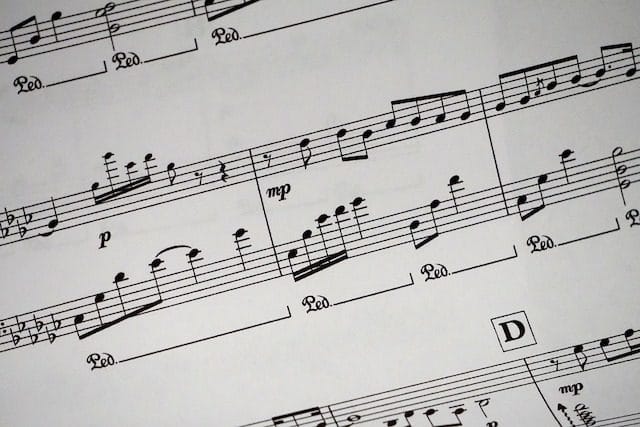
The 19th-century French composer Philippe Musard, though largely forgotten today, played a vital role in popularizing classical music, bringing it to the masses. His idea was that such musical performances shouldn't be limited to theaters and operas, which were primarily accessible to the upper classes. Consequently, he began organizing walking concerts that took place in open air venues and were available at low prices.
Mussar's musical compositions, the composer himself, typically consisted of his own works, mixed with well-known and popular themes by other composers. The music was accompanied by frenetic dances such as the galop, quadrille, and, of course, the cancan.
Musard's performances enjoyed enormous popularity among the lower classes, and his shows became the stage for the biggest parties in Paris. But, of course, not everyone was delighted with such depraved entertainment, and rumors soon began to circulate that the composer was in league with the devil. и that he is trying to seduce good Parisians into a sinful life.
5. Healer and school teacher
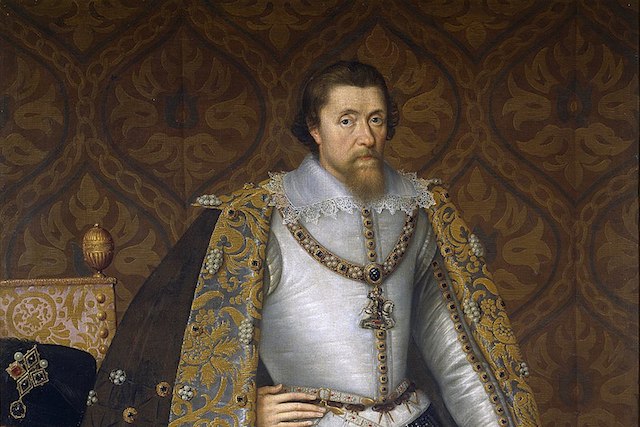
The kings of Scotland and England, James VI and I, were a bit obsessed with witchcraft and black magic and even wrote their own dissertation on necromancy, entitled « Demonology"» . In 1589, his wife, Anne of Denmark, was threatened by a storm at sea, and the king became convinced that these "contrary winds" were the result of witchcraft. Consequently, the number and intensity of witch trials increased significantly in the late 16th and early 17th centuries.
The most notorious of these were the North American trials. Berwick , which lasted over two years and resulted in more than 70 people being accused of witchcraft. Two of them were considered ringleaders. One was a healer named Agnes Sampson, who confessed to more than 50 accusations of witchcraft, while the other was a local schoolteacher named John Fayan , who confessed to making a pact with the devil and then acted as a registrar and scholar for many budding witches in the region. Both confessions, of course, were extracted under brutal torture, and both men were subsequently executed for their crimes.
4. The Murderous Nobleman
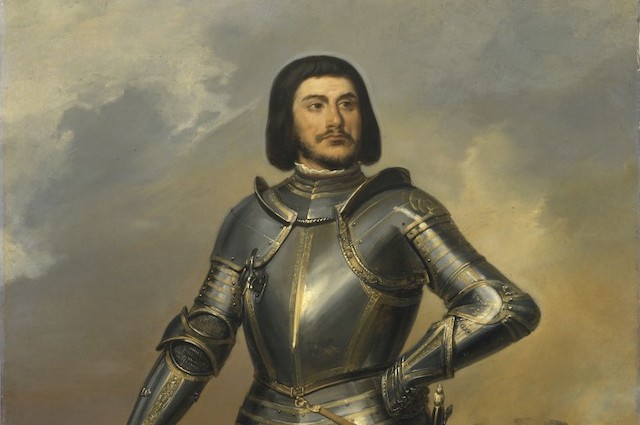
Of all the people on this list, the one most likely to be in league with the devil was Gilles Rais, as his actions were truly vile and his crimes almost unambiguous. Initially hailed as a hero of France for his role in the Hundred Years' War, the time when he served as Joan of Arc's comrade-in-arms, nobleman Gilles de Rais lived a secret and horrific second life in which he enjoyed torturing and kill children.
In September 1440, de Rais was arrested after a nearly decade-long killing spree, during which he may have killed more than 140 people. During his trial, both de Rais and several of his servants/accomplices confessed to their crimes, although these confessions were extracted under torture.
In addition to the murders, Gilles de Rais also confessed to involvement in Satanism , repeatedly summoning the devil and his demonic minions. While the nobleman refused to sell his soul, he offered the blood and organs of his victims in exchange for knowledge and mastery of the dark arts.
The inquisitors who presided over the trial branded Gilles de Rais a "heretic" , an apostate, a sorcerer, a sodomite, a conjurer of evil spirits, a soothsayer, a murderer of innocent children, a criminal, an apostate and an idolater, who deviated from the faith and who misused it…» It is not surprising that he was executed for his crimes, although questions about his guilt remain relevant to this day.
3. The Mad Scientist of Frankenstein Castle

The name "Frankenstein" needs no introduction, but in this particular case, we're not talking about Mary Shelley's iconic creation, but about Castle Frankenstein itself and the real-life mad scientist who lurked within.
His name was Johann Conrad Dippel, and he lived in Castle Frankenstein in the late 17th and early 18th centuries. Although he began as a theologian, Dippel eventually became fascinated with alchemy. He was said to have attempted to develop an elixir of life and even worked with corpses to practice soul transference.
Stories of his experiments shocked and terrified local residents, but Dippel and his work alienated even his peers. His contemporary and former friend Emanuel Swedenborg condemned him as "the most vile devil …who tried to do evil deeds.» For Dippel, nothing was forbidden, so it is not surprising that people believed that he eventually sold his soul the devil in pursuit of the most secret knowledge.
2. Devil's Blues
Here we have the same scenario as with the two fiddlers, but this time involving two blues musicians. The story of Robert Johnson is well known and popular. When he started out as a 19-year-old blues player, his skills were unremarkable. But he seemed to disappear for several years, and when he reappeared, he had become a master and remains one of the most influential blues performers in history.
People believed that Johnson had acquired his amazing abilities through nefarious means, meeting the devil at a crossroads and sold his soul in exchange for incredible talent. Then, when he died at the tender age of 27, it was the devil who profited from his side of the bargain.
Some of Robert Johnson's most popular hits, such as "Cross Roads Blues," "Hell Hound on My Trail," and "Me and the Devil Blues," certainly suggested this idea and indicated that the musician didn't mind his sinister image.
But he wasn't the first. That title belonged to Tommy Johnson, an unrelated blues player who had earned that reputation years earlier. What's more, he actively encouraged it, claiming that learned his music from the devil. But Tommy Johnson didn't die young, which is perhaps why the legend became more closely associated with Robert Johnson.
1. Faust
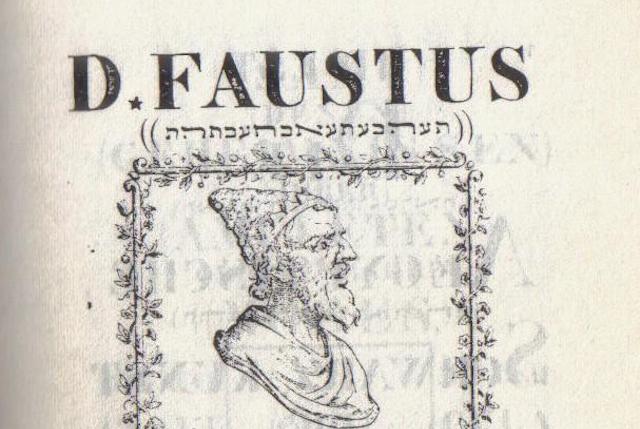
« Faustovskaya "Deal" is defined as a transaction in which a person is willing to exchange something of supreme moral or spiritual value in exchange for material benefits or property. It comes from the German legends about Faust, a scholar who sold his soul to the devil in exchange for unlimited worldly knowledge and pleasures. Despite being over 400 years old, the tale remains well-known thanks to numerous film, literary, and musical adaptations.
But what about the real person behind the myth? The legend was based on Johann Georg Faust, a German theologian and alchemist active in the early 16th century. Little is known about the historical figure. Some condemned him as a fraud, while others said he was necromancer , although most seemed to agree that he dabbled in black magic.
Faust died around 1540. Afterward, someone wrote and distributed a pamphlet detailing his evil deeds, and it became so popular that it spread throughout Europe. Several decades later, one such pamphlet fell into the hands of the English playwright Christopher Marlowe. He was inspired to write the play. «Doctor Faustus» , the first of many great works based on this legend, which cemented Faust's place in history as the most infamous man to make a deal with the devil.