









The cheering crowds in Trafalgar Square belied the grim reality for British citizens in 1945. The British economy lay in ruins, the empire was depleted, its global influence waning to that of the United States and the Soviet Union. Before the summer of 1945 was over, Churchill's government, a symbol of British defiance, had resigned. By the end of the decade, Indian independence had become a reality, the empire had collapsed, and the British navy, by then no longer able to afford luxuries, had become mothballs. Even the survival of the monarchy was questioned in parliament, pubs, and the press. Then, in the winter of 1952, King George VI, himself a reluctant monarch who had ascended to the throne after his brother's abdication, died at the age of 56. He had reigned for only 15 years.
Thus, a tired, dispirited, and disheartened nation, still struggling with wartime food shortages and rationing, still facing the rubble left by the German air raid, welcomed a new monarch, Elizabeth II. Her seven decades as queen had been turbulent. There were the Troubles in Ireland, the decolonization of Africa, the Cold War, the Race to the Moon, the containment of communism, the end of empire. There were political scandals, family scandals, and a Britain that had shifted on the global political stage, allied with the United States and NATO, yet remained determined to defend British interests. Here are ten key events from the reign of Her Majesty Elizabeth II, the longest-reigning monarch in British history.
10. Suez Crisis of 1956.
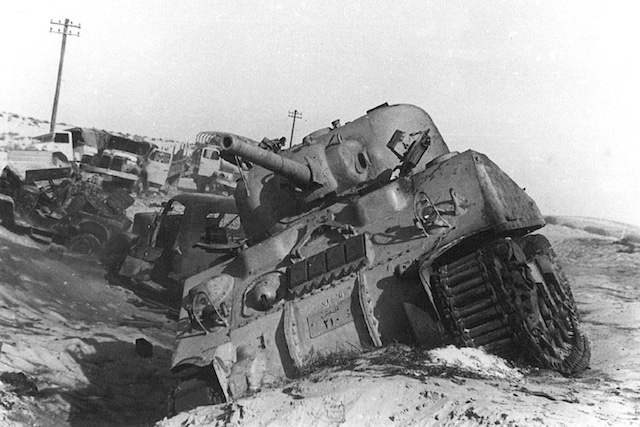
In 1956, Egyptian Gamel Abdel Nasser nationalized the Suez Canal Company, seizing control of the major waterway. The company, largely owned by British and French shareholders, controlled operations of the vital waterway. Complex, intertwined geopolitical and economic agendas involving Britain, France, the United States, the Soviet Union, Iraq, Egypt, Israel, and Jordan turned the region into a powder keg, abundantly fueled by the rivers of oil controlled by the region. In 1956, Israel, backed by France and Britain, launched a military invasion of the Suez Canal to regain control of the canal, an action sometimes referred to as the Second Suez Canal. Arab-Israeli war . The Soviet Union supported the Egyptians. The United States, fearing Soviet intervention and actions in Europe, condemned the Franco-British invasion.
The Suez Crisis escalated into a full-scale military conflict in 1956, involving land, air, and naval forces on a scale rivaling the Mediterranean theater of World War II. The United States used military, diplomatic, and economic pressure to force Britain and France to end their invasion. American and allied support for Nasser alienated the Israelis. Ultimately, this pressure led to the fall of the British government Led by Prime Minister Anthony Eden, the British and French forces withdrew their troops despite some military successes. The negotiated settlement, which, like all Middle East agreements, laid the groundwork for future crises, humiliated both the British and French in international circles.
The Suez Crisis, which has received little attention in most Western histories, has become an important turning point In the post-World War II era, this marked the end of Britain as an international superpower and led to a rift in the alliance between the English-speaking powers. The following year, partly to ease relations between the United States and Britain, Elizabeth made her first visit to the United States as monarch. One of the places Her Majesty requested to visit in America was a supermarket in College Park, Maryland. Food rationing was still in effect in Britain during her visit.
9. Polaris Agreement between the United States and Great Britain, 1962.
British-American scientific cooperation was widespread during World War II, including through the highly classified Manhattan Project , which led to the development of the atomic bomb. In 1943, the separate British and American atomic weapons programs were merged under the Quebec Agreement. In 1946, the Americans passed the McMahon Act, limiting access to American weapons technology. From then on, Britain forged ahead independently, developing thermonuclear weapons by 1957. However, the British fell behind in developing a survivable nuclear deterrent, which the Americans developed for deployment on nuclear submarines, introducing the Polaris system in the late 1950s.
President John F. Kennedy was a leading proponent of Polaris, as well as the restoration of the special relationship between the United States and the United Kingdom. The success of the first Polaris submarines allowed the United States to cancel the Skybolt missile program, a proposed system in which thermonuclear weapons would be launched from aircraft carrying the Skybolt missile. It was originally planned that The UK will purchase the Skybolt system. , thereby strengthening their own deterrent forces and sharing the costs of weapons system research. Following the cancellation of Skybolt, the Kennedy administration proposed splitting Polaris with the Royal Navy. The US agreed to sell British Polaris missiles along with their launch systems, while the UK provided its own warheads and submarines.
The Polaris Agreement, later amended to include Trident missiles, remains the foundation of the UK's independent nuclear deterrent. Since 1966, the Royal Navy has maintained at least one nuclear submarine at sea, giving the British government diplomatic leverage as a full-fledged nuclear power. The Polaris Agreement between the United States and Her Majesty's Government has been the foundation of the UK's continued credibility as a nuclear power for over fifty years. amendments including the Trident II missile and the Dreadnought-class submarine, it will continue to unite the two powers for decades to come.
8. The British Invasion and Rocking London 1964-66.
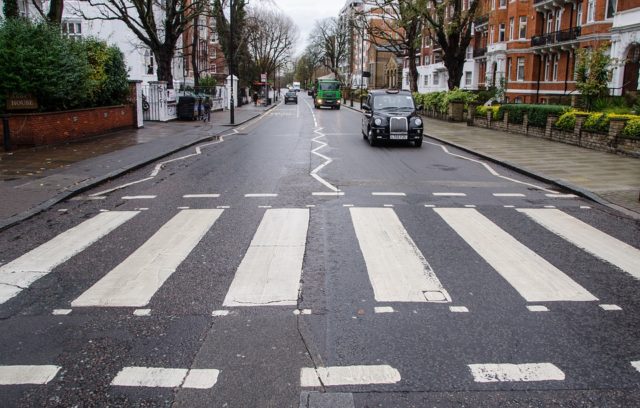
Starting with the Beatles in the early 1960s and continuing to act in films ( «Alfie» , «"To Sir", "With Love »), fashion (boots, miniskirts), television (The Avengers, Doctor Who) and international celebrities (Twiggy , Sean Connery, Julie Andrews, David Frost) Britain dominated the entertainment world of the 1960s. Dirty, dreary British streets turned into a swinging London overnight . Led by The Beatles, British music groups dominated the airwaves, especially in the United States, where disposable income flowed into British pockets. By the mid-1960s, the Beatles alone were earning approximately 650 dollars per second all over the world .
This money, earned in dollars, was converted by the Bank of England into British pounds sterling. Dollars boosted the British economy, saving the pound from devaluation, reducing the national debt. The four Beatles didn't receive the Order of the British Empire from Her Majesty simply because of their popularity. They were at the forefront of an economic engine that revitalized the British economy as much as British morale. And they were part of the overall well-being movement that grew in Britain throughout the 1960s. In the first year of the decade national service, The equivalent of the American conscription in Britain came to an end. Several other changes followed.
In 1967, abortion became legal in the United Kingdom with the passage of the Abortion Act. That same year, birth control became widely available under the National Health Service Act 1967. Same-sex acts between consenting adults (21), previously a criminal offense, became legal in England and Wales in 1967, and extended to Scotland and Northern Ireland in 1980. In 1982, these changes were seen by many conservatives and religious leaders as a reflection of the decline of empire. For others, they signaled newfound personal freedoms, guaranteed and protected by British law.
7. Aberfan Colliery Disaster in 1966.
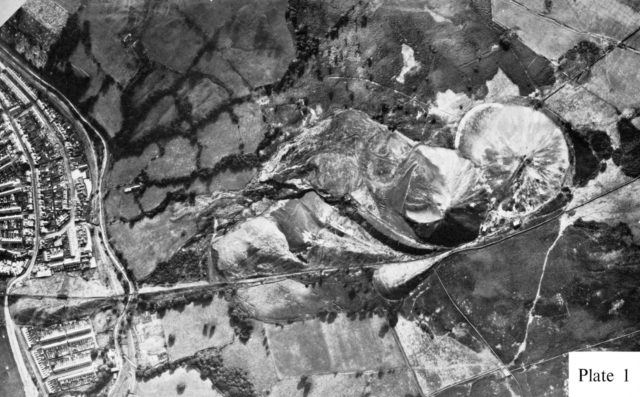
In October 1966, a coal spoil heap - a pile of waste produced by coal mining - illegally built and maintained, slid down a hillside in Wales and wiped out part of the town of Aberfan, where it buried a school and several houses. The landslide claimed the lives of 144 people, 116 of them children. The subsequent investigation blamed the incident on the National Coal Board, which was responsible for the construction and maintenance of the summit, as well as six other nearby mines, all of which violated existing regulations governing their existence. Although the National Coal Board (NCB) was found liable for the disaster, neither the NCB nor any of its employees were held accountable. Nor was anyone else.
Immediately after the tragedy, Her Majesty Queen Elizabeth categorically refused to visit the site, although her husband, Prince Philip, Duke of Edinburgh, did so. So did Lord Snowdon, her brother-in-law, who is married to Elizabeth's sister, Princess Margaret. Her Majesty waited a full eight days before traveling to the scene to meet with her subjects. According to some observers of the royal family and its reign, She later regretted it this delay . On the 50th anniversary of the tragedy in 2016, she sent a personal message commemorating the event and expressing her ongoing grief, which was shared by her son and heir, Prince Charles.
As of 2022, the Aberfan disaster remains the worst mining disaster in British history in terms of fatalities. It remains causes bitterness among the families of the deceased and the survivors, and a source of deep regret for Queen Elizabeth.
6. Vietnam War
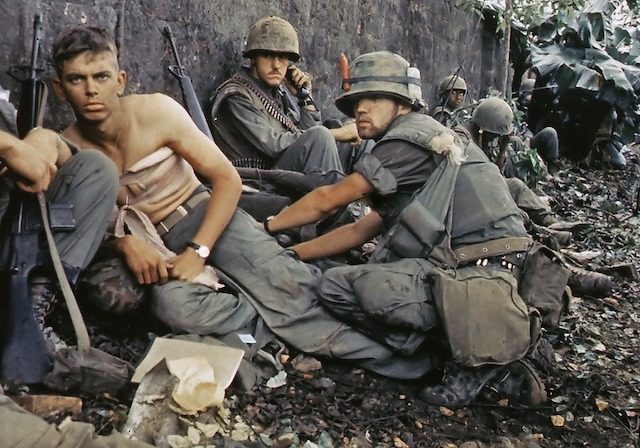
Despite sometimes almost relentless pressure from the administration of US President Lyndon Johnson and his emissaries, the United Kingdom did not actively support American military intervention in Vietnam. But Britain did not escape the Vietnam War. Throughout the 1960s, Queen Elizabeth witnessed anti-war protests among her subjects and in her dominions. Like the United States, Queen Elizabeth's dominions were divided over American involvement in Vietnam, often acrimoniously. US-British relations were strained. British attempts at peace met with American hostility, especially during Johnson's presidency.
Australia sent troops Australia's longest military intervention in Vietnam remains the longest military intervention in Australian history. New Zealand followed suit. These actions, which sparked further controversy, ensured that the war and American involvement in Vietnam would remain a source of protest. In the 1960s and 1970s, Elizabeth's sphere of influence saw frequent violent anti-war demonstrations.
During Prime Minister Harold Wilson's tenure in the British government in the 1960s, he described Britain's position The use of "negative support" in reference to American policy in Vietnam is a bit of political ambiguity that would have made Orwell proud. British opposition to the Vietnam War and the alliance between British anti-war protesters and those from America and other Western countries were a focus of Her Majesty's Government in the 1960s and 1970s. Britain did not actively participate in the war, but it found itself divided over American involvement, another strain in the "special relationship" between the US and Britain.
5. IRA bombings
Centuries of bombings, assassinations, military and police counter-terrorism campaigns, riots, civil war and a series of violent incidents in Ireland known collectively as the« Troubles »"," haunted Queen Elizabeth throughout her reign until the 1980s. In the late 1960s, the British army in Northern Ireland struggled to establish peace with radical Irish Republican Army (IRA) factions and other terrorist groups. Urban violence in Northern Ireland involving British troops and Irish "revolutionaries" made cities like Belfast the most dangerous in the world. Terrorist bombings also occurred in London and other British cities.
In 1979, the IRA carried out a series of high-profile murders High-ranking officials known for their cruelty and audacity. One of the close victims of the bombings was American General Alexander Haig, former US Secretary of State and later NATO commander. In August 1979, IRA bombs tore apart a yacht, killing Lord Mountbatten, the uncle of Elizabeth's husband, Prince Philip, and several members of his family. Mountbatten was the last Viceroy of India and a distant relative of the Queen. For many observers, the IRA's indiscriminate killings were as brutal as those practiced by Islamic terrorists in later years.
British Conservative governments responded with counterterrorism tactics, while political factions struggled to hammer out agreements that would satisfy all sides. Problems with the Northern Ireland government had been a constant feature of life for over sixty years. Despite progress, splinter terrorist groups continued to operate. create waves of violence . In 2007, British Army troops left Northern Ireland after more than three decades and losing over 1,400 lives during their lengthy deployment. The "Troubles" remain a dark stain on the long reign of Elizabeth II.
4. Return of Hong Kong and visit to China
Except for the period of Japanese occupation during World War II (1941–45), Hong Kong has been a British colony since 1841. Britain gained the territory by right of conquest during the Opium Wars and expanded its borders and holdings over the remainder. 19 and in the beginning 20 vv . When the communist People's Republic of China (PRC) won a seat on the United Nations Security Council, it launched a campaign to reclaim the territory, including the Portuguese-controlled territory of Macau. By the 1970s, the PRC officially recognized the British administration of Hong Kong but denied its sovereignty over the territory.
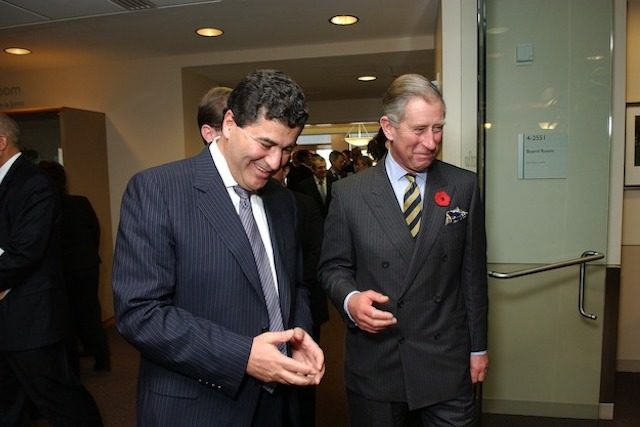
When Britain entered into extensive negotiations on the return of Hong Kong to Chinese sovereignty, disagreements arose, exacerbated by perceived Chinese sabre-rattling. Finally, after years of diplomatic compromise, including the first visit of a sitting British prime minister (Margaret Thatcher) to Hong Kong, the British agreed to return sovereignty over the territory to China in 1984. . Queen Elizabeth visited the city in 1986 (her second trip to Hong Kong, the first in 1975). The formal handover of the territory took place in accordance with the agreement July 1, 1997 . Prince Charles represented the monarchy at the official handover.
When Elizabeth ascended the throne in 1952, the disintegration of the British Empire had already been underway for some time. The handover of Hong Kong marked the end of the British Empire for many. In 2002, Parliament coined the term «British Overseas Territories» to describe the 14 remaining territories still under crown control.
3. 1992 and the year of scandals for the royal family
Throughout her long life, before and during her reign as Queen, Elizabeth remained free of personal scandal and even controversy. Her life was dedicated to service, beginning as a young princess during World War II. Unfortunately for Her Majesty, the same cannot be said of her family. Elizabeth's sister, Margaret, was implicated in several sex scandals , a public and embarrassing divorce, and a scrutiny of her private life that provided fodder for tabloids on both sides of the Atlantic. Elizabeth's son Andrew's public behavior led to , that the British press christened him "« Randy Andy »", decades before his connection to Jeffrey Epstein and child abuse allegations. He was eventually removed from his royal duties due to his deteriorating reputation.
But it was the complex relationship between her son Prince Charles, his wife Princess Diana and those who invaded their marriage that led Her Majesty to christen 1992 Annus Horrible , «"...not a year I'll look back on with undiluted pleasure." That same year, her daughter Anne divorced her husband, Captain Mark Phillips, after a tabloid-fueled scandal involving both parties. The Duchess of York, the former Sarah Ferguson, and her husband, the aforementioned Randy Andy, orchestrated a slew of salacious stories and photographs for the press, leading to their separation and eventual divorce. Then came Diana and Charles's split, punctuated by the publication of conversations between the Princess of Wales and James Gilbey.
The following year, another recording containing intimate and embarrassing conversations between Prince Charles and Camilla Parker Bowles, sparked further sighs and clucks about the behavior of members of the royal family. While much of the world found the Windsors' behavior reprehensible, Her Majesty maintained her legendary British "toughness" and weathered the storm. Since then, new scandals have arisen, though Elizabeth has continued to overcome them.
2. The death of Princess Diana
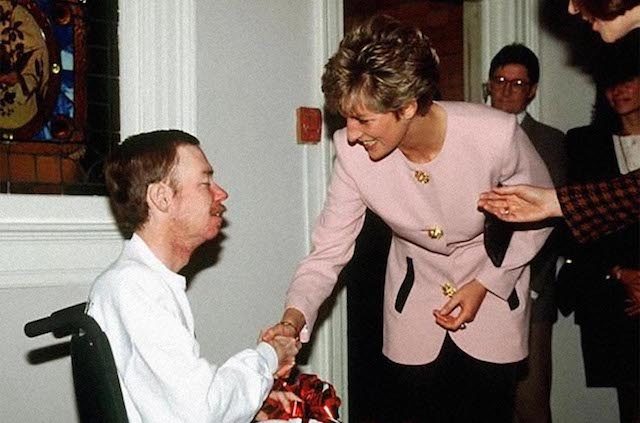
Death Princess Diana sparked an international outpouring of shock and grief. The former wife of one heir to the British throne and mother of another was elevated to near-sainthood status in the world's press and media. Thousands flocked to Buckingham Palace to pay their respects in the form of flowers, cards and letters, banners and posters, and vigils. Celebrities paid their respects around the clock. However, criticism of the Queen and the royal family prevailed. Among the complaints was the absence of the Royal Standard, which was flown at half-mast over the palace. The Queen was not in the palace at the time, and the Royal Standard was flown at Balmoral, her then residence, as required by current protocol.
The period of mourning and funeral revisited the events that led to Diana's divorce from Charles and portrayed her as a model mother to Princes William and Harry. At the same time, the Queen and the royal family faced significant criticism for their treatment of Diana while she was alive, as well as for their perceived indifference to her tragic death. Perhaps inevitably, conspiracy theories arose, Some of which link British intelligence, French intelligence, and even Prince Philip, the Duke of Edinburgh and the Queen's husband, to Diana's death. Many of these allegations remain the subject of controversy to this day.
Diana continued to be lauded decades after she died in a car crash in which her driver was three times the legal drinking limit in France. Her tragic Death shook the monarchy , although over time Elizabeth, initially harshly criticized, rose in the eyes of most of her subjects.
1. The marriage of Prince Harry and Meghan Markle

Throughout her long reign, Elizabeth maintained a complex relationship with the British press, including numerous lawsuits , initiated by Her Majesty and her family. The press responded with critical and sometimes salacious coverage of the royals, both in their professional duties and in their private lives. Advancing age has forced the Queen to gradually reduce her public appearances, particularly since the death of her husband, Prince Philip, in 2021. Throughout her reign, public approval of the monarchy as an institution has waxed and waned, although the Queen's personal approval has remained high. In 2012, the year of her Diamond Jubilee, it reached 90%.
In 2017, Prince Harry, the youngest son of Prince Charles and Princess Diana, announced his engagement to Meghan Markle, a biracial divorcee who also happened to be (gasp) American. Elizabeth's uncle had abdicated the throne decades earlier to marry an American divorcee, and while the likelihood of Harry ever ascending the throne was remote, it nonetheless demonstrated how public attitudes had changed during Elizabeth's reign. Meghan's public acceptance was near-universal. Later events revealed that she was less readily welcomed in the royal family's private chambers. Prince Philip advised his grandson not marry his fiancée. Meghan and Harry eventually stepped down from their royal duties and moved to America, and their subsequent appearances within the royal family point to the continuing rift within the Windsors. Yet Her Majesty emerged above the fray.
Louis XV of France is said to have commented, "Après moi, les deluge," meaning "After me, the deluge." This quote is said to express indifference to events once a person is dead and gone. This cannot be said to apply to Queen Elizabeth II. Despite the machinations of some members of her family and the arguments for the abolition of the monarchy that occasionally arise in British society, Her Majesty has served her people for over seven decades with patience, fortitude, and regal dignity. The public at large recognizes and respects her dedication. No matter who or what will inevitably replace it as head of the British state, she will be difficult to follow.