








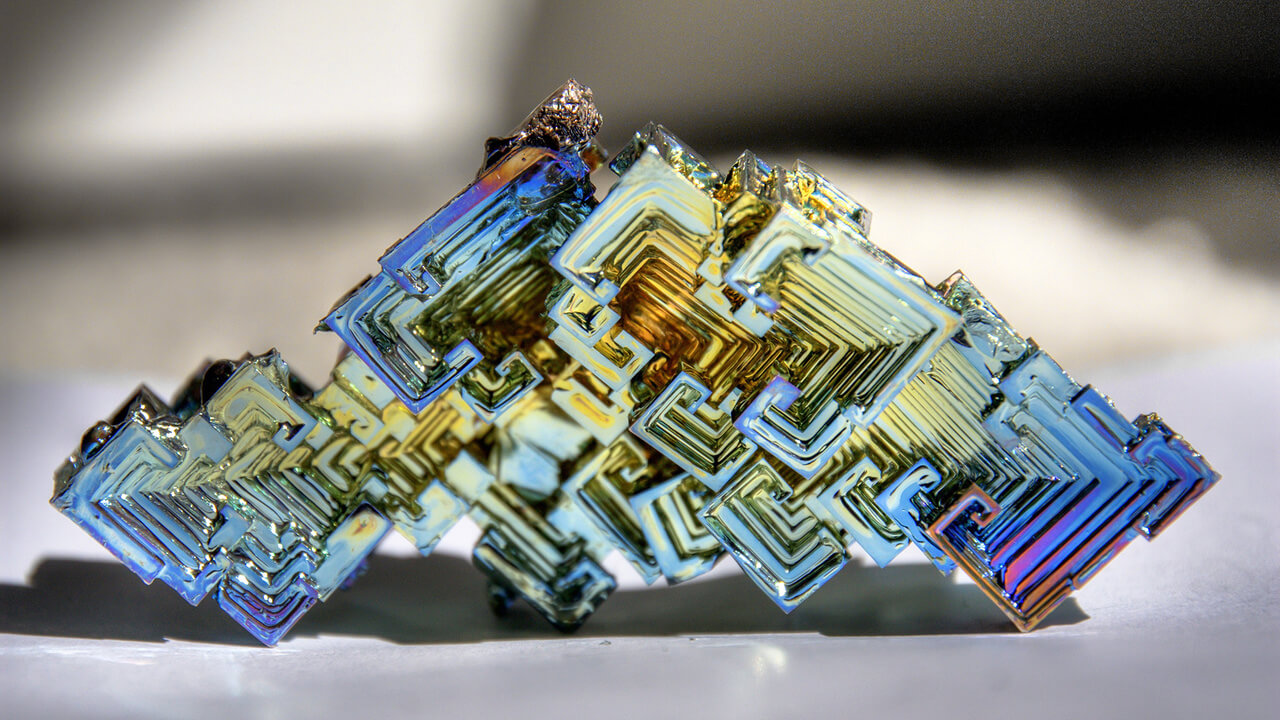
We all love metal. Cars, bicycles, kitchen appliances, drink cans, and countless other things are all made of metal. Metal is the cornerstone of our lives. But sometimes it can be very heavy.
When we talk about the weight of a particular metal, we usually mean its density, that is, the ratio of mass to the volume it occupies.
Another way to measure the "weight" of metals is their relative atomic mass. The heaviest metals by relative atomic mass are plutonium and uranium.
If you want to know, What metal is the heaviest?, If you're considering its density, we're happy to help. Here are the top 10 heaviest metals on Earth, listed by density per cubic centimeter.
10. Tantalum - 16.67 g/cm³
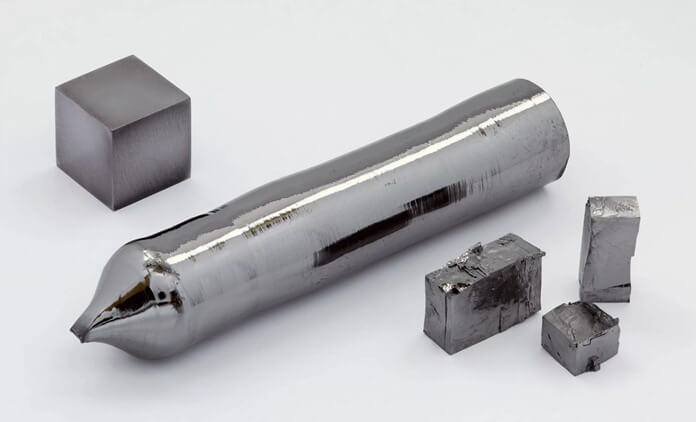 Tenth place in the ranking is occupied by a bluish-gray, very hard metal with an extremely high melting point. Despite its hardness, it is as malleable as gold.
Tantalum is an essential component in many modern technologies. Specifically, it is used to produce capacitors used in computers and mobile phones.
9. Uranium - 19.05 g/cm³
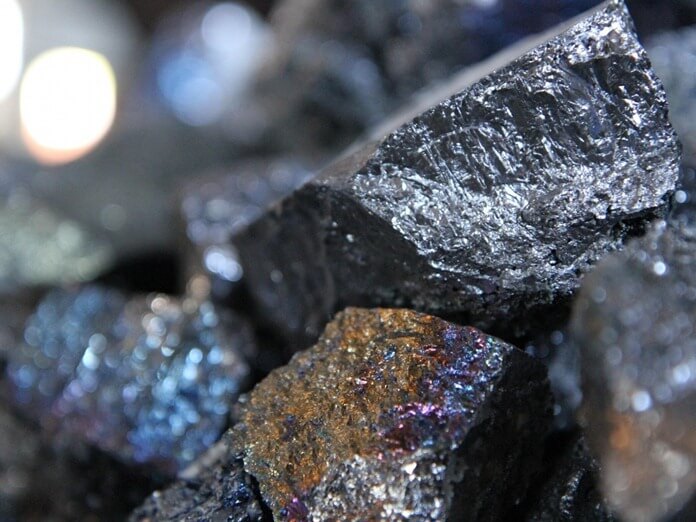 It is the heaviest element on Earth, based on its atomic mass—238.0289 g/mol. In its pure form, uranium is a silvery-brown heavy metal, almost twice as dense as lead.
Like plutonium, uranium is a necessary component for creating nuclear weapons.
8. Tungsten - 19.29 g/cm³
 Considered one of the densest elements in the world, tungsten boasts three unique properties in addition to its exceptional thermal and electrical conductivity, very high resistance to acids and abrasion:
- After carbon, it has the highest melting point - plus 3422 °C. And its boiling point is plus 5555 °C, this temperature is approximately comparable to the temperature of the surface of the Sun.
- It accompanies tin ores, but hinders tin smelting, converting it into slag foam. This is where it gets its name, which means "wolf cream" in German.
- Tungsten has the lowest coefficient of linear expansion upon heating of all metals.
7. Gold - 19.29 g/cm³
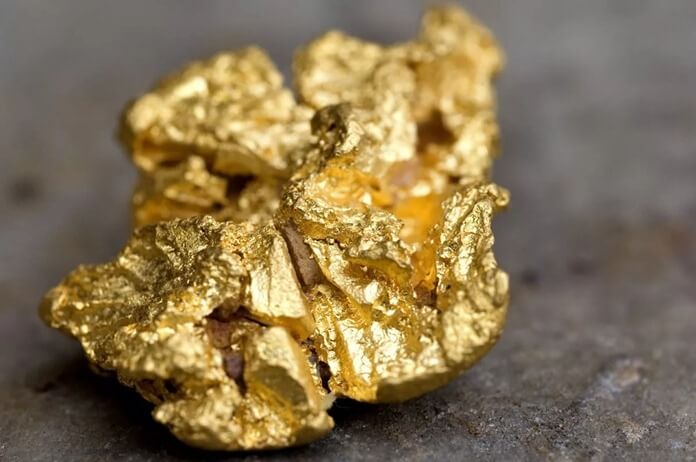 Since ancient times, people have been buying, selling, and even killing for this precious metal. Not just people, but entire countries are engaged in gold buying. America currently leads the world in gold reserves. And it's unlikely there will ever be a time when gold will no longer be needed.
They say money doesn't grow on trees, but gold does! Small amounts of gold can be found in eucalyptus leaves if they grow in gold-bearing soil.
6. Plutonium - 19.80 g/cm³
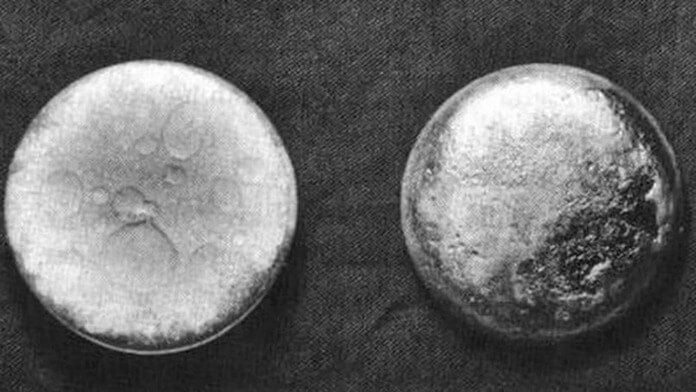 The sixth heaviest metal in the world is one of the most essential components for nuclear powers. It is also a true chameleon among the elements. Plutonium exhibits a colorful oxidation state in aqueous solutions, ranging from light violet and chocolate to light orange and green.
  The color depends on the oxidation state of plutonium and acid salts.
5. Neptunium - 20.47 g/cm³
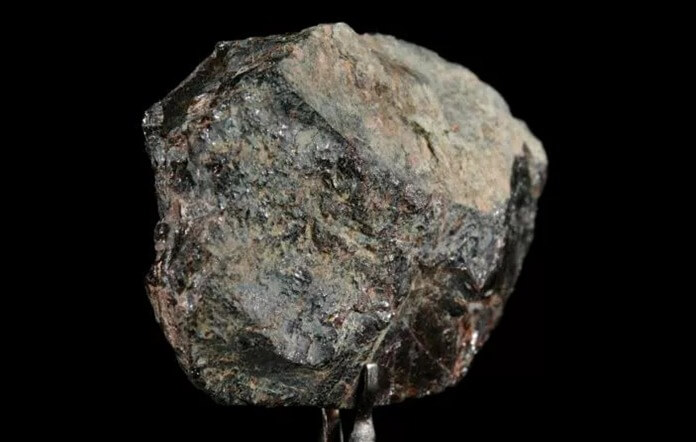 Named after the planet Neptune, this silvery metal was discovered by chemist Edwin McMillan and geochemist Philip Abelson in 1940. It is used to make number six on our list, plutonium.
4. Rhenium - 21.01 g/cm³
 The word "rhenium" comes from the Latin rhenus, meaning "Rhine." It's not hard to guess that this metal was discovered in Germany. The German chemists Ihde and Walter Noddack are credited with its discovery. It is the last of the elements discovered to have a stable isotope.
Due to its very high melting point, rhenium (in the form of alloys with molybdenum, tungsten and other metals) is used to create components for rocket technology and aviation.
3. Platinum - 21.40 g/cm³
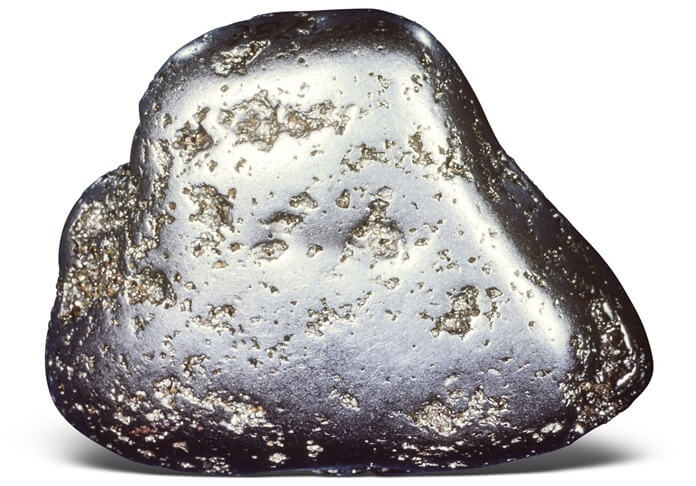 One of the most precious metals on this list (besides osmium and californium-252), it is used in a wide range of applications, from jewelry to the chemical industry and space technology. In Russia, Norilsk Nickel Mining and Metallurgical Company is the leading producer of platinum metal, producing approximately 25 tons of platinum annually.
2. Osmium - 22.61 g/cm³
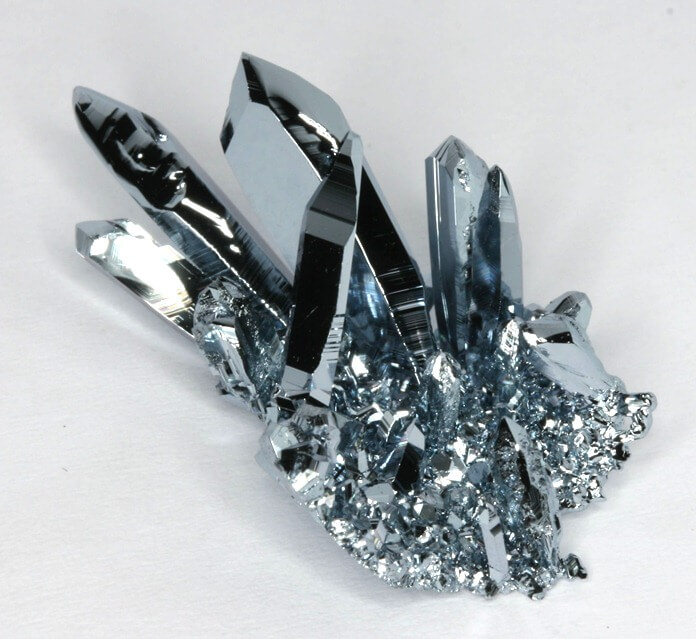 This brittle yet extremely hard metal is rarely used in its pure form. It is typically mixed with other dense metals, such as platinum, to create highly complex and expensive surgical equipment.
The name "osmium" comes from the ancient Greek word for "smell." When the alkaline alloy osmiridium dissolves in liquid, a pungent odor appears, similar to the smell of chlorine or rotten radish.
Both osmium and iridium (ranked first) weigh approximately twice as much as lead (11.34 g/cm³).
1. Iridium – 22.65 g/cm³ – the heaviest metal
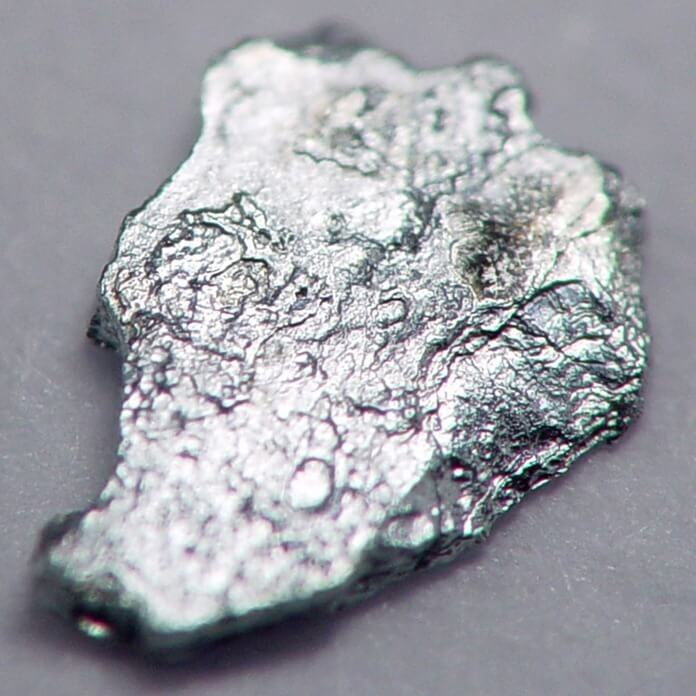 This metal can rightfully claim to be the element with the highest density. However, debate continues over which metal is heavier—iridium or osmium. The problem is that any impurity can reduce the density of these metals, and obtaining them in pure form is a very difficult task.
The theoretical density of iridium is 22.65 g/cm³. It is almost three times heavier than iron (7.8 g/cm³) and almost twice as heavy as the heaviest liquid metal, mercury (13.6 g/cm³).
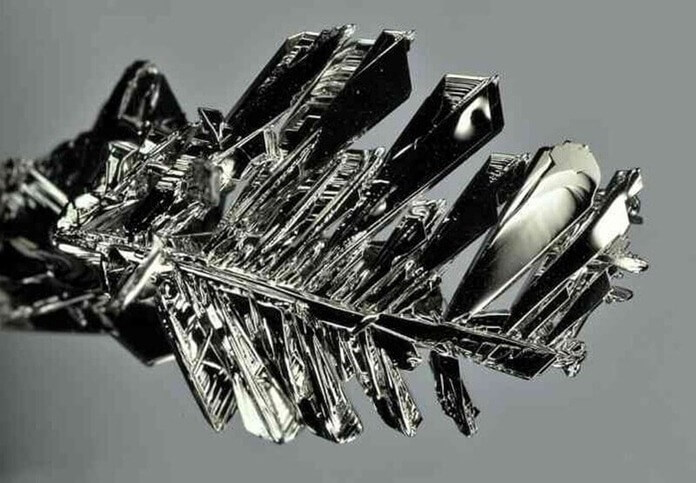 Like osmium, iridium was discovered by the English chemist Smithson Tennant in the early 19th century. Interestingly, Tennant discovered iridium not intentionally, but by accident. It was found in an impurity left after dissolving platinum.
 Iridium is primarily used as a hardener for platinum alloys used in equipment that must withstand high temperatures. It is processed from platinum ore and is a byproduct of nickel mining.
 The name "iridium" translates from ancient Greek as "rainbow." This is due to the presence of variously colored salts within the metal.
The heaviest metal on the periodic table is very rare in terrestrial substances. Therefore, its high concentration in rock samples is a marker of their meteoritic origin. Around 10,000 kilograms of iridium are mined worldwide each year. South Africa is the largest supplier.