








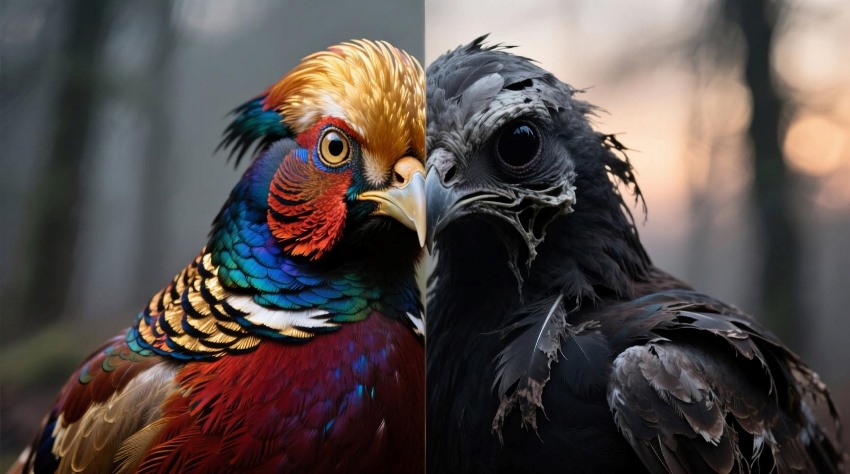
Throughout history, birds have been symbols of our highest ideals. From songbirds to soaring eagles, they embody the beauty of nature, the devotion of parents, the freedom of spirit… But are they so far removed from our mundane, down-to-earth ways?
Here are 10 birds and shocking facts about their dark side of existence.
10. Parasite huntsman
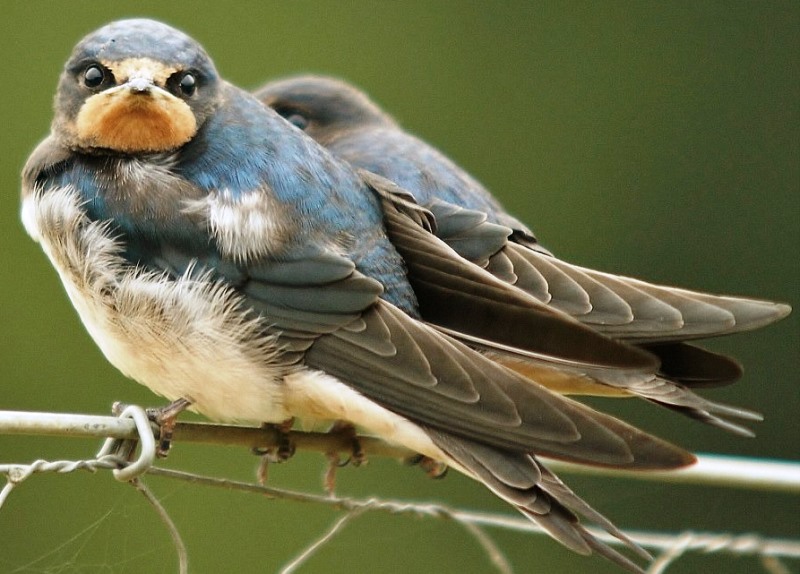
Oh, that parasitic huntsman! You know, when I first saw him, I immediately thought: what impudence! He looks like some kind of angry, exhausted seagull, only with some kind of... predatory glint in his eyes. Incidentally, in German, it sounds like "hunter"—and that, it must be said, perfectly captures his essence.
He's like a lone wolf, though he sometimes hunts in a pack. And his name is telling – "parasite." Because, imagine, he steals food right out of the air! You catch up with some poor bastard who probably just caught a tasty fish, and – bam! – the parasitic huntsman snatches it from his beak. Now that's a real air pirate, and what a daring one at that! Well, like pirates, basically – they spend most of their lives above the sea, above those endless, seething expanses, circling, threatening, forcing birds to surrender. And it's honestly a little creepy.
I once read that they prefer the roughest parts of the sea, supposedly because there's more prey there. That might be true, but I think they just enjoy tempting fate, you know, like people who enjoy adrenaline.
They come ashore, essentially, for one reason only—to procreate, as they say. You know, business. In Europe, they call it the Arctic skua because it breeds in the tundra, far, far north. And even there, amidst this harsh beauty, it remains a real menace. No, seriously, eating other birds and their eggs—that's a bit much, in my opinion!
And you know what else? They say its cry sounds like a baby's cry! What a twist, huh? Can you imagine, such a formidable bird, but it sounds like... like it's calling for its mother. What a terrible contrast, right? I don't know if I've heard it myself, but it sounds convincing. All in all, the parasitic huntsman is a bird that definitely deserves its own story. What a thing!
9. Pelican
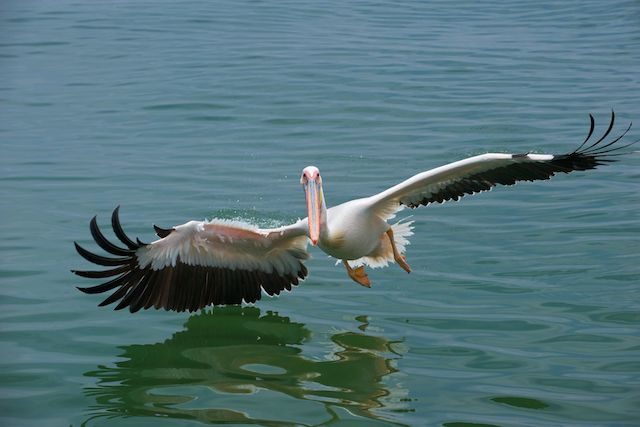
Oh, pelicans! What birds they are… with their duck-like feet and flamingo-curved necks, they're simply charming. And you know, I wonder if it wasn't the stork that brought us our babies, as they say in the fairy tales? Well, they certainly have the perfect beak – you could scoop up a newborn right now! Just kidding, of course… although, seriously, never, ever leave a child with a pelican, or anything you love! I'll tell you why.
Because, just imagine, these cute little creatures, when stressed or hungry, turn into real monsters! Well, not exactly monsters, of course, but… they start grabbing everything in sight, swallowing anyone! They say they've already caught goslings, unfortunate penguin chicks, ducks, pigeons… even baby turtles – wow! And, imagine, a Chihuahua! Yes, I'm not kidding!
And so, the poor thing ends up in that huge beak... and down into its throat, alive! Then, if the pelican is really hungry, it'll, you see, crawl into the stomach to get the scraps... and if not, it'll start with, you know, the harvest, the plants, whatever! Imagine, a kind of "storage bag"! You know, instead of enzymes, they have some kind of mucus inside to soften the prey. Well, it's just creepy, if you think about it!
It's strange, isn't it? Such graceful birds, and yet they have such a... peculiar diet. I once saw a pelican at the zoo, and the way it looked at me! It was as if it were thinking, "Wouldn't it be a shame if you..." Well, of course, I quickly moved on. But still, despite this, they evoke some inexplicable delight in me. There's some wild, unpredictable beauty about them, you know? Like life itself—sometimes it delights with tenderness, sometimes it terrifies you to the point of shivers. That's what pelicans are like—they seem so sweet, but inside... they're a whole world!
8. Cassowary
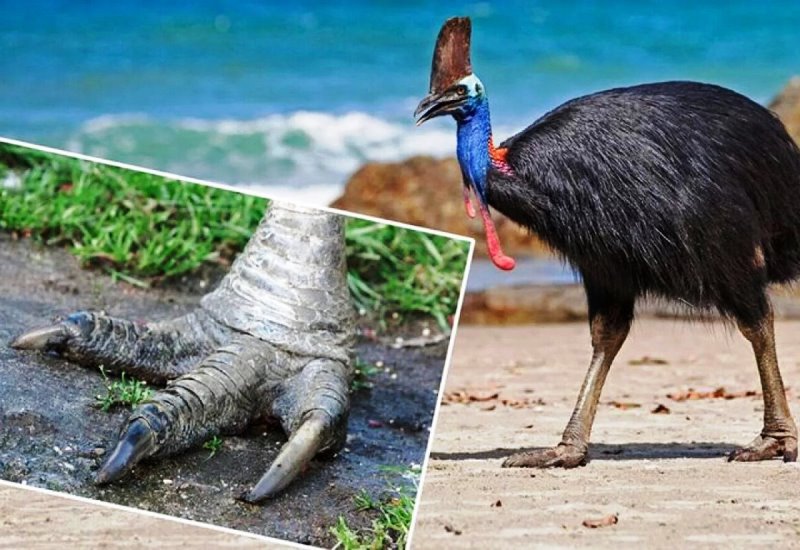
Can you picture this? Australia, sunshine, eucalyptus trees... and a cassowary. This bird—well, not really a bird, more like a feathered dinosaur in a jacket—plays a colossal role in the ecosystem, even if it doesn't look particularly cute. Without it, you know, some Australian plants simply wouldn't grow! The thing is, some seeds are so huge that other fruit eaters can't even swallow them. But the cassowary's digestive tract is like a seed germination factory, only much more... specialized. So, in a way, we should be grateful, right?
But here, you know, we get to the more interesting part. Because the cassowary is quite possibly the most dangerous bird on the planet. I'm not kidding! It has a huge claw on each foot, like a dagger—four inches long! And if it decides you're a threat... well, believe me, it'll strike like lightning. It simply "cuts through any potential threat with one swift swipe," as they say in documentaries. And it can run up to fifty kilometers an hour! I honestly can't imagine a bird that runs that fast. And it can jump! Almost two meters high! Basically, it's like the velociraptors from Jurassic Park, only with feathers. Even cassowaries scare each other—wow!
They're essentially solitary creatures. Romance is clearly not their thing. The males engage in some kind of tooth-rattling squabbles to show who's boss, and the females... well, they can make them run away with just a look. Now that's power! And when they communicate, it's incredible—low-frequency sounds you feel in your bones. Like the ground shaking. No wonder they've been known to kill people. Can you imagine? They usually just kick or jump on you, but they can also peck or headbutt you. You get, as they say, "puncture wounds, lacerations, and broken bones." Doesn't sound very pleasant, does it?
And you know what? They even climb into houses! They peck and kick doors and windows. Sometimes, can you imagine, they even break glass! But it turns out this isn't aggression. It's just them exhibiting "preventative vigilance," as if warding off a potential threat. It's as if they're afraid of themselves! It's simply unbelievable!
I wonder if they're a little uneasy with such power. Maybe they just don't know what to do with themselves? In any case, the cassowary is a bird of mystery, a bird of terror, a bird of salvation. And perhaps a bird best observed from afar... very far away. Well, I went to check if anyone was knocking on the window... maybe it was a cassowary dropping in for a visit. Brrr!
7. Whalehead
Oh my god, the Shoebill! This species… it's simply mesmerizing, honestly. I just recently learned about it and am completely hooked. Can you believe it, depictions of it have been seen all the way back in ancient Egyptian art! And now, it turns out, it even inspired the developers of The Legend of Zelda – Loftwing, that cool character, is a dead ringer for a Shoebill. Wow!
The shoebill is no slouch, I tell you. It's the size of a man, and its wingspan is a whopping eight feet! Can you imagine how formidable it is? It hunts all sorts of creatures: giant fish, snakes, baby crocodiles, and even Nile monitor lizards! The most interesting thing is its beak. It's curved, like, you know, some kind of sabot... That's why the Arabs call it "abu markhub"—"father of the shoe." And that "shoe"—for good reason—it's a powerful weapon! They say it clamps down on its prey and... well, you know, decapitates it. It's terrifying, for sure.
I was also told this: he's like a machine gun when he greets other shoebills! Can you imagine how that sounds? But you know, the wildest thing isn't his hunting skills. It's the way he treats his own chicks!
I'd heard about the cruelty of the natural world, of course, but when I watched David Attenborough's documentary "Africa," I was absolutely shocked. The footage was so heartbreaking... The mother flies off to get water, and the older chick, you see, decides to make fun of the younger one. He just pecks out his feathers, so viciously! The poor little one, he's barely hanging on as it is, and then this kind of abuse hits him. And the worst part is, when the mother returns, she doesn't intervene! She simply ignores the victim and, in effect, encourages the bully. What a twist! It's no wonder shoebill chicks rarely survive—at best, only one.
It occurred to me that even the world of birds has its own complex, cruel rules of survival. And how it all contrasts with the majestic, almost mythical beauty we see in ancient paintings or video game characters. It's like two completely different sides of the same coin. Overall, the shoebill is a bird of mystery, what can I say. A very unusual and, admittedly, a little frightening specimen. I'll have to read more about it; there's probably still much more interesting to discover.
6. Cuckoo
Oh, the cuckoo! Its call is, of course, the first harbinger of spring; we all hear it, and our hearts rejoice. But you know, behind that ringing trill lies such a story… so cunning, even a little creepy! After all, cuckoos are, in essence, true parasites, only in feathers. They don't bother raising their offspring, but simply toss their eggs into other birds' nests, hoping the foolish parents will raise their chicks as their own. Imagine how energy-saving that is!
Sometimes, it's truly amazing how they do it! Some cuckoos, they say, simply drop their eggs into the nest from above! Their shells, you know, are so thick, like a little bomb—bang!—and the other bird's egg is broken. Sounds careless, right? But in fact, it's all planned out down to the last detail. There's nothing left to chance! Cuckoos, like experienced agents, stake out nests in advance, so to speak.
I always imagined them hiding in the bushes, like spies, watching their owners, calculating the moment when they can safely lay an egg. And the most interesting thing is, the males get involved too! In some species, they even look like hawks – so menacing. And what do they do? Distract their host birds, force them to fight! Well, just to create chaos and make things easier for the female. Now that's what I call teamwork!
And that's not all! Cuckoos, it turns out, don't forget about their young. They come back and check on them. And if the owners suddenly decide "this isn't mine" and try to throw the cuckoo chick out—that's when things get interesting! The Great Spotted Cuckoo, they say, can even take revenge! Kill the owner's chicks. Just like the mafia, you know? That's the kind of racketeering these birds do.
But, you know, you don't always need to resort to such drastic measures. Cuckoos are cunning, I tell you! Their chicks hatch earlier and stronger than the others. And what do they do? They simply push everyone else out of the nest! Literally kick them out! Can you imagine the struggle for survival in the bird world?
And so you sit and think: the cuckoo is such an interesting, if not the most pleasant, character. That's just how life in nature is—full of intrigue and surprises. And every cuckoo's call now sounds to me like a tale of a small, but very determined, trickster. What do you think?
5. Reed Warbler
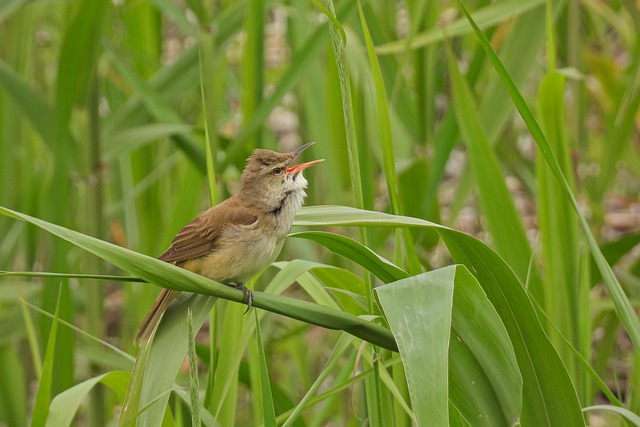
You know, I just came across a really wild story about warblers and reed warblers! Can you imagine, warblers, those sweet, sonorous singers of ours, are a real treat for cuckoos, practically a free lunch. Well, that's understandable; cuckoos are masters of disguise, but still!
But the reed warblers... that's a whole different story. The mother warbler seems completely unaware that there are impostors in her nest! Just imagine: a cuckoo hatches, begins to grow, and this poor mother continues to feed her, even when this "cuckoo" is already twice her size! Simply unbelievable! And, even stranger, she seems unaware when the other eggs are pushed out of the nest. It's as if she's blindfolded!
But don't think this means reed warblers are stupid or overly trusting. No, no, no! They have their own, very cunning plan! The thing is, reed warbler fathers usually build just one nest, even if they have a whole horde of chicks in it. And that's where the females, known as "lower harem mates," come in. It sounds funny, of course, but the point is that they mercilessly destroy the eggs of their rivals!
Honestly, I almost choked on my coffee when I read that! Can you imagine the drama unfolding in these humble reed nests? Scientists even tested it! They placed artificial plasticine eggs in the nests and monitored the reed warblers—wow! It turns out that once a "mistress" destroys her first wife's "children," she, so to speak, makes a "career" for herself and rises in the queue for male support.
And that's not all! New females have arrived, apparently determined to profit from this chaos. They build nests right next to the site of the "infanticide" to increase the likelihood of snagging a male. Just like in real life! Do you understand the struggle for survival they're going through? It's funny and creepy at the same time, right? Nature is a wondrous thing, after all, and the concepts of "good" and "evil" are somehow... blurred. Each one simply does what it takes to survive and produce offspring. Sometimes, to get what's yours, you have to... push your rival aside a little. What can you do!
4. Shrike
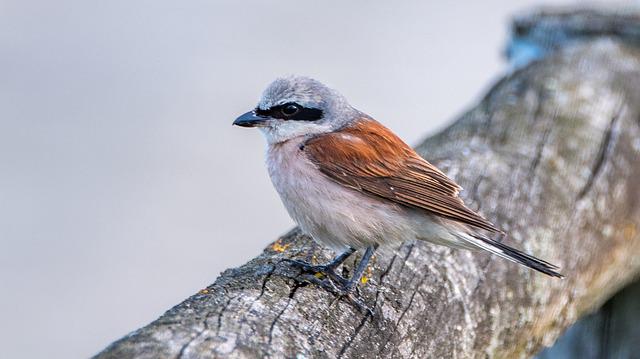
Well, what can I tell you about the shrike? This creature, you know, evokes conflicting feelings. On the one hand, imagine: small, so cute, with a raccoon mask on its face and that squeaky, piercing cry – just like a magpie, only even more nervous.
With its small stature, raccoon-like mask, and shrill, squeaky call, the shrike is undoubtedly cute. But it's also a bird of prey—and a psychopath. You may have seen insects—beetles, for example—impaled on a barbed wire fence. This is not an uncommon sight. In fact, it's a sure sign that a shrike (either one or a psychopathic child) is nearby.
3. Kea
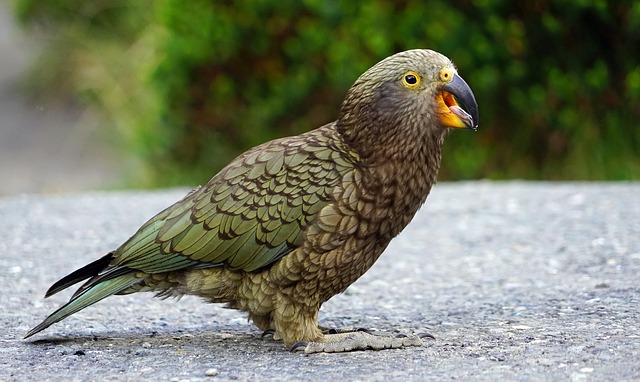
This kea... oh, the kea! It's an incredibly beautiful bird, a mountain parrot, and, you know, it's a real treasure for New Zealand. Can you imagine, its image graces banknotes, it's a hero of ancient Maori myths—just like a character from a fairy tale! And even in the New Zealand Scout movement, if you're between five and eight years old, you can be called a "kea"—such a sweet association, huh?
But this is where things get interesting, and frankly, a little creepy. Because the kea is also a national pest. Yes, you heard that right. These birds, it turns out, are real hooligans! You know, they climb onto the backs of sheep... and, well, it's just a nightmare. They devour them, ripping out their loins with their powerful beaks. Creepy, right?
I remember reading the story of a farmer in 2009 who complained about losing up to thirty sheep in a couple of months to what he called "kea strikes." Imagine how dizzy he was! And one day, he discovered... well, it's best not to describe it, but I'll just say that the intestinal cavity was open. It was absolutely terrifying.
And here's the strangest thing: New Zealanders are completely confused. On the one hand, the kea is under the strictest protection; it can't be touched! It's a national treasure, as I've already said. But on the other hand, lamb is the backbone of the economy, its main export! Can you imagine how much money this industry is worth? So, you're protecting a bird that's destroying your business.
The government is, of course, trying to find a solution. They're currently issuing permits to hunt keas, but only if they're caught red-handed, so to speak. Can you imagine trying to catch this bird in the act? It's like trying to catch the wind in a sack, honestly.
I'm wondering if they should try something more creative? Like teaching the kea to pick berries or something. Or maybe they just need to accept that the kea is an eccentric bird, with its quirks and bad habits. After all, who among us is without sin? Even the most beautiful and national treasures can sometimes be a real thorn in the side. But, you know, even despite all these troubles, I still think the kea is an incredibly charming bird. Just… be careful with your sheep!
2. Black vulture
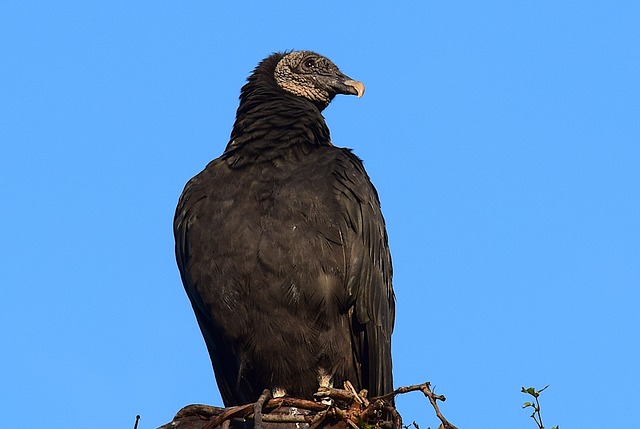
My God, just listen to what I learned! These vultures… well, they're creepy, just creepy! Imagine them circling over abandoned buildings like some kind of sinister witches, only pitch black. And they stalk turkeys, these turkey vultures, yes, to snatch something edible from them, hissing at them like angry cats. But it turns out it's just for fun for them!
The real nightmare begins when it comes to farms in Kentucky. That's where they show their true colors. The farmers there are in a panic, frankly! They say these birds like to... you know, mess around with newborn calves. First, you see, they jump up and down like crazy to "make" the calf "comfortable," and then... then the worst happens. They'll peck out its eyes, then its tongue, and then—well, everything they can. And all this in literally a couple of minutes!
And even worse – they attack the ewes when they're giving birth! Can you imagine?! Like some kind of surgeons, they carefully peel off the mother's skin to feast on both her and the lamb. It's simply hair-raising! I understand that nature is a cruel thing, but this… this is too much, to be honest.
And here's the worst part: there's nothing you can do about them! The Migratory Bird Treaty Act, you see. You can't touch them without federal permission. Well, unless you're a legal genius and can prove they're not just birds, but the embodiment of evil itself.
Of course, they have their usefulness—they're said to be quite good at scavenging roadkill. But you know, when you think of the calf and the sheep… it's hard not to think of them as some kind of evil that has flown out of the night. As if the darkness itself has turned into feathers and a beak. Simply terrifying! I now look at birds with apprehension, frankly. I never would have thought such seemingly harmless creatures could be so… bloodthirsty. What do you think?
1. Duck

Who doesn't love ducks? These cute creatures with their innocent quacking and bright plumage... But you know what? There's a dark, not-so-cute secret that few people think about. And I'm about to tell you about it, so brace yourself.
The thing is, male ducks, these drakes, are among the birds that have penises. And not just that, but, imagine, they're in the top 3%! And, relative to body size, they're champions among all vertebrates. Honestly, it's simply unbelievable! The Argentine lake duck, for example, boasts a penis that's a full four inches longer than its body! This is pure science fiction, not reality.
And that's not all! The most interesting thing is the shape. They're twisted... like a corkscrew! As if someone designed this mechanism specifically. Imagine a twisted pig tail, only ten times tighter. And how can I describe it... it's like choosing a sex toy from a vending machine in some crazy alien bar! Ribbed, rough, even jagged! Well, I don't know what you think, but I think that's a bit much.
And herein lies the crux of the matter. All these evolutionary refinements, all these adaptations... All of this, oddly enough, developed... for the female's pleasure. Yes, you heard right. To keep her from running away. Can you imagine the dilemma this poses for the males? After all, most duck species have more drakes than hens. Which means not all of them get their fill of a girl's affection. So what do they do? Unfortunately, they resort to... well, let's say, not the most pleasant methods. Often, to very cruel, and even deadly, group actions.
This is so ingrained in their nature that the male reproductive organ literally evolved to... well, to lock itself in place. It's like some kind of sexual arms race! And, as is typical in any race, the other side has its own defenses. In females, for example, the reproductive organ may have a spiral pointing in the opposite direction, or "dead-end side pockets" to, so to speak, intercept unwanted sperm.
I don't know about you, but I'm shocked. Who would have thought that behind those cute quacking sounds and fluffy feathers lies such a complex, dark, and, frankly, creepy story? I'll have to look at ducks in the park differently now... and, frankly, be a little scared.