








Everyone wants to be a genius, but only a few have the ability to achieve it through hard work and dedication. Some are born with a brain developed enough to be called geniuses. These are people whose futures seem promising from the start. But history shows that not all of them live long enough to realize their full potential. Some don't even make it past adolescence. Here's a list of ten such people in history whose potential was wasted.
1. Évariste Galois was a great mathematician who laid the foundations of abstract algebra and made astonishing contributions to mathematics, but died at the age of 20 in a duel.

The French mathematician Évariste Galois was born in Bourg-la-Reine on October 25, 1811. At the age of 12, he entered the Lycée Louis-le-Grand, but by 14, he had become bored with his studies. Mathematics remained his only interest. By the age of 15, Galois was already studying the original works of the famous 18th-century mathematician Joseph-Louis Lagrange. At 18, Galois began publishing his work.
On May 30, 1832, 20-year-old Évariste Galois took part in a rash duel. The true motives for the duel remain unclear, but Galois was convinced of his imminent death. Therefore, the day before the duel, he stayed up all night, jotting down numerous mathematical ideas and sending them to his friend Auguste Chevalier. During the duel, Galois was wounded in the stomach. A few hours later, he was discovered by a peasant who took him to the hospital. Before he died, he spoke to his brother Alfred: "Don't cry. It will take all my courage to die at 20.". (1,2)
2. Mozart's sister, Maria Anna Mozart, was a musical genius like her brother, and sometimes during their childhood tours, she was given the leading role, surpassing her brother's. But as soon as she reached marriageable age, her parents forced her to stop performing and settle down.

Maria Anna Mozart, Wolfgang Amadeus Mozart's older sister, was a talented musician like him. When Mozart was very young, Maria Anna (four and a half years older) was his idol. Her father, Leopold Mozart, began teaching her the harpsichord when she was seven years old. According to Maynard Solomon, "At the age of three, Mozart became inspired to study music by watching his father teach Marianne; he wanted to be like her.".
To showcase Maria and her brother's talent, their father took them on tour to many cities, such as Vienna and Paris. She was known as an excellent harpsichordist and pianist. Early in her career, she sometimes landed leading roles. But from the age of 18, her parents forbade her from touring and demonstrating her artistic talent. This was due to the societal expectations of the time, which held that a girl of marriageable age was expected to marry. (source)
3. Henry Moseley was an exceptionally gifted English physicist who died in the Battle of Gallipoli during World War I. He made numerous contributions to physics before volunteering for the British Army's Royal Engineers. He was only 27 years old when he was shot and killed in action.
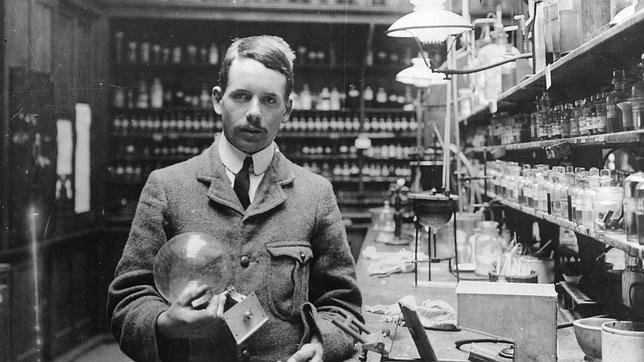
English physicist Henry Moseley was born in 1887. His love of physics began early. During his school years, he found physics lessons too easy and began studying the subject on his own. After graduating from Trinity College, Oxford University, he joined Ernest Rutherford's research group in 1910. There, he invented an atomic battery, calling it a radium battery. In 1913, using homemade equipment, he proved that the identity of each element is uniquely determined by the number of protons it contains. This allowed him to predict the existence of four new chemical elements.
In 1914, he planned to return to Oxford, but World War I began in August 1914. Moseley enlisted in the British Army's Royal Engineers. Initially, in April 1915, he served as a technical liaison officer during the Battle of Gallipoli, which took place in Turkey. On August 10, 1915, he was shot in the head by a Turkish sniper while transmitting military orders over the telephone. He was only 27 years old at the time of his death. (1,2)
4. Srinivasa Ramanujan was an Indian mathematician who had virtually no formal training in pure mathematics but composed approximately 3,900 identities and equations. He died of tuberculosis at the young age of 32.

In 1913, the English mathematician G. H. Hardy received a strange letter from an unknown clerk in Madras, India. The ten-page letter contained approximately 120 statements of theorems. He passed them on to his colleague J. E. Littlewood. Within hours, they concluded that the results "must be true, because if they were not true, no one would have had the imagination to invent them." The unknown clerk was none other than Srinivasa Ramanujan. Hardy responded enthusiastically and invited Ramanujan to England in 1914. Ramanujan's arrival in Cambridge marked the beginning of a highly successful five-year collaboration with Hardy. He was struck by Ramanujan's remarkable formal intuition in dealing with infinite series and continued fractions.
Although Ramanujan's time in England was mathematically productive, the country's climate and culture took a toll on his health. He belonged to the upper Brahmin caste, so he avoided non-vegetarian food. However, in England, obtaining purely vegetarian food was quite difficult, so he had to cook for himself. Wartime food shortages only worsened the situation. In 1917, he was hospitalized, but by the end of 1918, his health had improved. He returned to India in 1919, but his health deteriorated again, and he died the following year. (source)
5. Niels Henrik Abel, a Norwegian mathematician, made pioneering contributions to a variety of fields but remained virtually unrecognized during his lifetime. He died at the age of 26 from tuberculosis. The Abel Prize in Mathematics is named in his honor.

Niels Henrik Abel was born on August 5, 1802, in Nedstrand, Norway. At the age of 15, his mathematical talent was noticed by his mathematics teacher, Brent Michael Holmboe. In 1820, his father died, leaving the family in dire circumstances. But his mathematics teacher contributed and raised funds that allowed Abel to continue his studies and obtain a preparatory degree from the University of Kristiania in Oslo. His first scientific papers were published in 1823.
He published a number of papers before 1828, but remained virtually unrecognized during his lifetime. He made his discoveries while living in poverty. In 1828, he contracted tuberculosis in Paris. He died on April 6, 1829, just two days before a letter from August Crell arrived. Crell had succeeded in appointing Abel as a professor at the University of Berlin, but the good news came too late. (1,2)
6. Brandenn Brenner was a child prodigy, learning to read independently at 18 months. He began playing the piano at age three and graduated from high school at age ten. At age 14, he committed suicide by shooting himself in the head.

Brandenn E. Bremmer was the epitome of a child prodigy. At the age when children typically learn to pronounce words, Brandenn began reading. At age three, he could complete the schoolwork of an average first-grader and even play the piano. At age ten, he graduated from high school. At eleven, he entered college and studied to become an anesthesiologist. His life promised great promise. But on March 15, 2005, at the age of 14, Brandenn committed suicide by shooting himself in the head with a firearm. (source)
7. Nicolas Léonard Sadi Carnot was an extremely influential French physicist credited with founding thermodynamics. Tragically, he died of cholera at the age of about 30, and his house and all his unpublished research burned down.
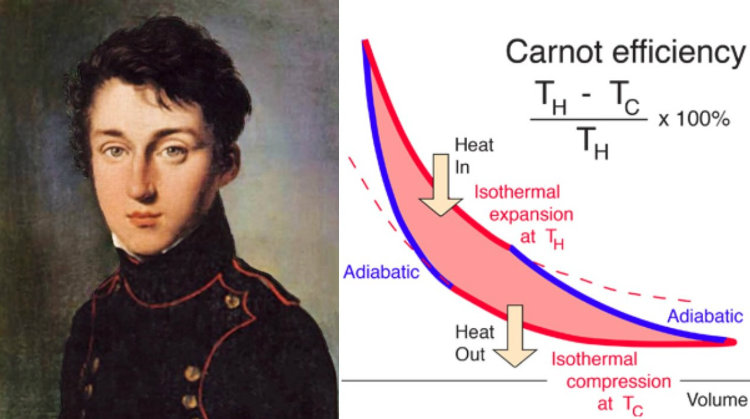
French military engineer and physicist Sadi Carnot is often called the "father of thermodynamics." He is known for his description of the Carnot cycle, which is related to the theory of heat engines. At the age of 16, he entered the École Polytechnique and graduated in 1814. He soon became an officer in the engineering corps of the French army. In 1819, Sadi transferred to Paris and remained in military service. There, he devoted most of his attention to personal intellectual pursuits and received only two-thirds of his pay. Carnot befriended the scientist Nicolas Clément and attended lectures on physics and chemistry. He soon became interested in improving the performance of steam engines. This led him to research that formed the basis of his works "Reflections on the Driving Force of Fire", published in 1824.
Carnot left the army in 1828 without a pension, calling himself a "steam engine designer in Paris." In 1832, he was admitted to a private psychiatric hospital, suffering from "mania" and "general delirium." He died of cholera shortly thereafter at the age of 36. (1,2)
8. Branwell Brontë, brother of writer Emily Brontë, was considered a child prodigy in his family. But he squandered his potential on alcohol and drugs before dying of tuberculosis at the age of 31.

Patrick Branwell Brontë, born June 26, 1817, was the fourth of six children and the only son of Patrick Brontë. His sisters attended school, but he was strictly educated at home by his father. Brontë read a lot in his youth. In January 1829, at the age of 11, he began publishing a magazine in which he published his poems, plays, criticism, histories, and dialogues. In 1834, he painted a portrait of his three sisters. He included his own portrait, but was dissatisfied with it and painted it over. Branwell was a talented writer, but not a genius like his sisters. His father wanted him to succeed to support his sisters. He experienced great embarrassment when he failed. His riotous drinking and drug abuse also contributed to his failures.
In January 1843, Branwell took a job as a tutor in Thorpe Green and fell in love with his employer's wife, who was 15 years his senior. After his employer's death, his wife made it clear to Branwell that she had no intention of marrying him. He then "sunk into chronic alcoholism, opiates, and debt." His behavior became increasingly unbearable and disgraceful to his family. On September 24, 1848, Brontë died of tuberculosis complicated by delirium, alcoholism, and addiction to laudanum and opium. However, the death certificate lists only "chronic bronchitis-marasmus" as the cause of death. (source)
9. William James Sidis was an American child prodigy with exceptional mathematical abilities and claimed to speak more than 40 languages. He entered Harvard at age 11 but eventually abandoned mathematics entirely and wrote on other topics under various pseudonyms.

William James Sidis, born in Boston in 1898, became known as a child prodigy in the early 20th century. He possessed a remarkable intellect, with an IQ estimated to be 50 to 100 points higher than Albert Einstein's. By the age of two, he could already read and type letters in English and French. He wrote one such letter to Macy's, inquiring about toys. At age 11, he entered Harvard and graduated at 16. with honors .
After leaving Harvard, he briefly taught mathematics at what is now Rice University in Houston, Texas. His fame and the fact that he was younger than all his students created difficulties for him. Under this pressure, he quit and returned to Boston. Soon, he began moving from city to city, changing jobs, constantly changing his name to avoid detection. During this time, he is believed to have written dozens of books under pseudonyms. In 1937, The New Yorker magazine published an article titled "April Fools' Day!" which described in humiliating detail William's fall from grace. Sidis sued The New Yorker, And the case was eventually settled seven years later. But the damage had already been done. In the summer of July 1944, William's landlady found him unconscious in his small Boston apartment. He never regained consciousness and was pronounced dead at the age of 46. (1,2)
10. Antoine Lavoisier, considered the "father of modern chemistry," was responsible for transforming alchemy into chemistry, but was executed during the French Revolution by a political enemy. The judge who sentenced him declared that the revolution had no need of scientists.

Antoine Lavoisier, the "father of modern chemistry," was a French nobleman and chemist. His achievements include discovering the role of oxygen in combustion, as well as recognizing and naming oxygen and hydrogen. He helped create the metric system and predicted the existence of silicon. He was also the first to establish that sulfur is an element.
In addition to being a chemist, he was an influential member of several aristocratic councils and an administrator of the General Farm. When the French Revolution began in 1789, he chose to remain in France rather than go abroad. At the height of the Revolution, he was accused of selling adulterated tobacco. In May 1794, he was guillotined. After his death, his contemporary, Joseph-Louis Lagrange, remarked, "It took them only an instant to cut off this head, and perhaps another like it will not appear for a hundred years.". (1,2)