









The world is noisy, so noisy, in fact, that even things you thought were quiet make all sorts of frantic sounds. Some are strange, others are frightening. Here are 10 of the most unexpected.
10. You, when you think you are silent

Even meditation masters and seasoned ninjas can't completely silence the body—at least, according to science. It always makes noise. You just don't hear it because, like noise-canceling headphones, the brain tunes it to distinguish itself from others.
Neuroscientists have studied this mechanism in electric fish, most species of which have an electrosensory lobe that receives electrical signals both from within the fish and from its surroundings. It can distinguish between these by subtracting electrical signals corresponding to input related to the fish's behavior, such as motor signals. The flicking of one's own tail while swimming, for example, won't register as the same as something else flicking its tail nearby. A similar mechanism exists in the mammalian brain, called the dorsal cochlear nucleus (DCN), which subtracts sounds corresponding to our movements from the general auditory input.
9. Ants

Ants usually communicate using chemical signals, but that's not the only way. They also chirp. And it sounds a bit like maniacal laughter.
The sounds are produced by what's known as "stridulation," the scraping of the abdominal appendage against ridges on the back—much like a spoon on a washboard. Workers sound different from queens; their chirps are slightly lower pitched. Therefore, when workers hear the queen, they become more attentive. Researchers have actually found that they will stand guard around a speaker playing the queen's sounds, maintaining a "hunched posture with antennae and slightly open mouth" for several hours.
Caterpillars Maculinea Rereli They exploit this vulnerability by mimicking the queen's sounds and odors to infiltrate colonies and steal royal treatment, including feeding and grooming. Beetles also mimic ant calls to enter nests.
8. Giraffes

Okay, so you might not have thought giraffes were silent, but consider this: what sound do you think giraffes make? Until recently, biologists assumed giraffes made sounds that humans couldn't hear, like the infrasonic "secret language" of elephants. However, more recently, research has shown that giraffes produce a clearly audible (92 Hz) humming sound. But they only make this sound at night.
It's believed that this humming is how giraffes maintain contact in the dark. However, there's an alternative explanation: it's the sound of giraffes snoring or talking in their sleep.
7. Fish
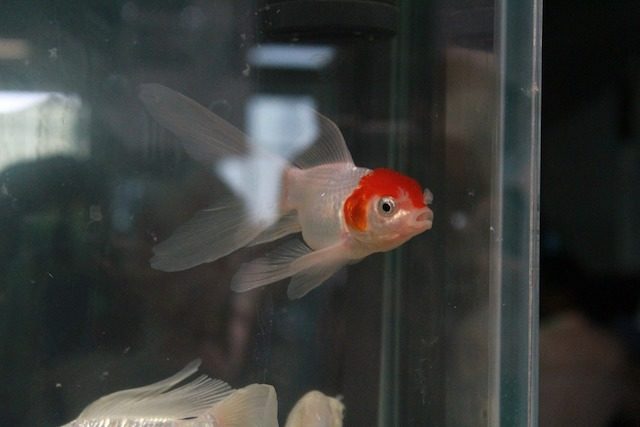
Although fish don't have vocal cords, they do make sounds—and we don't just mean swimming and splashing. In fact, thousands of the world's approximately 34,000 fish species are thought to make noise. Just under 1,000 of them have been documented. You can listen to them here.
Sounds are produced by the friction or clicking of bony structures against each other, or by striking the swim bladder like a drum, among other mechanisms. For example, two species of rays, previously thought to be silent, produce clicking sounds. As in other animals, these "vocalizations" are used to communicate reproductive and territorial information. And because sound travels much faster in water, fish are relatively louder than land and airborne animals; their signals travel much further.
Perhaps the strangest and most terrifying fish noise of all is that of the three-spined toad, which "cries like a baby.".
6. Marine worms

It's probably fair to say you don't think about sea worms at all; but if you do, you probably don't think they make noise. But they do. And, in fact, it's one of the loudest sounds of any sea creature.
Polychaetes, or bristle worms, are less than 3 centimeters long and are usually silent, hiding in the burrows of sea sponges. However, when threatened, they open their pharyngeal muscles to create a bubble, then release the pressure with a shockingly loud "battle pop" of 157 decibels.
By comparison, the cry of a blue whale—the loudest on Earth—is 180 decibels. A jet plane taking off is 140 decibels. A human eardrum ruptures when exposed to 160 decibels. But the crack of a sea worm is nothing compared to the crack of a snapping shrimp, which, at 189 decibels, is capable of breaking glass.
5. Plants

It took science some time to catch up with what intuition had been telling us for millennia: plants can talk. A 2019 study actually recorded their vocalizations, the "ultrasonic screeches" of plants being cut. Sounds at a frequency of 20-150 kHz, beyond the range of human hearing, emanated from tobacco and tomato plants and were recorded over the course of an hour of cutting. The tobacco plant emitted 15 sounds, and the tomato plant 25. But they don't only make noise when they're cut. The researchers noted that "even happy, healthy plants occasionally made noise.".
So, the next question is: do they hear? According to a 2013 article, more research is needed in this area, as the evidence suggests the answer is yes. Beyond anecdotal reports of plants being sung to stimulate vigorous growth, there are numerous (albeit outdated) scientific reports of plants germinating and growing at different rates in response to sounds of varying frequencies.
4. Bacteria

Although 10 billion times softer than a punch hitting a punching bag, the nanoscale beating of bacterial flagella (tails) can be amplified and heard as sound. These sounds can help scientists determine whether certain bacteria are resistant to antibiotics, a serious problem for a global population increasingly resistant to treatment.
Bacterial beating is recorded on a graphene-coated drum, the membrane of which is only a single layer of carbon atoms thick. This allows even the infinitely quiet sound of a single bacterial flagellum to be recorded. When exposed to antibiotics, the beating either stops after a couple of hours or does not, which tells us whether these treatments will work.
Viruses can also be converted into sound, but in a different way and for no more than entertainment purposes. The COVID-19 DNA sequence, for example, has been translated into music that sounds like synth-pop or classical music.
3. Cells

Cells don't just produce sounds or "songs"; an entire branch of science is dedicated to their study. Sonocytology is the study and application of nanoscale cellular vibrations. Since each individual cell type sings its own song, which changes under stress, these vibrations can be used for the early detection of diseases.
Researchers from the University of Manchester, for example, distinguished between healthy and cancerous prostate cells by irradiating them with infrared light and recording their "squeals." It's like comparing two large orchestras, one with an out-of-tune tuba—there's a difference, but it's hard to listen to. In fact, the cells sound more like a "piercing scream." According to Andrew Pelling of University College London, "If you listen to it for too long, you'll go crazy.".
Fortunately, they are inaudible to the naked ear. Sonocytologists record the sounds using an atomic force microscope, which touches the cells with a small tip to record vibrations—similar to how a record player's needle reacts to the impact of a gramophone record.
2. Space vacuum

It's a common misconception that outer space is silent. While it's true that no one can hear you scream in space, scientists have detected several eerie extraterrestrial sounds. And we're not just talking about those eerie planetary radio waves converted to sound. We're talking about actual sounds (or evidence of them).
Of course, space is mostly a vacuum, so sound waves can't travel through it. But around the supermassive black hole in the Perseus galaxy cluster, there's enough hot gas and plasma for sound waves to pass through. Needless to say, we don't have powerful microphones or are close enough to pick them up, but the sound waves are unmistakable.
The heart-wrenching baritone of the Perseus black hole, extracted from the data, was 57 octaves below middle C—so deep that its frequency had to be increased quadrillions (millions of billions) times to make it audible.
1. Silence

Even silence isn't quiet—at least not to the human brain. Anechoic chambers, with walls designed not only to block noise but also to capture and muffle any noise in the room, are the quietest places on Earth. The quietest of these belongs to Microsoft, which holds the world record at -20.6 decibels (compared to about 40 in a quiet house).
However, people sitting in these places for any length of time report not a peaceful silence, or even an unsettling silence, but a multitude of strange and terrifying sounds. Normally inaudible bodily sounds, for example, suddenly intensify: "spontaneous stimulation of the auditory nerve can cause a piercing hissing"; people hear their blood pounding; "a symphony of their digestive system's gurgling and chattering"; their breathing, and so on.
But that's just the beginning. Sit in complete silence for an hour or more, and you'll also begin to hear all sorts of disembodied sounds: swarms of bees; old pop songs; wind in the trees; sirens...