








PinRedditShareTweetEmailWhatsApp0 Shares
In this world, you can't move or wave your hand without bumping into something made of chemicals. This cat is made of chemicals. The air you're waving it through is also made of chemicals. Even though we tend to think of chemicals as dangerous, like acids or volatiles created in laboratories, simple things like water are still chemical compounds, having a simple chemical formula. But you're not here for boring, ordinary chemicals. You're here for the extraordinary.
10. Firefighters use a chemical called "wet water.".

Most of us are familiar enough with fire to know that water is a good weapon against it, with the exception of electrical or grease fires. When we see firefighters responding to a fire, we expect them to use a fire hose spraying water to extinguish the flames. It turns out that's not always the case.
Firefighters sometimes resort to using a chemical known as "wet water" to fight fires. No, that name doesn't help explain the difference between this chemical and actual water, which also seems to be quite effective at wetting objects. However, it's a completely different substance.
"Wet water" technology emerged in the 1960s and involves adding chemical wetting agents to regular water. These chemicals, typically emulsifiers, reduce the surface tension of the water and allow it to penetrate deeper. Furthermore, the water spreads more easily, making it more effective at extinguishing fires. In practice, this effectively makes the water "wet.".
9. Walnuts produce a toxic chemical called juglone.
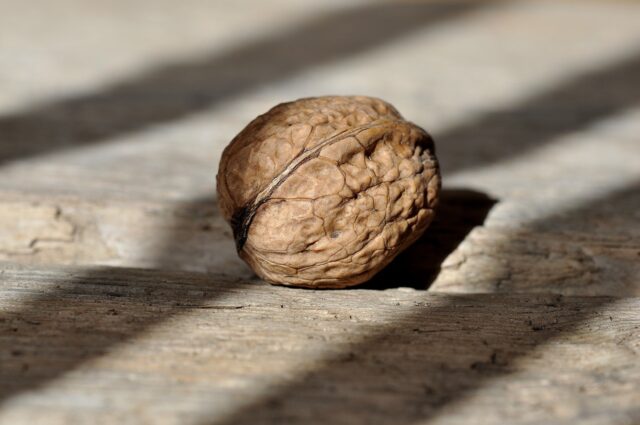
Walnuts are one of those second-class nuts, much rarer than pecans or almonds. They have their place in the food industry, but they're not the crown jewel of the diet. However, when it comes to curious chemical processes, walnuts take center stage.
Walnut trees produce a chemical called juglone. Juglone is very harmful to other plants and causes what's known as "walnut wilt." If plants such as tomatoes, potatoes, raspberries, carrots, beans, and a number of others are planted too close to a walnut tree, they are doomed. Juglone can spread up to 80 feet from the base of the tree and kill almost all plants within that radius.
This chemical works insidiously. It essentially suffocates other plants, preventing the exchange of carbon dioxide and oxygen. The only way to combat it is to separate the plants from the walnuts.
Be warned, this is also potentially dangerous to humans. Some people experience a severe allergic reaction, and touching the nuts or leaves can cause red blisters. Inhaling sawdust can also cause lung damage.
8. Sodium citrate is a chemical pun.
You might be vaguely familiar with the name sodium citrate. It's one of those substances you'll often see on the ingredient list of many products, somewhere at the bottom, among various preservatives and other unnatural-sounding ingredients. It's best known as an ingredient in some cheese products.
If you want a smooth and creamy cheese sauce, like for nachos, sodium citrate is the chemical to get it. To be clear, this is the same sauce you find at your local 7-Eleven or in a jar at Walmart when you need a creamy, gooey, cheese-like dip for your corn chips.
Sodium citrate is an emulsifier. It makes cheese sauce creamier while reducing acidity. It allows the cheese to remain liquid without separating, which may be familiar to you if you've ever tried to simply melt cheese without any additives to make your own sauce.
So what makes sodium citrate so interesting? There are many emulsifiers in the world, but sodium citrate is the only one whose chemical name is a play on words. This chemical compound consists of six sodium atoms, five carbon atoms, five hydrogen atoms, and seven oxygen atoms. You might remember the chemical symbols for each of these elements in order: Na, C, H, O. Yes, that makes Nacho.
7. Resiniferatoxin is 10,000 times hotter than the world's hottest pepper.

If you love spicy food, you may know that the X pepper is the hottest pepper in the world. It's a special hybrid pepper, bred specifically for its heat, and it measures a whopping 2,693,000 Scoville units. For comparison, Sriracha sauce ranges from 1,000 to 2,200 Scoville units. Frank's Red Hot Sauce is only 450 Scoville units. Keep this in mind when discussing resiniferatoxin.
Resiniferatoxin is derived from cacti, not common spices. It has a Scoville value of 16 billion. It's powerful enough to destroy nerve endings, and that's precisely what it's intended for—not as a food additive, but as a potential pain reliever. If it can deprive a person of the ability to feel pain, it could help people suffering from chronic pain conditions live more comfortably. Its potential benefits for cancer patients are currently being studied.
What happens if a person ingests this for some reason? According to popular belief, one to two grams can cause serious internal damage and possibly even death.
6. Cadaverine is the name of the chemical smell of rotting corpses.
Have you ever smelled death? Whether it's the smell of roadkill or spoiled food, the odor of a once-living creature now decomposing is almost impossible to ignore. The smell of rotting plant matter, like swamp soil or old food, is unpleasant, but there's something far more repulsive about the smell of dead things.
The smell of a decomposing carcass is a highly complex chemical mixture. Researchers have identified over 800 compounds in the odor of death. In particular, humans are particularly sensitive to the smell of a decomposing carcass: cadaverine and putrescine. Other animals, such as rotting pigs, do not produce these substances.
As unpleasant as it may sound, we've found a commercial use for the smell of decomposing corpses—in haunted houses. Only the best haunted houses pay for such things, but different scents can be mixed so that visitors passing through the house experience the stench of real corpses while being chased by people in zombie makeup.
5. The taste of DMSO can be felt by touch.

Dimethyl sulfoxide (DMSO) is a solvent widely used commercially for a variety of applications. It also has medical applications, being used for cryptopreservation of stem cells and as a drug delivery vehicle. Some even claim it has pain-relieving properties, as it is used to treat horses, although medical research has not confirmed this in humans.
What's interesting about DMSO isn't its use, but its curious properties. It's a byproduct of pulp and paper production, and it has an odor. Nurses who have reported the chemical odor in oncology wards say it can cause headaches and even stomach aches.
Contact with DMSO causes a garlicky odor on the skin in some patients. Even more surprising is that even just touching it can give you a taste. A little DMSO can get on your finger, and soon you'll notice a garlicky taste in your mouth. It's quickly absorbed through the skin and then enters the bloodstream, where it can be excreted by the tongue and inhaled into the lungs, causing a garlicky taste and bad breath. Depending on the amount absorbed, you may experience the garlicky taste and smell all day long.
4. A chemical substance that gives raspberries their flavor has been discovered in space.

Ethyl formate is a so-called ester. These organic compounds are found naturally in all kinds of foods and impart aroma and flavor. In the case of ethyl formate, it smells like rum and tastes like raspberry. In fact, it's one of the compounds in raspberries that gives them their unique flavor. Synthetic versions, created in laboratories, are used to flavor a wide variety of fruit drinks, including alcoholic ones.
While this phenomenon can be found everywhere on Earth, it's even more fascinating beyond Earth. If you've ever looked at an image of the Milky Way galaxy, you've likely noticed this giant, hazy cloud at the center, which partly gives the Milky Way its name. This is the Sagittarius B2 dust cloud.
This cloud is approximately 150 light-years in diameter. It also contains 10^27 liters of 200% alcohol. As you may recall, ethyl formate is used to flavor alcohol, and it's also present in this same gas cloud. This means that the heart of our galaxy is a raspberry-flavored alcoholic cocktail. Unfortunately, it's incredibly rarefied in the gas space, so it would take a considerable effort to collect it all and taste it.
3. Bees produce isoamyl acetate, which is also found in bananas.

Bees in a hive use chemical signals to communicate with each other. Queen bees secrete pheromones, which is how the drones know where to find her. Similarly, when the hive is threatened, the drones must communicate the danger to each other so that action can be taken.
In the 1790s, François Hubert noticed that after a bee stings, other bees soon arrive to sting a person. He wanted to find out how other bees recognize that the first bee, which died while stinging, posed a threat.
It wasn't until 1962 that Canadian researchers identified the chemical secreted by bee stings that attracted other bees to attack. The compound they isolated turned out to be isoamyl acetate. It also smelled suspiciously of bananas.
Paradoxically, isoamyl acetate is found in bananas, but this was only discovered later. It is still used to produce banana-flavored products. However, despite the connection between the two, there is no evidence that banana scent causes aggression in bees.
2. Pyrazine can be found in bell peppers even in tiny doses.

If you love the flavor of bell peppers, you might like this. If not, you'll be completely disappointed. The chemical that gives bell peppers their flavor is called pyrazine. This compound is sometimes found in wine, as it can be present in the skins of some grape varieties and detracts from the overall aroma and flavor of white wines.
It's a powerful flavor enhancer in its own right. In fact, you can detect its flavor even at incredibly low concentrations of 0.2 parts per billion, though some sources suggest 0.002 parts per billion. A single drop can impart a peppery flavor to five entire swimming pools. And what about lower concentrations? They can be detected at two parts per trillion.
1. Artificial grape flavoring is created using methyl anthranilate.
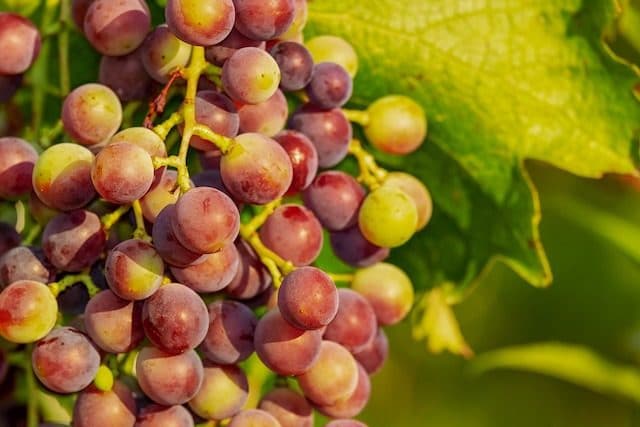
Do you like grape candies or grape soda? You may have noticed that many delicious drinks with artificial flavors don't actually taste like grape at all. They taste like grape, but they don't quite live up to the billing, do they?
Artificial grape flavoring is made from a chemical called methyl anthranilate. Doesn't sound very appetizing, does it? We could go on and on about artificial flavorings, how awful they are, and so on.
This chemical was first isolated in the 1890s, and at the time, chemists used orange blossoms to extract it. After isolating it, they assumed it smelled like grapes. If it smelled like grapes, why not use it to flavor grape candies, sodas, and the like?
In a completely unexpected turn of events, methyl anthranilate was successfully produced artificially using byproducts of the coal industry. Sounds tempting, doesn't it? This simplified its mass production.
A few years later, scientists, seeking a more authentic grape flavor, turned to real grapes. An ingenious idea, right? Guess what chemical they isolated from grapes? Methyl anthranilate. It turns out it smells like grapes, because that's what gives grapes their grape smell.
The irony, of course, is that most of us don't think this stuff tastes like grapes. But that's partly because we're not eating the same grapes people ate in 1890. Back then, people mostly ate dark purple grapes, like Concords. The regular red and green grapes we eat today were never native to America and were rarely eaten back then. Plus, they don't contain methyl anthranilate, so they never had a chance of tasting like artificial grapes.
Other articles that may interest you