








«"A coincidence is a striking occurrence of events with no apparent cause or effect." ~ Oxford Dictionary. Many of us experience numerous coincidences in our lives. There are also those random coincidences that make us wonder, "How?" Some questions remain unanswered. Some consider coincidences a sign from God, while others ignore the coincidence of events. Here is a list of some striking coincidences in history:
1. Typhoons twice stopped Mongol invaders between 1274 and 1281, saving Japan from conquest.

A typhoon saved Japan from the Mongols. The Mongols managed to conquer the islands of Iki and Tsushima, but samurai clans attacked them in Hakata Bay, forcing them to return to their bases in China. After regrouping and during their return, the typhoon claimed the lives of hundreds of soldiers. Furthermore, after the first invasion in 1274, the Japanese built a two-meter-thick wall along the coast.
In 1281, the second Mongol invasion occurred. This time, the number of ships and soldiers was astonishingly large, and it is still considered the largest attempted naval invasion in history. The fleet, numbering over 4,000 ships, carried over 140,000 soldiers. Due to the presence of a two-meter-thick wall on the coast, the Mongols were forced to remain at sea for several months. A few months later, another typhoon caused massive destruction to the invading fleet. The Japanese named this typhoon "« Kamikaze »", which means "divine wind". (source)
2. Writer, entrepreneur, and lecturer Mark Twain was born when Halley's Comet passed close to Earth in 1835 and died when it passed close to Earth again, 74 years later.
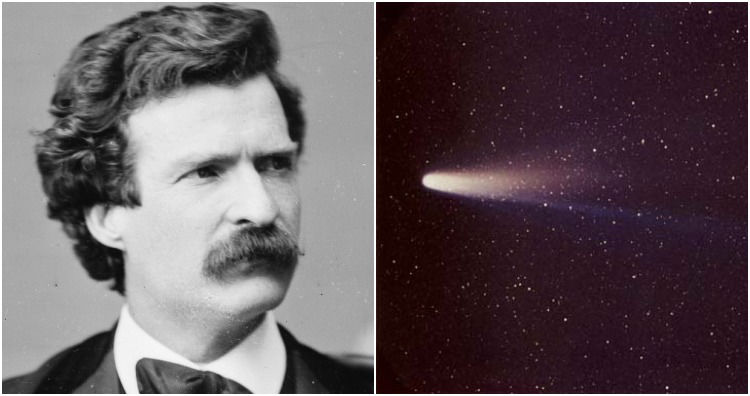
Samuel Langhorne Clemens, or Mark Twain, the author of such famous classic works as «Tom Sawyer »" And «The Adventures of Huckleberry Finn, Mark Twain was born in 1835, two weeks after Halley's Comet passed close to Earth. Halley's Comet is a "short-period" comet, visible every 74 to 79 years. Mark Twain, who was also a humorist, lecturer, and entrepreneur, predicted that he would die when Halley's Comet was visible again.
«"I arrived with Halley's Comet in 1835. It will arrive again next year, and I expect to fly away with it. It will be the greatest disappointment of my life if I do not fly away with Halley's Comet. The Almighty has surely said, 'Here are two inexplicable phenomena; they arrived together, they must go away together.'".
Halley's Comet was visible again on April 20, 1910. Mark Twain suffered a heart attack and died the following day. (source)
3. Thomas Jefferson and John Adams died on the same day, July 4, the 50th anniversary of the signing of the Declaration of Independence.

John Adams, the second President of the United States (1797-1801), and Thomas Jefferson, the third President of the United States (1801-1809), coincidentally died on the same day—July 4, 1826, the 50th anniversary of the Declaration of Independence. These two true patriots passed away just five hours apart. They were the last of the American revolutionaries who fought against the British and created a new political system. Their relationship was fraught with tension due to differing views. However, Thomas Jefferson overcame this barrier and sent them a New Year's greeting on January 1, 1812. John Adams responded gratefully, and their friendship, forged during the Revolution, was renewed. Two great friends and two great leaders departed this world on the same day. (source)
4. Tsutomu Yamaguchi, a Nagasaki resident, was on a business trip to Hiroshima. On the day the atomic bomb fell, he was caught in the blast. Miraculously, he survived and returned home. He then returned to his hometown of Nagasaki, was caught in the second atomic blast, and also survived.
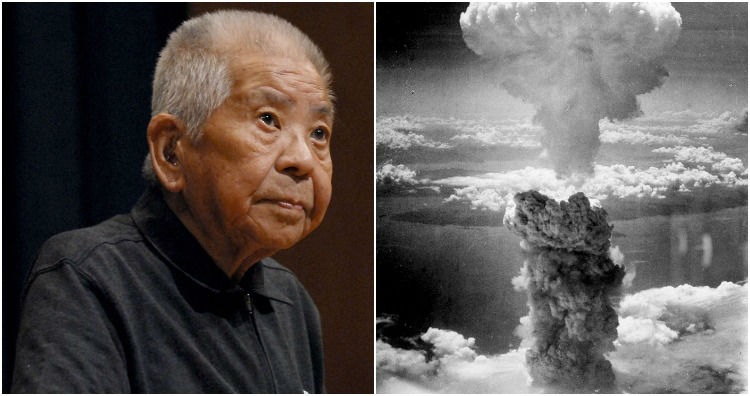
During World War II, the first atomic bombs in human history were dropped on Hiroshima and Nagasaki. Tsutomu Yamaguchi, who was living in Nagasaki at the time, was in Hiroshima on a business trip. He was preparing to leave for Nagasaki with two of his colleagues, Akira Iwanaga and Kuniyoshi Sato. Yamaguchi realized he had forgotten his Hanko (a seal allowing him to travel), so he returned to work. On the way, just three kilometers from Hiroshima, the "Little Boy" atomic bomb fell in the city center, making Yamaguchi one of the many victims of the first atomic bomb, which exploded in Hiroshima on August 6, 1945. He saw the bombers, temporarily lost his sight, and suffered several severe burns. However, he survived and returned to his hometown of Nagasaki the next day. Fortunately, his colleagues also survived the explosion.
On August 9, 1945, he returned to his office in Nagasaki and reported on the attack on Hiroshima, when the "Fat Man" atomic bomb exploded in Nagasaki. Coincidentally, he was again three kilometers from the bomb's release site. Miraculously, Yamaguchi survived the second atomic blast, this time without injury. He lived a peaceful life until 2009, when he was diagnosed with stomach cancer. He died on January 4, 2010, at the age of 93. (source)
5. The Great Chicago Fire, the Peshtigo Fire, the Great Michigan Fire, and the Port Huron Fire all occurred on the same night.
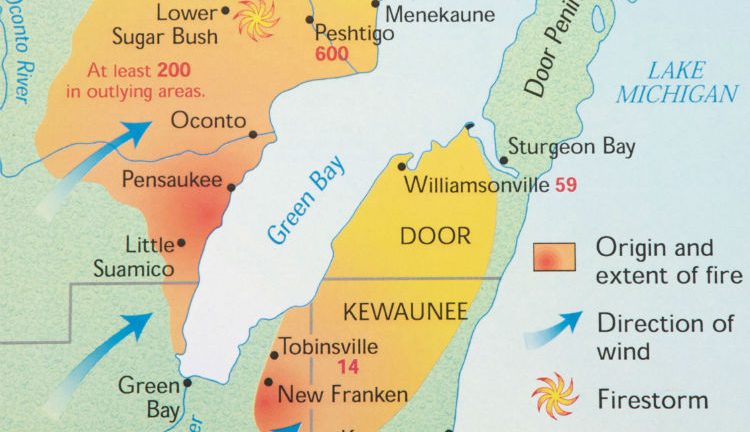
October 8, 1891, is also known as "the day America burned." The evening was dry, the ground parched. For two days, fires of unknown cause raged in Chicago and Peshtigo, Illinois. This was the Great Chicago Fire, which killed over 300 people and caused massive property damage. It was one of the largest fires in recorded history. That same night, an even larger fire occurred, considered the largest wildfire in history, killing over 1,500 people. The Great Michigan Fire and the Port Huron Fire occurred on the same night, likely due to heat waves from Chicago and Peshtigo. The causes of the Great Chicago Fire and the Peshtigo Fire remain unknown. However, one theory holds that they were caused by the impact of fragments of Comet Biela, which has not been observed since. (1,2,3,4)
6. Robert Lincoln, son of Abraham Lincoln, coincidentally was either present or nearby when three presidents were assassinated: Abraham Lincoln, James A. Garfield (whose assassination he witnessed), and William McKinley.
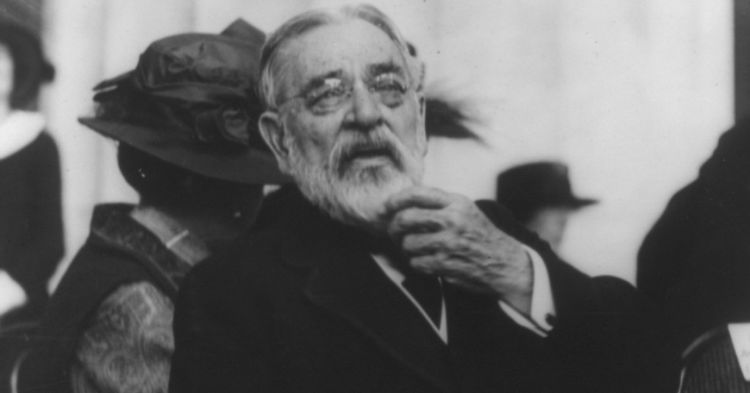
Robert Todd Lincoln, son of US President Abraham Lincoln, was the 35th US Secretary of Defense. Coincidentally, he was nearby during the assassinations of Presidents Abraham Lincoln, James A. Garfield, and William McKinley.
The first assassination was that of his own father. He was at the White House and hurried to the Peterson House, where his father, Abraham Lincoln, breathed his last. The next assassination he attended was that of James A. Garfield. Lincoln was there at Garfield's invitation. On July 2, 1881, Charles J. Ghitou assassinated President Garfield, and Secretary of Defense Robert Todd Lincoln witnessed his death. In 1901, while Robert Lincoln was there at the invitation of William McKinley, Leon Czolgosz assassinated the president in Buffalo, New York. However, Lincoln did not actually see the event. To any further invitations, Robert Todd Lincoln replied, "No, I will not go, and they had better not invite me, because there is a certain fatality in attending presidential functions.". (source)
7. When a church bombing occurred in Nebraska in 1950, no one was injured because all the choir members coincidentally arrived late for evening rehearsal.

Every Wednesday evening, the West Side Baptist Church in Nebraska held choir rehearsals. On the evening of March 1, 1950, an explosion completely destroyed the church building and shattered windows in nearby homes. Amazingly, all 15 choir members were unharmed, having arrived late for rehearsal. This event is considered one of the greatest coincidences in history, as not one, not two, but the entire 15-member choir was late for rehearsal. Moreover, each member had a different reason for being late. (source)
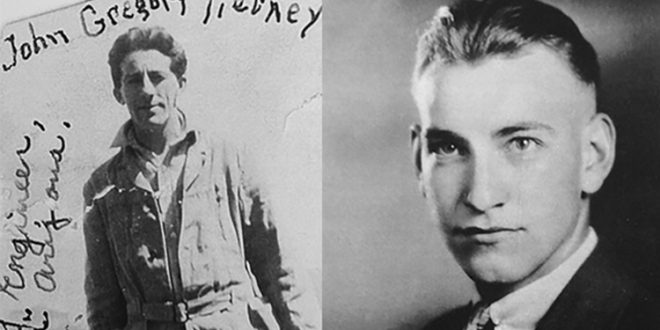
8. One hundred and twelve people died during the construction of the Hoover Dam. The first was J. G. Tierney, who drowned on December 20, 1922. Coincidentally, his son, Patrick W. Tierney, was the last person to die in 1935, exactly 13 years later.

The Hoover Dam was built in the Black Canyon of the Colorado River during the Great Depression in the United States. President Franklin D. Roosevelt dedicated the dam. The construction of the Hoover Dam cost a total of 112 lives, including one tourist, three employees of the U.S. Bureau of Reclamation, and the remaining 91 employees of six different companies. The first fatality was J. G. Tierney, a surveyor searching for the ideal site for the dam, on December 20, 1922. The last fatality during the dam's construction was Patrick Tierney, J. G. Tierney's son, on December 20, 1935. He was an electrician's helper and fell from a water intake tower. (source)
9. Wilmer McLean lived in a house near the place Battle of Bull Run . Then he moved. His new home was the house where General Lee surrendered to General Grant, ending the war. The war began on his front lawn and ended in his living room.

During the early years of the American Civil War, the First Battle of Bull Run took place on July 21, 1861, on the farm of Wilmer McLean. Wilmer McLean was a grocer living in Manassas, Virginia. McLean's residence served as the headquarters of Confederate Brigadier General P.G.T. Beauregard. In 1863, McLean and his family moved their business to Appomattox, Virginia, to continue their operations there. In 1865, Confederate General Robert E. Lee was preparing to surrender to Lieutenant General Ulysses S. Grant when a messenger knocked on McLean's door asking for help. On April 9, 1865, in Wilmer McLean's living room, Robert E. Lee surrendered, marking the end of the Civil War. Wilmer McLean's home witnessed both the beginning and end of the American Civil War. (source)
10. In 1918, Walter Summerford was struck by lightning. Six years later, in 1924, he was struck again. Six years later, in 1930, he was struck again. Even after his death in 1932, lightning struck his grave in 1936.

In February 1918, Major Walter Summerford, a British soldier, was struck by lightning in Flanders Fields. The strike paralyzed his legs. In 1924, while fishing, lightning struck a tree under which he was sitting. The tree fell, striking him and paralyzing the right side of his body. After recovering, in 1930, while walking in the park, he was struck again, leaving him permanently paralyzed. He died two years later. However, the string of "coincidences" did not end there. Six years after he was last struck by lightning and lay in his grave, lightning struck his tombstone. (source)