








If you come up with a brilliant idea in this world, you should know that someone else will likely try to steal it. It's sad, but true. To protect yourself, you can always try to copyright or trademark your idea before someone else gets a chance to steal your hard work. That way, if someone does, you can take legal action to either stop them or seek damages.
If you don't file trademarks, you have no idea how many there are. strange attempts to register trademarks And what things have actually been registered as trademarks? Let's look at some of the most surprising and unusual trademarks that are hard to believe.
10. Darth Vader's Breath is a trademark
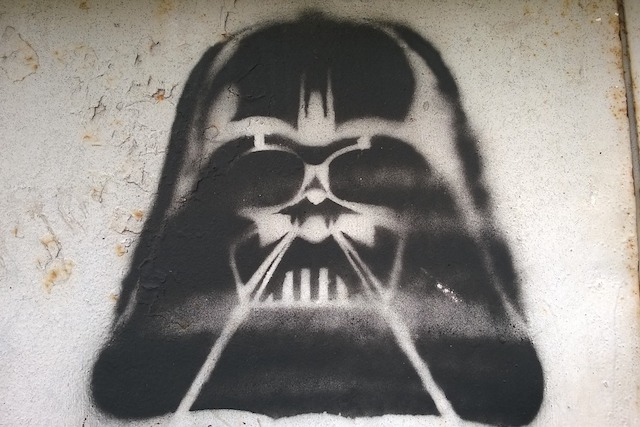
«"Star wars"» — is a pop culture monster that began in the 1970s and has only grown. These days, there are films «"Star wars"» , TV shows, animation, video games, action figures, LEGO, and even spaghetti. It's everywhere. Considering all the money it's made «"Star wars"» , the franchise is valued at around $65 billion, you better believe everything is trademarked.
Obvious things are trademarked, like names, images, and all that good stuff, but in Star Wars, it goes deeper. A character like Darth Vader is more than just a cool-sounding name and a sinister costume. That's why even Vader's breath is trademarked.
Defined as "the sound of rhythmic mechanical human breathing produced by breathing through a scuba regulator," Lucasfilm trademarked Vader's distinctive sound to prevent anyone else from attempting to incorporate it into their own works without permission.
Registering a sound as a trademark is not uncommon when it comes to something unique. That "dun-dun" sound from Law & Order, the MGM lion's roar, and Tarzan's unique cry are also trademarks.
9. The aroma of plasticine is a trademark
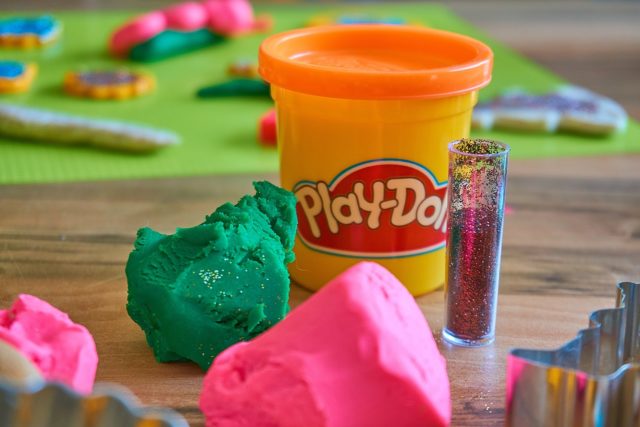
If a trademark can protect sound, why not smell? That's exactly what the creators of Play-Doh thought when they decided to trademark this distinctive odor, which is difficult to describe as anything more than "the smell of Play-Doh." But they had to describe it, as part of the process.
According to its creators, Play-Doh's scent can be described as "a combination of sweet, slightly musky vanilla aroma with hints of cherry and the natural aroma of salted wheat dough." We'll let you determine how accurate that is.
Hasbro trademarked this scent back in 2018, making it one of several fragrances enjoying such trademark protection. Stores selling electronics, which are also somehow protected by trademarks, offer strawberry-scented toothbrushes, bubblegum-scented flip-flops, and even a "floral musk" scent.
8. The term "superhero" is a trademark owned by DC and Marvel
The superhero genre is as big as it's ever been, and while it saw a bit of a backlash in the early 2020s, the fact remains: the majority of the highest-grossing films of all time are superhero movies, with both Marvel and DC earning around $40 billion at the box office.
Most people think of Marvel and DC as competitors, and there has long been a rivalry between the companies, which have shared writers and artists over the years and had several famous characters that seemed to have been copied from the other company at one time or another.
There were times, however, when Marvel and DC worked together. Their universes have crossed paths several times in comics, and you can see the Hulk and Superman battling in print if you're so inclined. But the companies also teamed up behind the scenes to trademark the term "superhero.".
Anyone in America using the words "superhero," "superhero," or any derivative of these terms risks being sued, as it is jointly owned by both companies. Two companies owning the same trademark is certainly uncommon, but it's not in dispute. They struck a deal because, being in the same business, they realized neither could succeed against the other in claiming the term as a whole. Furthermore, neither Marvel nor DC is consistent in enforcing their rights. Many companies use these terms willy-nilly and without consequence, but others have been rejected by lawyers at the publishers' discretion.
7. The cry "Eeeeee" is registered as a trademark.
If you're a certain type of person, you might be a fan of the music of Florida's favorite son, Pitbull. Like Tarzan, Pitbull is known for his distinctive scream, or "grito." Pitbull successfully filed a trademark for this scream, arguing that the sound is so clearly associated with him that even if he isn't there and the sound is being played, people who recognize him will immediately recognize it as his.
The scream, which was spelled EEEEEEEYOOOOOO for the purposes of the lawsuit, was one of fewer than 40 distinctive sounds ever claimed for a trademark. This means Pitbull achieved quite a feat in securing it.
6. "Taco Tuesday" was a trademark until 2023.
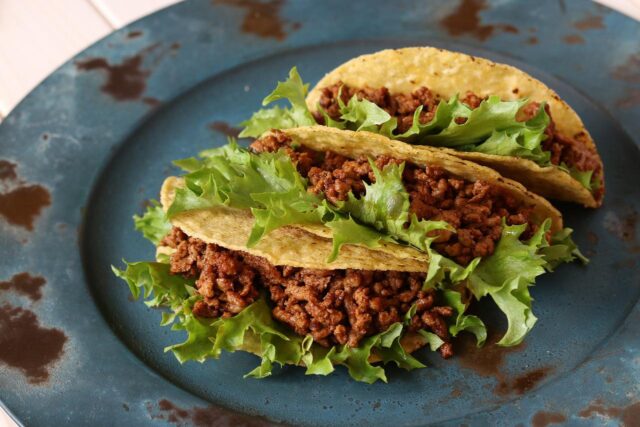
Tacos are popular and, damn, delicious. "Taco Tuesday" is an unofficial event enjoyed by people across America, and it's even been immortalized in a LeBron James video, which has become a meme featuring the basketball player simply shouting the phrase. It's such a common phrase and idea that it has its own Wikipedia page.
Unbeknownst to most taco lovers, the idea of eating delicious tacos on Tuesday wasn't a spontaneous, alliterative idea. It was a carefully thought-out plan, hatched by Taco John's back in 1989, when they actually trademarked it. Who knew?
While the idea of "Taco Tuesday" has only truly become a ubiquitous part of culture in the last 15 years or so, Taco John's saw the writing on the wall and tried to capitalize on it. Unfortunately, it didn't work. After years of holding the trademark and watching everyone and their uncle trample on it, they eventually gave it up after Taco Bell waged an active campaign to force them to release the phrase, believing it belonged to everyone due to common usage. But there was one objection.
The Taco John's brand was trademarked in every state except New Jersey. Restaurateur Gregory Gregory (yes, that's his real name) held the trademark in New Jersey, and he held on for three months after Taco John's gave it up.
Ironically, Gregory dislikes tacos and had long stated that he would never give up the brand, planning to pass it on to his grandson. Perhaps something else prompted his change of heart.
5. Bubble wrap is a trademark
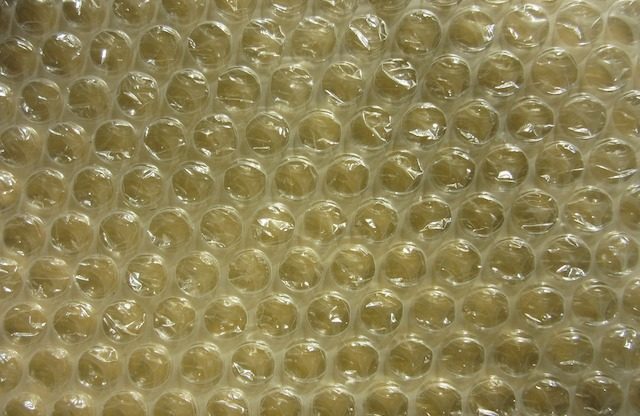
By now, everyone, including their uncle, knows bubble wrap. It's a sheet of plastic with tiny air pockets that burst when opened. People have been using it to insulate packages for decades. What's less well known is that bubble wrap is by no means a technical term. Bubble wrap is a trademark for "a cellular, cushioning packaging material containing bubbles of air or other gases.".
The trademark was registered back in the 1960s, but it has become so ubiquitous as the name of this product and every similar product that it is now considered a generic trademark. Items like paper napkins, aspirin, and jet skis have lost their connection to the original brand, and if they become too common, as happened with bubble wrap, the trademark will be lost.
4. The term «realtor» is a trademark

If you've ever bought or sold real estate, you've probably needed the help of a real estate agent. They're easy to find online, and no matter what city you live in, there are likely plenty of people willing to help. Plenty of real estate agents. But perhaps not so many realtors. Because they're not the same thing, and only one is trademarked.
While most of us use the terms "real estate agent" and "Realtor" interchangeably, realtors definitely don't want you to. "Realtor" is a trademark of NAR, the National Association of Realtors. A real estate agent must become a member and adhere to a code of ethics, which they are vetted for, to gain access to extensive resources for their business.
It's also worth noting that "Realtor" is a proper noun and should always be capitalized, although this is rarely the case. NAR works hard to preserve its trademark to prevent it from becoming a generic term that loses its meaning.
3. The Grammy Awards are made of a trademarked alloy called grammium.
Once a year, the biggest names in music gather for the Grammy Awards, where people online can celebrate their favorite musician's win or lament the fact that the Grammys are garbage, and it doesn't matter if their favorite artist loses. It's a timepiece!
For those who still care about awards, each winner receives a statue, known as a Grammy, to take home and wear a cape or whatever else people do with such things. The award's name comes from the fact that it looks like a tiny gramophone, which probably means little to most music lovers today, as no one has used one for decades.
Like most award statues, the Grammy appears to be gold, but it's not. It's made of a special alloy cleverly named Grammium. The Grammy Association trademarked this alloy to ensure no one else can use it to make Grammys. Or anything else, really.
The alloy is composed of zinc and aluminum, and after molding, it is plated with 24-karat gold. The horn of the gramophone part is made of brass. If you ever come across one and are wondering whether it's worth pawning, the trophy won't have any real monetary value, but it's estimated that one would cost about $15 to make.
2. 7-Eleven is the originator of the term "brain freeze."«
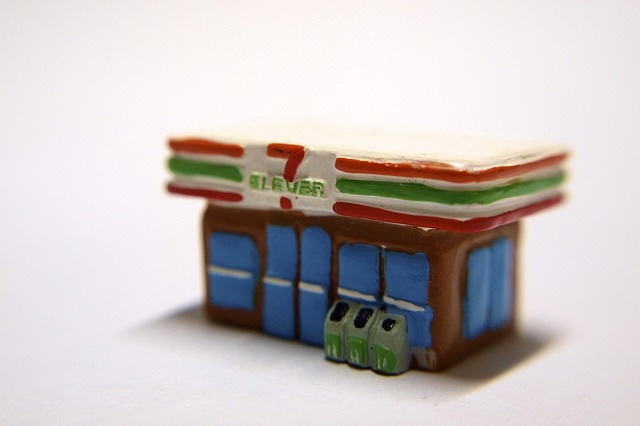
Besides its delicious refreshment, the 7-Eleven Slurpee is also known for one very important thing: pain. If you drink a Slurpee too quickly, the cold will penetrate your brain, making you feel like your mind is being destroyed from the inside. But this goes away within a minute, and you can start drinking again too quickly.
A cold headache, also known as a "brain freeze," is caused by the rapid cooling of the capillaries in the sinus area, which causes vasoconstriction. For some people, this is extremely painful, but for many, it's a strangely amusing side effect, much like how hot sauce makes you feel momentarily uncomfortable before you go back for more.
For 7-Eleven, brain freeze has become a great marketing tool. So much so that they trademarked the term. Even though both Slurpee and brain freeze have become almost generic terms for what they describe, 7-Eleven owns both.
1. Billy Joel owns the trademark "Billy Joel" and Yoko Ono owns John Lennon
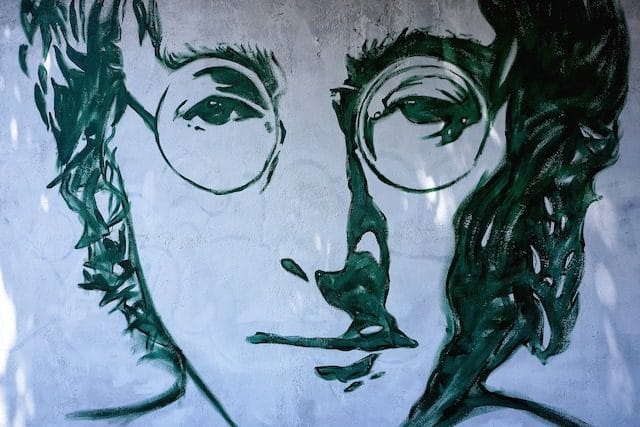
If you're a celebrity, your name is part of your fame. When someone says "Tom Cruise" or "Jennifer Lawrence," you immediately know who they're talking about. And perhaps for some celebrities, this means they truly want to own their name completely, ensuring no one can ever use it in any context without permission. This brings us to the fact that Billy Joel has trademarked his name. A trademark covers virtually everything, from merchandise to printed materials and music that may include his name.
Beyond registering your own name as a trademark, there are circumstances in which you can claim someone else's name. Yoko Ono owns John Lennon's trademark, and if you want to use his signature on something, she will be the custodian. Unlike Joel, who registered a trademark for the standard version of his name, Ono owns the trademark for Lennon's signature, which cannot be reproduced on any retail product.